 By
Quick answer: How much does the Crunchbase API cost?
- No public price: the Crunchbase API is sold as a custom licence through sales.
- Basic API retired: Crunchbase says it no longer offers Basic API keys.
- Pro and Business include exports and Crunchbase MCP, not a REST API key.
- Free alternatives: SEC EDGAR APIs need no key; Tracxn Lite is free for personal use.
- Founders: you rarely need the API; you do need accurate public profiles.
Key takeaways
- Budget for a sales conversation, not a price list, if you need the Crunchbase API.
- Most small teams can do their research in Pro with 2,000 export rows a month.
- MCP access in Pro and Business is for an individual using AI tools, not for backend apps.
- Licensed data comes in packages: Fundamentals, Insights and Predictions.
- If you're the startup being looked up, accurate public pages matter more than any API.
You want startup and funding data in your own app, CRM or model, and Crunchbase is the obvious source. Then you look for the price and find a form. That's not you missing something: Crunchbase doesn't publish API pricing, and the free Basic API that many tutorials still describe has been retired. This guide sets out what the Crunchbase API actually costs to get, what the self-serve plans include instead, and cheaper or free alternatives, all from official pages checked on 18 November 2026. It ends with the other side of the API: if you're the startup being looked up, how to make sure the data about you is right. Jump to the price table, the alternatives or the plan.
How much does the Crunchbase API cost?
There is no public price for the Crunchbase API. Crunchbase's API page offers "Explore API Pricing" buttons that lead to a form: "Fill out this form to explore API access and pricing with a member of our team." Its pricing page lists "Scaled API access" only under Custom Data Solutions, marked "Custom Pricing" with a "Talk to sales" button.
| Plan | Price (Crunchbase pricing page) | REST API key | What you get for data access |
|---|---|---|---|
| Free account | $0 | No (Basic API retired) | Limited profiles, search, AI research and Crunchbase MCP, with usage limits |
| Pro (1 seat) | $49/month billed annually for the first year (normally $79), or $99 month to month; 7-day free trial | No | 2,000 export rows a month, up to 1,000 results per search, base MCP usage |
| Business (2+ seats) | From $199/month billed annually | No | 5,000 export rows a month, more MCP use, Salesforce, HubSpot, Zapier and Outreach integrations |
| Custom Data Solutions | Custom pricing, via sales | Yes | Scaled API access, enterprise MCP, bulk delivery to cloud storage, Snowflake or Databricks |
Table: Crunchbase API pricing and plans (Crunchbase pricing page and docs, checked 18 Nov 2026)
So the honest answer to "how much does the Crunchbase API cost?" is: a quote. What drives that quote, according to Crunchbase's docs and pricing page, is which data packages you license, how much usage you need and how the data is delivered.
The Crunchbase API: what's sold, and how
- Price
- Not published; quote via sales
- Licence
- Custom Data Solutions
- Packages
- Fundamentals, Insights, Predictions
- Rate limit
- 200 calls per minute (docs)
- Catch
- No self-serve API plan
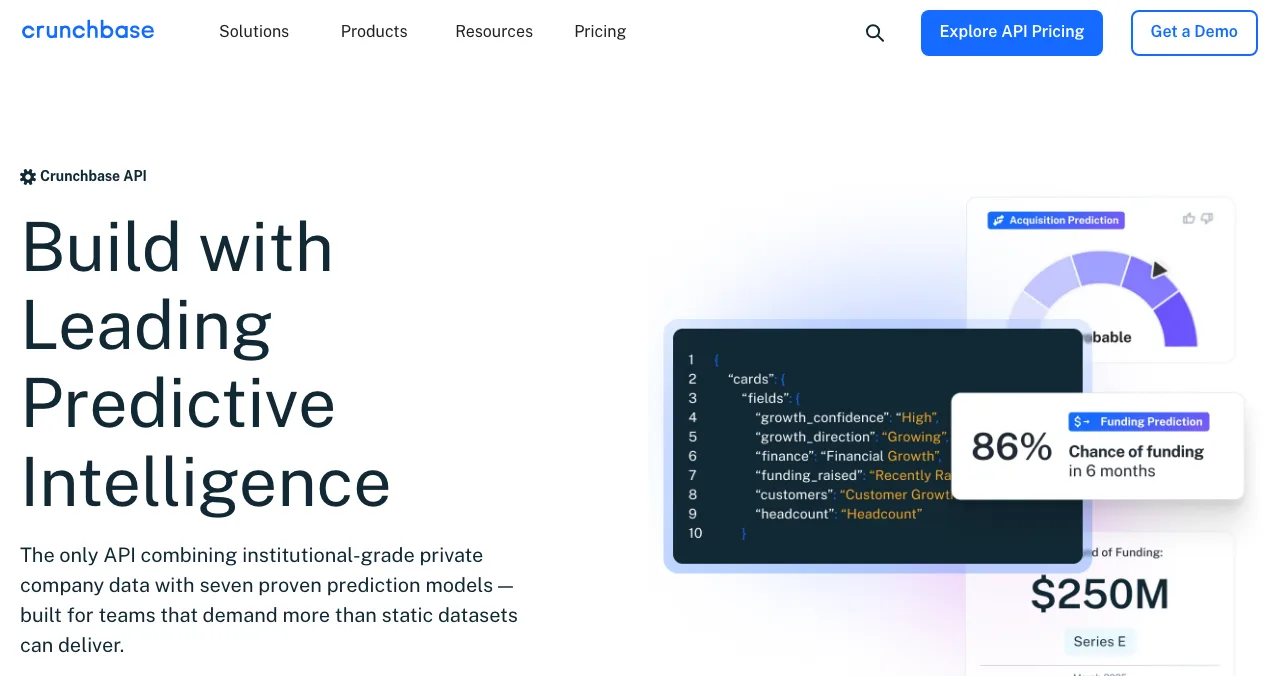
Crunchbase's developer docs say access to the REST API requires "a provisioned REST API key" and that you "choose the reference for your licensed package". Its legacy docs put it more bluntly: access to the full API "requires an Enterprise or Applications License".
The licensed packages, per the API packages overview:
- Fundamentals: historical firmographic and financial data, split into Core Firmographics (name, type, legal status, employee count, key leadership), Advanced Firmographics (ownership, structure, accelerators, education, public activity), Core Financials (funding stage, aggregate and latest funding, investors) and Advanced Financials (round-by-round histories).
- Insights: analyses of past and present private-market activity.
- Predictions: forecasts of company outcomes, such as funding, acquisition or IPO.
- Note: Insights and Predictions always include Fundamentals.
On the pricing page, the same items (firmographics, funding data, people and contacts, growth and heat scores, valuation estimates, forecasts) are marked "Available to license" in the Custom column.
Rate limit: Crunchbase's API docs state "a rate limit of 200 calls per minute for our API endpoints". Confirm the current limit for your package with your account team.
What happened to the free Crunchbase Basic API?
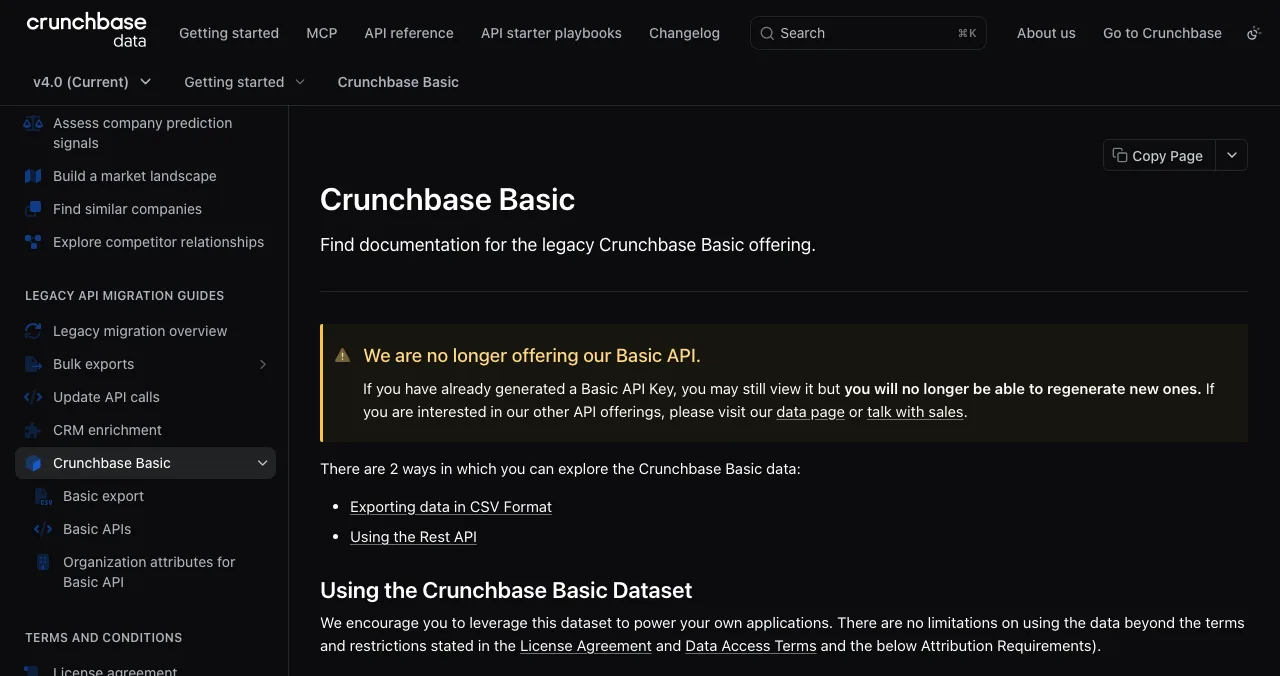
For years, "is the Crunchbase API free?" had a yes-ish answer: the Basic API gave a limited set of organisation data free. That's over. The Crunchbase Basic page in the docs now opens with: "We are no longer offering our Basic API." If you already generated a Basic key you can still view it, but "you will no longer be able to regenerate new ones". The notice sends everyone else to Crunchbase's data page or sales.
Crunchbase's docs also include legacy migration guides for moving existing API integrations, CSV exports and CRM enrichment to newly provisioned keys, coordinated with your account team. If an old tutorial tells you to "generate a free key in your account settings", it's out of date.
Pro and Business: exports and MCP instead of an API
- Pro
- $49/mo annual (first year) or $99 monthly
- Business
- From $199/mo annual, 2+ seats
- Exports
- 2,000 or 5,000 rows a month
- MCP
- Included, with usage limits
- Catch
- No REST API key
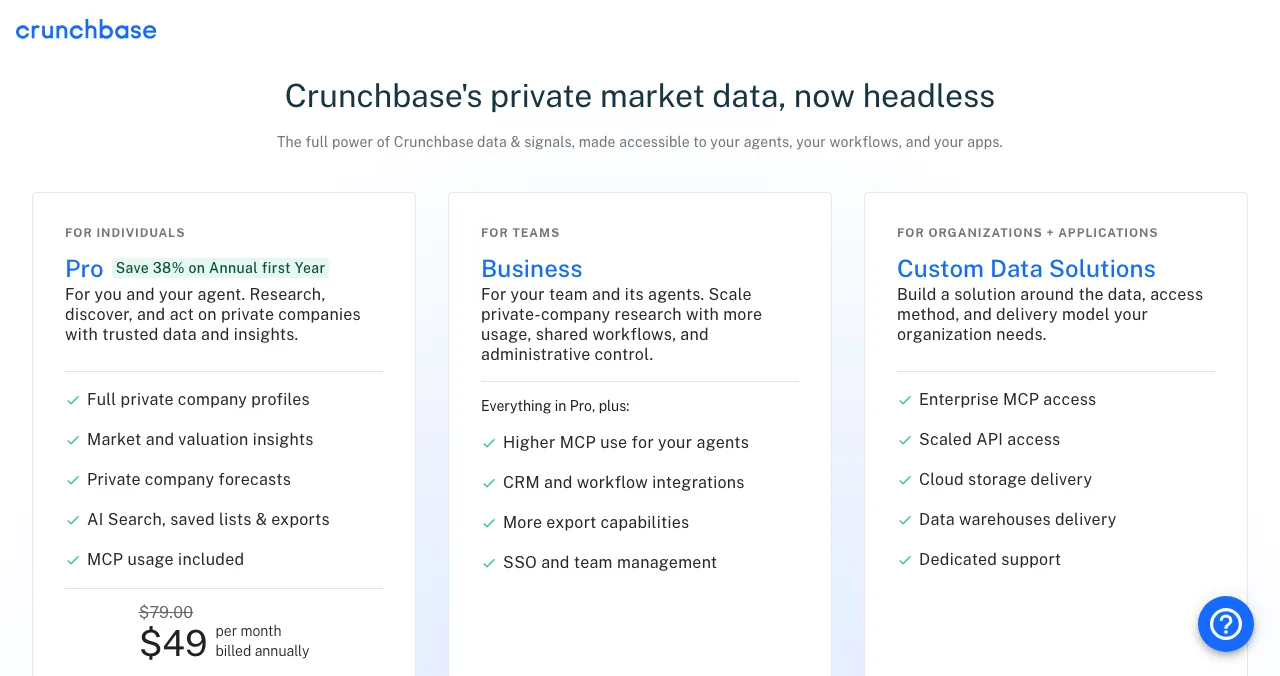
Many teams that search for "crunchbase api pricing" don't need a REST API at all. They need a few thousand rows a month in a spreadsheet or CRM, or an AI assistant that can look companies up. That's what the self-serve plans now sell:
- Exports: Pro includes 2,000 export rows a month; Business 5,000. Exports begin when the paid subscription starts, not during the trial.
- Crunchbase MCP: included in Pro and Business, so you can use Crunchbase data inside ChatGPT, Claude and Perplexity with your own login. Pro has base usage; Business more. Usage limits apply.
- CRM integrations: Business adds Salesforce, HubSpot, Zapier and Outreach.
- The line: Crunchbase says shared, unattended or backend agents and applications need "programmatic access through a Custom Data Solution". An MCP seat doesn't replace a REST API key.
Best for: analysts, founders and sales teams who need data in their tools, not inside their own product. For more on the free tier, see is Crunchbase free?
Crunchbase API alternatives: cheaper or free
| Source | API | Cost | Best for |
|---|---|---|---|
| SEC EDGAR | Yes, no key needed | Free; fair access 10 requests/second | US company filings and financial facts |
| Tracxn | APIs and data dumps (Data Solutions packs) | Lite free (personal use); packs by quote | Startup and sector data, emerging markets |
| Apollo | Yes, on Custom plans | Free plan without API; Custom by quote | Sales contacts and company data |
| Crunchbase Pro export | No API; CSV exports | $49–$99/month | Small, periodic pulls |
Table: Crunchbase API alternatives (each provider's pricing or docs, checked 18 Nov 2026)
For a broader list, see our Crunchbase alternatives guide.
SEC EDGAR APIs: free, official US data
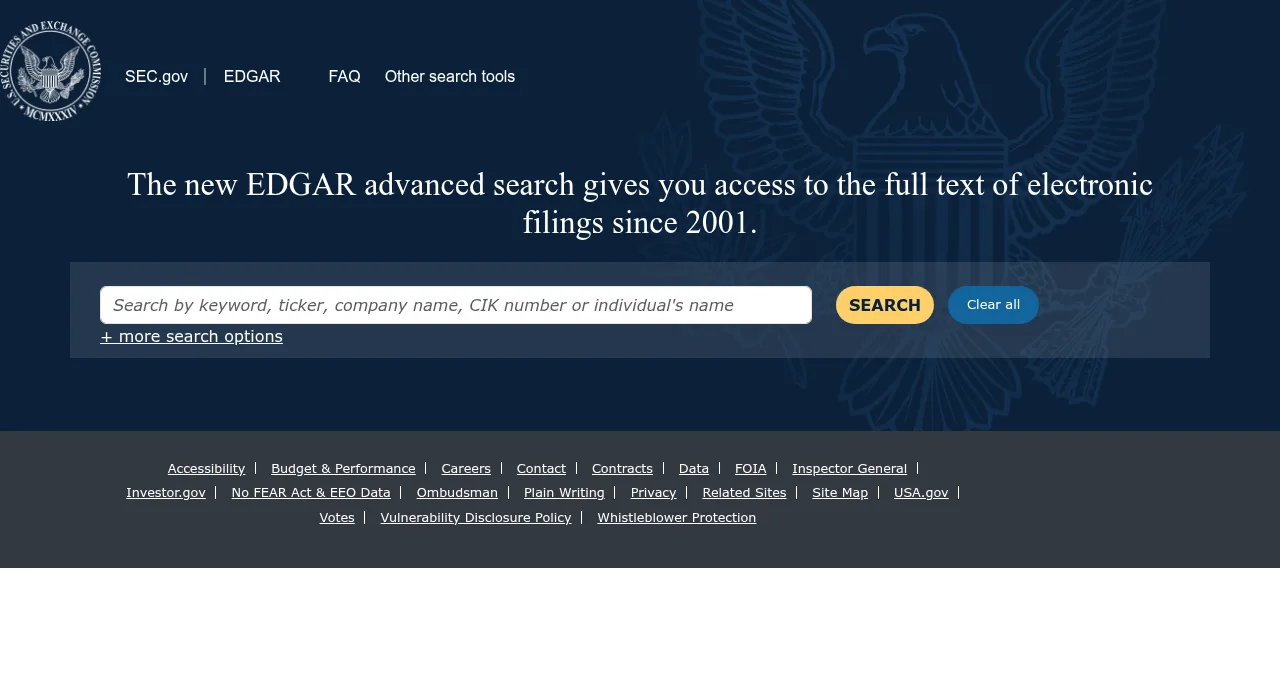
The SEC says its EDGAR APIs "do not require any authentication or API keys to access". They return each filer's submission history and XBRL financial data from forms such as 10-K and 10-Q, with nightly bulk ZIP files for large volumes. The fair-access rule limits each user to no more than 10 requests per second. It won't tell you about a seed round in Berlin, but for US companies, including Form D filings for private raises, it's free and authoritative.
Best for: US company data in your own app at zero licence cost.
Tracxn: free Lite, quoted APIs
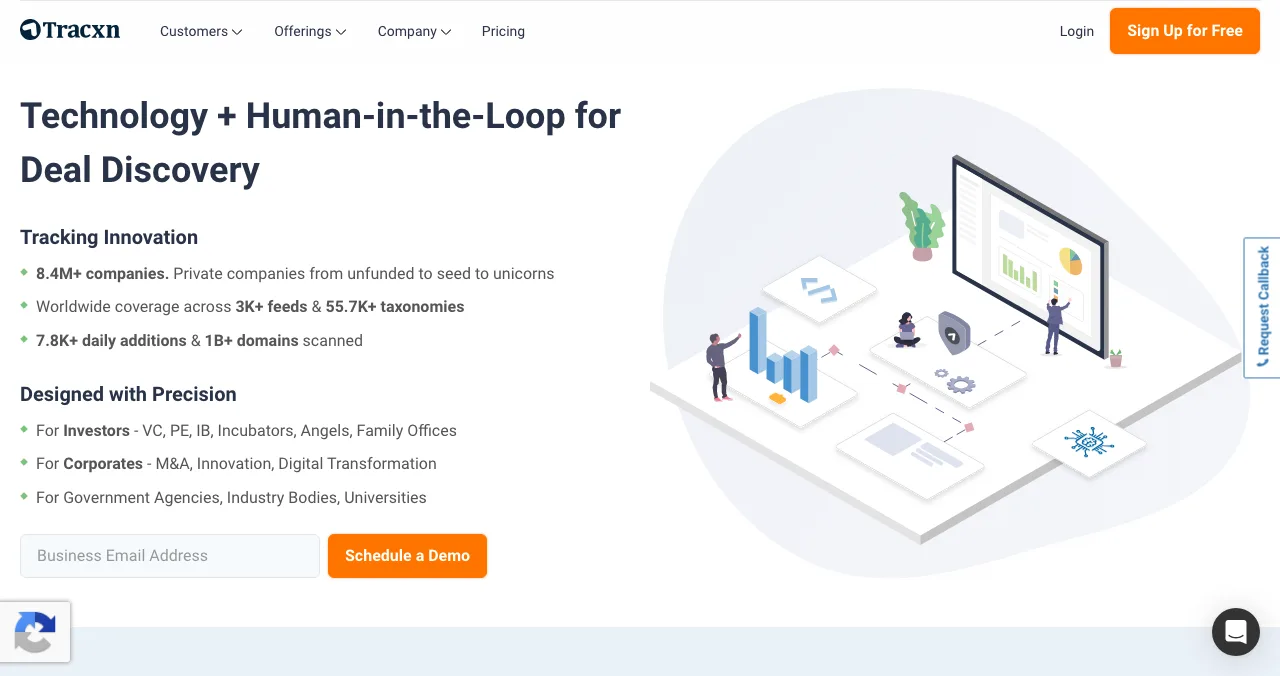
Tracxn's pricing page offers Lite free for personal use (no card, usage limits, no exports or alerts) and Premium by quote. Its "Data Solutions (APIs/Data Dumps)" packs come in internal-usage and commercial-redistribution versions, priced by a specialist, with trial packs mentioned.
Best for: comparing a second quote against Crunchbase, especially for emerging-market coverage.
Apollo: API on Custom plans
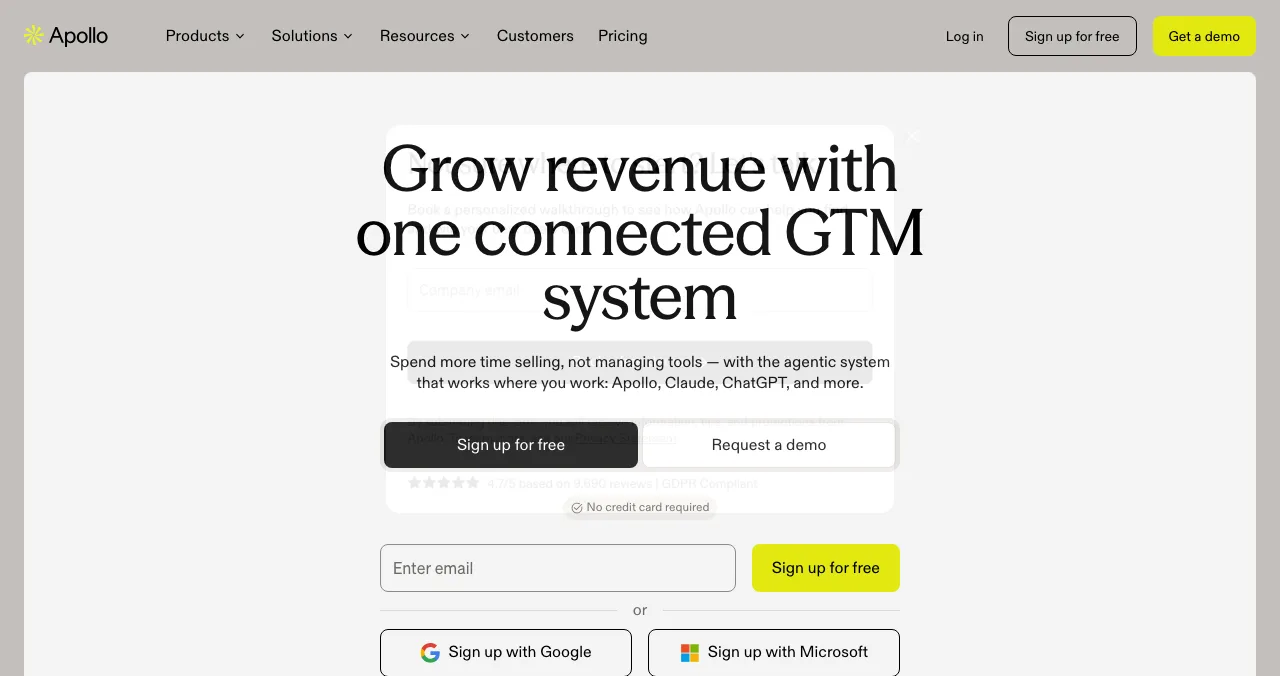
Apollo's pricing page names Free, Basic, Professional and Custom plans and says "API access is available on Custom plans". It's a sales-data tool, not a funding database, so use it when the goal is reaching people at companies rather than tracking rounds.
Best for: sales enrichment in a CRM.
Which option should you choose?
| You need… | Choose |
|---|---|
| Funding data inside your own product or model | Crunchbase Custom Data Solutions (ask for a quote) or a Tracxn Data Solutions pack |
| A few thousand rows a month for research | Crunchbase Pro exports |
| An AI assistant that can look up companies | Crunchbase Pro or Business with MCP |
| US company filings at no cost | SEC EDGAR APIs |
| Sales contacts in your CRM | Apollo, or Crunchbase Business integrations |
| A stream of brand-new products to browse by hand | Free public directories such as the Science of Apps Launchpad |
Table: Which Crunchbase API option or alternative fits your job
If you're the startup being looked up
- Cost
- Free, forever
- Visibility
- Permanent public profile
- Ranking
- Relevance, never payment
- Checked by
- Automated checks and a human
- Included
- A product test and report
Every API above is someone else describing your company. Investors' tools, sales platforms and AI assistants pull from public pages: your site, your Crunchbase profile, directories and launch sites. If those are thin or inconsistent, so is every dataset built on them. Two free steps fix most of it:
- Claim your Crunchbase profile — creating and editing profiles is free; see how to get listed on Crunchbase.
- Publish a permanent product page — a Science of Apps Launchpad listing is free forever, moderated by a person, ranked by relevance and never by payment, and its public Discover pages are a free place for anyone to browse new startups by category.
It also tests your product. A free baseline check of your landing page, discoverability and speed runs as you go live; a full investigation covers 22 areas with 39 automatic measurements and 74 expert checks, analyst-reviewed and private to your team.
Know what a stranger sees first
List free, then order the report that fits your stage.

 Economy
See what new customers see
- Store listing and homepage, screen by screen
- Scorecard against 60 Laws of UX
- Customers, competitors and the fixes worth most
PremiumThe full diagnosis and the plan
- Every screen, every finding, every flow
- All 60 laws with evidence and fixes
- 8 strategy chapters and a 90-day roadmap
Researched from your live product and fact-checked against the evidence.
A plan for getting Crunchbase data without overpaying

- Write down the job — which fields, how many companies, how often, and where the data must land.
- Try the free routes first — the free account and MCP for lookups; SEC EDGAR for US filings.
- Run Pro's 7-day trial with a real task — if 2,000 export rows a month cover it, stop there.
- Request two quotes — Crunchbase Custom Data Solutions and a Tracxn Data Solutions pack; ask about rate limits, packages and redistribution rights.
- Check the licence terms — internal use and putting data in your own product are priced differently.
Mistakes to avoid

- Following an old Basic API tutorial — new Basic keys aren't issued any more
- Buying an API for a spreadsheet job — Pro exports may be enough
- Using a personal MCP seat for a backend app — Crunchbase says that needs a Custom Data Solution
- Ignoring redistribution terms — showing licensed data to your own users is a different licence
- Leaving your own profile blank — every dataset copies what's public about you
Ready to be found?
How we know
Crunchbase plans and prices come from its pricing page; API access terms from its API product page and developer docs (welcome page, API packages overview, Crunchbase Basic page and the v4 legacy "Using the API" page); SEC details from its EDGAR API and developer resources pages; Tracxn and Apollo from their pricing pages. All were read on 18 November 2026. We found no official Crunchbase API price and don't quote third-party estimates. Search figures are Google Keyword Planner's global 12-month averages (crunchbase api: about 1,000 a month; crunchbase api pricing: 320). Science of Apps runs the Launchpad and has no relationship with Crunchbase or the other providers.
Key terms, defined
- REST API key: a credential that lets your software call Crunchbase's API directly; issued only under a licence.
- Custom Data Solutions: Crunchbase's sales-led licence for API, bulk and warehouse delivery.
- Crunchbase Basic API: the former free, limited API; no longer offered to new users.
- Crunchbase MCP: Model Context Protocol access that lets AI tools query Crunchbase with your login.
- Rate limit: the maximum number of API calls allowed in a period; 200 per minute in Crunchbase's docs.
- Redistribution rights: permission to show licensed data to your own customers, usually priced separately.
Frequently asked questions
How much does the Crunchbase API cost?
Crunchbase doesn't publish a price. Its API page sends you to a form to 'explore API access and pricing with a member of our team', and its pricing page lists API access under Custom Data Solutions with custom pricing. Expect a quote based on the data packages, usage and delivery method you need. Self-serve Pro and Business plans don't include a REST API key.
Is the Crunchbase API free?
Not any more for new users. Crunchbase's documentation says it is no longer offering its Basic API; people who already generated a Basic key can still view it but can't regenerate new ones. A free Crunchbase account still gives limited access to profiles, search and Crunchbase MCP, with usage limits.
What happened to the Crunchbase Basic API?
Crunchbase retired it for new sign-ups. Its docs carry the notice 'We are no longer offering our Basic API' and point to its data page or sales for other API offerings. Separately, Crunchbase's developer docs include legacy migration guides for moving existing integrations to newly provisioned keys.
Does Crunchbase Pro include API access?
No REST API key. Pro ($49 a month billed annually for the first year, normally $79, or $99 monthly) includes full private company profiles, AI search, saved lists, 2,000 export rows a month and base Crunchbase MCP usage for AI tools such as ChatGPT and Claude. API access is listed only under Custom Data Solutions.
What is the Crunchbase API rate limit?
Crunchbase's API documentation states a rate limit of 200 calls per minute for its API endpoints. Licensed customers should confirm current limits for their package in the API essentials docs or with their account team, because limits and allowances can be set by agreement.
What are the cheaper alternatives to the Crunchbase API?
For US company filings, the SEC's EDGAR APIs need no authentication or API key, within a fair-access limit of 10 requests per second. Tracxn's Lite plan is free for personal use, with APIs and data dumps sold as quoted Data Solutions packs. Apollo offers API access on its Custom plans for sales data.
What is Crunchbase MCP?
A way to use Crunchbase data inside compatible AI tools such as ChatGPT, Claude and Perplexity with your own Crunchbase login. Crunchbase says MCP is included with Pro and Business with usage limits, while backend or unattended agents need programmatic access through a Custom Data Solution.
Sources
- Crunchbase — Product pricing: Pro, Business and Custom Data Solutions (checked 18 Nov 2026)
- Crunchbase — Crunchbase API product page (checked 18 Nov 2026)
- Crunchbase Data — Crunchbase Basic (legacy) documentation (checked 18 Nov 2026)
- Crunchbase Data — API packages overview (checked 18 Nov 2026)
- Crunchbase Data — Using the API (v4 legacy docs, checked 18 Nov 2026)
- Crunchbase Data — Welcome to Crunchbase Data (checked 18 Nov 2026)
- U.S. SEC — EDGAR application programming interfaces (checked 18 Nov 2026)
- U.S. SEC — Developer resources: fair access (checked 18 Nov 2026)
- Tracxn — Pricing: Lite, Premium and Data Solutions (checked 18 Nov 2026)
- Apollo.io — Pricing and plans (checked 18 Nov 2026)
- Science of Apps — Launchpad: launch your product free (checked 18 Nov 2026)
- Checked November 18, 2026. Figures that change — fees, salaries, prices — are reviewed every six months; if something is out of date, tell us.
Where to go from here
- Is Crunchbase free? — free account vs Pro
- Crunchbase alternatives — free and paid
- Get listed on Crunchbase — free profile, step by step
- Science of Apps - LaunchpadMicrolaunch review: how a 30-day launch works, what Launch Pro, Launch Plus and Launch Everywhere cost, whether there's a free option, and how it compares with Uneed, Product Hunt and the free LaunchpadIs Microlaunch free? Its own pages show paid launch packs from $39 for 30 days of visibility. How it works, what each plan includes, and free options to pair.
- Science of Apps - LaunchpadWellfound alternatives for founders: where else to hire, and where else to be seen, with what Wellfound itself now costs and what happened to AngelList TalentWellfound alternatives for founders: Work at a Startup, Cutshort and Peerlist for hiring, Crunchbase and Tracxn for investors, plus Wellfound's own free plan.
- Science of Apps - LaunchpadWhat is Crunchbase? What the private-company database covers, who uses it, what's free, what Pro and Business cost, and how startups use itWhat is Crunchbase? The private-company database explained: who uses it, what a free account gets, Pro and Business prices, and how startups use it.
- Science of Apps - LaunchpadCrunchbase pricing in 2027: what the free account includes, what Pro and Business cost, and whether you need to payCrunchbase pricing for 2027, checked: the free account's limits, Pro at $49 a month billed annually or $99 monthly, Business from $199, and the 7-day trial.
- Science of Apps - LaunchpadCrunchbase vs PitchBook: who each is built for, what each costs, and why most founders need one and not the otherCrunchbase vs PitchBook: Crunchbase is self-serve from $49 a month with a free account; PitchBook is enterprise, price on request. Who should use which.
- Science of Apps - LaunchpadFractional CMO for startups: what a part-time chief marketing officer actually does, what one costs (with the dated data that exists), when to hire one, and the cheaper diagnosis to run firstFractional CMO for startups: what the role covers, what it costs (with dated data), when to hire one instead of an agency, and a cheaper diagnosis to run first.






Get the ideas, not the noise.
Sign up with Google and we’ll send you short UX psychology tips by email — why people tap, stall and leave, and what to do about it. Unsubscribe anytime. Prefer something to keep? Get the free Laws of UX guide as a PDF.
Launch day ends. Your listing shouldn't.
Data buyers and AI tools pull startups from public pages. A free Science of Apps Launchpad listing gives your startup a permanent, accurate public page, and tests your product with a detailed report.