 By
Quick answer: What does a fractional CMO cost?
- What it is: a senior marketing leader, part-time, for strategy and direction.
- What it isn't: a doer of all the marketing; you still need people or agencies to execute.
- Cost: varies widely; the average fractional hourly rate across roles was about $153 in June 2026 (Go Fractional).
- When: after early traction, before a full-time marketing leader.
- First: a cheap diagnosis of your product and funnel, so the CMO's hours go on decisions.
Key takeaways
- A fractional CMO sells judgement; buy it when you have decisions worth making.
- Pre-traction, the product and positioning usually matter more than a marketing leader.
- Ask for a 90-day plan with measurable outcomes before signing.
- Clarify who executes: a CMO without hands produces documents.
- A diagnosis first makes the CMO's first month far more productive.
Somewhere between "the founders do the marketing" and "we hire a VP of Marketing" there's a gap, and the fractional CMO fills it: a senior marketer, part-time, who sets direction and manages the people doing the work. For the right startup at the right moment it's excellent value. Too early, it's an expensive way to produce a strategy deck for a product that isn't ready. This guide explains what a fractional CMO for startups actually does, what one costs (using the only dated, published figures we could verify), when to hire, how it compares with an agency, and the cheaper diagnosis to run first. Facts were checked on each source's own page on 18 November 2026. Jump to the role, the cost or when to hire.
- Average fractional hourly rate, all roles (Go Fractional, June 2026)
- ~$153
- Job: senior judgement, part-time
- 1
- Days to judge a fractional CMO
- 90
- Strategy decks that fix a leaking funnel
- 0
What does a fractional CMO do for a startup?
A fractional chief marketing officer is a part-time marketing leader. The value is judgement: deciding what the company should do in marketing and making sure it gets done. The hands are usually someone else's.
| A fractional CMO usually | A fractional CMO usually doesn't |
|---|---|
| Sharpens positioning and the target customer | Write every post and ad |
| Chooses which channels to test, in what order | Run all the channels personally |
| Sets the budget, goals and metrics | Replace the product work |
| Hires and manages freelancers, agencies or juniors | Work full-time |
| Reports to founders and the board | Guarantee results |
| Defines the role for a future full-time hire | Stay forever |
Table: What a fractional CMO does and doesn't do for a startup (Science of Apps editorial summary; individual agreements vary)
What does a fractional CMO cost?
There's no standard price, and most figures you'll find online come from people selling fractional services. We use one dated source that publishes its basis.
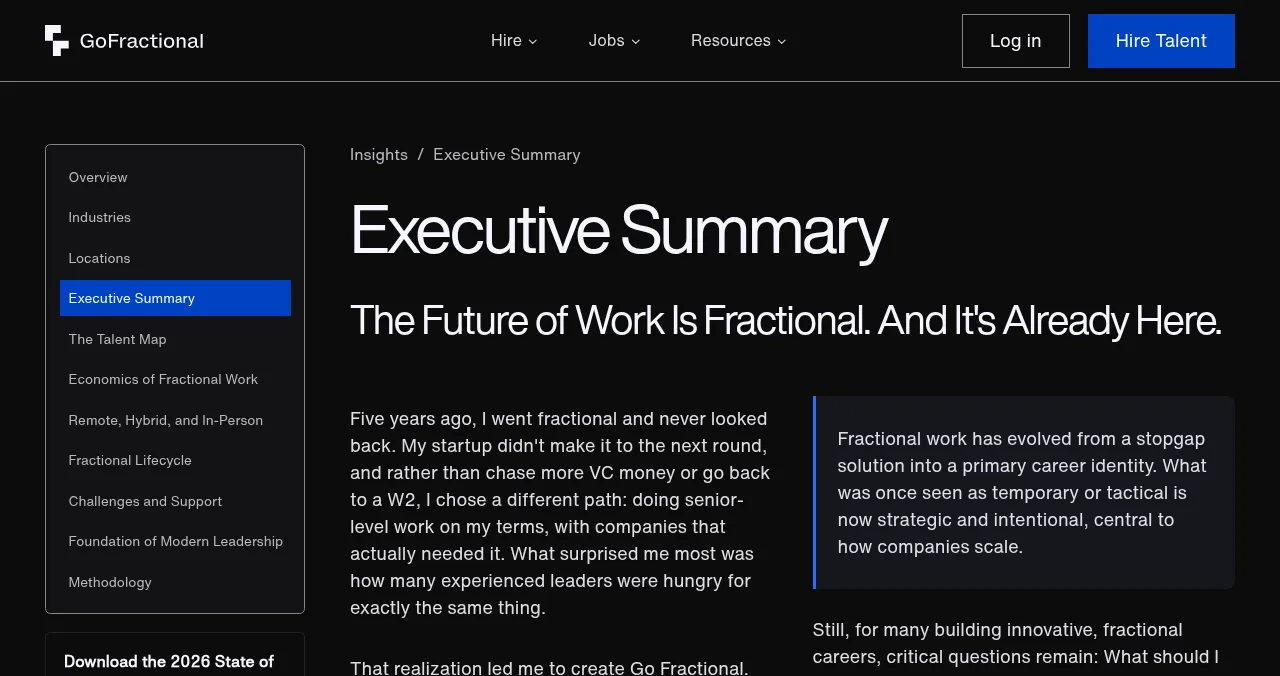
Go Fractional's 2026 State of Fractional Work report puts the average fractional hourly rate at about $153 as of June 2026. Note what that figure is: an average across all fractional roles, drawn from the company's own job board and input from fractional leaders, not a CMO-only benchmark and not a survey of startups. Go Fractional runs a marketplace for fractional talent, so read it as one market's snapshot. Its summary also names marketing among the most in-demand fractional functions.
What drives the price for a fractional CMO specifically:
- Seniority and track record: a former CMO of a scaled company costs more than a first-time head of marketing.
- Scope: advice a few hours a week costs less than leading a team several days a week.
- Hands-on work: some include execution in their specialism; most don't.
- Market: rates differ by country, as they do for agencies (Clutch's 2026 agency guide shows average agency hourly rates from $100–$149 in the US to under $25 in India).
- Structure: monthly retainer, hourly, or a fixed-scope project such as a 90-day strategy.
Execution is extra. If the fractional CMO directs an agency, budget for the agency too; Clutch's 2026 guide says most projects reviewed on its platform cost $10,000–$49,999, before ad spend. See digital marketing agency for startups for the full breakdown.
When should a startup hire a fractional CMO?
| Your situation | Fractional CMO? | Better first move |
|---|---|---|
| Pre-launch or no users | Rarely | Talk to users; fix the product and landing page; list free |
| Early users, no channel working | Sometimes, for a short strategy project | Test two channels yourself for six weeks |
| Paying users, one channel working | Often a good fit | Hire one to scale and add channels |
| Several channels, freelancers and an agency, no leader | Yes | A fractional CMO to direct them |
| Ready for a full-time marketing leader | As a bridge | Use the CMO to define the role and hire |
Table: When a fractional CMO makes sense for a startup, by stage (Science of Apps editorial framework)
The signal is simple: hire a fractional CMO when you have more marketing decisions than the founders can make well, and enough traction that the decisions matter. Before that, the work is usually product and positioning, covered in startup marketing strategy.
Fractional CMO vs agency vs full-time hire
| Fractional CMO | Marketing agency | Full-time CMO or VP | |
|---|---|---|---|
| Main job | Strategy and leadership | Execution of channels | Strategy, leadership and building a team |
| Time | Part-time | Agreed scope | Full-time |
| Commitment | Usually flexible | Contract term | Employment |
| Best for | Traction, no marketing leader | A proven channel to scale | Marketing as a core, ongoing function |
| Risk | Advice without execution | Execution without strategy | High cost, slow to change |
Table: A fractional CMO compared with an agency and a full-time hire (Science of Apps editorial comparison)
Many startups combine them: a fractional CMO sets direction and holds an agency or freelancers to account.
The cheaper first step: a diagnosis
A good fractional CMO will spend their first weeks diagnosing: where visitors come from, where they drop, what the product promises and whether it keeps the promise. You can do much of that diagnosis cheaply first, so the CMO's paid hours go on decisions, not discovery.

List your product free on the Science of Apps Launchpad, forever, in six short steps, and a baseline diagnosis of your landing page, discoverability and speed runs as you go live. A full investigation loads your product in a real browser on desktop and mobile, examines the whole customer journey with automatic measurements and expert heuristics, and gives every finding a verdict backed by evidence and approved by an analyst. It's private to your team and never affects your listing's ranking.
- Areas examined, from discoverability to every screen
- 22
- Automatic measurements, desktop and mobile
- 39
- Expert heuristics on the screens behind the login
- 74
- Verdicts: Good, Needs improvement, Needs to be fixed, Critical, Recommendation
- 5
Arrive
First impression
Discoverability on Google, AI and social; landing page, pricing, trust and speed.
Join
The first minutes
Sign-up, sign-in, recovery and onboarding.
Use
The everyday job
Core flow, dashboards, search, microcopy and error states.
Pay
Value into revenue
Paywall, upgrade, checkout and payments.
Stay
Coming back
Notifications, account, settings and help.
Every screen
Throughout
Accessibility to WCAG 2.2, visual design and consistency.
Evidence for every finding
A measurement or a screenshot, not an opinion.
Five clear verdicts
From Good to Critical, so priorities are obvious.
Analyst-reviewed
Every finding approved by a person.
Private to your team
Never public, never part of ranking.
Hand your CMO a head start
List free, then order the report that fits your stage.

 Economy
See what new customers see
- Store listing and homepage, screen by screen
- Scorecard against 60 Laws of UX
- The fixes worth most
PremiumThe full diagnosis and the plan
- Every screen, every finding, every flow
- All 60 laws with evidence and fixes
- 8 strategy chapters and a 90-day roadmap
Fact-checked against the evidence. Private by default. Never affects ranking.
How to hire a fractional CMO

- Run the diagnosis first. Know your numbers and your product's weak points.
- Write the scope. The decisions you need made, the outcomes you want in 90 days, the time you expect, and who executes.
- Shortlist three. Look for experience at your stage and in your type of market (B2B, consumer, developer).
- Ask for a 30-60-90 plan. A short written plan based on your diagnosis tells you more than a pitch.
- Call founder references. Ask what changed and what they'd do differently.
- Agree the terms. Fee structure, time, meetings, deliverables, metrics, ownership of work and accounts, and a notice period.
- Review at 90 days. Renew, change scope, or end and keep the plan.
A 90-day engagement, in outline
- Before day 1
Diagnosis
Launchpad listing and baseline diagnosis; analytics with sign-up as a key event; your own numbers.
- Days 1–30
Strategy
Positioning, target customer, channel priorities, budget, metrics.
- Days 31–60
Set up and test
Hire or brief the people who execute; launch the first channel tests.
- Days 61–90
Scale or stop
Double down on what works; cut what doesn't; plan the next quarter or the full-time hire.
Mistakes

- Hiring before traction — strategy for a product that isn't ready yet
- No one to execute — a CMO without hands produces documents
- Vague scope — no written outcomes, no way to judge the engagement
- Paying for discovery — spending senior hours finding problems a cheap diagnosis would have found
- Judging on activity — meetings and decks instead of sign-ups and revenue
- Locking in too long — keep a notice period short enough to exit after 90 days
Ready to launch?
How we know
The fractional rate comes from Go Fractional's Executive Summary of its 2026 State of Fractional Work report (June 2026); agency figures from Clutch's Digital Marketing Agency Pricing Guide 2026 (updated 21 September 2026). Both were read on 18 November 2026. We found no dated, published benchmark specific to fractional CMOs that we could verify, so we don't quote one. The role summary, decision tables and plan are Science of Apps' editorial framework. The Launchpad's investigation details come from its investigate and pricing pages, read the same day. Science of Apps runs the Launchpad.
Key terms, defined
- Fractional CMO: a senior marketing leader who works part-time for one or several companies.
- Retainer: a fixed monthly fee for an agreed amount of time or scope.
- Fractional work: senior, part-time roles shared across companies, paid by the hour, retainer or project.
- 30-60-90 plan: a written plan of what someone will do in their first 30, 60 and 90 days.
- Marketing diagnosis: an evidence-based check of where a product and funnel lose people, before deciding what to fix.
- Execution: the hands-on work of running channels: writing, designing, buying ads, posting.
Frequently asked questions
What does a fractional CMO cost?
There's no standard price, and few dated, published benchmarks. Go Fractional's 2026 State of Fractional Work report puts the average fractional hourly rate at about $153 as of June 2026, across all fractional roles, not CMOs alone. Senior marketing leaders can charge more or less depending on experience, market and scope; most work on a monthly retainer or hourly. Get two or three quotes for the same written scope.
What does a fractional CMO do for a startup?
Sets the marketing strategy: positioning, target customer, which channels to test and in what order, budget, goals and metrics. They usually build or hire the team or agencies that execute, review the work, and report to the founders or board. Some also do hands-on work in their specialism, but the core value is senior judgement for a fraction of a full-time cost.
When should a startup hire a fractional CMO?
Usually after early traction: you have paying users, one or two channels showing results, and more marketing decisions than the founders can make well. Before that, the product and positioning tend to matter more, and founders learn by doing. A fractional CMO is also useful before hiring a full-time marketing leader, to define the role.
Is a fractional CMO better than a marketing agency?
They do different jobs. A fractional CMO decides what to do and manages whoever does it; an agency executes channels. Many startups use both: the fractional CMO sets strategy and briefs and holds the agency to account. If you only need one channel run and know which one, an agency or freelancer may be enough.
How many hours a week does a fractional CMO work?
It depends on the agreement; arrangements range from a few hours a week of advice to several days a week of hands-on leadership. Agree the time, the meetings, the deliverables and response times in writing, and review after the first 90 days.
What should I ask a fractional CMO before hiring?
Which startups at our stage have you worked with, and what changed? What would you do in the first 30, 60 and 90 days? Who executes, and is that included? Which metrics will you own? How much time will you give us, and how do we reach you? Ask for references from founders, not only testimonials.
Is there a cheaper first step than a fractional CMO?
Yes: a diagnosis. Before paying for senior time, find out where your product and funnel lose people. Free tools cover speed and accessibility, five user tests cover onboarding, and listing on the Science of Apps Launchpad gives you a free baseline diagnosis of your landing page, discoverability and speed, with fuller paid reports available.
Sources
- Go Fractional — Executive Summary, 2026 State of Fractional Work (June 2026; checked 18 Nov 2026)
- Clutch — Digital Marketing Agency Pricing Guide 2026, updated 21 Sep 2026 (checked 18 Nov 2026)
- Google Search Central — Do you need an SEO? (checked 18 Nov 2026)
- Google Analytics Help — [GA4] Traffic acquisition report (checked 18 Nov 2026)
- Science of Apps — Product investigation: 22 areas (checked 18 Nov 2026)
- Science of Apps — Pricing: Economy and Premium reports (checked 18 Nov 2026)
- Checked November 18, 2026. Figures that change — fees, salaries, prices — are reviewed every six months; if something is out of date, tell us.
Where to go from here
- Startup marketing strategy — the plan a CMO would start from
- Digital marketing agency for startups — the execution side
- Startup audit — the diagnosis to run first
- Science of Apps - LaunchpadShould you hire a digital marketing agency for your startup? What a marketing agency for startups costs (with dated data), when it's worth it, the red flags Google itself warns about, and the free basics to do firstShould a startup hire a digital marketing agency? Dated cost data, when a marketing agency for startups pays off, red flags, and the free basics to do first.
- Science of Apps - LaunchpadCrunchbase API pricing in 2027: why there's no public price, what happened to the free Basic API, what Pro and Business include instead, and cheaper or free alternatives for startup dataCrunchbase API pricing isn't public: API access is a custom licence via sales, and the free Basic API is gone. What Pro includes, and cheaper alternatives.
- Science of Apps - LaunchpadHow to market a startup with no money: the free channels that work, in the order to use them, and what each costs in time insteadHow to market a startup with no money: direct outreach, communities, free launch sites, directories, content and AI search, in order, with the time each costs.
- Science of Apps - LaunchpadA startup marketing strategy on one page: positioning, one or two channels, a launch, content that answers buyer questions, and weekly metrics, with a template to fill inA startup marketing strategy you can run: positioning, one or two channels, a launch, answer-first content and weekly metrics, with a template.
- Science of Apps - LaunchpadHow long until a startup gets its first users? There's no honest average, but each channel has a published clock: from same-day launch sites to months for searchHow long until a startup gets first users? No honest average exists, but each channel has a published clock, from same-day launches to months for search.
- Science of Apps - LaunchpadWhat's inside a startup analysis report: the sections a good report covers, a one-page startup analysis canvas to start with, and the Economy and Premium product reports from the Science of Apps Launchpad comparedWhat a startup analysis report includes: the core sections, a one-page startup analysis canvas, and how the Economy and Premium product reports compare.






Get the ideas, not the noise.
Sign up with Google and we’ll send you short UX psychology tips by email — why people tap, stall and leave, and what to do about it. Unsubscribe anytime. Prefer something to keep? Get the free Laws of UX guide as a PDF.
Launch day ends. Your listing shouldn't.
Before you pay for senior marketing time, list free on the Launchpad and get your product tested end to end with a detailed report: a cheap first marketing diagnosis.