 By
Quick answer: What is a startup audit?
- A startup audit checks product and go-to-market with evidence.
- Eight areas: positioning, discoverability, landing page, sign-up and onboarding, core flow, pricing, speed and accessibility, growth.
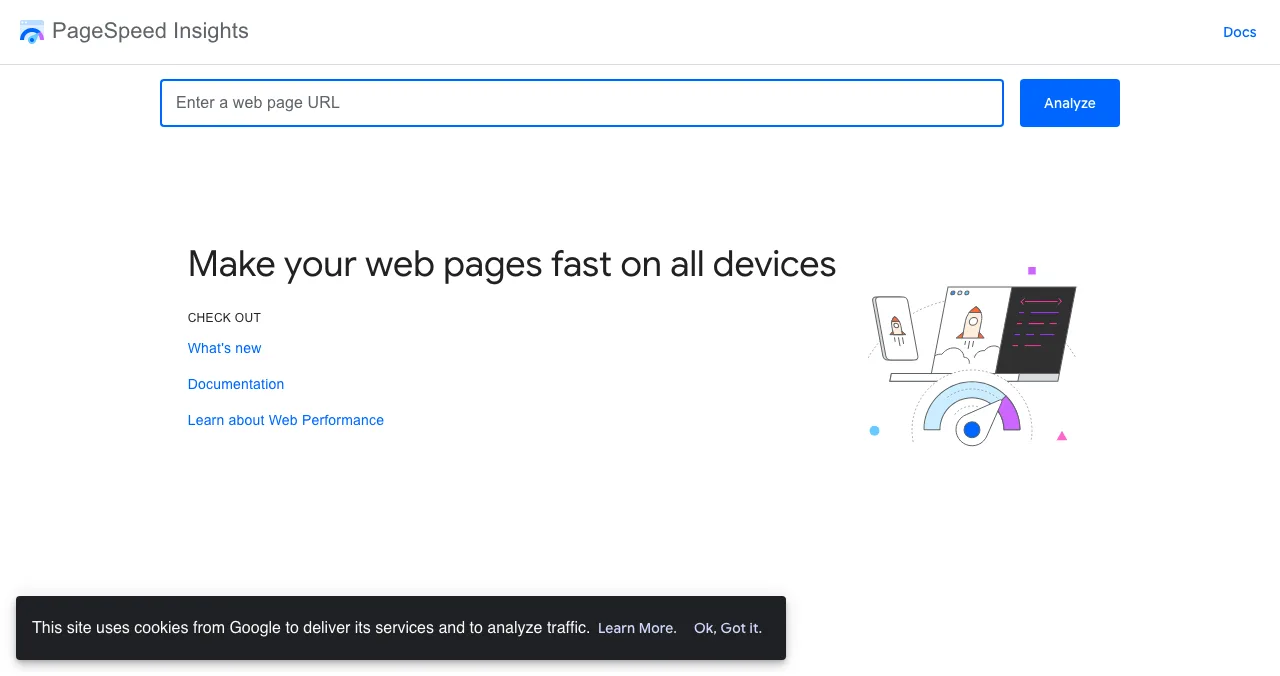
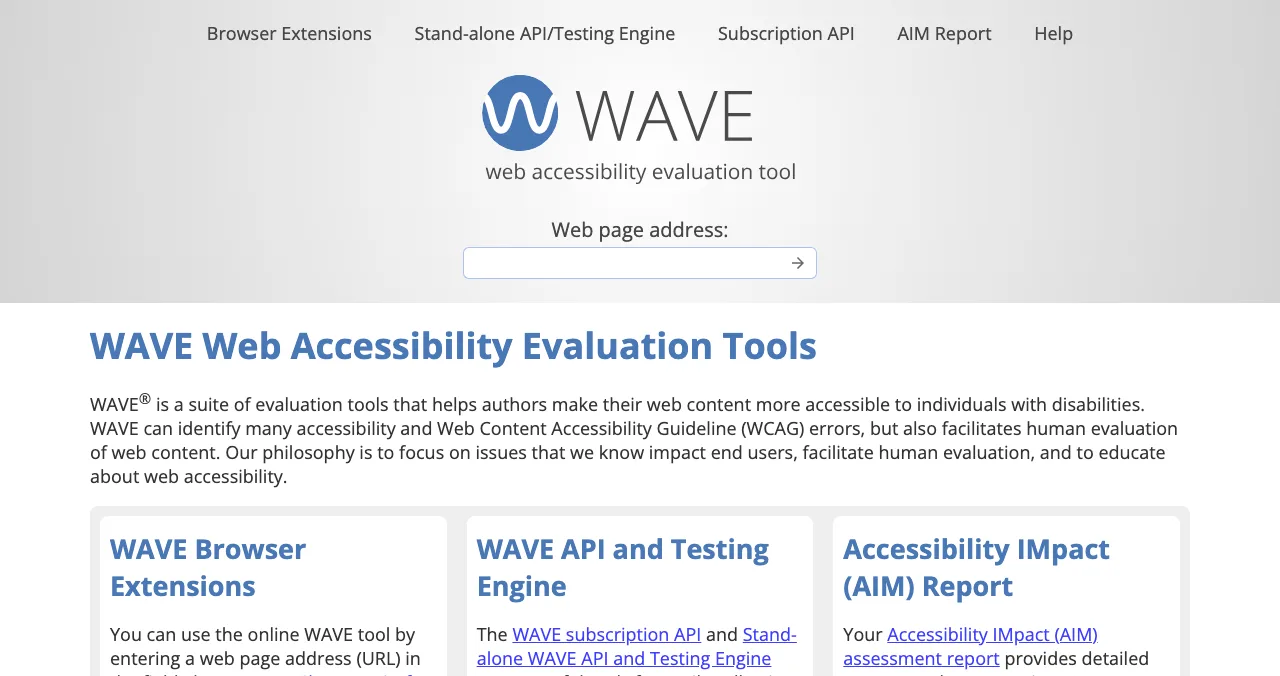
- Free tools cover speed (PageSpeed Insights) and accessibility basics (WAVE).
- Outside eyes catch what founders can't see.
- Free baseline audit when you list on the Science of Apps Launchpad.
Key takeaways
- An audit is useful only if it ends in a priority order.
- Founders are the worst-placed people to audit their own onboarding.
- Discoverability now includes AI answers, not just Google.
- Speed and accessibility are measurable; measure them.
- Audit before spending on acquisition, not after.
Most startups find their problems the expensive way: after paying for traffic that didn't convert, or after an investor's due diligence turned up something the founders hadn't seen. A startup audit finds them first. It's a structured, evidence-based check of how your product and go-to-market actually work for a stranger. This guide covers the eight areas a startup audit should cover, a self-audit checklist you can run this week with free tools, and how to get an outside audit free. Facts were checked on each source's own page on 18 November 2026. Jump to the eight areas, the checklist or a free audit.
- Areas a startup audit covers
- 8
- Product areas in a full outside audit
- 22
- Free tools for speed and accessibility
- 2
- Output that matters: a priority order
- 1
The eight areas of a startup audit
| Area | Question | How to check |
|---|---|---|
| Positioning | Can a stranger say what you do in five seconds? | Five-second test with people outside the team |
| Discoverability | Can people find you on Google and in AI answers? | Search your category; ask ChatGPT, Gemini and Perplexity |
| Landing page | Does it turn a visitor into a sign-up? | Analytics, heatmaps, a page review |
| Sign-up and onboarding | How fast to the first moment of value? | Sign up in a clean browser; count steps and minutes |
| Core flow | Can users do the main job without help? | Watch five new users |
| Pricing and payments | Is the cost clear and checkout trustworthy? | Review the pricing page and checkout |
| Speed and accessibility | Fast on a mid-range phone? Usable for everyone? | PageSpeed Insights; WAVE; WCAG 2.2 |
| Growth | Are users staying, paying and referring? | Retention cohorts, revenue, referral rate |
Table: The eight areas of a startup audit (Science of Apps editorial framework)
The startup self-audit checklist
- One-line value proposition — on the homepage, above the fold, in plain words
- Indexed in Google — search site:yourdomain and your brand name
- Mentioned in AI answers — ask three AI assistants about your category
- Landing page CTA visible on mobile — without scrolling
- Sign-up under two minutes — in a clean browser, on a phone
- First value in one session — the user gets a result before they leave
- Core flow without help — five new users, no hints
- Clear pricing — what's free, what's paid, what happens at the end of a trial
- PageSpeed Insights — check mobile Core Web Vitals
- WAVE accessibility scan — fix errors such as missing alt text and low contrast
- Retention tracked — cohorts, not just totals
- Privacy policy and terms — linked and current
Why an outside audit finds more
Founders know where every button is; new users don't. Your mental model of the product isn't your users'. An outside audit uses the product the way a stranger would, and records each problem with evidence.
A free startup audit on the Science of Apps Launchpad
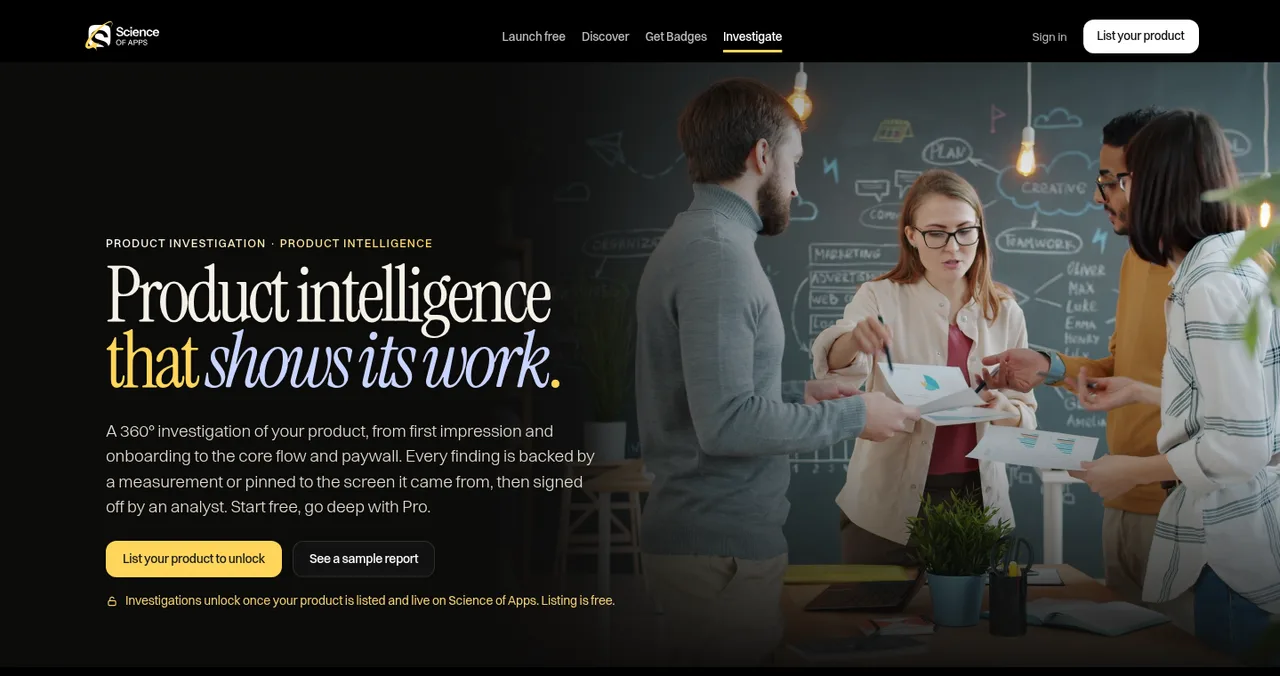
List your product free and a baseline audit of your landing page, discoverability and speed runs as you go live. A full investigation covers 22 areas across the whole journey, re-cut for your category.
Arrive
First impression
Discoverability on Google, AI and social; landing page, pricing, trust and speed.
Join
The first minutes
Sign-up, sign-in, recovery and onboarding.
Use
The everyday job
Home, core flow, dashboards, search, microcopy and error states.
Pay
Value into revenue
Paywall, upgrade, checkout and payments.
Stay
Coming back
Notifications, account, settings and help.
Every screen
Throughout
Accessibility to WCAG 2.2, visual design and consistency.
From audit to action plan
List free, then order the report that fits your stage.

 Economy
See what new customers see
- Store listing and homepage, screen by screen
- Scorecard against 60 Laws of UX
- The fixes worth most
PremiumThe full diagnosis and the plan
- Every screen, every finding, every flow
- All 60 laws with evidence and fixes
- 8 strategy chapters and a 90-day roadmap
Fact-checked against the evidence. Private by default.
A one-week audit plan
- Day 1
List and baseline
List on the Launchpad; read the free baseline audit.
- Day 2
Self-audit
Run the checklist above; record each finding with a screenshot.
- Day 3
Five users
Watch five people sign up and do the core task.
- Day 4
Speed and accessibility
PageSpeed Insights and WAVE; fix the errors.
- Day 5
Prioritise
Rank findings by severity and effort; fix Critical first.
Mistakes

- Auditing after the ad spend — audit first; traffic to a leaky page is wasted
- No evidence — "the onboarding feels long" isn't a finding; "9 fields, 4 minutes" is
- Everything is a priority — rank by severity
- Only auditing desktop — most first visits are on phones
- Ignoring AI answers — buyers ask assistants, not only search engines
Ready for your audit?
How we know
The audit areas are Science of Apps' editorial framework. Tool details come from Google's PageSpeed Insights and Search Central, WebAIM's WAVE and the W3C's WCAG 2.2; the Launchpad's audit and reports come from its investigation and pricing pages, all read on 17–18 November 2026. Science of Apps runs the Launchpad.
Key terms, defined
- Startup audit: an evidence-based check of a startup's product and go-to-market, ending in prioritised fixes.
- Discoverability: how easily people find you on search engines, AI assistants and social.
- First moment of value: the point where a new user first gets a real result.
- Core Web Vitals: Google's metrics for loading, responsiveness and visual stability.
- WCAG 2.2: the W3C's current accessibility guidelines.
Frequently asked questions
What is a startup audit?
A structured check of how well a startup's product and go-to-market work, backed by evidence. It usually covers positioning, discoverability in search and AI answers, the landing page, sign-up and onboarding, the core flow, pricing and payments, speed and accessibility, and growth metrics, ending with prioritised fixes.
What's the difference between a startup audit and due diligence?
Due diligence is an investor verifying all of a startup's claims, including legal and financial records. A startup audit is usually commissioned by the founders to find and fix problems in the product and go-to-market before customers or investors notice them.
How do I audit my startup for free?
Run the self-audit checklist in this guide, test speed with Google's PageSpeed Insights, check accessibility basics with WebAIM's WAVE, watch five new users try the product, and list free on the Science of Apps Launchpad for a baseline audit of your landing page, discoverability and speed.
How often should a startup be audited?
Before any big acquisition push, before fundraising, and after major releases. Many teams re-run a lightweight self-audit each quarter and commission a full outside audit once or twice a year.
What does a startup audit report include?
Findings by area, each with evidence (a measurement or a screenshot), a severity or verdict, the reason it matters, and a recommended fix, followed by a prioritised list or roadmap. The Science of Apps Economy and Premium reports follow this structure.
Sources
- Science of Apps — Product investigation: 22 areas (checked 18 Nov 2026)
- Science of Apps — Pricing: Economy and Premium reports (checked 18 Nov 2026)
- Google — PageSpeed Insights
- WebAIM — WAVE web accessibility evaluation tool
- Google Search Central — SEO starter guide
- W3C — Web Content Accessibility Guidelines (WCAG) 2.2
- Checked November 18, 2026. Figures that change — fees, salaries, prices — are reviewed every six months; if something is out of date, tell us.
Where to go from here
- Free website audit — five checks, free tools
- Startup analysis report — what's inside
- What is a UX audit? — the UX part, in depth
- Science of Apps - LaunchpadSaaS audit checklist: 100 checks across 22 areas of the customer journey, from discoverability and sign-up to the paywall, retention and accessibility, plus a SaaS health check of the numbersA SaaS audit checklist with 100 checks across 22 areas, from discoverability and sign-up to paywall, retention and accessibility, plus a SaaS health check.
- Science of Apps - LaunchpadThe best UX audit tools for startups, free and paid: what each one actually checks (behaviour, speed, accessibility, research) and the gaps no tool fillsThe best UX audit tools for startups, free and paid: Clarity, PageSpeed Insights, WAVE, Hotjar, Maze and an end-to-end product test, with what each checks.
- Science of Apps - LaunchpadWhat a 360-degree product audit is: every stage of the customer journey, measured and checked by experts, with five verdicts and a priority order, and how to get one freeA 360 degree product audit checks every stage of the journey, from first visit to renewal, with measurements, expert checks and verdicts. What it covers.
- Science of Apps - LaunchpadA landing page review checklist for startups: 36 evidence-based checks for clarity, trust, speed, mobile and the call to action, with the research behind eachA landing page review checklist for startups: 36 checks for the first 10 seconds, trust, speed, mobile and the call to action, from NN/g and Google research.
- Science of Apps - LaunchpadA free website UX audit for startups: the five things to check first (findability, clarity, speed, accessibility, the sign-up path) with the free tools that measure eachA free website UX audit for startups: check findability, clarity, speed, accessibility and the sign-up path first, with free Google, WebAIM and Microsoft tools.
- Science of Apps - LaunchpadHow to market a SaaS in 2027: positioning, being found by buyers, content that gets cited, launches and a product that convertsHow to market a SaaS in 2027: sharp positioning, alternatives directories, search and AI visibility, launches, founder-led sales and a trial that converts.
Get the ideas, not the noise.
Sign up with Google and we’ll send you short UX psychology tips by email — why people tap, stall and leave, and what to do about it. Unsubscribe anytime. Prefer something to keep? Get the free Laws of UX guide as a PDF.
Launch day ends. Your listing shouldn't.
List free on the Science of Apps Launchpad and a baseline audit of your landing page, discoverability and speed runs as you go live; full product audits cover 22 areas with evidence.