 By
Quick answer: How do you evaluate a startup?
- Six areas: problem, product, market, traction, team, risk.
- 30 points: five questions per area, each scored 0–5 with evidence.
- Early stage: team and problem weigh most; traction is thin.
- Later stage: retention, revenue and unit economics dominate.
- Product evidence: test the live product, not the pitch.
Key takeaways
- Evaluate with evidence: every score should point to something you can show.
- The product is the most-claimed and least-tested part of most evaluations.
- Retention tells you more about product-market fit than sign-ups.
- Weights change with stage; a seed startup isn't judged like a Series B.
- Founders should run the same evaluation on themselves before investors do.
Every investor, accelerator and acquirer evaluates startups, and most founders only find out how after the "no". The questions are surprisingly consistent: is the problem real, does the product solve it, is the market big enough, are users staying, can this team execute, and what could kill it. This guide turns those questions into a 30-point startup evaluation framework you can run on any startup, including your own. It's our editorial framework, built on the outlines investors publish (Sequoia, Y Combinator and Dave Berkus), which we read on 17–18 November 2026. Jump to the framework, how weights change by stage or how to evaluate the product.
- Areas every evaluation covers
- 6
- Questions, scored 0–5 with evidence
- 30
- Product areas in a full product test
- 22
- Rule: evidence, not opinion
- 1
The 30-point startup evaluation framework
Score each question from 0 (no evidence) to 5 (strong, verifiable evidence). The point is not the total; it's finding the weakest area.
| Area | The five questions | Evidence to ask for |
|---|---|---|
| 1. Problem | Is it real? Urgent? Frequent? Who has it most? Why now? | Interviews, search demand, workarounds people already pay for |
| 2. Product | Does it solve the problem? Can a new user get value fast? Is it usable and accessible? Is it trustworthy? Is it hard to copy? | A live product test, onboarding data, usability findings |
| 3. Market | How big? How reachable? Growing? Who else serves it? What's the wedge? | Bottom-up sizing, channel tests, competitor map |
| 4. Traction | Are users active? Retained? Paying? Referring others? Growing efficiently? | Cohort retention, revenue, referral rate, CAC payback |
| 5. Team | Do they know the problem? Can they build? Can they sell? Have they shipped before? Do they learn fast? | Track record, shipping speed, customer conversations |
| 6. Risk | What kills it: tech, market, regulation, platform, funding? Which is mitigated? | A written risk list with mitigations |
Table: A 30-point startup evaluation framework (Science of Apps editorial framework, built on Sequoia's and YC's published outlines)
What investors publish about evaluating startups
The best-known published outlines line up closely with the framework above.
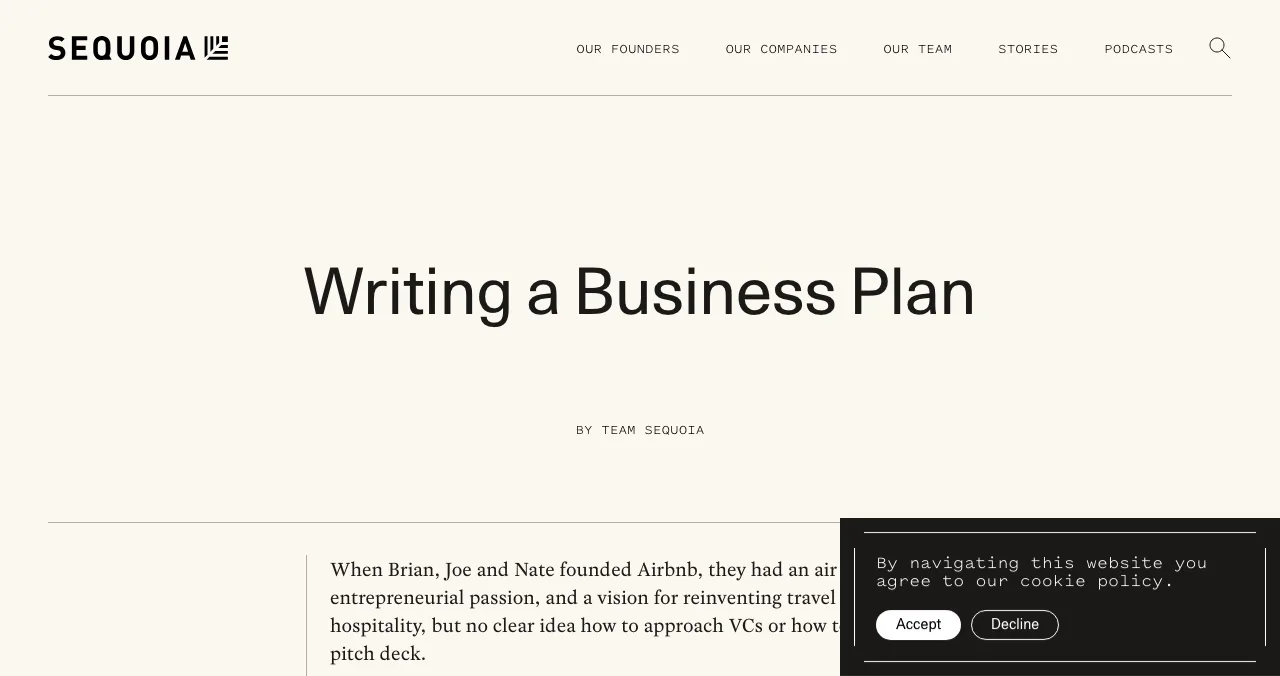
- Sequoia's outline asks for company purpose, problem, solution, why now, market potential, competition, business model, team, financials and vision.
- Y Combinator's seed deck advice (Aaron Harris) stresses clarity and concision: at seed stage there isn't much detail, so the narrative and the founders carry the evaluation.
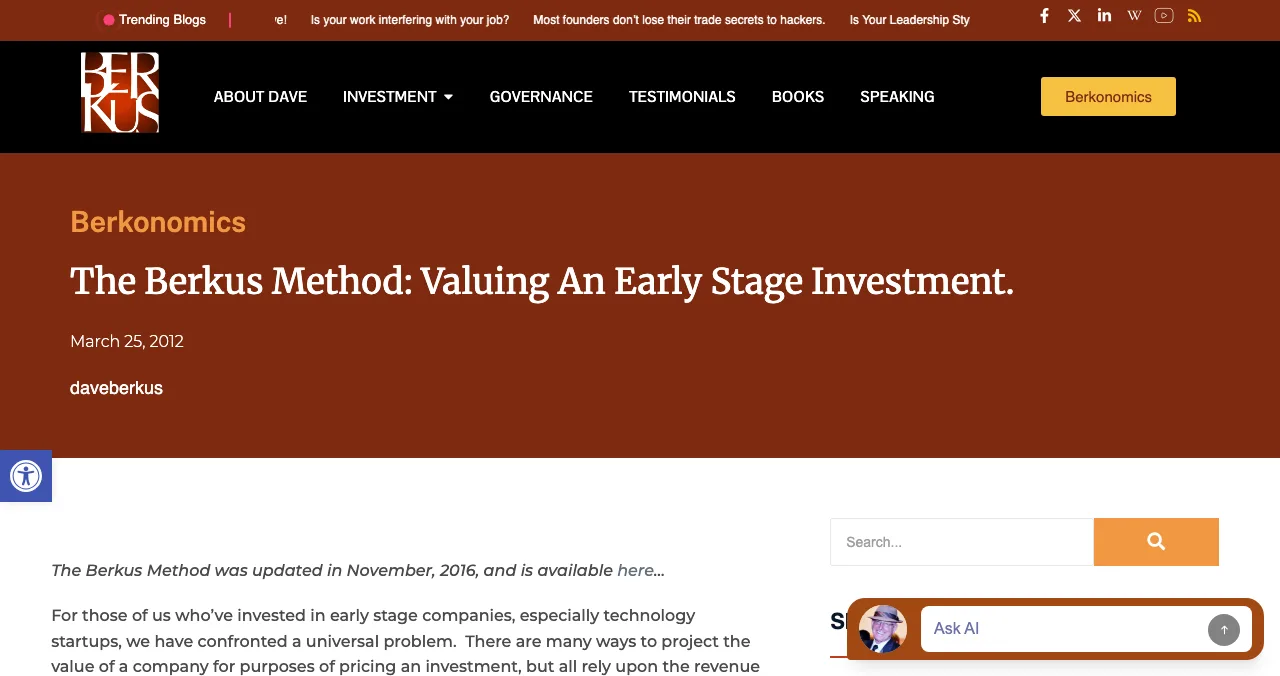
- The Berkus Method, from angel investor Dave Berkus, values a pre-revenue startup by adding up to $500,000 for each of five risk-reducing elements: a sound idea, a prototype, a quality management team, strategic relationships and product rollout or sales.
Notice the pattern: every method rewards evidence that reduces risk. A working prototype is worth more than a plan; a retained user is worth more than a sign-up.
How the weights change by stage
| Stage | Weighs most | Weighs least | Typical evidence |
|---|---|---|---|
| Idea / pre-seed | Team, problem | Traction | Interviews, prototype, founder track record |
| Seed | Problem, product, early traction | Financials | Active users, early retention, first revenue |
| Series A | Traction, market, unit economics | Idea novelty | Cohort retention, revenue growth, CAC payback |
| Growth | Efficiency, market share, risk | Prototype | Margins, net revenue retention, competitive position |
Table: How startup evaluation weights shift by stage (editorial summary)
How to evaluate the product (area 2)
The product is where evaluations are weakest. Decks show screenshots; nobody signs up. Here's how to do it properly:

- Arrive as a stranger — find the product from a search, read the landing page and note what it does in the first five seconds.
- Sign up in a clean browser — on mobile too; count the fields and the friction.
- Reach the first moment of value — how many minutes and steps?
- Do the core task — the job the product is hired for, end to end.
- Hit the paywall — is the upgrade clear and honest?
- Check accessibility and speed — WCAG basics and page load on a mid-range phone.
- Write down every finding with a screenshot — evidence, not impressions.
That's a compressed version of what the Science of Apps Launchpad does when you list a product.

Arrive
First impression
Discoverability on Google, AI assistants and social; landing page, pricing, trust and speed.
Join
The first minutes
Sign-up, sign-in, recovery and onboarding to the first moment of value.
Use
The everyday job
Home, core task flow, dashboards, search, microcopy and empty, loading and error states.
Pay
Value into revenue
Paywall, upgrade, checkout and payments.
Stay
Coming back
Notifications, account, settings and help.
Every screen
Throughout
Accessibility to WCAG 2.2, and visual design and consistency.
Your product, evaluated
List free. Once you're live, get the free baseline check, then the report that fits your stage.

 Economy
See what new customers see
- Store listing and homepage, screen by screen
- Scorecard against 60 Laws of UX
- Customers, competitors and the fixes worth most
PremiumThe full diagnosis and the plan
- Every screen, every finding, every flow
- All 60 laws with evidence and fixes
- 8 strategy chapters and a 90-day roadmap
Researched from your live product and fact-checked against the evidence.
A worked example: scoring a seed-stage SaaS
An illustration, not a real company: a seed-stage scheduling SaaS for clinics.
| Area | Score (0–25) | Why |
|---|---|---|
| Problem | 20 | Interviews show clinics lose hours to no-shows; they pay for workarounds |
| Product | 11 | Works, but sign-up takes 9 fields and the first booking needs a 20-minute setup |
| Market | 15 | Reachable through clinic associations; sizing done top-down only |
| Traction | 9 | 40 clinics active; month-3 retention unknown |
| Team | 19 | Founder ran a clinic; technical co-founder shipped before |
| Risk | 12 | Depends on one calendar integration; no mitigation written |

Table: Illustrative startup evaluation of a hypothetical seed-stage SaaS
The verdict writes itself: fix onboarding (product) and measure retention (traction) before raising.
Mistakes when evaluating a startup

- Scoring the pitch instead of the product — sign up and use it
- Counting sign-ups as traction — retention and revenue are the evidence
- Top-down market sizing only — "1% of a huge market" isn't a plan
- Ignoring risk — write down what could kill it and what's being done
- Using the same weights at every stage — a pre-seed team isn't judged on revenue
- Founders skipping self-evaluation — investors will find the weak area anyway
Evaluators also fall for the aesthetic-usability effect: a polished deck or product makes everything else look better than it is. Score each area separately, with evidence.
Ready to get evaluated?
How we built this framework
The six areas and their questions are Science of Apps' editorial framework, cross-checked against Sequoia's business plan outline, Y Combinator's seed deck guidance and the Berkus Method as published by Dave Berkus and the Angel Capital Association, all read on 17–18 November 2026. The worked example is illustrative, not a real company. Search volumes are Google Keyword Planner's global 12-month averages.
Key terms, defined
- Startup evaluation: a structured judgement of a startup's problem, product, market, traction, team and risk.
- Traction: evidence that users want the product: activity, retention, revenue and referrals.
- Retention: the share of users who keep using the product over time.
- CAC payback: months of gross profit needed to recover the cost of acquiring a customer.
- Berkus Method: a pre-revenue valuation method that assigns up to $500,000 to each of five risk-reducing elements.
- Product test: using the live product as a new user would and recording findings with evidence.
Frequently asked questions
How do you evaluate a startup?
Score six areas with evidence: the problem, the product, the market, traction, the team and risk. Ask five questions in each, score 0–5, and weight them by stage: team and problem matter most at pre-seed; retention, revenue and unit economics dominate from Series A.
What criteria do investors use to evaluate startups?
Most use a version of the same outline: the problem and why now, the solution, market size, competition, business model, traction, team and financials. Sequoia's published pitch outline covers almost exactly these. Investors add their own judgement of the founders and of risk.
How do you evaluate a startup for investment?
Start with the team and the problem, check the product yourself, verify traction from data rather than the deck, size the market bottom-up, list the risks, then decide what valuation the evidence supports. Pre-revenue methods such as Berkus and Scorecard turn qualitative evidence into a number.
How do you evaluate a startup's product?
Use it as a new user would: find it from search, read the landing page, sign up, reach the first moment of value, try the core task, hit the paywall. Note every point of friction with a screenshot. The Science of Apps Launchpad runs this kind of test across 22 areas once a product is listed.
What is a startup evaluation framework?
A structured list of questions and weights used to judge a startup consistently. Good frameworks cover problem, product, market, traction, team and risk, ask for evidence on each, and adjust weights by stage, so two evaluators would reach similar scores.
How do I evaluate my own startup?
Run the 30 questions honestly, ask someone who doesn't love the idea to score it too, and get outside evidence on the product: user interviews, analytics and an independent product test. The weakest area is your next priority.
Sources
- Sequoia Capital — Writing a business plan (checked 17 Nov 2026)
- Y Combinator — How to build your seed round pitch deck (checked 17 Nov 2026)
- Dave Berkus — The Berkus Method: valuing an early stage investment (checked 18 Nov 2026)
- Angel Capital Association — After 20 years: updating the Berkus Method of valuation (2024)
- Science of Apps — Product investigation: 22 areas (checked 18 Nov 2026)
- Science of Apps — Launchpad (checked 18 Nov 2026)
- Checked November 18, 2026. Figures that change — fees, salaries, prices — are reviewed every six months; if something is out of date, tell us.
Where to go from here
- Startup due diligence checklist — the investor's version
- Startup valuation — turning evaluation into a number
- Product-market fit — how to measure it
- Science of Apps - LaunchpadStartup rating explained: how CB Insights, Crunchbase and investors score startups, what the scores mean and miss, and how to get your own product rated free with evidenceHow startups get rated: CB Insights' Mosaic, Crunchbase's Growth and Heat scores, investor scorecards, and how to get your own product rated free with evidence.
- Science of Apps - LaunchpadStartup due diligence checklist: the 60 questions investors ask about team, market, product, traction, financials and legal, the documents to prepare, and how to answer the product half with evidenceA startup due diligence checklist: 60 questions investors ask on team, market, product, traction, financials and legal, plus the data room and a product report.
- Science of Apps - LaunchpadHow to start a tech company without being technical: four ways to build the product without coding, what the non-technical founder must own, and how to launch and get the product testedHow to start a tech company without coding: no-code tools, AI app builders, a technical co-founder or hired developers, and the jobs only you can do.
- Science of Apps - LaunchpadHow does Product Hunt work? Featuring, the daily leaderboard, upvote weighting and Product of the Day, from Product Hunt's own rulesHow Product Hunt works: launches go live at 12:01 AM PT, editors pick what's featured, and the leaderboard weighs upvotes, comments, time and more.
- Science of Apps - LaunchpadHow to use launch traction in a startup pitch: which launch signals investors can verify, where they belong in the deck, and how to present them honestlyHow to use a launch profile and launch traction in your pitch: signals investors can verify, where they go in the deck and what not to overclaim.
- Science of Apps - LaunchpadStartup ideas from Reddit: where people share them, 20 real threads from the past year (with subreddit and date) describing problems people want solved, and how to turn each into a testable listingStartup ideas from Reddit: where people share them, 20 real threads from the past year by subreddit and date, and how to turn a pain point into a test.






Get the ideas, not the noise.
Sign up with Google and we’ll send you short UX psychology tips by email — why people tap, stall and leave, and what to do about it. Unsubscribe anytime. Prefer something to keep? Get the free Laws of UX guide as a PDF.
Launch day ends. Your listing shouldn't.
The product half of any startup evaluation is the hardest to judge from a deck. List free on the Science of Apps Launchpad and get your live product tested across 22 areas, with evidence for every finding.