 By
Quick answer: How do I market a SaaS product?
- Positioning: one buyer, one problem, one sentence.
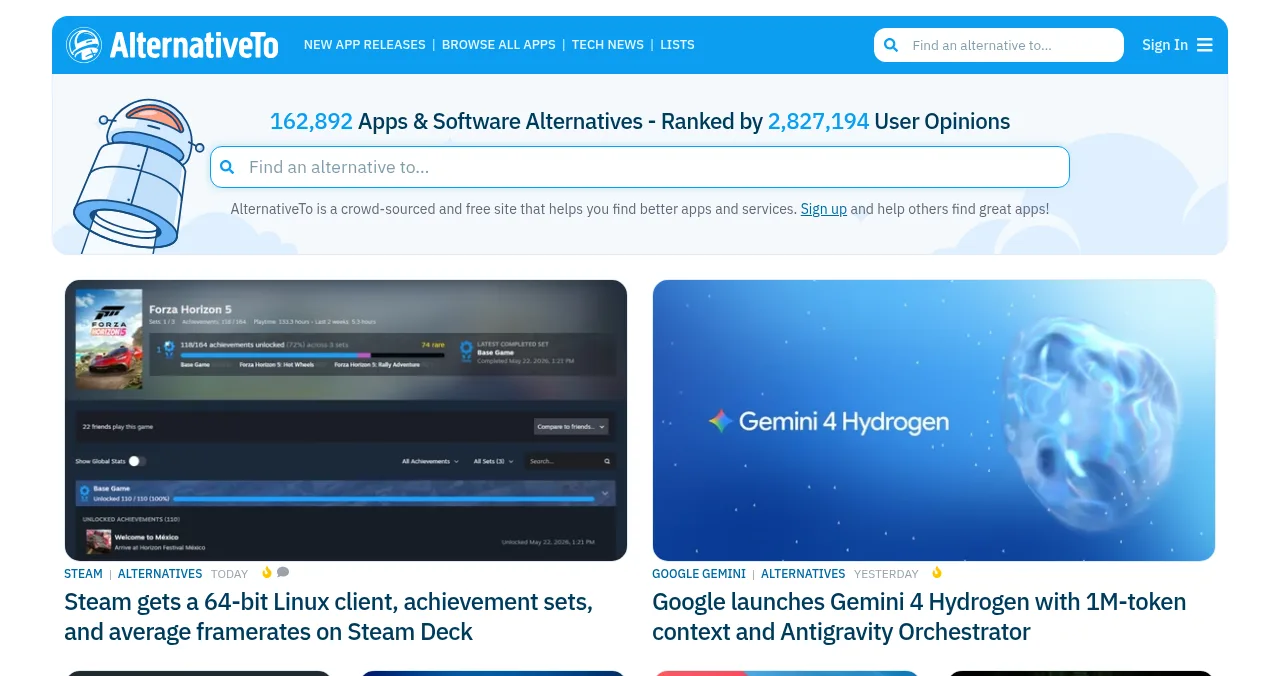
- Be where buyers compare: SaaSHub, AlternativeTo, a free Launchpad profile, Crunchbase.
- Search and AI visibility: answer pages, honest comparisons, crawlable by Google and AI search bots.
- Launch moments: Product Hunt, Peerlist, Uneed; Show HN and DevHunt for developer SaaS.
- Founder-led sales: design partners and one-to-one outreach early.
- A trial that converts: fast first result, visible pricing, clear terms.
Key takeaways
- Marketing can't fix vague positioning; start with one buyer and one problem.
- B2B buyers research alone: alternatives directories, comparison pages and AI answers shape the shortlist before they talk to you.
- Content that answers specific buyer questions, with numbers and sources, gets found by Google and cited by AI.
- Launches create moments; listings and content create a steady flow.
- The product is part of marketing: the trial and paywall decide whether interest becomes revenue.
SaaS marketing advice tends to start with channels: SEO, ads, LinkedIn, webinars. But in 2027, B2B buyers build their shortlist alone, through comparison sites, search results and AI answers, before they ever talk to you. So the playbook starts earlier: who you're for, where buyers compare, what they read, and what happens when they try you. Platform rules here were checked on their own pages on 16–17 November 2026. Jump to positioning, being found, content or the trial.
- Buyer and problem to position for
- 1
- Parts of the 2027 SaaS marketing playbook
- 6
- Extra files Google needs for AI Overviews
- 0
- Metric that ties it together: trials that reach a real result
- 1
1. Positioning: one buyer, one problem
| Vague | Sharp |
|---|---|
| "All-in-one workspace for teams" | "Client approvals for design agencies" |
| "AI-powered analytics" | "Weekly churn alerts for subscription apps" |
| "The future of HR" | "Interview scheduling for recruiting teams of 5–50" |
Table: Vague vs sharp SaaS positioning
Sharp positioning makes every later step easier: directories know your category, AI answers know when to mention you, and visitors know in seconds whether you're for them.
2. Be found where buyers compare
| Where | Why | Cost |
|---|---|---|
| SaaSHub | Buyers compare alternatives; reviewed | Free |
| AlternativeTo | "Alternatives to X" searches | Free |
| Science of Apps Launchpad | Found by problem on Google and AI answers | Free, forever |
| Crunchbase | Partners, investors, press | Free profile |
| Integration marketplaces | Buyers of tools you connect to | Varies by marketplace |
Table: Where SaaS buyers compare tools (each site's own pages, checked 16–17 Nov 2026)
3. Content that gets found and cited

- List the questions buyers ask before buying — pricing, "how it works", "X vs Y", "best tool for [job]", integrations, security.
- One page per question, answer first — the answer in the first two sentences.
- Add specifics — numbers, screenshots, named integrations and sources. The GEO study found statistics, quotations and citations made content more visible in AI answers.
- Publish honest comparisons — fair "you vs competitor" pages get cited by people and AI answers.
- Keep it crawlable — Google says there are no extra requirements for its AI features; allow OAI-SearchBot, Claude-SearchBot and PerplexityBot for AI search.
More in organic visibility for startups.
4. Launch moments
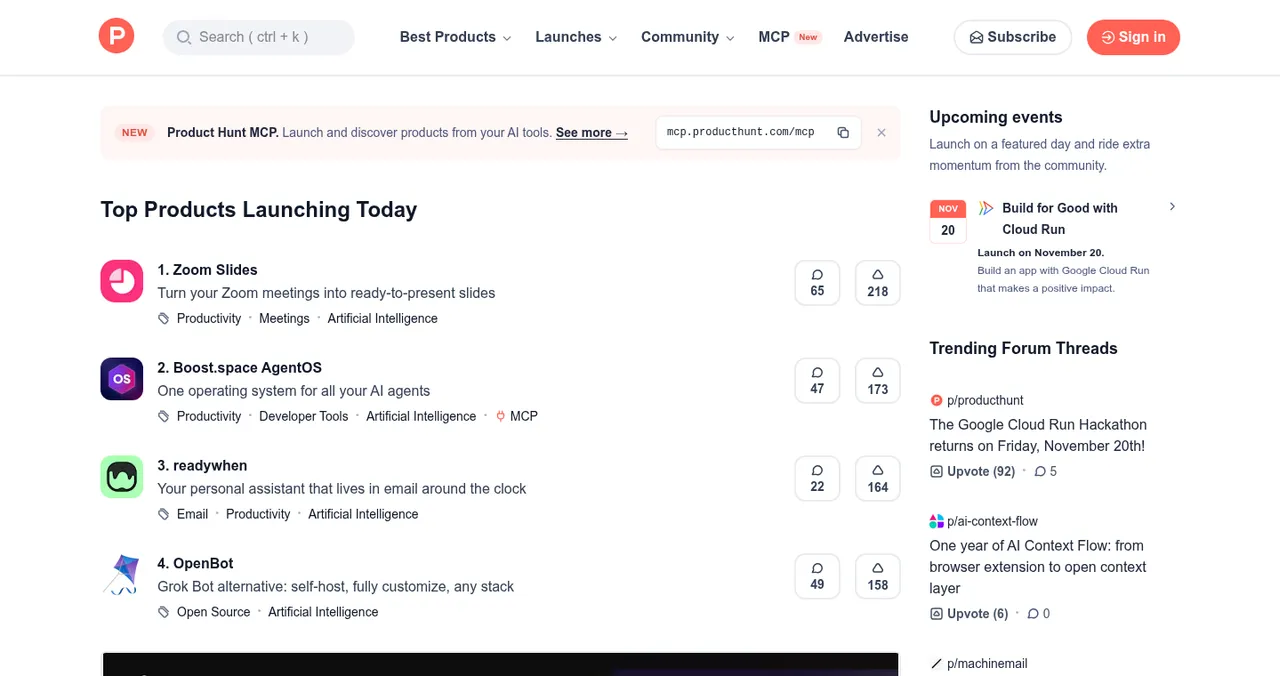
Launches create attention, feedback and a permanent product page: Product Hunt for self-serve SaaS, Peerlist and Uneed for a calmer launch, Show HN and DevHunt for developer SaaS. Relaunch every major update. See where to launch a SaaS.
5. Founder-led sales
Early SaaS marketing and sales are the same job: talk to buyers. Recruit design partners, message a narrow list one to one, and use every conversation to sharpen positioning. See your first SaaS customers.
6. A trial that converts
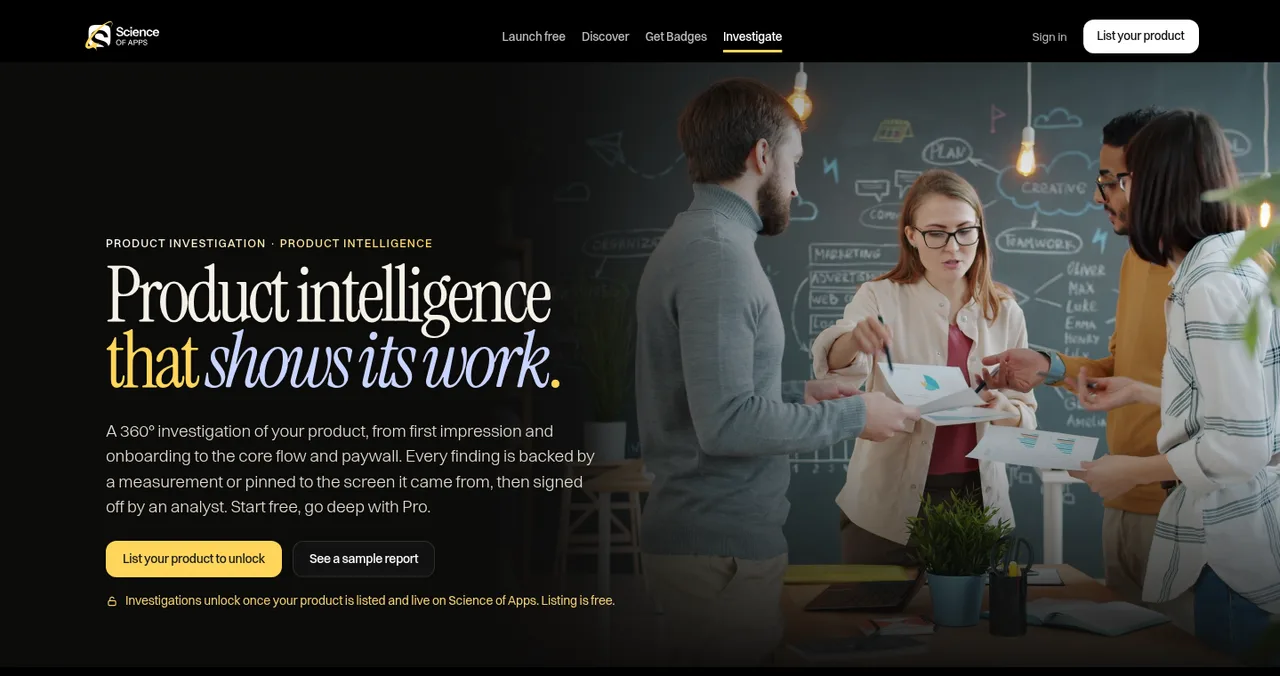
Marketing brings people to the trial; the trial decides revenue. Fast sign-up, a guided first result, visible pricing with few plans (Hick's Law) and a checkout that works on mobile. Once your free Launchpad listing is live, the whole journey is tested end to end, landing page to paywall, with a detailed report ranking what to fix first.
Arrive
First impression
Findability, landing page, pricing, trust signals, speed.
Join
The first few minutes
Sign-up, sign-in, onboarding to the first result.
Use
The everyday job
The core workflow, navigation, empty and error states.
Pay
Where value turns into revenue
Paywall, upgrade, checkout.
Stay
What brings people back
Notifications, settings, help.
Every screen
Judged throughout
WCAG 2.2 accessibility, visual consistency.
A 90-day SaaS marketing plan
- Weeks 1–2
Position and list
Sharpen the one-liner; list on SaaSHub, AlternativeTo, Crunchbase and a permanent Launchpad profile.
- Weeks 3–4
Fix the trial
Act on the product report; make the first result fast.
- Month 2
Content and launch
Five answer pages and one honest comparison; a Peerlist launch, then Product Hunt.
- Month 3
Sales and measurement
Founder-led outreach to a narrow list; measure activation and paid conversion by source.
SaaS marketing mistakes

- Marketing for everyone — vague positioning makes every channel weaker
- Hiding pricing — buyers drop you from the shortlist
- Generic content — rewrite what everyone says and nobody cites you
- Blocking AI search crawlers — you vanish from AI shortlists
- Ignoring the trial — marketing can't fix a product that doesn't activate
Customer logos and reviews near sign-up reassure buyers (social proof).
Ready to market your SaaS?
How we know
Directory and launch rules come from each site's own pages (16–17 November 2026); search and AI visibility from Google Search Central and OpenAI's crawler documentation; content findings from Aggarwal et al.'s GEO paper (KDD 2024). The six-part playbook and 90-day plan are our editorial framework. Science of Apps runs the Launchpad and product investigation mentioned.
Key terms, defined
- Positioning: who your product is for, what problem it solves and how it's different.
- Alternatives directory: a site where buyers compare software by the tools it replaces.
- Founder-led sales: founders selling directly before a sales team exists.
- Activation: a trial user reaching the first real result.
- GEO: generative engine optimization, getting cited in AI answers.
Frequently asked questions
How do I market a SaaS product?
Position it for one buyer and problem, list it where buyers compare tools, publish pages that answer buyer questions and can be cited by Google and AI assistants, create launch moments on Product Hunt or Peerlist, sell personally to early customers, and make sure the trial reaches a real result fast.
What are the best marketing channels for SaaS?
Early on: founder-led outreach, alternatives directories (SaaSHub, AlternativeTo), launch sites, communities where buyers talk and search content. Later: content at scale, partnerships, integrations marketplaces and paid channels once you know which messages convert.
How do I market a SaaS with no budget?
Use time instead of money: list free on alternatives directories and a permanent Launchpad profile, launch on free launch sites, publish answer pages and honest comparisons, help in communities, and sell directly to a narrow set of buyers.
Does content marketing still work for SaaS in 2027?
Yes, if it's specific. Pages that answer one buyer question with real numbers, examples and sources get found in search and cited in AI answers. Generic posts that repeat what everyone says rarely do.
How important is the free trial in SaaS marketing?
Very. Marketing brings people to the trial; the trial decides whether they buy. If new users don't reach a real result quickly, conversion suffers whatever your marketing does.
Should a SaaS launch on Product Hunt?
Usually, if it's self-serve and polished, and you can be present all day. It creates a moment and a permanent product page. For developer SaaS, Show HN and DevHunt often fit better.
Sources
- SaaSHub — Submit a product: guidelines (checked 17 Nov 2026)
- Product Hunt Help Center — What kind of products get featured (checked 17 Nov 2026)
- Google Search Central — AI features and your website (checked 17 Nov 2026)
- OpenAI — Overview of OpenAI crawlers (checked 17 Nov 2026)
- Aggarwal et al. — GEO: Generative Engine Optimization (arXiv 2311.09735, KDD 2024)
- Science of Apps — Launchpad: launch your product free
- Checked November 17, 2026. Figures that change — fees, salaries, prices — are reviewed every six months; if something is out of date, tell us.
Where to go from here
- How to launch a SaaS — beta to first customers
- How to get your first SaaS customers — founder-led sales
- App marketing strategy — the wider marketing plan
- Science of Apps - LaunchpadHow to market an AI tool in 2027: positioning by task, AI directories, AI search, demos and the trust that makes people payHow to market an AI tool in 2027: position by task, list in AI directories, get cited by AI search, show real outputs and earn trust that converts.
- Science of Apps - LaunchpadHow to get your first SaaS customers: from design partners to paid plans, without a sales teamHow to get your first paying SaaS customers in 2027: design partners, founder-led sales, communities, launch sites, directories and a trial that works.
- Science of Apps - LaunchpadHow to launch an AI product: prove the outputs, describe the task not the model, pick free and paid launch sites, and make sure AI search can find youHow to launch an AI product in 2027: show real outputs, describe the task, launch on Product Hunt and AI directories, and get found by AI search engines.
- Science of Apps - LaunchpadHow to promote your startup for free in 2027: 30 tactics across launches, listings, content, communities and partners30 free ways to promote a startup in 2027: launch sites, listings, search and AI visibility, content, communities, partners and your own users.
- Science of Apps - LaunchpadHow to market a startup with no money: the free channels that work, in the order to use them, and what each costs in time insteadHow to market a startup with no money: direct outreach, communities, free launch sites, directories, content and AI search, in order, with the time each costs.
- Science of Apps - LaunchpadGenerative engine optimization for startups: what the research shows, and a plan to get cited by AI answersGEO for startups in 2027: what the original GEO research found, how to get cited by ChatGPT, Perplexity, Claude and Google AI, and a 30-day plan.
Get the ideas, not the noise.
Sign up with Google and we’ll send you short UX psychology tips by email — why people tap, stall and leave, and what to do about it. Unsubscribe anytime. Prefer something to keep? Get the free Laws of UX guide as a PDF.
Launch day ends. Your listing shouldn't.
A permanent, free profile buyers find by the problem your SaaS solves, plus your product tested end to end, from landing page and trial to paywall and checkout, with a detailed report.