 By
Quick answer: Do nofollow links help SEO?
- Dofollow: a normal link with no nofollow, ugc or sponsored value.
- nofollow: use when other values don't apply (Google).
- ugc: user-generated content such as comments and forum posts.
- sponsored: ads and paid placements.
- Do nofollow links help? Yes, indirectly: visitors, discovery and a natural link profile.
Key takeaways
- Dofollow isn't an attribute; it just means no qualifying rel value.
- Google defines sponsored, ugc and nofollow, and you can combine them.
- Nofollow became a hint for crawling and indexing on 1 March 2020.
- Buying dofollow links for ranking is link spam under Google's policies.
- Most launch sites and directories use nofollow or ugc, and they're still worth it.
A founder submits to a directory, inspects the listing, sees rel="nofollow" and wonders if the whole thing was a waste. It wasn't. "Dofollow vs nofollow" is one of the most misunderstood ideas in startup SEO, mostly because the lists passed around founder groups treat a followed link as the only thing that matters. This guide explains the three rel values in Google's own words, answers whether nofollow links help SEO, shows how to check any listing in thirty seconds, and lists what real launch sites used when we inspected them. Google's pages were read on 18 November 2026. Jump to the rel values, do nofollow links help? or how to check.
- Rel values Google defines: sponsored, ugc, nofollow
- 3
- Nofollow became a hint for crawling and indexing (1 March)
- 2020
- Bought links that are safe for ranking
- 0
- To check any link's rel attribute
- 30 sec
What do ugc, sponsored and nofollow (rel) mean?
There is no "dofollow" attribute. A link is followed when it has none of the qualifying values. Google's page on qualifying outbound links defines the three that matter:
| rel value | Google's definition | Typical use | Passes ranking credit? |
|---|---|---|---|
| (none) | A regular link "that you expect Google to fetch and parse without any qualifications" | Editorial links, your own profile links | Can count as a vote |
| sponsored | Links "that are advertisements or paid placements" | Ads, sponsorships, paid listings | No (qualified) |
| ugc | "User-generated content (UGC) links, such as comments and forum posts" | Comments, forums, user-submitted listings | No (qualified) |
| nofollow | Use "when other values don't apply" | A link you don't want to vouch for | No (qualified) |
Table: Link rel values for Google (Google Search Central, "Qualify your outbound links to Google", checked 18 Nov 2026)
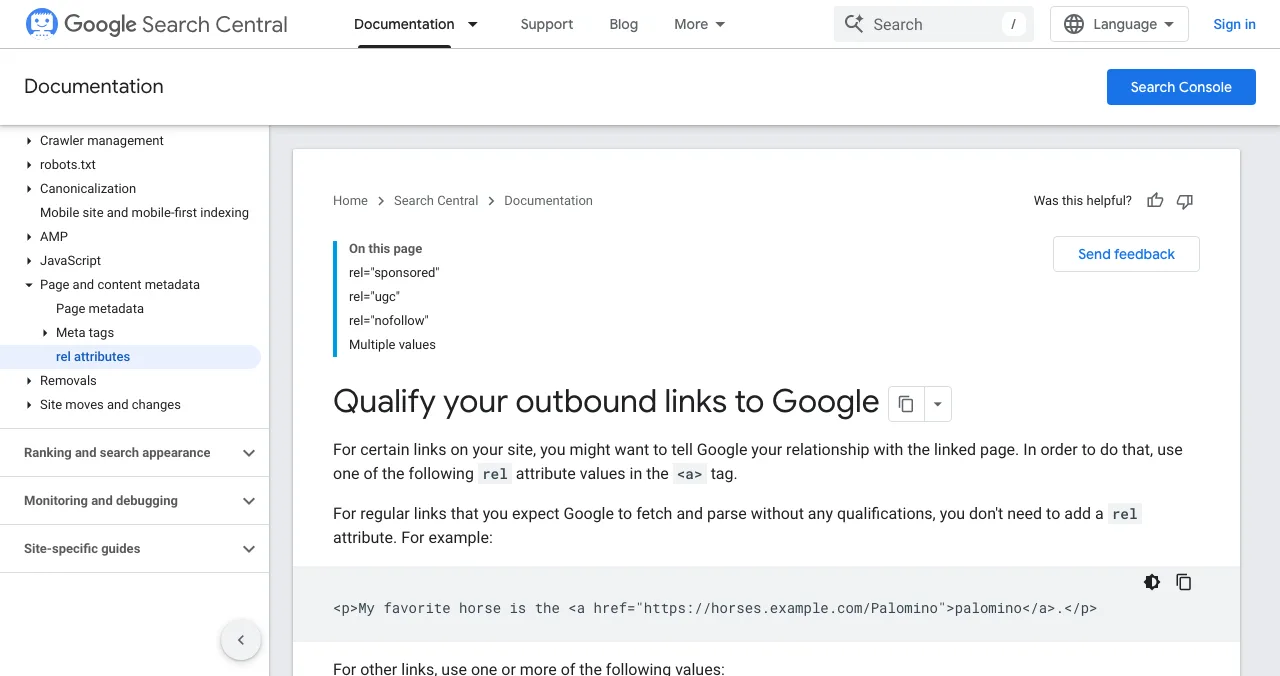
Three details from Google's page are worth knowing:
- You can combine values. "You may specify multiple rel values as a space- or comma-separated list", such as rel="ugc nofollow".
- Qualified links may still be crawled. Google says such links will generally not be followed, but the linked page may still be crawled if Google finds it another way.
- Trusted contributors can earn followed links. Google suggests a site might drop the attribute for members who have consistently made high-quality contributions over time.
What changed in 2019 and 2020?
Until 2019 nofollow was effectively a directive. In September 2019 Google introduced sponsored and ugc and announced that nofollow would become a hint; for crawling and indexing, it became a hint on 1 March 2020. Google said at the time there was "absolutely no need to change any nofollow links that you already have." For founders, the practical meaning is simple: a nofollow link is no longer a dead end, but you can't count on it passing value either.
Do nofollow links help SEO?
Yes, indirectly, and often more than founders expect. Here's what a nofollow or ugc link on a well-used directory still does:

Visitors
A listing people browse sends real clicks, and real users are the point.
Discovery
Google's SEO starter guide says most new pages it finds are found through links; mentions help people and crawlers find you.
Second-order links
A journalist or blogger who finds you on a directory may write about you with an editorial, followed link.
A natural profile
A link profile made only of followed links looks engineered; a mix is what real sites have.
Consistent facts
The same name, description and URL across listings helps search and AI engines recognise your company.
What a nofollow link doesn't do is guarantee ranking credit. That's fine. The startups that rank are the ones with something worth linking to, not the ones with the most directory links. See backlinks for startups for how to earn the editorial kind.
Dofollow vs nofollow on real launch sites
We inspected listing pages on well-known launch sites. A single page shows how one listing was coded on one day, so treat this as a dated sample.
| Platform | Website link rel | When / where from |
|---|---|---|
| Product Hunt | noreferrer noopener ugc | Notion product page, inspected 17 Nov 2026 |
| SaaSHub | nofollow | Notion page, inspected 17 and 18 Nov 2026 |
| AlternativeTo | nofollow noopener; FAQ: nofollow unless editors decide otherwise | Inspected 17 Nov 2026; FAQ read 18 Nov 2026 |
| BetaList | Internal redirect; several links nofollow | A startup page, inspected 17 Nov 2026 |
| DevHunt | Free listings nofollow; paid launches dofollow (FAQ) | FAQ read 18 Nov 2026 |
| Uneed | Free launches keep a dofollow link at 20 upvotes (launch guide) | Read 18 Nov 2026 |
| Science of Apps Launchpad | noopener (followed) | Two public profiles, inspected 18 Nov 2026 |
Table: Website link rel attributes on launch sites (listing pages inspected 17–18 Nov 2026; policies from each platform's pages)
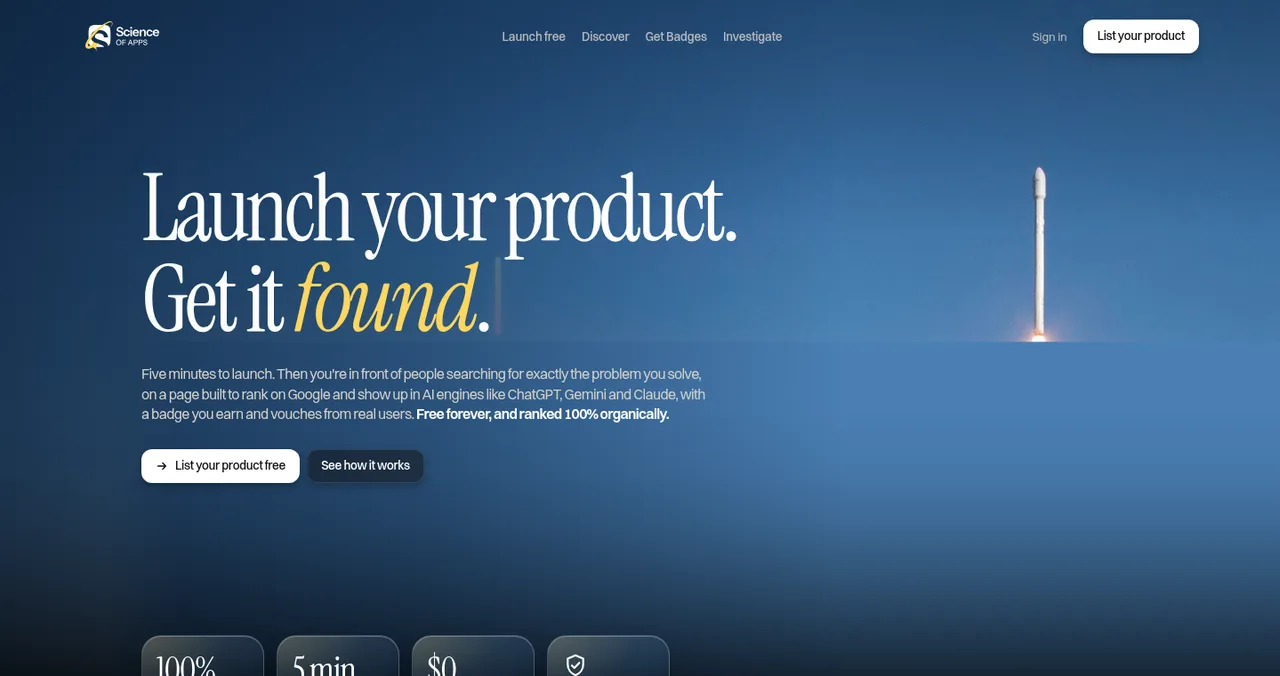
The full method and more platforms are in dofollow launch platforms: we checked the rel attributes.
Is buying dofollow links ever OK?
Google's spam policies list "buying or selling links for ranking purposes" as link spam, along with excessive link exchanges, automated link building, low-quality directory or bookmark links, and paid guest posts or press releases with links that pass ranking credit. Paying for an ad or a sponsorship is allowed when the link is qualified with sponsored or nofollow. Sites that violate the policies "may rank lower in results or not appear in results at all."
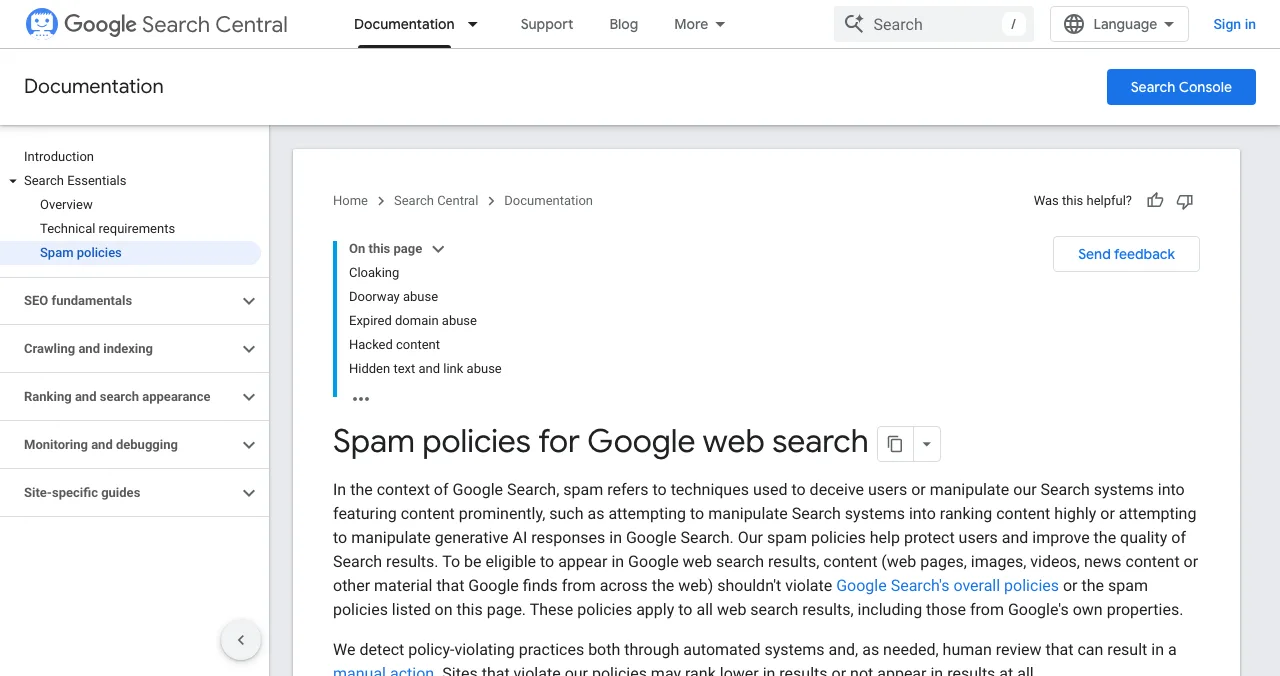
So when a launch site sells a "dofollow link" package, decide on the visibility it buys (a newsletter slot, a featured position, a chosen launch date), not on the link.
How to check if a link is dofollow or nofollow

- Open the listing — in a normal browser window, logged out.
- Right-click the website link — choose Inspect.
- Read the anchor tag — look for rel="nofollow", "ugc" or "sponsored".
- Check the href — an internal /go, /visit or /r/ address means a redirect through the platform.
- Recheck later — upgrades, votes and age can change the link; Uneed and DevHunt both tie followed links to conditions.
Search Console's Links report won't help here: Google's help page says the report "doesn't specify if a link is marked as nofollow."
Which kind of link should a founder want?
| Link | Value for a startup | Where it comes from |
|---|---|---|
| Editorial, followed | Highest: a real endorsement plus visitors | Articles, reviews, partners who chose to link |
| Directory, followed | Modest bonus, if the directory is real | Some launch sites and directories, sometimes conditional |
| Directory, nofollow or ugc | Visitors, discovery, consistent facts | Most launch sites and directories |
| Paid, sponsored | Visibility only; fine if qualified | Ads, sponsorships |
| Paid, unqualified | Risk: link spam | Link sellers, "DR 70 dofollow" packages |
Table: Which links are worth wanting (Science of Apps editorial view, based on Google's link-spam policy)
Which rel values should your own startup use?
The same rules apply to links you publish. A startup site usually has four kinds of outbound link, and Google's outbound-links page covers each:
| Link on your site | rel to use | Why |
|---|---|---|
| Affiliate links, paid partner placements, sponsored posts | sponsored (nofollow also acceptable) | Google asks for paid links to be qualified; its spam policies call unqualified paid links link spam |
| Comments, forum posts, user profiles, community-submitted listings | ugc | User-generated content; you can drop it for trusted, long-standing contributors |
| A link you need to include but don't want to vouch for | nofollow | "When other values don't apply" |
| Docs, integrations, sources you cite, partners you genuinely recommend | none | Ordinary editorial links; don't nofollow your own recommendations |
Table: Which rel values a startup should use on its own outbound links (based on Google Search Central's outbound-links guide and spam policies, checked 18 Nov 2026)
Two habits to avoid. Don't add nofollow to every external link to "keep link juice": it tells Google you don't stand behind sources you chose, and that isn't what the attributes are for. And don't nofollow links between your own pages; Google needs those to crawl your site.
If you run a community, a marketplace or a directory of your own, decide your rel policy before launch and write it down. AlternativeTo, DevHunt and Uneed all publish theirs, which is why founders can plan around their rules.
Your product, tested end to end
A link only matters if the page it lands on works. When your Launchpad listing goes live, a free baseline diagnosis checks your landing page, discoverability and speed. A full investigation tests your product in a real browser on desktop and mobile, with every finding backed by evidence and approved by an analyst, private to your team.
- Areas of your product tested
- 22
- Automatic measurements, desktop and mobile
- 39
- Expert checks behind your login
- 74
- Verdicts, from Good to Critical
- 5
Make the click worth it
List free, then order the report that fits: what new customers see first, or the full diagnosis and a plan.

 Economy
See what new customers see
- Store listing and homepage, screen by screen
- Scorecard against 60 Laws of UX
- Customers, competitors and the fixes worth most
PremiumThe full diagnosis and the plan
- Every screen, every finding, every flow
- All 60 laws with evidence and fixes
- 8 strategy chapters and a 90-day roadmap
Researched from your live product and fact-checked against the evidence.
Mistakes founders make with nofollow links

- Skipping good directories because they're nofollow — the visitors are the value
- Paying mainly for a "dofollow" badge — buying links for ranking is link spam
- Trusting undated dofollow lists — inspect the link yourself; policies change
- Asking partners for followed links in a contract — Google lists requiring links in terms of service as link spam
- Nofollowing your own internal links — let Google crawl your own site normally
Ready for a listing that links to you?
How we know
Definitions come from Google Search Central's page on qualifying outbound links and its 2019 announcement on nofollow, and the rules on paid links from Google's spam policies, all read on 18 November 2026. Rel attributes were read from live listing pages on 17 and 18 November 2026; DevHunt's, AlternativeTo's and Uneed's policies come from their own pages. Science of Apps runs the Launchpad.
Key terms, defined
- Dofollow (followed) link: a link with no nofollow, ugc or sponsored value.
- Nofollow link: a link with rel="nofollow", used when no other value applies.
- UGC link: a link in user-generated content, marked rel="ugc".
- Sponsored link: an ad or paid placement, marked rel="sponsored".
- Hint: a signal Google may consider rather than a rule it must obey.
- Link spam: links created mainly to manipulate rankings, as defined in Google's spam policies.
Frequently asked questions
Do nofollow links help SEO?
Indirectly, yes. Google says it generally doesn't follow nofollow links, but they still send visitors, help people find and mention you, and can lead to editorial links later. Since March 2020 Google treats nofollow as a hint for crawling and indexing. A relevant nofollow listing on a site your buyers use is worth more than an irrelevant dofollow link.
What is the difference between dofollow and nofollow links?
A dofollow link is a regular link with no qualifying rel value, which Google can fetch, parse and count as a vote. A nofollow link carries rel="nofollow", asking Google not to associate the linking site with the page or pass ranking credit. 'Dofollow' isn't a real attribute; it's simply the absence of nofollow, ugc and sponsored.
What do ugc and sponsored mean?
Google asks sites to mark user-generated content links, such as comments and forum posts, with rel="ugc", and advertisements or paid placements with rel="sponsored". Use rel="nofollow" when neither applies. You can combine values in one attribute, such as rel="ugc nofollow", when more than one description fits.
Should I only submit to dofollow directories?
No. Most well-known launch sites and directories use nofollow or ugc: on pages we inspected, Product Hunt used ugc and SaaSHub and AlternativeTo used nofollow. Choose directories by whether your customers use them; a followed link is a small bonus, not the reason to submit.
Is it against Google's rules to buy dofollow links?
Buying or selling links for ranking purposes is listed as link spam in Google's spam policies. Paying for advertising or sponsorship is fine if the link is qualified with rel="sponsored" or rel="nofollow". Sites that break the policy can get a manual action or rank lower.
How do I check if a link is dofollow or nofollow?
Right-click the link, choose Inspect, and read the rel attribute on the anchor tag. If it contains nofollow, ugc or sponsored, the link is qualified; if not, it's a followed link. Also check whether the href points at the site's own redirect, such as /visit or /go, rather than your URL.
Is the Science of Apps Launchpad link dofollow?
On 18 November 2026 we inspected the website links on two public Launchpad profiles: both had rel="noopener" only, which is a followed link. Treat this as a dated check, not a promise, and inspect your own profile after it goes live. Listing is free either way, and payment never affects ranking.
Sources
- Google Search Central — Qualify your outbound links to Google (checked 18 Nov 2026)
- Google Search Central — Spam policies for Google web search: link spam (checked 18 Nov 2026)
- Google Search Central Blog — Evolving nofollow: new ways to identify the nature of links (Sept 2019; checked 18 Nov 2026)
- Google Search Central — SEO starter guide (checked 18 Nov 2026)
- Search Console Help — Links report (checked 18 Nov 2026)
- AlternativeTo — FAQ: links are nofollow unless editors decide otherwise (checked 18 Nov 2026)
- DevHunt — FAQ: nofollow listings and dofollow launches (checked 18 Nov 2026)
- Science of Apps — Launchpad public profiles (rel attributes inspected 18 Nov 2026)
- Checked November 18, 2026. Figures that change — fees, salaries, prices — are reviewed every six months; if something is out of date, tell us.
Where to go from here
- Dofollow launch platforms — we checked the rel attributes
- Backlinks for startups — how to earn them
- Free directory submission sites — where to list
- Science of Apps - LaunchpadWhich launch sites and startup directories give dofollow backlinks? We inspected the rel attribute on real listing pages: most are nofollow or ugc, and that's fineWhich launch sites give dofollow backlinks? We checked real listings on 17 Nov 2026: Product Hunt is ugc, SaaSHub and AlternativeTo nofollow.
- Science of Apps - LaunchpadDevHunt review: how the weekly developer-tool launches work, what's free, what the $49 launch and super boosts buy, and who it suitsA 2027 DevHunt review: free nofollow listings, the $49 weekly launch with a dofollow link, super boosts, developer voting and who it suits.
- Science of Apps - LaunchpadThe best free backlink checkers for startups in 2027: six tools compared on their own pages, what each free version shows, its limits, and how to check my backlinks in ten minutesThe best free backlink checker depends on whose links you check: Search Console and Ahrefs Free for yours, Semrush, Moz and Bing for any site. Limits compared.
- Science of Apps - LaunchpadIs SEO dead? What the data says about AI search vs SEO for startups: Pew's click study, Google's own traffic claims and where a founder's hours should goIs SEO dead? Pew found fewer clicks when AI summaries appear; Google says clicks are stable. What both mean for a startup's AI search vs SEO plan.
- Science of Apps - LaunchpadSaaS directories worth your time in 2027: 13 checked places to list a SaaS, labelled buyer-intent or launch, free or paid, with their rules13 SaaS directories worth listing on in 2027, each checked: buyer-intent vs launch sites, free vs paid, the rules, and whether directories help SEO.
- Science of Apps - LaunchpadLLM SEO vs traditional SEO side by side: what stays the same, what changes, which crawlers matter and how to measure each, using Google's and AI companies' own docsLLM SEO vs traditional SEO, side by side: the foundations that stay the same, what changes (crawlers, answers, citations, measurement) and what to skip.
Get the ideas, not the noise.
Sign up with Google and we’ll send you short UX psychology tips by email — why people tap, stall and leave, and what to do about it. Unsubscribe anytime. Prefer something to keep? Get the free Laws of UX guide as a PDF.
Launch day ends. Your listing shouldn't.
A free, permanent Launchpad profile links to your website (the public profiles we inspected on 18 Nov 2026 used followed links), and your product is tested with a detailed report.