 By
Quick answer: Is LLM SEO different from SEO?
- Same: crawlable, indexed, helpful pages; links; clear titles.
- Different: several AI search crawlers to allow, not just Googlebot.
- Different: answers cite a few sources, so being the clearest answer matters more.
- Different: measure citations and AI referrals, not just rank.
- Skip: llms.txt for Google, 'chunking', special AI schema (per Google).
Key takeaways
- Most LLM SEO advice is SEO advice with a new name.
- Blocking an assistant's search crawler can make you invisible to it.
- Answer-first, specific pages get quoted more easily.
- Consistent facts across profiles help assistants describe you correctly.
- Be sceptical of tactics Google explicitly says not to bother with.
Every few months a new acronym arrives (GEO, AEO, LLMO, LLM SEO) with the promise that search has changed completely. Read the documentation the search and AI companies publish themselves and a calmer picture appears: the foundations are the same, a handful of things differ, and some popular tactics are explicitly unnecessary. This comparison sets them side by side, from Google's, OpenAI's, Anthropic's and Perplexity's own pages as checked on 17 November 2026. Jump to the comparison, what changes or what to skip.
LLM SEO vs SEO, side by side
| Traditional SEO | LLM SEO | |
|---|---|---|
| Goal | Rank in a list of results | Be cited in a generated answer |
| Crawlers | Googlebot, Bingbot | Plus OAI-SearchBot, Claude-SearchBot, PerplexityBot |
| What's shown | Title, snippet, link | A summary quoting a few sources, with links |
| Content that wins | Helpful, people-first pages | The same, with clear, specific answers |
| Technical needs | Indexable, crawlable | Google: no extra requirements for its AI features |
| Brand signals | Consistent name and links | The same; assistants describe you from many sources |
| Measurement | Rank, clicks, Search Console | Citations, AI referrals, Generative AI performance report |
Table: LLM SEO vs traditional SEO (from Google's, OpenAI's, Anthropic's and Perplexity's own documentation, checked 17 Nov 2026)
What stays the same

- Be crawlable and indexed — Google says pages need to be indexed and eligible for a snippet
- Helpful, people-first content — the same quality bar
- Links from relevant sites — how pages are found
- Clear titles and one topic per page
- Consistent facts about your brand — see entity SEO
What changes

- More crawlers to allow — each assistant has its own search crawler; blocking it can hide you from its answers.
- Fewer slots — an answer cites a few sources, not ten results, so the clearest answer wins.
- Questions get longer — people ask full questions; pages that answer specific sub-questions match more of them.
- Measurement moves — Search Console's Generative AI performance report for Google; referrals and spot checks for others.
What to skip, per Google
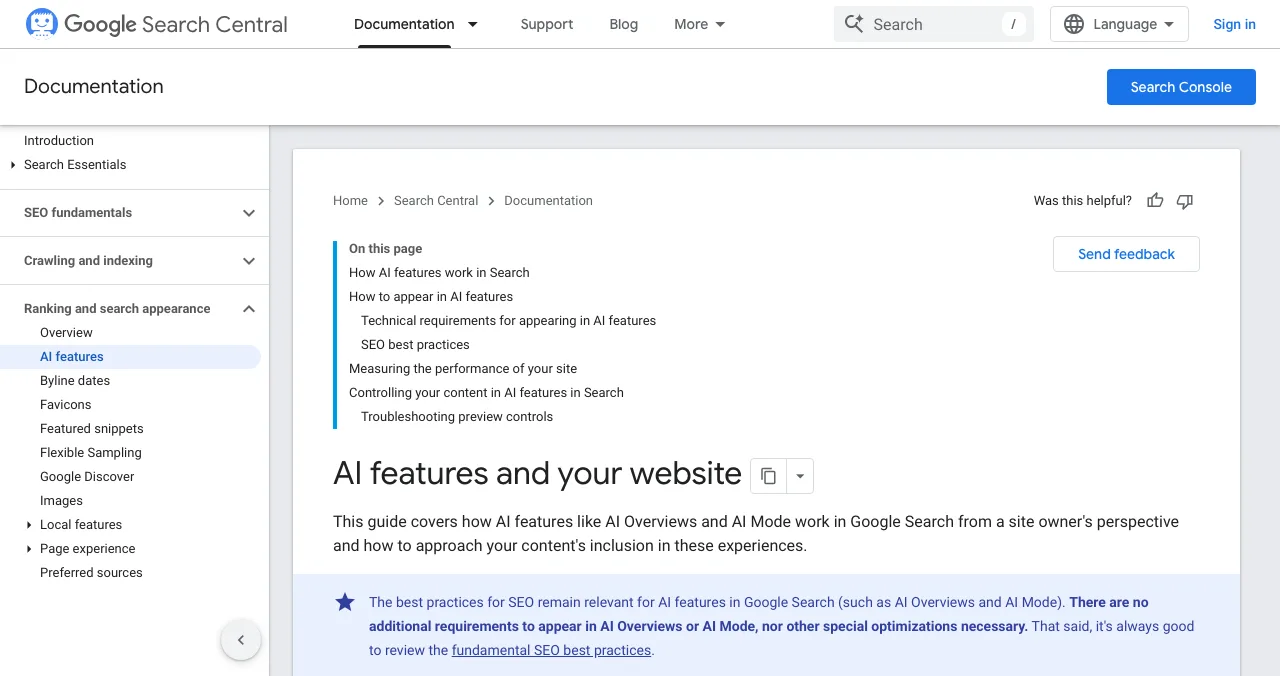
Google's generative AI guidance (updated 10 July 2026) says you don't need these for its AI features:

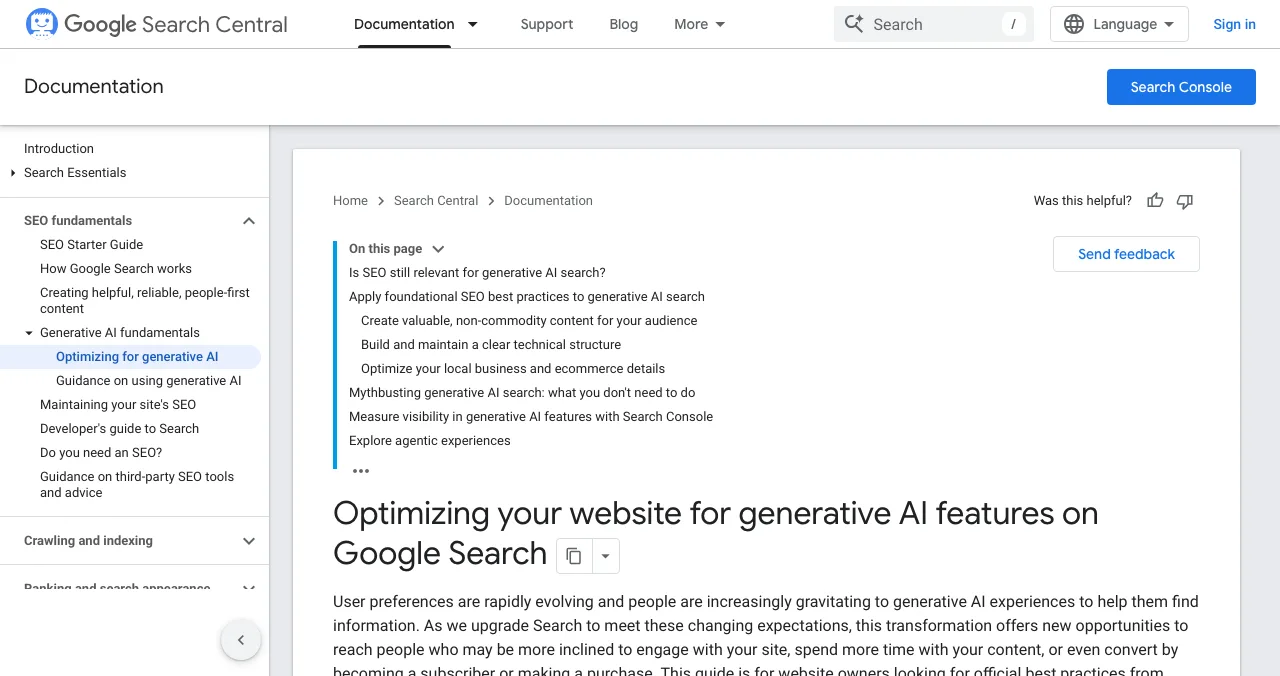
- llms.txt or other AI text files
- "Chunking" content into artificial pieces
- Special schema for AI
- Inauthentic mentions — planting your brand around the web
Ready for both?
How we know
Google's position comes from its generative AI guide and AI features documentation; crawler names from OpenAI's, Anthropic's and Perplexity's own documentation; all read on 16–17 November 2026. The side-by-side framing is our editorial summary.
Key terms, defined
- LLM SEO: optimising to be cited by AI assistants.
- LLM: a large language model, the technology behind AI assistants.
- Search crawler: a bot that fetches pages for a search or answer engine.
- Citation: a linked source in an AI answer.
- GEO / AEO: generative and answer engine optimisation; overlapping names.
Frequently asked questions
Is LLM SEO different from SEO?
Mostly not. Google says its AI features use the same foundations and need no extra technical requirements. The differences are which crawlers you allow, how answers are presented (summaries citing a few sources) and how you measure success.
What is LLM SEO?
Optimising so large-language-model assistants such as ChatGPT, Perplexity, Claude and Google's AI Overviews find, understand and cite your pages when answering questions.
Do I need llms.txt for LLM SEO?
Google's generative AI guidance says you don't need llms.txt or other AI text files for its AI features. Other assistants haven't said they rely on it either; it's optional.
Which crawlers matter for LLM SEO?
Googlebot for Google's AI features, OAI-SearchBot for ChatGPT search, Claude-SearchBot for Claude, and PerplexityBot for Perplexity. Each company documents how to allow or block them.
How do I measure LLM SEO?
Google points to Search Console's Generative AI performance report. For other assistants, track referral traffic from their domains and ask them the questions your buyers ask.
Should startups prioritise LLM SEO or SEO?
Do the SEO foundations first; they serve both. Then make sure AI search crawlers aren't blocked and your key pages answer specific questions clearly.
Sources
- Google Search Central — Optimizing your website for generative AI features on Google Search (updated 10 Jul 2026)
- Google Search Central — AI features and your website (checked 17 Nov 2026)
- OpenAI — Overview of OpenAI crawlers
- Anthropic — Does Anthropic crawl data from the web, and how can site owners block the crawler?
- Perplexity — Perplexity crawlers
- Google Search Central — SEO Starter Guide
- Checked November 17, 2026. Figures that change — fees, salaries, prices — are reviewed every six months; if something is out of date, tell us.
Where to go from here
- Rank in ChatGPT — the assistant side
- What is AEO? — answer engines
- AI search checklist — do it step by step
- Science of Apps - LaunchpadHow to rank in ChatGPT, Gemini, Claude and Perplexity: each engine's own rules, side by side, and what works across all of themHow to rank in ChatGPT, Gemini, Claude and Perplexity in 2027: each engine's crawler rules side by side, and the content that gets cited by all four.
- Science of Apps - LaunchpadThe AI search optimization checklist: crawler access, content, corroboration and measurement for Google AI Overviews, ChatGPT, Claude and PerplexityA 2027 AI search optimization checklist: crawler access, answer-first content, corroboration and measurement for AI Overviews, ChatGPT, Claude and Perplexity.
- Career guidesGenerative engine optimization skills employers want in 2027: getting brands mentioned and cited in ChatGPT, Gemini, Perplexity and AI OverviewsGEO skills employers want in 2027: how AI assistants choose sources, quotable facts, authority and mentions, crawler access and tracking AI citations.
- Science of Apps - LaunchpadHow to get organic visibility for your startup on Google and in AI search, without paying for adsHow to get organic visibility for your startup in 2027: get indexed, let AI search crawlers in, build profiles and citations, and write pages engines quote.
- Science of Apps - LaunchpadGenerative engine optimization for startups: what the research shows, and a plan to get cited by AI answersGEO for startups in 2027: what the original GEO research found, how to get cited by ChatGPT, Perplexity, Claude and Google AI, and a 30-day plan.
- Science of Apps - LaunchpadHow to get your startup mentioned by Gemini, Claude and Grok: what each company documents about crawling and search, and the levers that work for all threeHow to get your startup mentioned by Gemini, Claude and Grok: what Google, Anthropic and xAI document about crawling, and the levers that work for all three.
Get the ideas, not the noise.
Sign up with Google and we’ll send you short UX psychology tips by email — why people tap, stall and leave, and what to do about it. Unsubscribe anytime. Prefer something to keep? Get the free Laws of UX guide as a PDF.
Launch day ends. Your listing shouldn't.
A free, permanent Launchpad profile works for both: a crawlable page that states what you do and who it's for, ranked by relevance and never by payment.