 By
Quick answer: What is the difference between a launch platform and a startup directory?
- Launch platform: a dated feature, ranked by votes, for a day or a week.
- Startup directory: a permanent listing, found by search and category.
- Launch sites spike; directories persist.
- Examples: Product Hunt and Peerlist (launch); SaaSHub, AlternativeTo and Crunchbase (directory).
- Both at once: the Science of Apps Launchpad, plus a product diagnosis.
Key takeaways
- Use launch platforms for a burst of feedback and early adopters.
- Use directories for steady discovery by people with the problem.
- Launch-day rankings fade; directory listings compound.
- List permanently first so every launch has somewhere to point.
- Some sites mix both models; read how each ranks.
Founders use "launch platform" and "directory" as if they were the same thing, then wonder why a great Product Hunt day left no trace a month later, or why a directory listing never produced a burst of feedback. They're different tools with different jobs. This page gives a plain definition of each, a side-by-side table, real examples checked on each site's own pages on 18 November 2026, and when a startup needs which. Jump to the definitions, the table or which to use first.
Definitions: launch platform vs startup directory

Launch platform
A website that features new products on a chosen day or week, where a community tries them, comments and votes. Ranking is by votes within that window. Attention spikes, then fades. Product launch platform meaning, in one line: a stage, for a day.
Startup directory
A website that keeps permanent, searchable listings of startups or products, organised by category, alternatives or search. People arrive when they have a need. Attention is steady and long-lived. In one line: a shelf, for good.
Launch site vs directory, side by side
| Launch platform | Startup directory | |
|---|---|---|
| What you get | A dated launch slot | A permanent listing |
| How long you're visible | A day or a week, then an archive page | As long as the listing exists |
| How products are ranked | Votes in the launch window | Search relevance, category, reviews or editors |
| Who's watching | Early adopters, makers, the community | People searching for a solution |
| Effort | High on the day: posting, replying, sharing | Low after setup: keep it current |
| Typical result | A spike of visits, feedback, first users | A steady trickle of qualified visits |
| Examples | Product Hunt, Peerlist Launchpad, Uneed, DevHunt | SaaSHub, AlternativeTo, Crunchbase |
| Link on the page | Product Hunt: ugc (inspected 17 Nov 2026) | SaaSHub, AlternativeTo: nofollow (inspected 17–18 Nov 2026) |
Table: Startup launch platforms vs directories (Science of Apps definitions; examples from each site's pages, checked 17–18 Nov 2026)
Real examples of each
| Site | Model | How it works (from its own page) |
|---|---|---|
| Product Hunt | Launch platform | Launches go live at 12:01 AM Pacific on the date you schedule, tomorrow to 30 days ahead; free |
| Peerlist Launchpad | Launch platform | Open through Mondays, every week; verified profile; project 100% complete |
| Uneed | Launch platform | Daily launches; a free launch needs an upvote score of 10 on the day to stay published |
| DevHunt | Both | A free permanent page with a nofollow link, or a $49 launch week |
| SaaSHub | Directory | Products go through approval; unreleased products are rejected |
| AlternativeTo | Directory | Free review queue; apps must be publicly available (no closed betas) |
Table: Launch platforms and directories, real examples (each site's own pages, checked 18 Nov 2026)
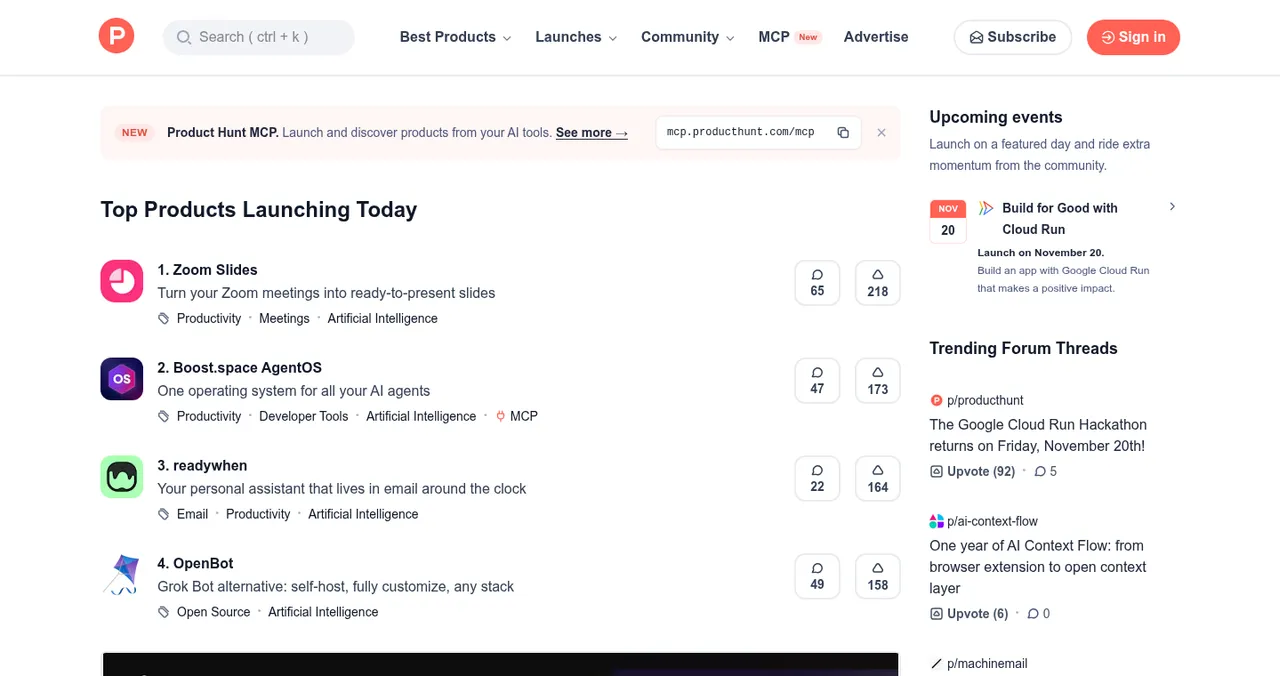
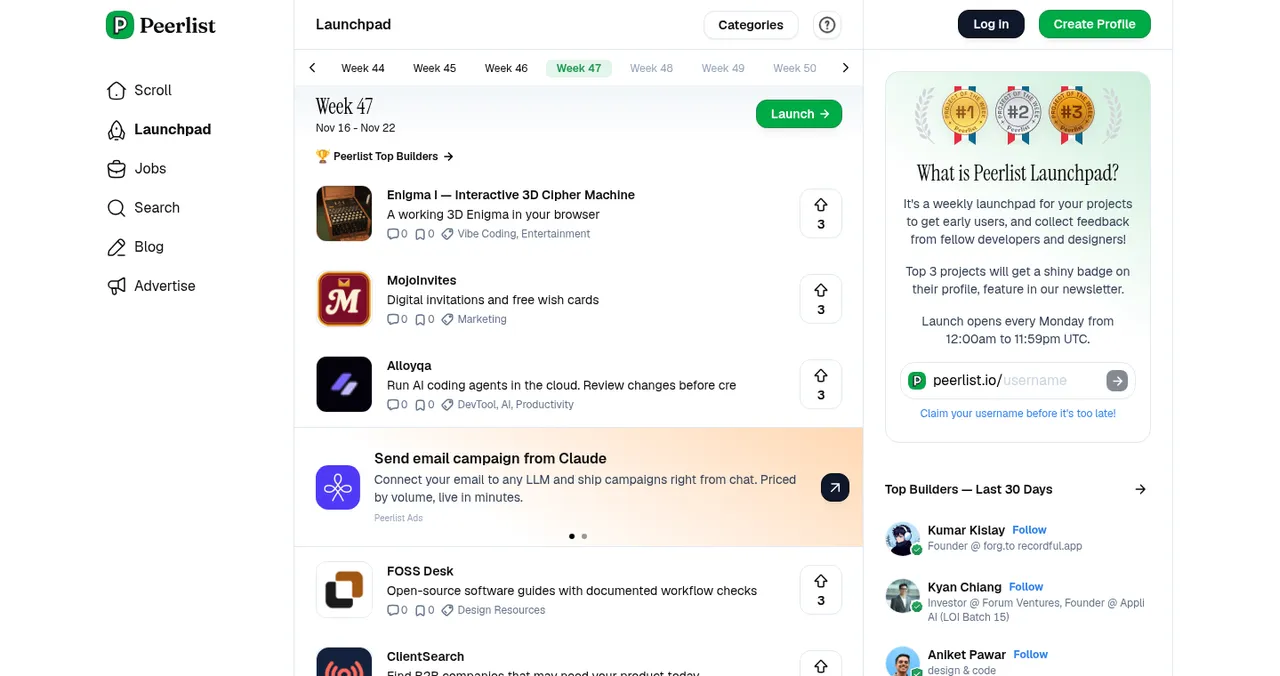
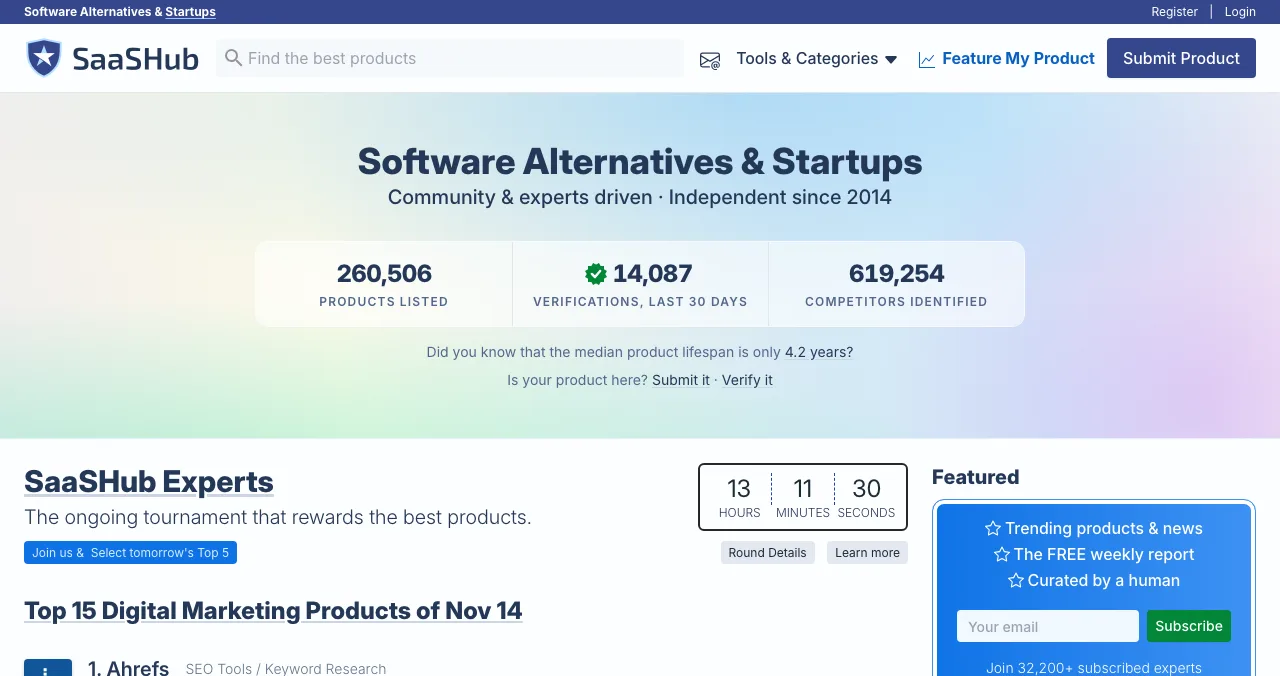
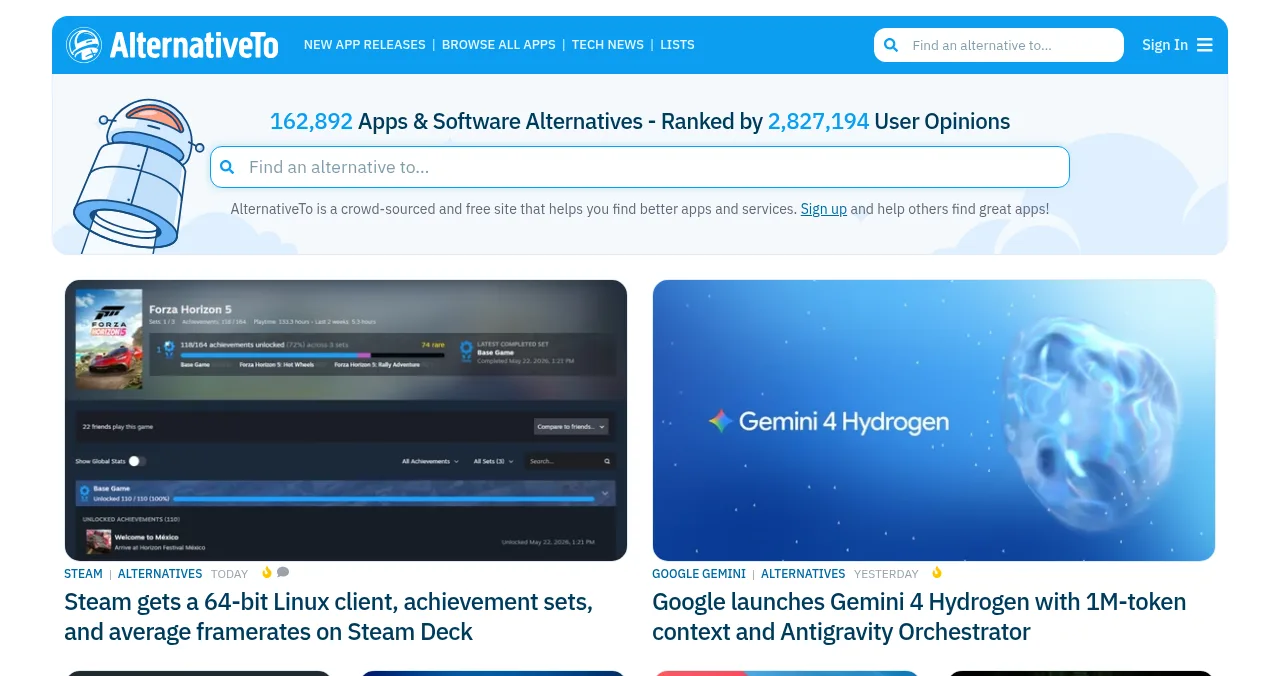
The line blurs: Product Hunt keeps product pages after launch day, and DevHunt offers both a permanent listing and a launch week. What matters is where the attention comes from: a date, or a search.
Which does a startup need?
| Your goal | Use | Why |
|---|---|---|
| Feedback and first users this week | Launch platform | Concentrated attention from people who like trying new things |
| Being found by buyers next month and next year | Directory | People with the problem search there |
| Investor and partner credibility | Directory (company profile) | Crunchbase and similar are where people check |
| A canonical page for every post to link to | Permanent listing | Launch pages fade; a listing doesn't |
| Momentum and a story to tell | Launch platform | "We launched" is news; "we're listed" isn't |
Table: Launch platform or directory, by goal (Science of Apps editorial guidance)
The Launchpad: a launch and a listing, plus a diagnosis

The Science of Apps Launchpad sits in both columns. You go live with a Featured badge, like a launch. Your profile stays permanently and is ranked by relevance, editorial picks and community interest (vouches and follows), never payment, like a directory. It's free forever and accepts startups, SaaS, mobile apps, AI products, developer tools, browser extensions, games and open source.
It also does something neither model usually does: it tests your product. A free baseline diagnosis of your landing page, discoverability and speed runs as you go live; a full investigation covers 22 areas in a real browser on desktop and mobile, with every finding evidenced and analyst-approved.
- Areas of your product tested
- 22
- Automatic measurements, desktop and mobile
- 39
- Expert checks behind your login
- 74
- Verdicts, from Good to Critical
- 5
Fix the page before the spike
List free, then order the report that fits: what new customers see first, or the full diagnosis and a plan.

 Economy
See what new customers see
- Store listing and homepage, screen by screen
- Scorecard against 60 Laws of UX
- Customers, competitors and the fixes worth most
PremiumThe full diagnosis and the plan
- Every screen, every finding, every flow
- All 60 laws with evidence and fixes
- 8 strategy chapters and a 90-day roadmap
Researched from your live product and fact-checked against the evidence.
Which first?

- Permanent listing — the Launchpad and a company profile, so you have a canonical page.
- Fix the page — read the free diagnosis and fix anything Critical before traffic arrives.
- Directories your buyers use — SaaSHub and AlternativeTo once you're released.
- Launch days, spaced out — Peerlist on a Monday, Product Hunt midweek, Uneed when your queue date comes.
- Point everything home — every launch links to the same listing and site.
Mistakes

- Treating a launch as a strategy — the spike ends; plan where people find you after
- Treating a directory as a launch — don't expect a burst of feedback from a listing
- Launching before you have a permanent page — launch traffic needs somewhere lasting to go
- Launching everywhere on one day — you can't answer every comment
- Judging by the peak — compare 30-day visits, not launch-day upvotes (peak-end rule shapes how you'll remember it)
Ready for both?
How we know
The definitions are Science of Apps' own. Each example's rules come from its own help, FAQ or submission page, read on 18 November 2026; link attributes come from listing pages we inspected on 17–18 November 2026. Science of Apps runs the Launchpad.
Key terms, defined
- Launch platform: a site that features new products for a day or week, ranked by votes.
- Startup directory: a site with permanent, searchable listings of startups or products.
- Launch site vs directory: a spike of attention versus steady discovery.
- Product launch platform meaning: a stage where makers publish a product on a date for a community to try and vote on.
- Canonical listing: the one permanent page every launch and mention points to.
Frequently asked questions
What is the difference between a launch platform and a startup directory?
A launch platform features new products on a specific day or week and ranks them by community votes, giving you a short spike of attention. A startup directory keeps a permanent, searchable listing that people find by category or search whenever they need it. Launch platforms are for moments; directories are for ongoing discovery.
What does product launch platform mean?
A product launch platform is a website where makers publish a new product on a chosen date so a community can try it, comment and vote. Products compete on a daily or weekly leaderboard. Product Hunt, Peerlist Launchpad, Uneed and DevHunt are examples; each keeps a product page after the launch, but the attention is concentrated on the day.
Is Product Hunt a launch platform or a directory?
Mainly a launch platform: products launch at 12:01 AM Pacific Time on a scheduled date and compete on a daily leaderboard. Product pages stay afterwards and can be found by search, so it has a directory side, but most of the attention arrives on launch day.
Is a launch site or a directory better for SEO?
Directories usually help more over time because the listing stays live and gets found by search, while a launch page's attention fades. Both mostly give nofollow or ugc links: Product Hunt used ugc and SaaSHub nofollow on pages we inspected. The lasting value is consistent, findable information about your startup.
Should I use a launch platform or a directory first?
A permanent listing first. It gives every later launch, post and press mention one canonical page to point to, and it keeps working after launch day. Then pick the launch platforms whose audience fits your product and schedule them a few days apart so you can answer every comment.
What is the Science of Apps Launchpad, a launch platform or a directory?
Both. Your product goes live with a Featured badge, like a launch, and keeps a permanent public profile ranked by relevance, editorial picks and community interest, like a directory. It's free forever, and it adds something neither model usually offers: your product tested with a detailed report.
Sources
- Science of Apps — Launchpad: launch your product free (checked 18 Nov 2026)
- Science of Apps — Product investigation (checked 18 Nov 2026)
- Product Hunt Help Center — Launch FAQ and myths (checked 18 Nov 2026)
- Peerlist Help Center — How do I launch a project on Peerlist Launchpad? (checked 18 Nov 2026)
- Uneed — How to launch your product on Uneed (checked 18 Nov 2026)
- SaaSHub — Submit a product: guidelines (checked 18 Nov 2026)
- AlternativeTo — FAQ (checked 18 Nov 2026)
- DevHunt — FAQ (checked 18 Nov 2026)
- Checked November 18, 2026. Figures that change — fees, salaries, prices — are reviewed every six months; if something is out of date, tell us.
Where to go from here
- Best product launch platforms — the launch side
- Free startup directories — the directory side
- What is a startup launchpad? — the term, defined
- Science of Apps - LaunchpadScience of Apps Launchpad vs Product Hunt: a permanent free listing with a product report, or one big launch day? A fair comparison of cost, ranking, visibility and what each gives youScience of Apps Launchpad vs Product Hunt compared: cost, ranking, how long you stay visible and the product report. Which to use, and why most use both.
- Science of Apps - LaunchpadFree startup directories in 2027: 16 checked sites to submit your startup to, grouped by what you want (investors, customers, a launch, India) with each one's rules16 free startup directories checked for 2027, grouped by goal: investors, customers, launch day and India, with each site's rules and the ones to skip.
- Science of Apps - LaunchpadUneed vs Product Hunt vs Microlaunch: cost, timing, ranking and who each launch site suitsUneed vs Product Hunt vs Microlaunch in 2027: free and paid options, launch timing, how each ranks you and how long you stay visible, all checked.
- Science of Apps - LaunchpadScience of Apps Launchpad vs Uneed vs Peerlist: which free launch site suits your startup, compared by cost, waiting time, ranking, audience and how long you stay visibleUneed, Peerlist and the Science of Apps Launchpad compared: cost, waiting time, ranking, audience and permanence, with a plan for using all three in one month.
- Science of Apps - LaunchpadWhich launch sites and startup directories give dofollow backlinks? We inspected the rel attribute on real listing pages: most are nofollow or ugc, and that's fineWhich launch sites give dofollow backlinks? We checked real listings on 17 Nov 2026: Product Hunt is ugc, SaaSHub and AlternativeTo nofollow.
- Science of Apps - LaunchpadWhich startup launch platforms let payment affect ranking or placement, which keep them separate, and how to spend launch money wiselyWhich startup launch platforms let money buy placement in 2027: DevHunt boosts, Uneed fast-track, featured slots, versus sites where payment never affects rank.

Get the ideas, not the noise.
Sign up with Google and we’ll send you short UX psychology tips by email — why people tap, stall and leave, and what to do about it. Unsubscribe anytime. Prefer something to keep? Get the free Laws of UX guide as a PDF.
Launch day ends. Your listing shouldn't.
The Science of Apps Launchpad is both: you go live with a Featured badge like a launch, keep a permanent listing like a directory, and get your product tested with a detailed report.