 By
Quick answer: How do you market a product launch?
- Strategy first: one goal, one audience, one message, one page.
- Seven channels: own audience, communities, launch sites, press and newsletters, content and search, partners, paid.
- Owned channels first on launch day; paid last, once the page converts.
- Six weeks: three before launch, launch week, two after.
- One permanent page every channel links to, tagged with UTM parameters per channel.
Key takeaways
- Launch marketing amplifies what's there; it can't fix a confusing product.
- The audience you already have converts better than any new channel.
- Each launch site and community has rules; read them before you post.
- A permanent page keeps converting after the campaign ends.
- Measure channels by users who stayed, not by visits.
Launch marketing is where founders spend the most energy and get the least back, usually because the energy goes into the wrong order: ads before the page converts, launch sites before the existing audience hears, five channels on one day. "Launch strategy" is searched about 390 times a month, "launch marketing" 260 and "product launch marketing" 170 (Google Keyword Planner, global 12-month average). This playbook gives you a simple launch strategy, the seven launch marketing channels in the order startups should use them, a six-week calendar, and the one page every channel should point to. Platform rules were checked on each platform's own page on 18 November 2026. Jump to the channels, the six-week plan or measurement.
- Goal, audience, message and page
- 1
- Launch marketing channels
- 7
- Weeks from warm-up to follow-up
- 6
- UTM tags on every link
- 3
Start with a launch strategy: four decisions
Before any channel, write down four things. If you can't, the campaign will drift.
| Decision | Question | Example |
|---|---|---|
| Goal | What number will tell you it worked? | 200 activated users in 30 days |
| Audience | Who exactly, and where do they already spend time? | Freelance designers in two online communities |
| Message | What one line should a stranger remember? | "Send invoices from Figma in one click" |
| Page | Where will every channel send people? | One permanent product page with a clear sign-up |
Table: Four decisions behind a product launch marketing strategy (illustrative example)
Our product launch strategy guide covers sizing the launch and choosing launch days in more depth.
The seven launch marketing channels, in order
| # | Channel | Cost | Best for | Watch out for |
|---|---|---|---|---|
| 1 | Your own audience | Free | First sign-ups and early proof | A list you never warmed up |
| 2 | Communities | Free | Reaching people with the problem | Self-promotion rules |
| 3 | Launch sites | Mostly free | A day of attention from early adopters | Asking for upvotes |
| 4 | Press and newsletters | Free to pitch | Credibility and a wider audience | "We launched" isn't news |
| 5 | Content and search | Time | Visitors who keep coming | Slow to start |
| 6 | Partners | Time | Borrowing a trusted audience | One-sided asks |
| 7 | Paid | Money | Scaling what already converts | Paying to send traffic to a leak |
Table: Launch marketing channels for startups, in the order to use them
1. Your own audience
Your email list, existing users, beta testers and waitlist convert better than any new channel because they already know you. Tell them first, personally where you can, and give them one thing to do: try it.
2. Communities
Post where your users already talk, as a member, not an advertiser: what you built, why, and a question. Read each community's rules first; many limit self-promotion.
3. Launch sites
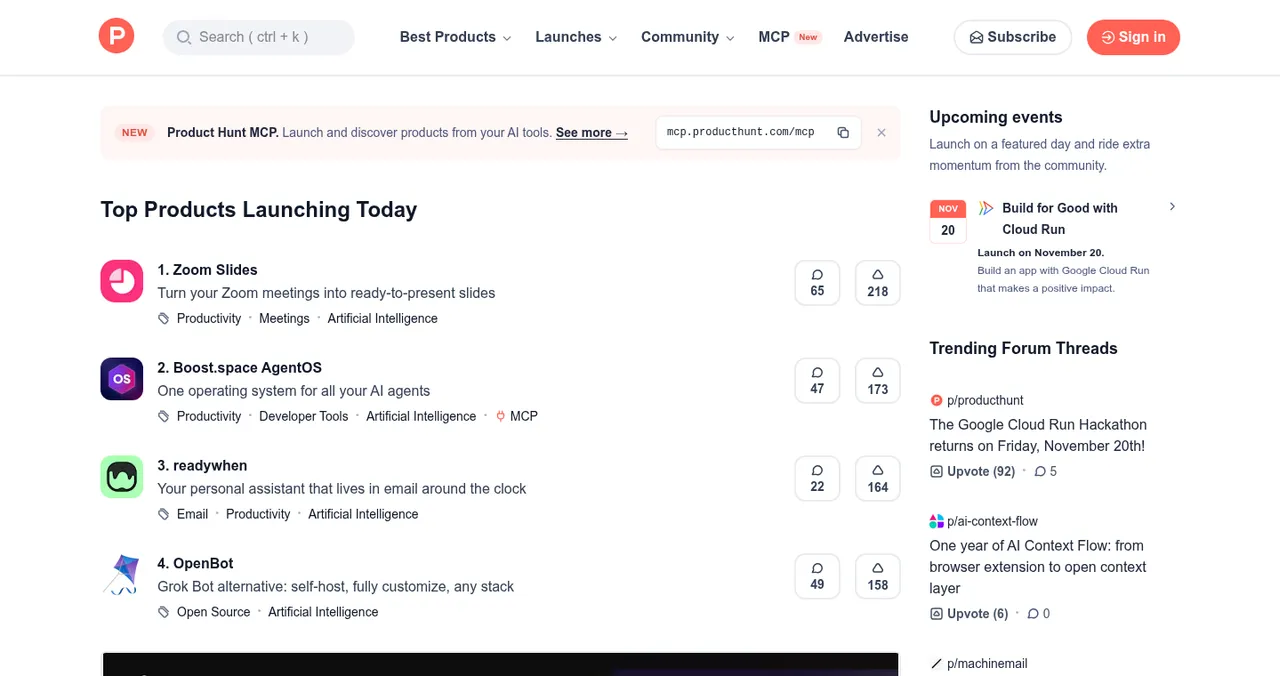
- Product Hunt: schedule up to 30 days ahead; launches go live at 12:01 AM Pacific. Product Hunt says never to ask for upvotes, which can get your account flagged.
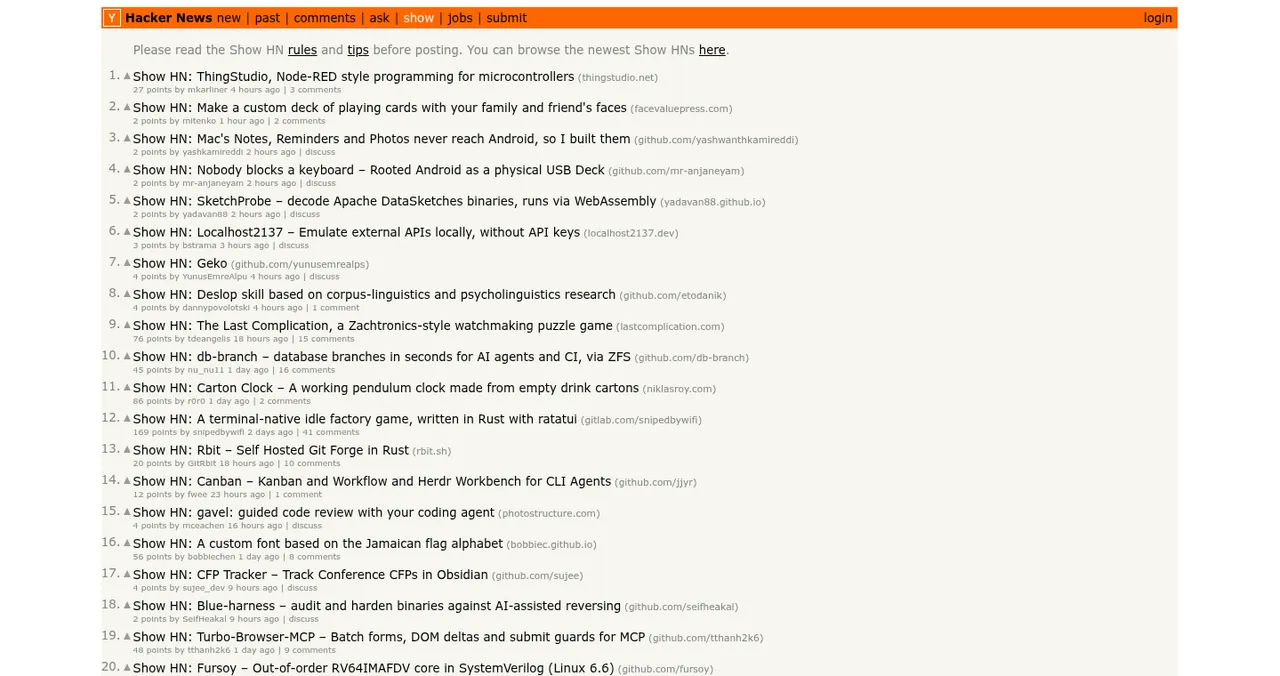
- Show HN: for something people can try, ideally without sign-ups; landing pages and sign-up pages don't qualify, and asking friends to upvote isn't allowed.
4. Press and newsletters
Pitch a story, not an announcement: a number, a customer result, a surprising insight. Send personal emails to the few writers who cover your space. Keep links in any release plain: Google's spam policies list optimised anchor-text links in press releases distributed on other sites as an example of link spam. Our startup press release guide has a template.
5. Content and search
Write the posts your audience searches for (the problem, not your product name) and publish them on pages that last. This is the slowest channel and the one that keeps paying after launch week.
6. Partners
Tools, communities and creators who serve the same users can introduce you. Offer something useful in return: an integration, a guest session, a discount for their audience.
7. Paid
Only once your page converts and you know what an activated user is worth. Before that, paid reach just measures how leaky the page is.
The page every channel points to
Seven channels sending people to seven different links splits your proof and your data. One permanent page fixes both: every vouch, badge and review collects in one place, and every UTM-tagged link lands on the same conversion path.
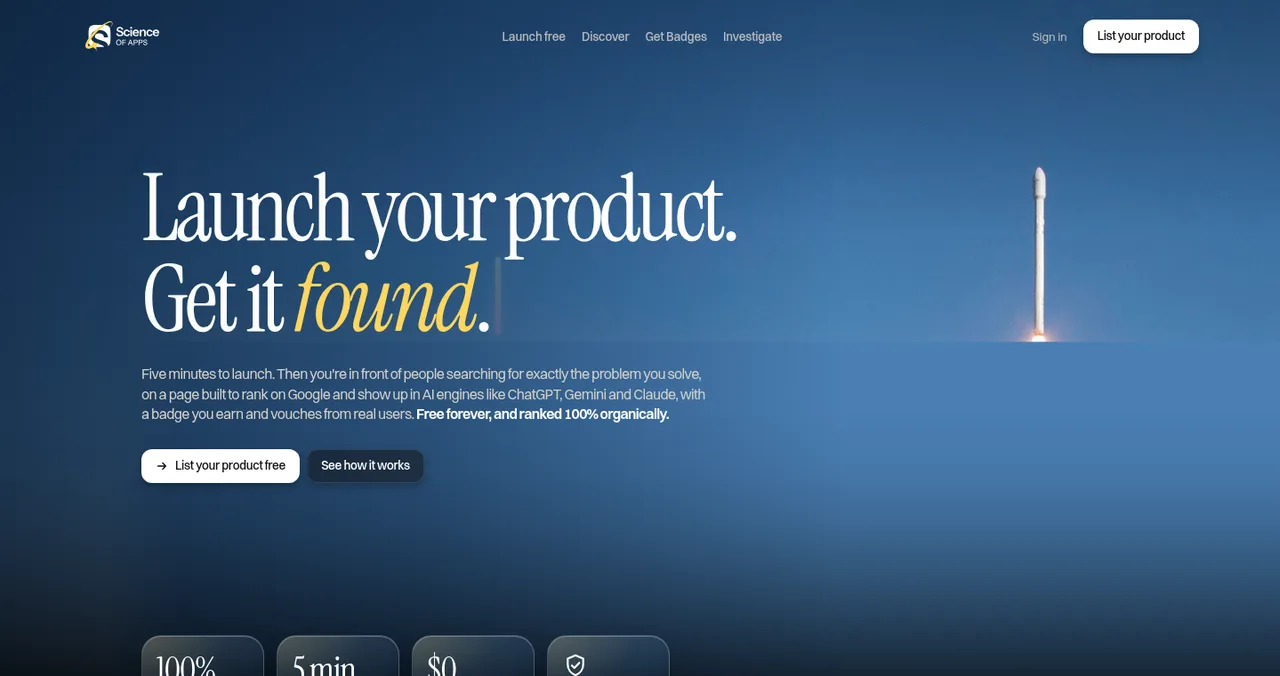
The Science of Apps Launchpad is built to be that page: free forever, found by the problem you solve after the campaign ends, ranked by relevance and community interest, never payment, with earned badges (Featured, Verified, Community favourite, Editor's pick) and vouches from users. It also tests the product the campaign sends people to.
- Areas of your product tested
- 22
- Automatic measurements, desktop and mobile
- 39
- Expert checks behind your login
- 74
- Verdicts that rank what to fix first
- 5
Make sure the page converts first
List free, then order the report that fits: the first impression, or the full diagnosis with a 90-day plan.

 Economy
See what new customers see
- Store listing and homepage, screen by screen
- Scorecard against 60 Laws of UX
- Customers, competitors and the fixes worth most
PremiumThe full diagnosis and the plan
- Every screen, every finding, every flow
- All 60 laws with evidence and fixes
- 8 strategy chapters and a 90-day roadmap
Researched from your live product and fact-checked against the evidence. Private to your team.
The six-week product launch marketing plan
This plan assumes your audience-building has started; if not, begin with pre-launch marketing.
- Week −3
Strategy and page
Write the four decisions; publish your permanent page; read the product check and fix critical findings.
- Week −2
Assets and pitches
Tagline, screenshots, 30–60 second demo, launch post; shortlist writers and newsletters; book launch dates.
- Week −1
Warm-up
Tell your list the date; take part in communities; brief partners; set UTM links for every channel.
- Launch week
Own audience, then outward
Day 1 your list and users; then communities and launch sites one at a time; reply to everyone.
- Week +1
Follow-up
Personal thank-yous, answers to every question, fixes shipped, a results post with real numbers.
- Week +2
Measure and extend
Compare channels by activated users; double down on the best two; plan content that keeps working.
How do you measure launch marketing?
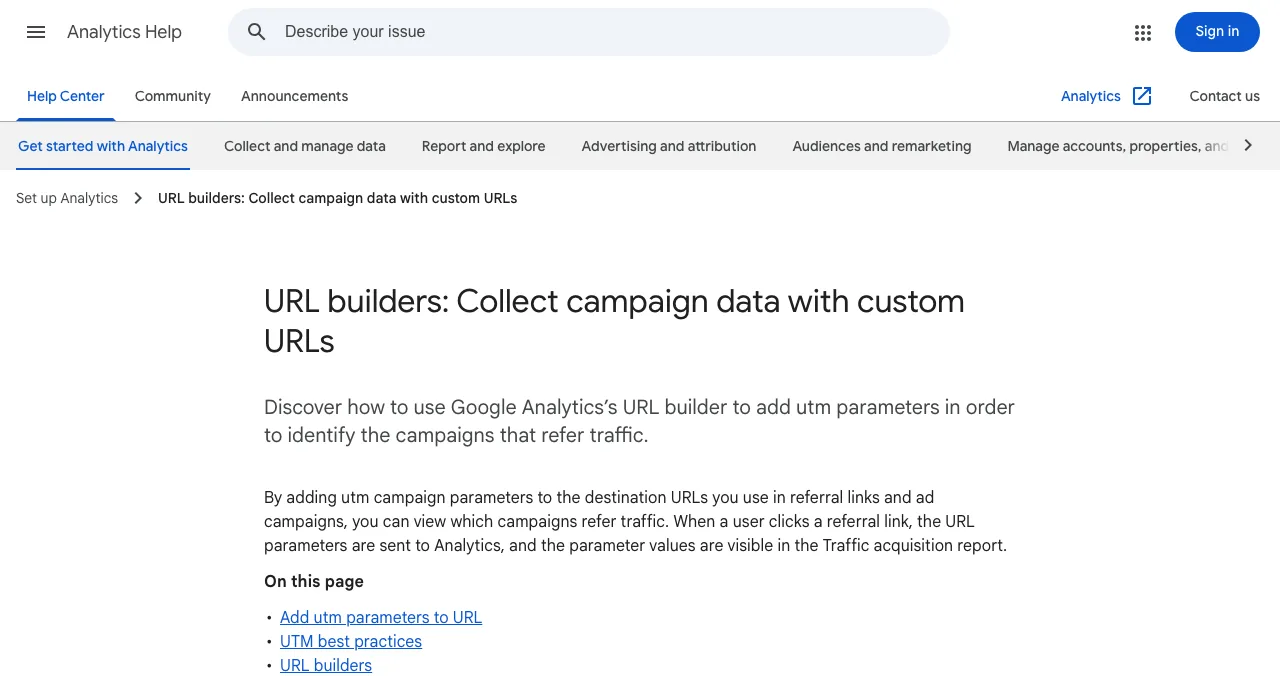
Google Analytics advises always using utm_source, utm_medium and utm_campaign when you tag links. Use one campaign name for the launch and a different source per channel, then compare channels by what matters.
| Metric | Why it matters |
|---|---|
| Activated users by channel | Shows which channel brought people who got value |
| Conversion rate of the page | Shows whether the page, not the channel, is the problem |
| Day-7 retention by channel | Separates curious visitors from real users |
| Cost per activated user | The only fair way to compare paid with free |
Table: Launch marketing metrics that matter
Launch marketing mistakes

- Paid ads before the page converts — fix the page first
- Skipping your own audience — they convert best and cost nothing
- Asking for upvotes — Product Hunt and Hacker News both say no
- A different link per channel — one page, many UTM tags
- Keyword-stuffed press release links — Google treats them as link spam
- Stopping on launch day — the follow-up weeks turn attention into users
Pages that show visible proof convert better, social proof at work: real vouches and badges on the page your campaign points to do more than any launch-day adjective.
Ready to launch?
How we built this playbook
The channel order, plan and metrics are Science of Apps editorial guidance; the example in the strategy table is illustrative. Platform rules (Product Hunt, Show HN, Google's link spam policy and UTM guidance) come from each platform's own pages, read on 18 November 2026. The Launchpad's terms come from its homepage, investigation page and pricing page, read the same day. Search volumes are Google Keyword Planner's global 12-month averages. Science of Apps runs the Launchpad.
Key terms, defined
- Launch marketing: the work of getting the right people to hear about, try and adopt a new product or feature.
- Launch strategy: the goal, audience, message, channels and timing behind a launch.
- Owned channel: an audience you reach directly, such as your email list or existing users.
- UTM parameters: tags on a link that tell analytics the source, medium and campaign of a visit.
- Activated user: a new user who has reached the product's first moment of value.
- Permanent page: a product page that stays live and findable after the campaign ends.
Frequently asked questions
How do you market a product launch?
Decide one goal, one audience and one message, and build one permanent page. Then tell your own audience first, post in communities where your users already talk, launch on sites that fit your audience, pitch press and newsletters with a real story, and publish content that keeps working. Add paid only once the page converts, and tag every link.
What is a product launch marketing strategy?
The plan for how people will hear about a launch and why they'll care: who the audience is, the message, which channels reach them, the order and timing of each channel, and how success will be measured. A launch strategy for a startup usually leans on owned channels and communities rather than paid reach.
Which launch marketing channels work best for startups?
Usually your own audience (email list, existing users, beta testers), then communities where your users already gather, then launch sites such as Product Hunt or Show HN where they fit. Press works when there's a story with numbers. Paid ads work last, once you know the landing page converts.
How long should a product launch campaign run?
For a startup, about six weeks of focused work: three weeks of preparation and warm-up, a launch week, and two weeks of follow-up, results posts and fixes. A permanent product page keeps working after that, which is why the campaign should point to one.
How much should a startup spend on launch marketing?
Often very little. Most early launches are won with owned channels, communities and free launch sites, which cost time rather than money. Spend on paid ads only once you know your page converts and what an activated user is worth; otherwise you're paying to send people to a leak.
How do you measure launch marketing?
Tag each channel's link with utm_source, utm_medium and utm_campaign, as Google Analytics recommends, and compare channels by activated users and retention, not visits or upvotes. Review at one week and four weeks after launch, and repeat only the channels that brought users who stayed.
Sources
- Product Hunt Help Center — Launch FAQ and myths (checked 18 Nov 2026)
- Hacker News — Show HN guidelines (checked 18 Nov 2026)
- Google Analytics Help — URL builders: collect campaign data with custom URLs (checked 18 Nov 2026)
- Google Search Central — Spam policies: link spam (checked 18 Nov 2026)
- Science of Apps — Launchpad: launch your product free (checked 18 Nov 2026)
- Science of Apps — Product investigation (checked 18 Nov 2026)
- Science of Apps — Pricing: free listing, Economy and Premium reports (checked 18 Nov 2026)
- Checked November 18, 2026. Figures that change — fees, salaries, prices — are reviewed every six months; if something is out of date, tell us.
Where to go from here
- Product launch strategy — the five parts of a good launch
- Pre-launch marketing — build the audience first
- Startup press release — template and where to send it
- Science of Apps - LaunchpadPre-launch marketing for startups: a six-week plan from waitlist to launch day, with the channels, assets and rules that matterPre-launch marketing for startups: a 6-week plan with a waitlist, building in public, early adopters, launch assets and a scheduled launch date.
- Science of Apps - LaunchpadProduct launch strategy for 2027: how to plan, run and follow up a launch that brings users, not just a spikeA product launch strategy for 2027: set goals, size the launch, build a permanent page, sequence launch days, run launch week and follow up, step by step.
- Science of Apps - LaunchpadA mobile app launch plan for 2027: what to do eight weeks before, on launch day and in the 30 days after, with store rules, pre-orders and pre-registration, launch marketing and how to know it workedA mobile app launch plan in three phases: 8 weeks before, launch day and 30 days after. Store rules, pre-orders, launch marketing and the metrics to watch.
- Science of Apps - LaunchpadA startup marketing strategy on one page: positioning, one or two channels, a launch, content that answers buyer questions, and weekly metrics, with a template to fill inA startup marketing strategy you can run: positioning, one or two channels, a launch, answer-first content and weekly metrics, with a template.
- Science of Apps - LaunchpadHow to launch a SaaS product in 2027: from private beta to public launch to the first paying customersHow to launch a SaaS in 2027, step by step: private beta, pricing, onboarding that activates, a permanent page, launch days, and turning trials into customers.
- Science of Apps - LaunchpadA go-to-market strategy for startups on one page: the eight boxes of a GTM canvas, a worked example, the B2B and self-serve motions, and a 90-day launch planA go-to-market strategy template for startups: an eight-box GTM canvas covering customer, problem, promise, price, channels and motion, plus a 90-day plan.
Get the ideas, not the noise.
Sign up with Google and we’ll send you short UX psychology tips by email — why people tap, stall and leave, and what to do about it. Unsubscribe anytime. Prefer something to keep? Get the free Laws of UX guide as a PDF.
Launch day ends. Your listing shouldn't.
The Science of Apps Launchpad is the permanent page your launch campaign points to: free forever, found by problem after the campaign ends, and tested with a detailed report so the traffic you earn converts.