 By
Quick answer: Where can I sell my side project?
- SideProjectors: free to list and browse; best for small projects, code and domains.
- Microns: no listing fee; 10% / 8% / 6% commission by asking price (from $1k / $10k / $100k).
- Acquire.com: 8% / 7% / 6% closing fee plus $25 / $50 / $100 a month to list, by asking price.
- Flippa: paid listing packages from $29 and a sliding success fee, 10% down to 5%.
- Prepare first: clean metrics, a clear product and a public footprint buyers can check.
Key takeaways
- Match the marketplace to the project's size: free boards for small ones, curated marketplaces for revenue.
- Commission-only models cost nothing if you don't sell; monthly listing fees cost something either way.
- Buyers pay for revenue, traffic and transferable assets, and they verify all three.
- A product that works well for new users is easier to sell than one that needs explaining.
- Decide what you're selling (code, domain, users, revenue) before you pick where.
Side projects end in one of three ways: they grow, they get abandoned, or they get sold. Selling is the most underused option. A project you've stopped working on can still be worth something to someone who wants its code, its domain, its users or its revenue. The hard part is knowing where to sell a side project, because the marketplaces differ a lot in who buys and what they charge. This comparison covers SideProjectors, Microns, Acquire.com (formerly MicroAcquire) and Flippa, with every fee taken from each marketplace's own page on 17–18 November 2026, plus how to prepare a project so it sells. Jump to the comparison, which one fits or the preparation plan.
Where to sell a side project
 List free
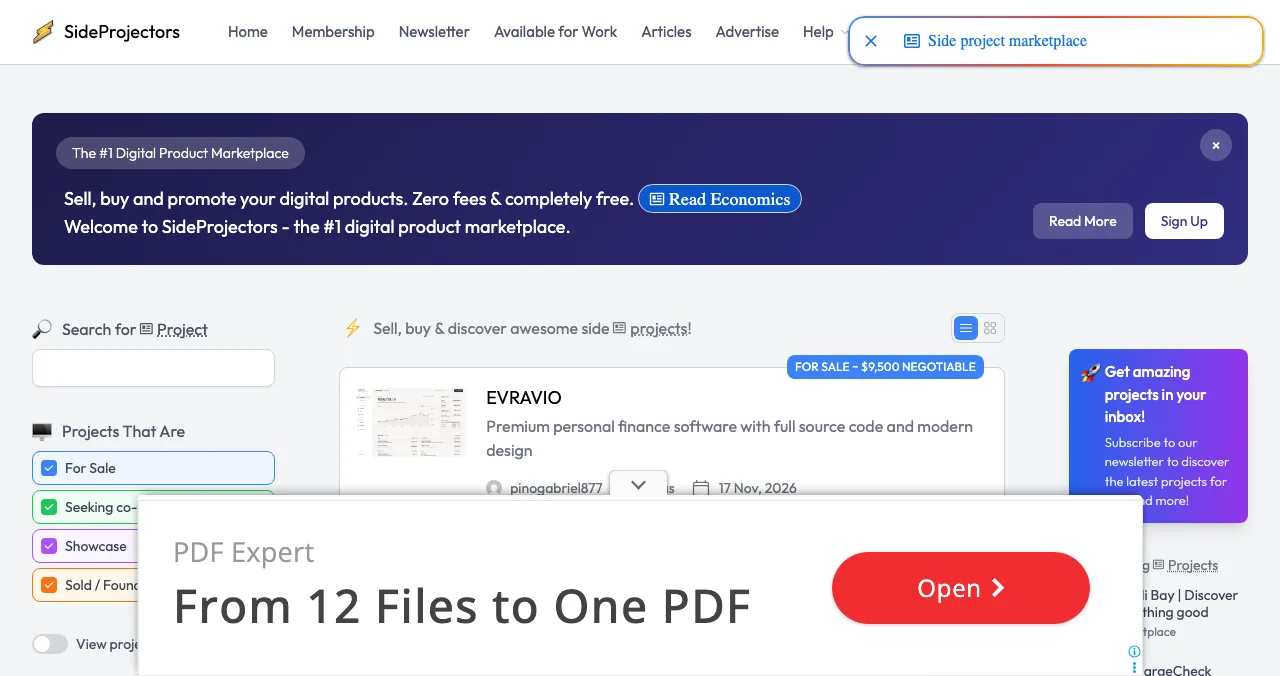
SideProjectors Best free option
A free board for small projects, code and domains.
Free to listSmall projects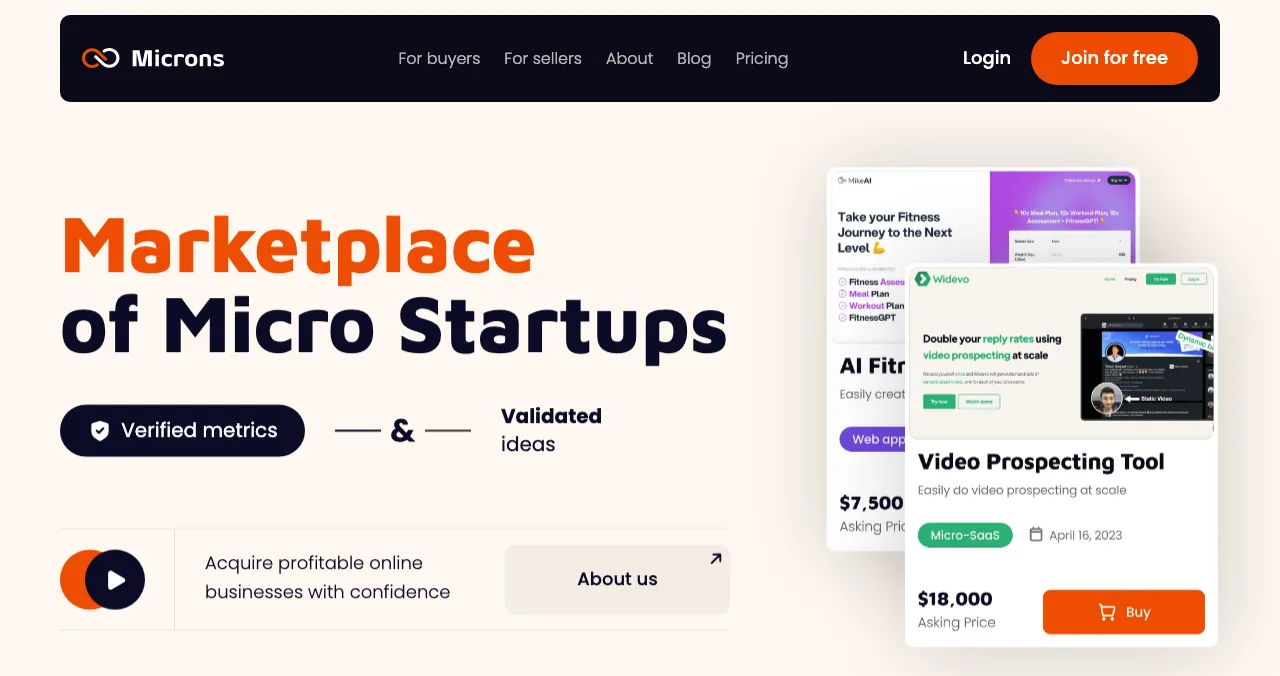
Microns
A curated marketplace for micro startups, paid only on sale.
No listing fee6–10% commission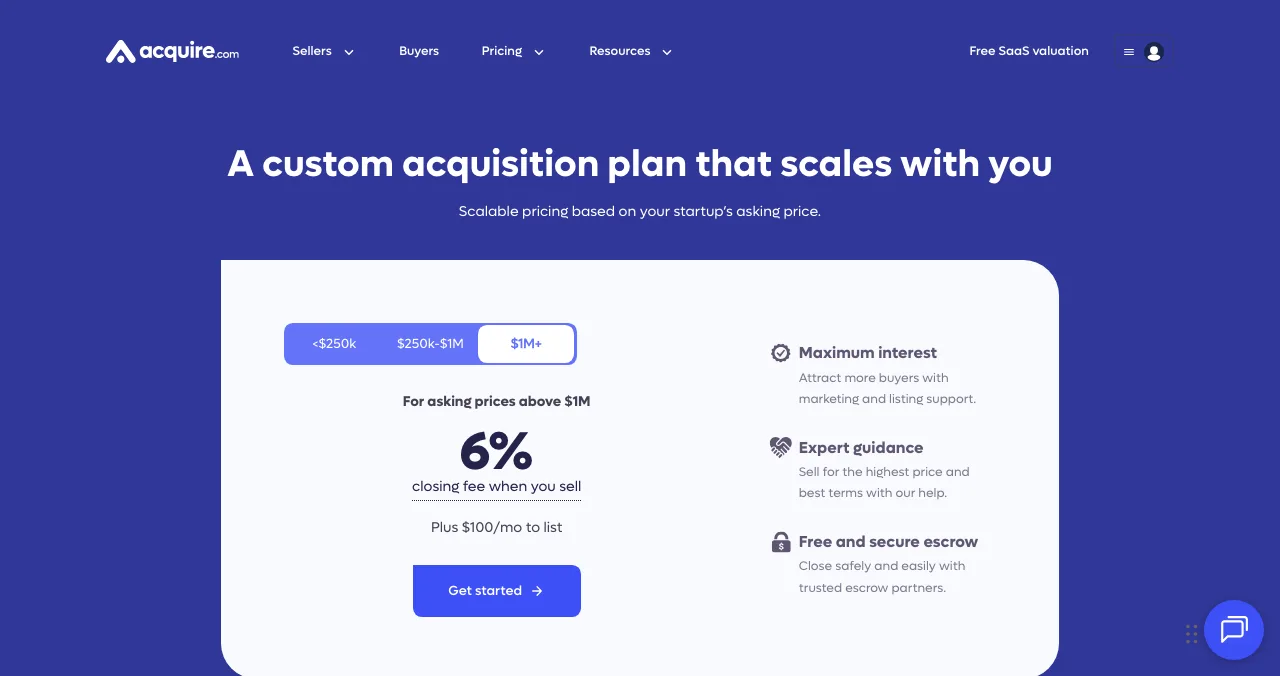
Acquire.com
The SaaS-focused marketplace formerly called MicroAcquire.
6–8% closing feeMonthly listing fee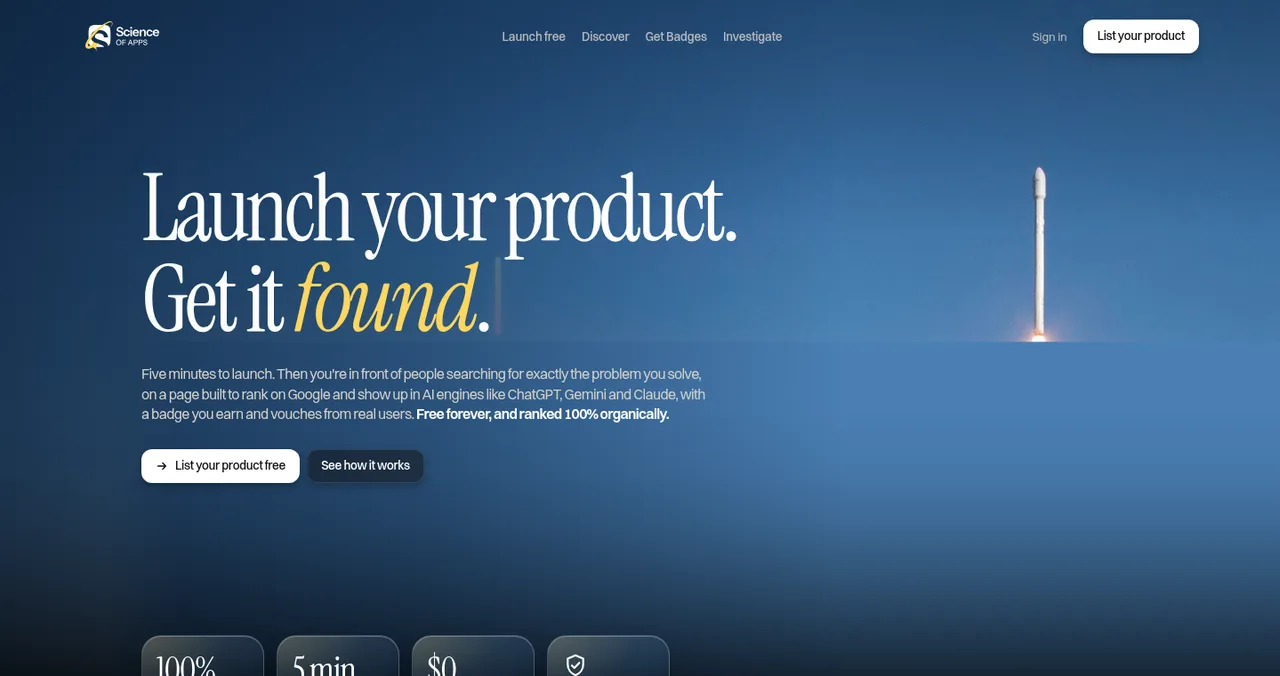
Science of Apps Launchpad
Not a marketplace: a free public page and a product report buyers can trust.
Free foreverProduct tested
Side project marketplaces compared
The biggest difference is how you pay: nothing, a commission only when you sell, or a listing fee plus a commission.
| SideProjectors | Microns | Acquire.com | Flippa | |
|---|---|---|---|---|
| Best for | Small projects, code, domains, unfinished ideas | Micro startups with some traction | SaaS and startups with revenue | Websites, apps, content and e-commerce of most sizes |
| Listing fee | Free (basic) | None | $25, $50 or $100 a month by asking price | Packages from $29 |
| Fee when you sell | None stated | 10% from $1k, 8% from $10k, 6% from $100k asking price | 8% under $250k, 7% $250k–$1M, 6% above $1M | Sliding success fee, 10% down to 5% |
| Escrow | Not stated | Not stated | Free; Acquire covers the cost | Escrow.com from 1.2% |
| Buyers pay | Free to browse | Free plan or Buyer Premium ($40 a month or $299 a year) | Free basic access; memberships from $390 | Free to browse |
Table: Where to sell a side project, by fees (each marketplace's own pricing page, checked 17–18 Nov 2026)
1. SideProjectors: free, for small projects and code
- Cost to list
- Free (basic)
- Fee on sale
- None stated
- Best for
- Small projects, code, domains
- Also
- Co-founder search, showcase
- Catch
- Mostly smaller buyers and prices
SideProjectors is the natural first stop for a project that's small, unfinished or without revenue. Its homepage banner calls it "zero fees & completely free", and its FAQ says basic submissions and browsing are free. Besides selling, you can list a project to find a co-founder or simply show it off.
- Cost: free for a basic listing; the FAQ mentions optional premium features (more visibility, analytics) but we didn't find prices for them.
- What sells: code bases, domains, templates and small apps, often to buyers who want a head start rather than an income.
- Process: you handle the deal and the transfer with the buyer yourself.
Best for: a side project without meaningful revenue, or one you'd rather sell cheaply than abandon.
2. Microns: micro startups, paid only when you sell
- Cost to list
- No listing fee
- Fee on sale
- 10% from $1k, 8% from $10k, 6% from $100k
- Buyers
- Free or Buyer Premium
- Best for
- Micro-SaaS, small apps, newsletters
- Catch
- Commission is higher on small deals
Microns calls itself a "marketplace of micro startups", and its listings show revenue and asking prices for small apps, micro-SaaS tools and newsletters. Its pricing page is simple for sellers: no listing fee, and a commission only on a successful sale.
- Cost: 10% for asking prices from $1k, 8% from $10k, 6% from $100k.
- Buyers: a free buyer plan, or Buyer Premium at $40 a month or $299 a year.
- Fit: projects with a little traction or revenue, too small for a SaaS-focused marketplace.
Best for: a micro startup with some users or revenue, when you'd rather pay only if it sells.
3. Acquire.com (formerly MicroAcquire): SaaS with revenue
- Listing fee
- $25 / $50 / $100 a month by asking price
- Closing fee
- 8% under $250k, 7% to $1M, 6% above
- Escrow
- Free
- Best for
- SaaS and startups with revenue
- Catch
- You pay the monthly fee whether or not you sell
Acquire.com is the marketplace founders still search for as "MicroAcquire"; microacquire.com now says the two are the same company and team. It's built for startups, especially SaaS, with real revenue, and it's the usual answer to "where do I sell my SaaS".
- Cost: a closing fee paid only at sale (8% below a $250k asking price, 7% from $250k to $1M, 6% above $1M) plus a monthly listing fee ($25, $50 or $100). The page says there are no other hidden fees.
- Included: valuations, synced metrics, vetted buyers, automated NDAs, legal document builders and free escrow, per the pricing page.
- Bigger deals: "Guided by Acquire" is a separate advisory service for profitable SaaS with at least $100k in trailing-twelve-month revenue; its price isn't listed.
- Buyers: free basic access; memberships from $390.
Best for: a SaaS side project with steady revenue and metrics you can connect.
Flippa: the broadest marketplace
Flippa sells websites, apps, content sites, e-commerce stores and SaaS of most sizes. Its pricing page lists listing packages starting at $29, higher tiers and brokered packages, and a success fee on a sliding scale from 10% down to 5% depending on sale price; payment through Escrow.com is listed from 1.2%. We couldn't capture a screenshot because Flippa's site served a bot check to our browser, so it isn't ranked above; check its pricing page for the tier that matches your asking price.
Is the Launchpad a place to sell a side project?
No, and we won't pretend it is. The Science of Apps Launchpad is a free launch and listing platform, not a marketplace for selling businesses. It helps a sale in a different way: buyers look at a project's public footprint and how well the product actually works, and the Launchpad gives you both a permanent public page and an evidence-backed report.
- A public footprint: a free, permanent listing found by the problem the product solves, ranked by relevance, editorial picks and community interest, never payment.
- Earned trust signals: Featured on going live, Verified with a work email on your domain, Community favourite and more; vouches and followers from real users.
- Your product, tested end to end: a free baseline diagnosis of the landing page, discoverability and speed runs as you go live. A full investigation loads the product in a real browser on desktop and mobile.
- Areas of the product tested
- 22
- Automatic measurements, desktop and mobile
- 39
- Expert checks behind the login
- 74
- Verdicts: Good to Critical, plus Recommendations
- 5
Why that helps a sale: a buyer will find every broken flow during due diligence and price it in. Finding and fixing them first, with evidence, means fewer surprises and a cleaner story. The report is private to your team; whether you share it with a buyer is your choice.
Know what a buyer will find
List free, then order the report that fits: what new customers see first, or the full diagnosis and a plan.

 Economy
See what new customers see
- Store listing and homepage, screen by screen
- Scorecard against 60 Laws of UX
- Customers, competitors and the fixes worth most
PremiumThe full diagnosis and the plan
- Every screen, every finding, every flow
- All 60 laws with evidence and fixes
- 8 strategy chapters and a 90-day roadmap
Researched from your live product and fact-checked against the evidence. Private to your team.
Which marketplace should you sell your side project on?
| Your side project | Start with | Why |
|---|---|---|
| Code, a domain or an unfinished idea, no revenue | SideProjectors | Free; buyers want a head start, not income |
| A few users or a little revenue | Microns | No listing fee; commission only on sale |
| SaaS with steady monthly revenue | Acquire.com | SaaS buyers, metrics, free escrow |
| Content site, e-commerce store or app of any size | Flippa | The broadest range of buyers and asset types |
| Not sure it's sellable yet | Launchpad listing and report first | Find out what works and fix it before you list |
Table: Which side project marketplace fits, by stage
How to prepare a side project to sell

- Decide what you're selling — code, domain, users, audience or revenue; it decides the marketplace and the price.
- Get the numbers verifiable — revenue from your payment processor, traffic from analytics, costs from invoices.
- Fix what a buyer would find — broken sign-up, slow pages, mobile bugs; list free on the Launchpad and read the diagnosis.
- Document the handover — stack, hosting, accounts, running costs and the hours a week it takes.
- Clean up the public footprint — an up-to-date site, listing and store pages; old launch threads that still make sense.
- List where it fits — and answer buyer questions quickly and honestly.
Mistakes when selling a side project

- Listing on the wrong marketplace — a no-revenue project on a revenue marketplace sits unsold while the monthly fee runs
- Unverifiable numbers — buyers discount what they can't check
- Anchoring too high — an ambitious asking price can set the wrong anchor and scare off serious buyers
- Hiding problems — due diligence finds them; disclose and price them in
- No handover plan — a project that needs you every day is worth less
- Moving money outside escrow — use the marketplace's escrow or a recognised escrow service
Ready to list?
How we compared them
Fees and features come from each marketplace's own pages: Acquire.com's seller and buyer pricing, microacquire.com, Microns' pricing page and SideProjectors' homepage and FAQ, read on 18 November 2026, and Flippa's pricing page as captured on 17 November 2026. Where a page didn't state a fee (for example, SideProjectors' premium features), we say so rather than guess. Fees change; check each page before you list. Science of Apps runs the Launchpad and has no relationship with any marketplace here.
Key terms, defined
- Side project marketplace: a site where people list small online products and businesses for sale.
- Closing fee / success fee: a percentage of the sale price paid to the marketplace when a deal completes.
- Listing fee: a fee to list, charged whether or not the project sells.
- Escrow: a neutral third party that holds the buyer's money until the assets are transferred.
- TTM revenue: trailing-twelve-month revenue, the past year's income.
- Due diligence: the buyer's checks on revenue, traffic, code and accounts before paying.
Frequently asked questions
Where can I sell my side project?
On a marketplace that fits its size and stage. SideProjectors is free and suits small projects, code and domains. Microns targets micro startups with no listing fee and a commission on sale. Acquire.com (formerly MicroAcquire) suits SaaS and startups with revenue. Flippa covers websites, apps and online businesses of most sizes with paid listings.
Is SideProjectors free?
Yes for the basics. SideProjectors' homepage describes it as 'zero fees & completely free', and its FAQ says basic project submissions and browsing are free. It mentions premium features such as extra visibility but didn't list their prices on the pages we read on 18 November 2026.
How much does Acquire.com charge sellers?
Acquire.com's seller pricing page lists a closing fee, paid only if you sell, of 8% below a $250k asking price, 7% from $250k to $1M and 6% above $1M, plus a monthly listing fee of $25, $50 or $100 respectively. It says escrow is free and there are no other hidden fees.
Is MicroAcquire the same as Acquire.com?
Yes. MicroAcquire renamed itself Acquire.com, and microacquire.com now states that MicroAcquire and Acquire.com are the same company and team. Searches for 'microacquire' lead to the same marketplace for buying and selling startups, with the same seller pricing: a closing fee on sale plus a monthly listing fee, set by your asking price.
What does Microns charge to sell a startup?
Microns' pricing page says sellers pay no listing fee, only a commission on a successful sale: 10% for asking prices from $1k, 8% from $10k and 6% from $100k. Buyers can use a free plan or pay for Buyer Premium.
How much does Flippa charge?
Flippa's pricing page lists listing packages starting at $29, higher-tier and brokered packages, and a success fee on a sliding scale from 10% down to 5% depending on the sale price. Payment through Escrow.com is listed from 1.2%. Check the page for the tier that matches your asking price.
How do I sell my SaaS side project for the best price?
Make it easy to verify and easy to take over: connect real revenue and traffic data, document the stack and running costs, remove yourself from daily operations, fix obvious product problems, and keep a clean public footprint. Buyers discount anything they can't check or would have to fix.
Can I sell a side project with no revenue?
Yes, but buyers are paying for code, design, a domain or an audience rather than income, so prices are lower. Free boards like SideProjectors are the natural place for projects without revenue; revenue-focused marketplaces such as Acquire.com mostly attract buyers looking for income.
Sources
- Acquire.com — Seller pricing (checked 18 Nov 2026)
- Acquire.com — Pricing: buyer plans (checked 18 Nov 2026)
- MicroAcquire — MicroAcquire is now Acquire.com (checked 18 Nov 2026)
- Microns — Pricing (checked 18 Nov 2026)
- SideProjectors — Homepage and FAQ (checked 18 Nov 2026)
- Flippa — Pricing (checked 17 Nov 2026)
- Science of Apps — Launchpad: launch your product free (checked 18 Nov 2026)
- Science of Apps — Product investigation (checked 18 Nov 2026)
- Science of Apps — Pricing: free listing, Economy and Premium reports (checked 18 Nov 2026)
- Checked November 18, 2026. Figures that change — fees, salaries, prices — are reviewed every six months; if something is out of date, tell us.
Where to go from here
- How to sell your app — and what it's worth
- How to launch a side project — before you sell it
- Side project ideas — start the next one
- Science of Apps - LaunchpadThe B2B software directory guide for 2027: where to launch B2B software free, from G2 and Capterra to SaaSHub and Product Hunt, with each one's terms checkedWhere to launch B2B software free: the Launchpad, G2's free plan, Capterra, SaaSHub and Product Hunt, plus what B2B buyers check first. Terms checked Nov 2026.
- Science of Apps - LaunchpadSites like AppSumo for SaaS founders: how AppSumo deals and lifetime deals work, the deal marketplaces still live in 2027, what each publishes about vendor terms, and the free route to early users before any lifetime dealSites like AppSumo in 2027: DealMirror, DealFuel and others checked, how AppSumo deals and lifetime deals pay, and the free route to early users first.
- Science of Apps - LaunchpadSoftware listing sites and software directories worth your time: 8 places B2B software should list, which are free, how each ranks products, and the order to list inThe software listing sites and software directories worth it for B2B: 8 checked on 18 Nov 2026, which are free, how each ranks, and the order to list in.
- Science of Apps - LaunchpadThe ecommerce software directory guide for 2027: where to launch an e-commerce tool, from the Shopify App Store and WooCommerce Marketplace to Wix and BigCommerce, with every fee checkedWhere to launch e-commerce tools: the Launchpad, Shopify App Store, WooCommerce Marketplace, Wix App Market and BigCommerce, with fees and reviews checked.
- Career guides by Science of Apps for 2027Online certification courses: a 2027 buyer's guide to choosing one that's worth your moneyHow to choose an online certification course in 2027: check the issuer, the assessment, the real cost and the job fit, plus 10 safe picks by goal.
- Science of Apps - LaunchpadStartup ideas for women founders in 2027: 30 ideas built on real problem signals, from care tech to deep tech, plus funding programmes for women that are open right now and how to launch free30 startup ideas for women founders, from care tech to deep tech, plus three funding programmes for women open now (checked 18 Nov 2026) and a free launch.





Get the ideas, not the noise.
Sign up with Google and we’ll send you short UX psychology tips by email — why people tap, stall and leave, and what to do about it. Unsubscribe anytime. Prefer something to keep? Get the free Laws of UX guide as a PDF.
Launch day ends. Your listing shouldn't.
Buyers look at a product's public footprint and how well it actually works. A free Science of Apps Launchpad listing adds a permanent public page, and its product test gives you an evidence-backed report of what works and what to fix before you list for sale.