 By
Quick answer: How many kids watch YouTube?
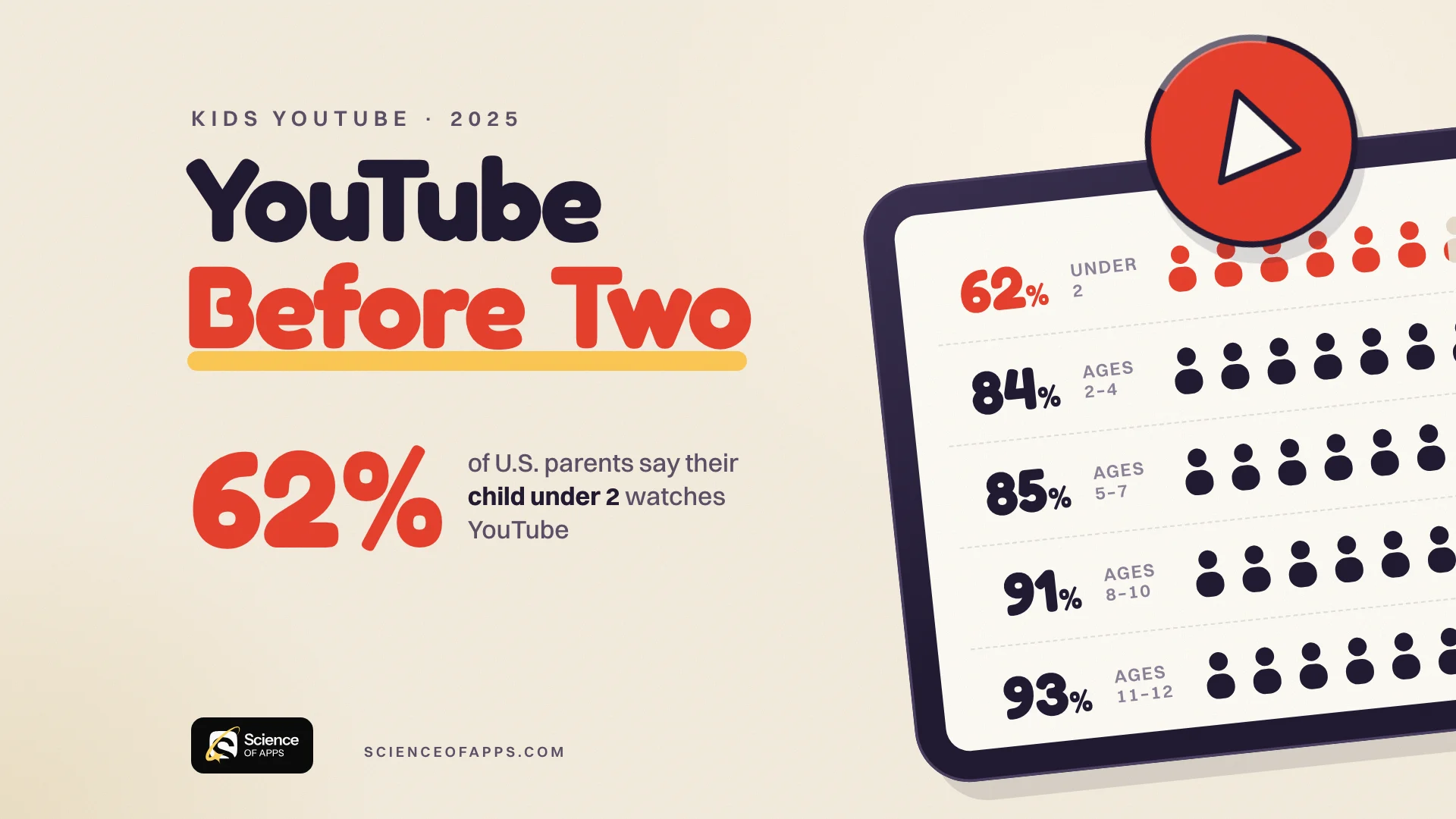
- 62% of U.S. parents of a child under 2 say their child watches YouTube, up from 45% in 2020 (Pew Research Center, 2025).
- 51% of parents of kids 12 and under say their child watches YouTube daily, up from 43% in 2020; for 11- to 12-year-olds it is 60%.
- Children aged 0 to 8 spend 28 minutes a day on longer app videos such as YouTube and 14 minutes on short-form video, up from 1 minute in early 2020 (Common Sense Media, 2025).
Key takeaways
- Daily viewing follows the same slope, from 35% under 2 to 60% among 11- and 12-year-olds.
- Common Sense measured short-form viewing (TikTok, Instagram Reels and YouTube Shorts) separately for the first time: 14 minutes a day on average, compared with one minute in early 2020, and 22 minutes a day for 5- to 8-year-olds.
- Pew found that 74% of all parents say they ever watch YouTube with their child.
Kids YouTube viewing no longer starts at school age. It starts in the high chair. According to Pew Research Center's October 2025 report on children and screens, 62% of parents of a child under 2 say their child watches YouTube, and 35% say that happens every day. Five years earlier the under-2 figure was 45%.
This post brings together the two most recent large U.S. surveys on how much YouTube kids watch: Pew's How Parents Manage Screen Time for Kids (3,054 parents of children 12 and under, surveyed May 13 to 26, 2025, published Oct. 8, 2025) and The 2025 Common Sense Census: Media Use by Kids Zero to Eight (1,578 parents of children 8 and under, surveyed Aug. 5 to 29, 2024, published Feb. 26, 2025). Both rely on parent reports, so they measure what parents know and say, not logged watch time.
Kids YouTube statistics: how many children watch, by age?
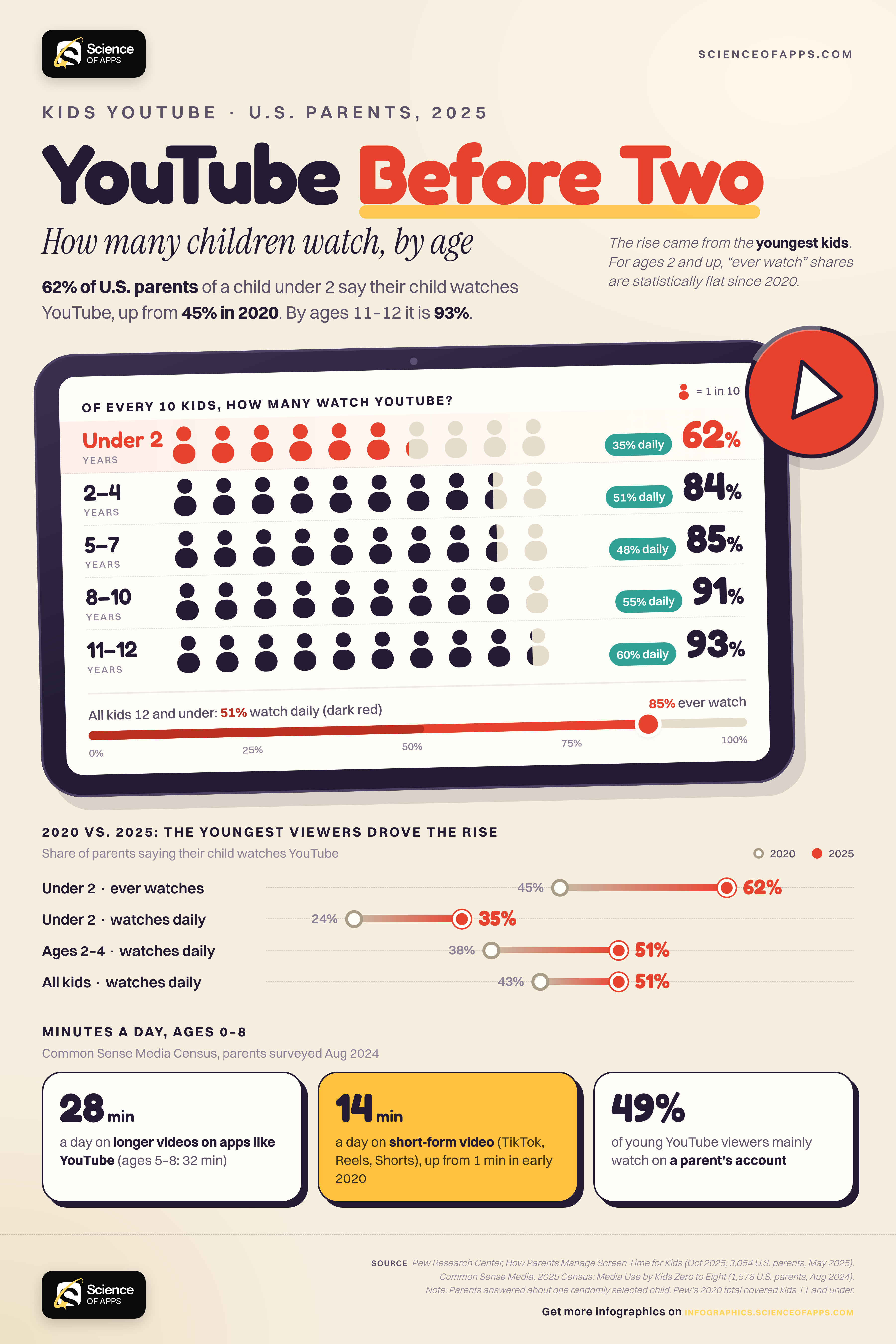
The table below shows every figure in the kids YouTube infographic, with its source and survey date.
| Measure | Group | Value | Source, as of |
|---|---|---|---|
| Child ever watches YouTube | Under 2 | 62% | Pew, May 2025 |
| Child ever watches YouTube | Ages 2–4 | 84% | Pew, May 2025 |
| Child ever watches YouTube | Ages 5–7 | 85% | Pew, May 2025 |
| Child ever watches YouTube | Ages 8–10 | 91% | Pew, May 2025 |
| Child ever watches YouTube | Ages 11–12 | 93% | Pew, May 2025 |
| Child ever watches YouTube | All, 12 and under | 85% | Pew, May 2025 |
| Child watches YouTube daily | Under 2 | 35% | Pew, May 2025 |
| Child watches YouTube daily | Ages 2–4 | 51% | Pew, May 2025 |
| Child watches YouTube daily | Ages 5–7 | 48% | Pew, May 2025 |
| Child watches YouTube daily | Ages 8–10 | 55% | Pew, May 2025 |
| Child watches YouTube daily | Ages 11–12 | 60% | Pew, May 2025 |
| Child watches YouTube daily | All, 12 and under | 51% | Pew, May 2025 |
| Child ever watches YouTube, 2020 | Under 2 | 45% | Pew, 2020 |
| Child watches YouTube daily, 2020 | Under 2 | 24% | Pew, 2020 |
| Child watches YouTube daily, 2020 | Ages 2–4 | 38% | Pew, 2020 |
| Child watches YouTube daily, 2020 | All, 11 and under | 43% | Pew, 2020 |
| Child ever watches YouTube, 2020 | All, 11 and under | 80% | Pew, 2020 |
| Longer videos on apps such as YouTube, per day | Ages 0–8 | 28 min | Common Sense, Aug 2024 |
| Longer videos on apps such as YouTube, per day | Ages 5–8 | 32 min | Common Sense, Aug 2024 |
| Short-form video (TikTok, Reels, Shorts), per day | Ages 0–8 | 14 min (early 2020: 1 min) | Common Sense, Aug 2024 |
| YouTube viewers who mainly watch on a parent's account | Ages 0–8 | 49% | Common Sense, Aug 2024 |
Use is near-universal once children start school. Pew's detailed tables show the share of parents who say their child ever watches YouTube climbs from 62% under age 2 to 84% at ages 2 to 4, 85% at 5 to 7, 91% at 8 to 10 and 93% at 11 to 12. Daily viewing follows the same slope, from 35% under 2 to 60% among 11- and 12-year-olds.
The change since 2020 is concentrated at the bottom of the age range. Pew reports that the under-2 share rose from 45% to 62%, while the shares for children 2 and older are statistically unchanged. Daily viewing rose from 24% to 35% for under-2s and from 38% to 51% for 2- to 4-year-olds. Across all children, daily use went from 43% to 51%; note that the 2020 survey covered children 11 and under and the 2025 survey children 12 and under, and Pew says the comparisons are largely unchanged when only children 11 and under are counted.
Income matters too. Pew found that 55% of lower-income and 51% of middle-income parents say their child watches YouTube daily, compared with 40% of upper-income parents.
How much YouTube do kids watch each day?
Pew measures reach, not minutes. For time spent, the best recent source is the 2025 Common Sense Census. It found that children aged 0 to 8 spend an average of 28 minutes a day watching longer videos on apps such as YouTube, down from 39 minutes in early 2020. By age the figure is 17 minutes for under-2s, 29 minutes for 2- to 4-year-olds and 32 minutes for 5- to 8-year-olds.
The decline in longer videos does not mean less video overall. Common Sense measured short-form viewing (TikTok, Instagram Reels and YouTube Shorts) separately for the first time: 14 minutes a day on average, compared with one minute in early 2020, and 22 minutes a day for 5- to 8-year-olds. Total screen time for the age group was essentially flat, at 2 hours 27 minutes a day versus 2 hours 24 minutes in 2020. The viewing has shifted toward shorter clips.
Common Sense also measured daily YouTube viewing at 36% of children aged 0 to 8 in 2024, up from 24% in 2017. That is lower than Pew's 51% daily figure because the age ranges, question wording and survey dates differ. The two numbers should not be compared directly.
Are parents watching YouTube with their kids?
Parents are usually nearby. Pew found that 74% of all parents say they ever watch YouTube with their child. Among parents whose under-2 watches, that rises to 95%, and it is 84% among parents of 5- to 12-year-old viewers. Common Sense found a similar pattern: 62% of parents of children 0 to 8 co-watch YouTube at least some of the time, but only 17% co-watch TikTok.
Which account the child uses matters for safety settings. Per the Common Sense Census, 49% of young children who watch YouTube mainly do so on a parent's account, 24% watch without logging in and 15% use their own account. Among children with their own account, 88% use a YouTube Kids account. As a result, a large share of young children's viewing happens outside a child profile and the content filters that come with one.
What this means for app builders
Autoplay is a default-effect problem. When one video ends and the next starts on its own, stopping takes effort and continuing takes none. Young children rarely make that effort. YouTube Kids lets a parent switch on “Disable autoplay”, and once it is on the child cannot turn autoplay back on. Under the standard profile settings, autoplay is a setting the child can change themselves unless a parent has turned it off. For anyone building for children, the lesson is that an off switch hidden in a menu is not enough. A safe default is what protects most children.
Recommendation loops reward watch time, not wellbeing. A feed tuned for engagement learns what keeps a toddler watching, and that is rarely what a parent would pick. Kid-safe products can still recommend content. They should do it from a narrower, curated pool, cap the session (for example by ending on a calm closing screen instead of a new thumbnail) and put the parent in the loop.
Design for the shared screen. With 49% of young viewers on a parent's account and most parents co-watching, the real user is often a parent and child together on one device. Fast profile switching, a visible kid mode and timers a parent can set in one tap matter more than features aimed at a solo child user.
Methodology and sources
Figures were read directly from the primary sources on Nov 27, 2026. Pew figures come from the report text and its appendix tables, which print exact percentages; parents with more than one child aged 12 or under answered about one randomly selected child. The margin of sampling error for the full Pew sample is plus or minus 2.2 percentage points. Common Sense figures come from the report PDF (Key Tables A and B, Table 9 and the online video section). No values were estimated or read off chart bars. Pew and Common Sense figures use different ages, questions and dates and are not directly comparable.
The full list of sources, with links, is below.
Frequently asked questions
How many kids watch YouTube?
According to Pew Research Center (survey of 3,054 U.S. parents, May 2025), 85% of parents of a child 12 or younger say their child watches YouTube, and 51% say the child watches daily. The share ranges from 62% for children under 2 to 93% for 11- and 12-year-olds.
How much YouTube do kids watch per day?
The 2025 Common Sense Census (1,578 U.S. parents, surveyed August 2024) found children aged 0 to 8 spend an average of 28 minutes a day on longer videos on apps such as YouTube, plus 14 minutes a day on short-form video such as YouTube Shorts, TikTok and Reels.
Are more babies watching YouTube than before?
Yes. Pew Research Center found the share of parents saying their child under 2 watches YouTube rose from 45% in 2020 to 62% in 2025, and daily viewing for under-2s rose from 24% to 35%.
Do kids use YouTube Kids or regular YouTube?
Per Common Sense Media's 2025 Census, 49% of children 0 to 8 who watch YouTube mainly use a parent's account, 24% watch without logging in and 15% use their own account. Among those with their own account, 88% use a YouTube Kids account.
Where does this data come from, and how current is it?
The figures come from Pew Research Center, Common Sense Media, Google, each linked in the sources below. Figures were read directly from the primary sources on Nov 27, 2026. Pew figures come from the report text and its appendix tables, which print exact percentages; parents with more than one child aged 12 or under answered about one randomly selected child.
Sources
- Pew Research Center — How Parents Manage Screen Time for Kids (Oct 8, 2025; accessed Nov 2026)
- Pew Research Center — 1. How parents describe their kids' tech use (Oct 8, 2025)
- Pew Research Center — Appendix: Detailed tables (Oct 8, 2025)
- Pew Research Center — Methodology (Oct 8, 2025)
- Common Sense Media — The 2025 Common Sense Census: Media Use by Kids Zero to Eight, full report PDF (Feb 26, 2025)
- Common Sense Media — 2025 Census report page (Feb 26, 2025)
- Common Sense Media — Press release: Digital Childhood Starts at Age Two (Feb 26, 2025)
- Google — YouTube Kids Help: Parental controls for YouTube Kids profiles (accessed Nov 2026)
- Google — YouTube Kids Help: Manage YouTube Kids profile settings (accessed Nov 2026)
- Checked November 29, 2026. Figures that change — fees, salaries, prices — are reviewed every six months; if something is out of date, tell us.
Where to go from here
- Dopamine Detox: How Apps Hook Your Brain, and What the Science Actually Says — Science of Apps Infographics
- The Most Popular AI Tools in 2026, Ranked by Web Traffic — Science of Apps Infographics
- Original dataAverage screen time in 2026: how long people spend online, in India and worldwide, and what research says it doesThe average online adult spends about 33½ hours a week on online media, 18½ on social and video feeds; Indians average five hours a day on phones. The data.
- Science of Apps InfographicsDopamine Detox: How Apps Hook Your Brain, and What the Science Actually SaysDopamine detox, fact-checked: you can't deplete dopamine, but variable rewards do hook users. 40% of U.S. teens are online almost constantly (Pew, 2025).
- Science of Apps - LaunchpadWhat is Product Hunt? How launches, the leaderboard, featuring, makers and Product of the Day actually workWhat Product Hunt is and how it works in 2027: daily launches, the leaderboard, featuring, makers and hunters, Product of the Day and the rules, explained.
- Science of Apps - LaunchpadIs SEO dead? What the data says about AI search vs SEO for startups: Pew's click study, Google's own traffic claims and where a founder's hours should goIs SEO dead? Pew found fewer clicks when AI summaries appear; Google says clicks are stable. What both mean for a startup's AI search vs SEO plan.
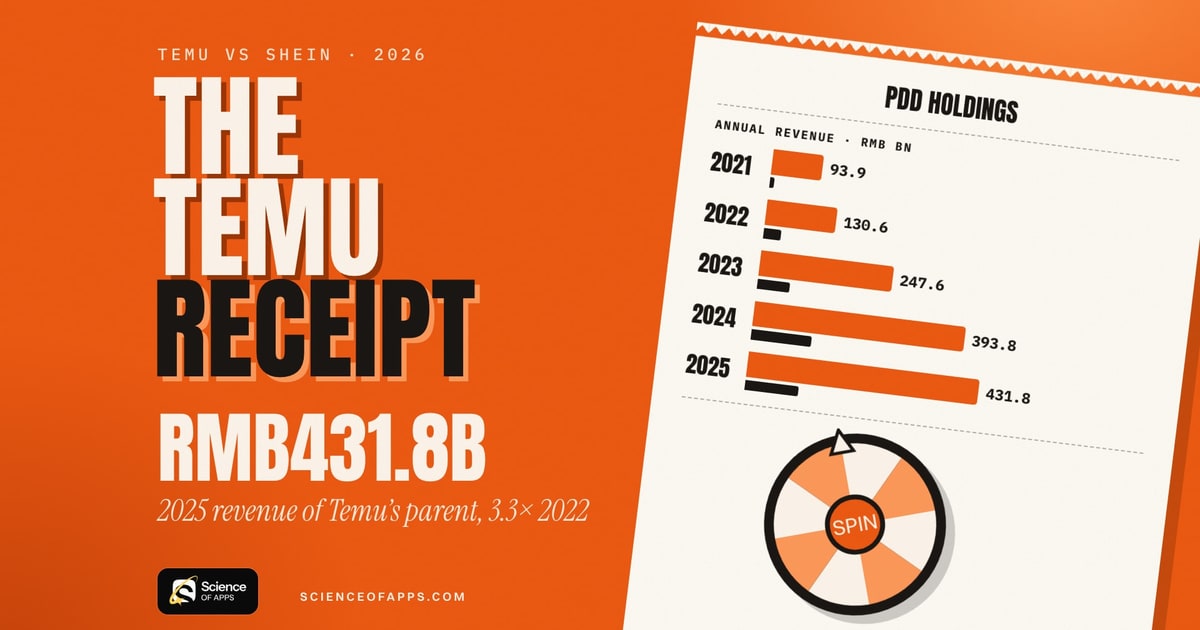
- Science of Apps InfographicsTemu vs Shein in 2026: The Numbers Behind the Rise (and Is Temu Safe?)Temu's parent made RMB431.8B in 2025 but profit fell 12%; US downloads dropped 73% in spring 2025 and the EU fined Temu €200M. The data, and is Temu safe?
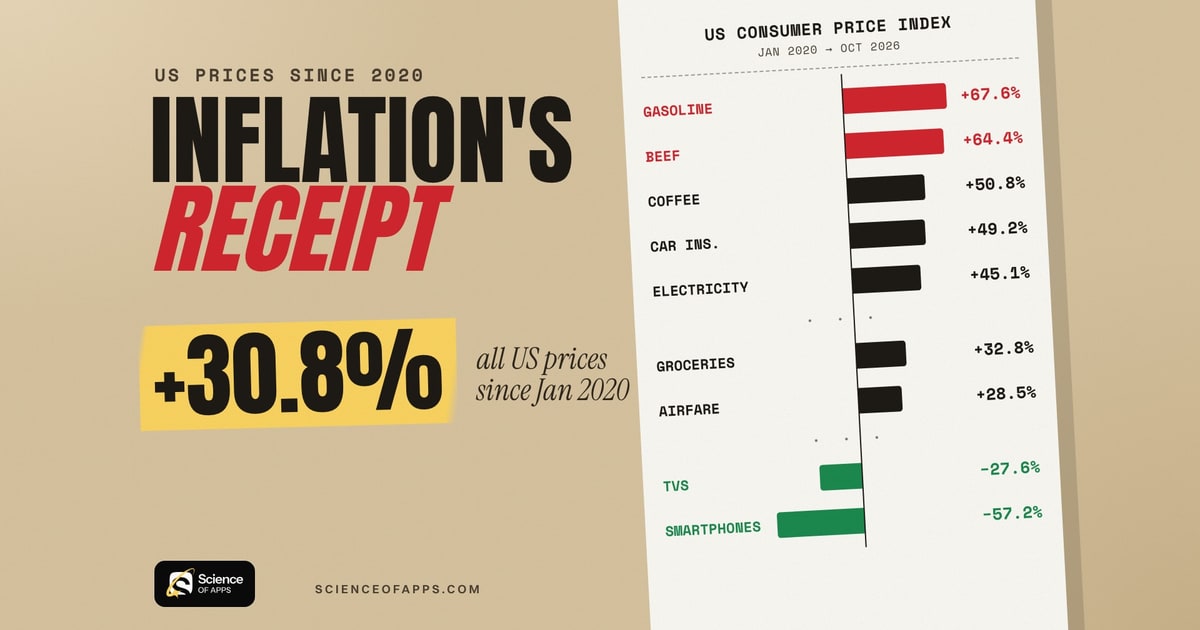
- Science of Apps InfographicsInflation Since 2020: What Got More Expensive and What Got CheaperUS prices rose 30.8% from Jan 2020 to Oct 2026 (BLS CPI). See what got more expensive, from gasoline to beef, and what got cheaper: smartphones and TVs.


Get the ideas, not the noise.
Sign up with Google and we’ll send you short UX psychology tips by email — why people tap, stall and leave, and what to do about it. Unsubscribe anytime. Prefer something to keep? Get the free Laws of UX guide as a PDF.
See what your own users' numbers are telling you.
A behavioral UX audit of your app or SaaS product: why users hesitate, stall and leave, and a prioritized fix list. Fixed price, 2–4 weeks.