 By
Quick answer: How do startups do market research for free?
- Start with people: 10–20 problem interviews beat any report.
- Demand signals: Google Trends (relative interest) and Keyword Planner (search volume), both free.
- Competitors: read their reviews, pricing pages and launch pages.
- Market size: bottom-up from public statistics, not a top-down guess.
- Smoke test: a landing page and waitlist measure real intent.
Key takeaways
- Talk about the customer's problem, not your idea.
- Behaviour beats opinions: sign-ups, pre-orders and searches count more than compliments.
- Competitors' one-star reviews are a free feature list.
- A bottom-up market size is more believable than a big top-down number.
- Market research doesn't end at launch; keep a running file.
Paid market reports cost a lot and rarely answer a startup's real questions: does this problem hurt enough, who has it, what do they use today, and will they switch? You can answer most of those free, in two or three weeks, with methods that need time rather than money. This guide covers nine free market research methods for startups, in the order most founders should use them, then shows how to turn the results into a short market analysis and competitive analysis. Tool facts were checked on each tool's own page on 18 November 2026. Jump to the nine methods, market analysis or competitive analysis.
Market research for startups: the nine free methods at a glance
| # | Method | Answers | Tool | Time |
|---|---|---|---|---|
| 1 | Customer interviews | Is the problem real and painful? | Calls, The Mom Test | 1–2 weeks |
| 2 | Search trends | Is interest rising, seasonal or regional? | Google Trends | 1 hour |
| 3 | Search volume | How many people search for it? | Google Keyword Planner | 1 hour |
| 4 | Community listening | How do buyers describe it? | Indie Hackers, Hacker News, forums | 2–3 hours |
| 5 | Review mining | What do users hate about competitors? | G2, Capterra, app stores | 2–3 hours |
| 6 | Company databases | Who's funded in this space? | Crunchbase | 1 hour |
| 7 | Launch platforms | What launched recently? | Product Hunt, the Launchpad | 1 hour |
| 8 | Public statistics | How big is the market? | Census and statistics offices | 2–4 hours |
| 9 | Smoke test | Will people actually sign up? | A landing page and a form | 1–2 weeks |
Table: Nine free market research methods for startups (Science of Apps editorial selection, checked 18 Nov 2026)
1. Customer interviews: is the problem real?
Every other method measures interest at a distance. Interviews tell you why. Talk to people who might have the problem about their past behaviour: the last time it happened, what they did, what it cost them, what they tried. Don't pitch your idea; people are polite and will say it's great.
Two free guides set the standard. Rob Fitzpatrick's The Mom Test is about asking questions that even your mum can't lie to you about, and Y Combinator's How to talk to users covers finding people and running the conversation. Our customer interview script has questions you can copy.
Best for: every startup, before anything else.
2. Google Trends: which way is interest moving?
Google Trends shows relative search interest over time and by region. Google's help page explains that each data point is divided by total searches for that place and time, then scaled from 0 to 100. So it tells you direction (rising, falling, seasonal) and where interest is strongest, not how many people search.
Try: compare your problem's phrase with two or three competitor names over five years.
3. Google Keyword Planner: how many people search?
- Cost
- Free
- Needs
- A Google Ads account (after you create a campaign)
- Shows
- Monthly search volume ranges and related keywords
- Catch
- Smart Mode accounts must switch to Expert Mode
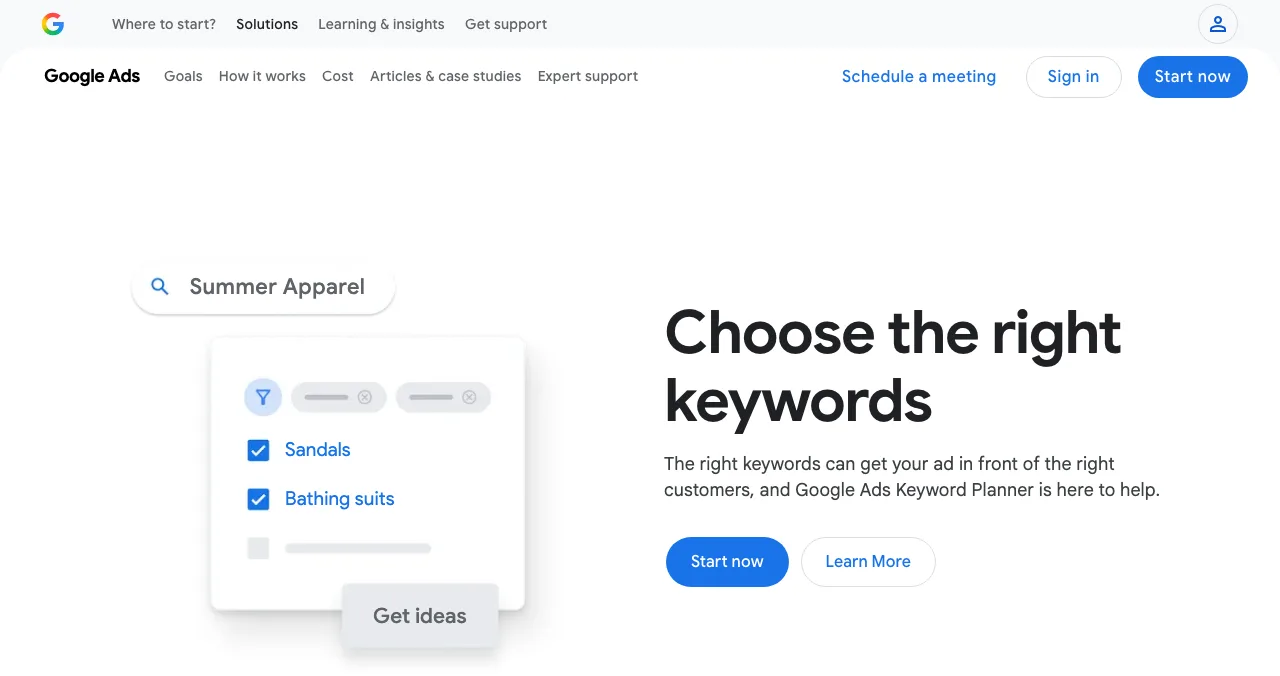
Google describes Keyword Planner as "a free resource" for building keyword lists, available to anyone with a Google Ads account. It shows search volumes for your problem's phrases and suggests related ones, which doubles as a list of the words customers use.
4. Community listening: how do buyers talk?
Read the places your buyers already discuss the problem: niche forums, subreddits, Slack and Discord groups, and founder communities such as Indie Hackers and Hacker News. Search for the problem, not your product category. Save exact phrases; they become your headline and keywords. Read each community's rules before posting, and listen before you ask.
5. Review mining: what do users hate about competitors?
Competitors' reviews on G2, Capterra and the app stores are free customer research someone else paid for. Read the three-star reviews first; they're the most balanced. Tally complaints by theme: price, missing feature, support, speed, learning curve. Those themes are where you can be different.
6. Company databases: who's funded?
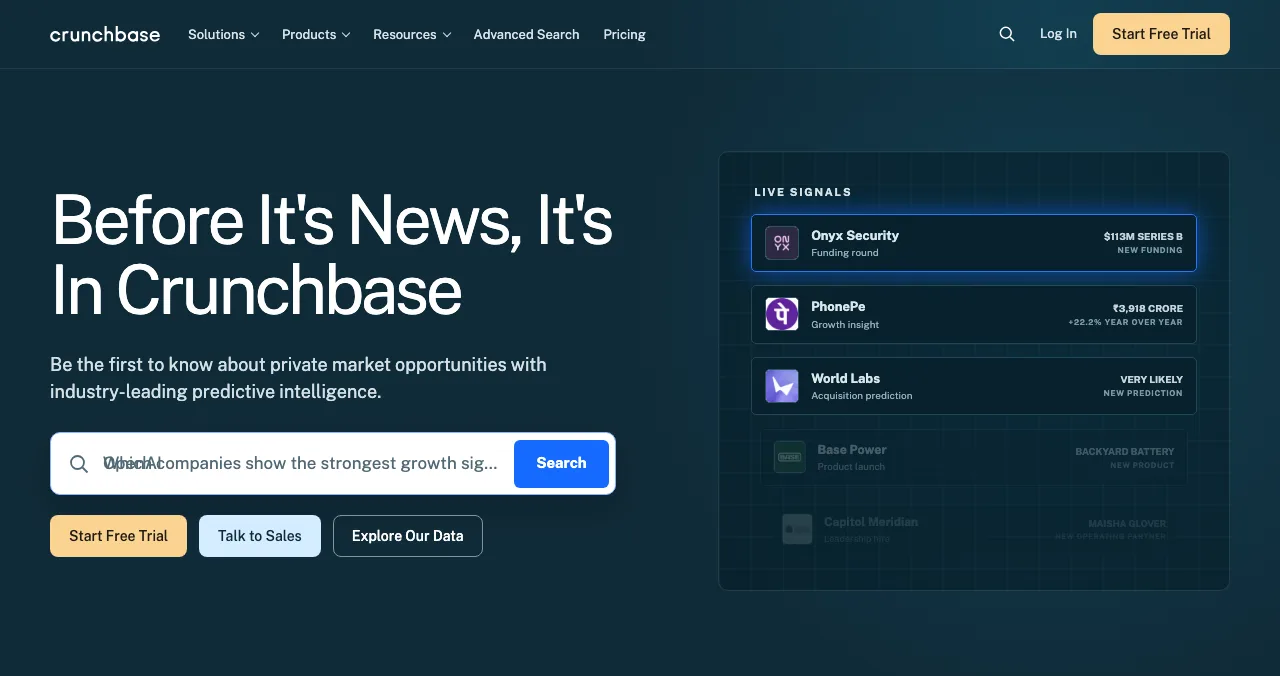
Crunchbase lists companies, funding rounds and investors. It has a free tier with limits; our guide on whether Crunchbase is free covers what you get. Use it to find who has raised money in your space recently, which tells you where investors think the market is going.
7. Launch platforms: what launched recently?
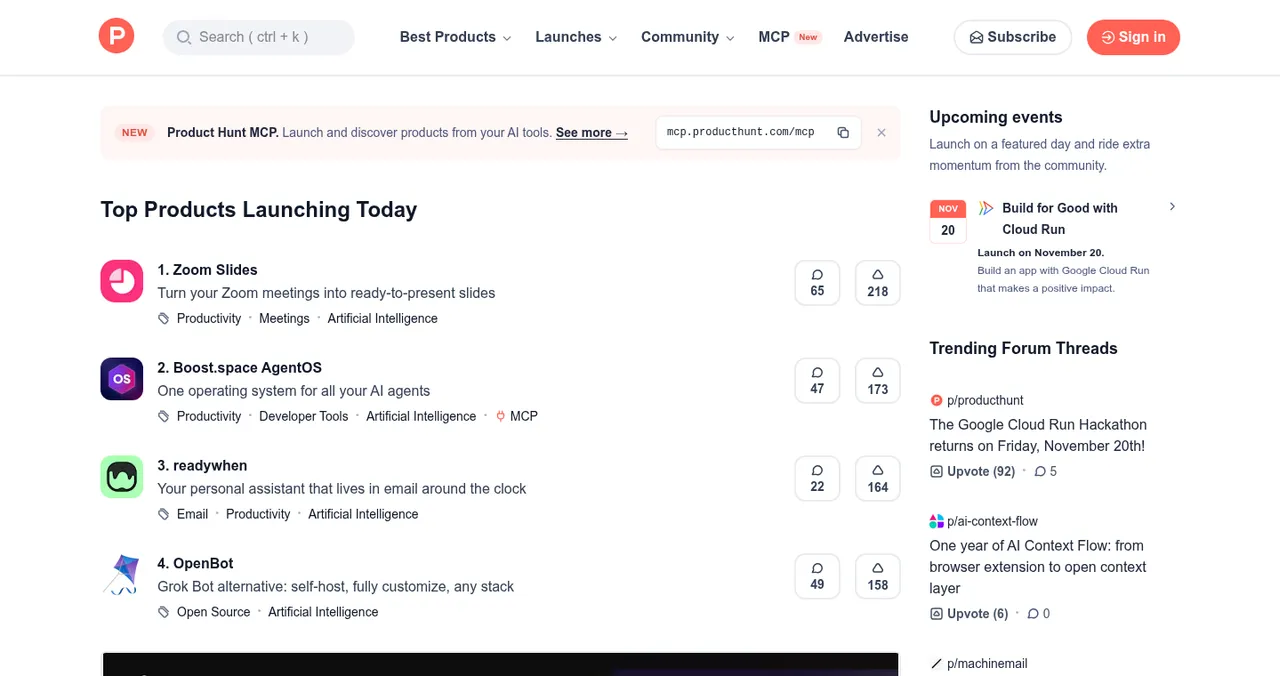
Launch platforms show what's new before it appears in databases. Browse Product Hunt and the Science of Apps Launchpad by category to find young competitors, read how they describe themselves, and see which problems keep coming up.
8. Public statistics: how big is the market?
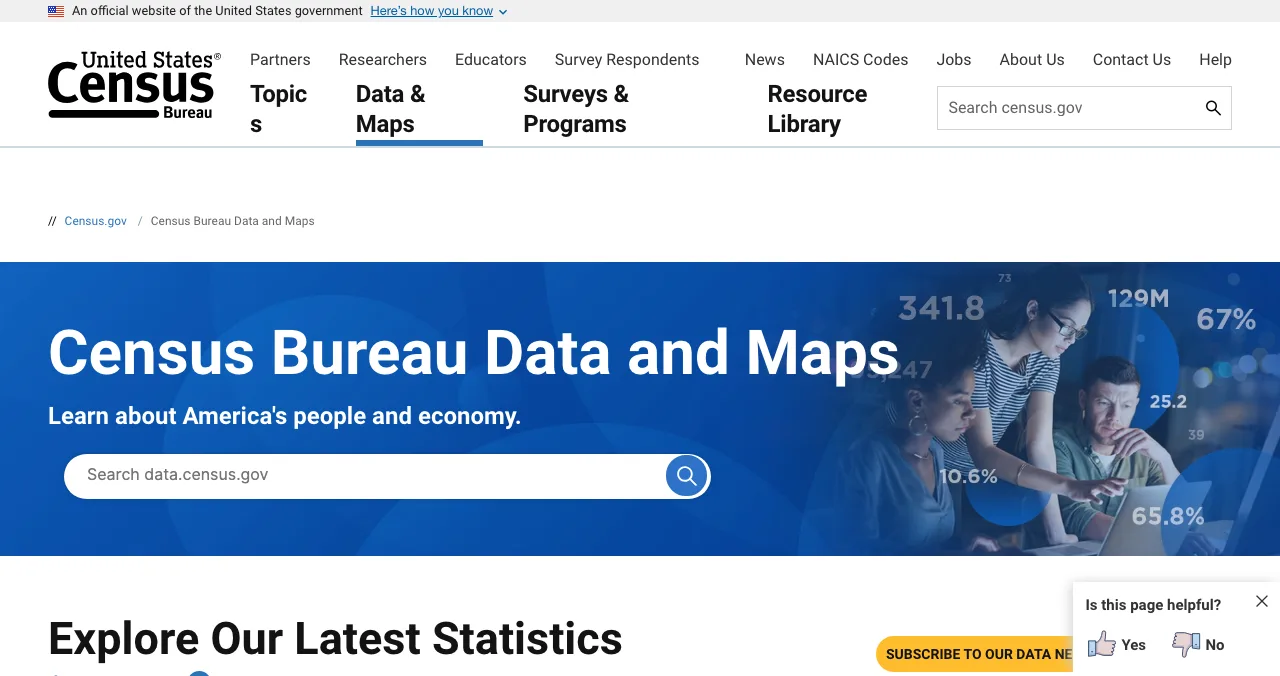
National statistics offices publish free data on population, businesses, industries and spending. In the US, the Census Bureau covers people and the economy; most countries have an equivalent office. Use these numbers to count your customers bottom-up (see market analysis).
9. A smoke test: will people actually sign up?
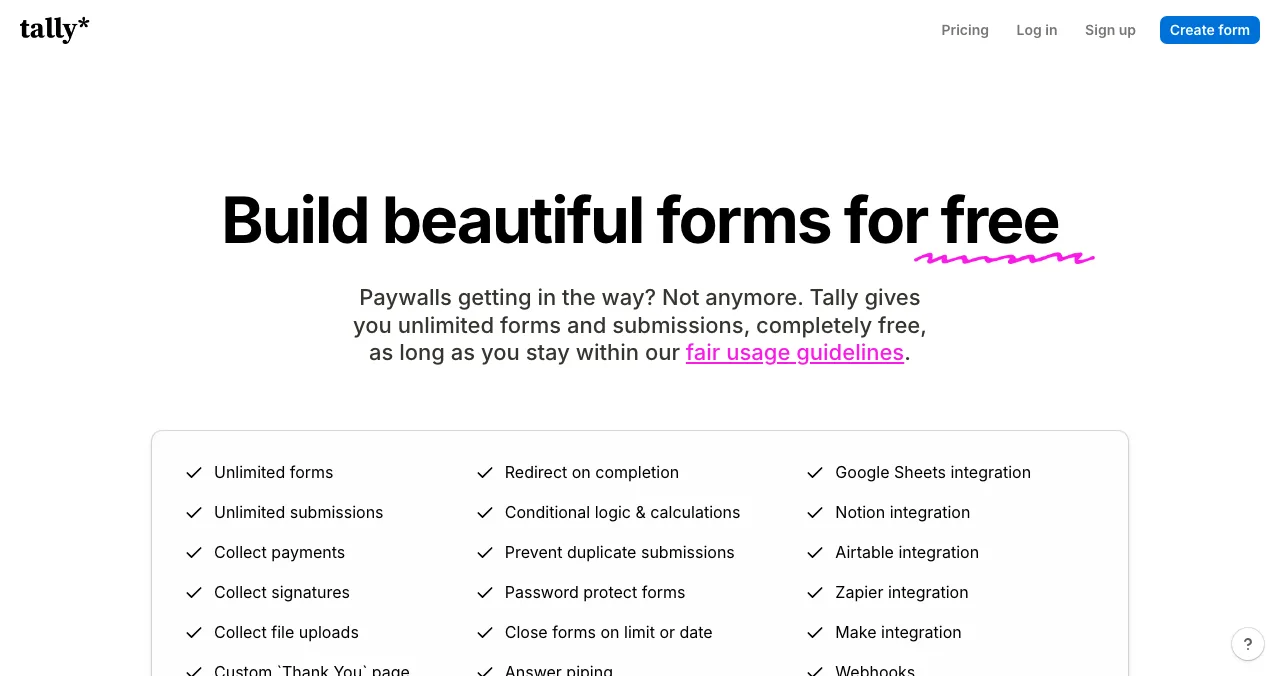
Build one page that describes the product as if it existed, with one action: join the waitlist, pre-order or book a call. Send targeted visitors from the communities in method 4 and count sign-ups. A free form tool such as Tally is enough. Behaviour is the strongest signal you'll get before building.
How to do a market analysis for startups
A market analysis for startups turns research into a page or two that an investor or co-founder can check. Size the market bottom-up: count the customers you could realistically reach, then multiply by what each would pay a year.
| Layer | Question | Illustrative example |
|---|---|---|
| Total addressable market | Everyone with the problem | All small accounting firms in your country |
| Serviceable market | Those your product fits | Firms with 2–20 staff that use cloud software |
| Obtainable market | Those you can reach in 2–3 years | The share your channels can realistically reach |
| Price | What each pays per year | From your interviews and competitors' pricing pages |
Table: A bottom-up market sizing template (the example is hypothetical)
Write down the source for every number. A smaller number with evidence is more convincing than a big one without.
How to do a competitive analysis for startups
A competitive analysis for startups compares you with direct competitors, indirect alternatives (spreadsheets, agencies) and doing nothing. Our competitor analysis template has a table you can copy.
| Competitor | Target customer | Pricing model | Strength | Top complaint | Your difference |
|---|---|---|---|---|---|
| Direct rival A | |||||
| Indirect alternative | |||||
| Doing nothing |
Table: Competitive analysis template
Market research on the Science of Apps Launchpad
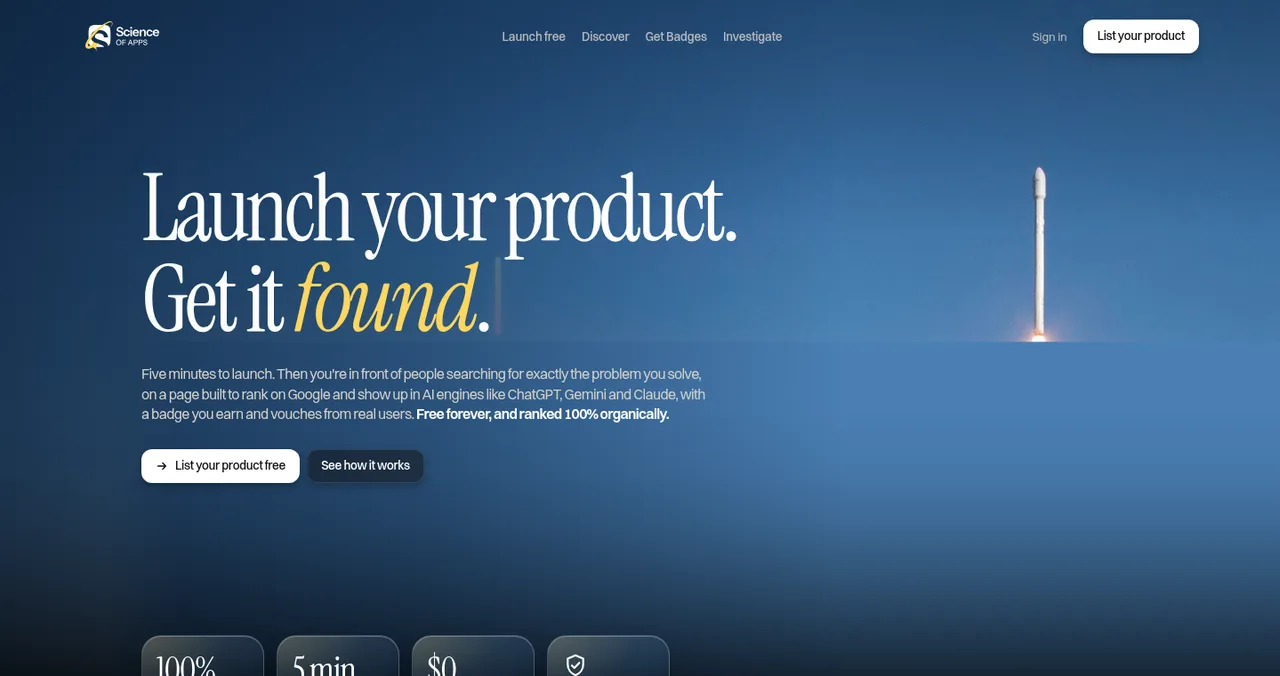
The Science of Apps Launchpad is a free, permanent place to list a startup, SaaS, app or AI product, ranked by relevance, editorial picks and community interest, never payment. It helps your research twice: browse it to find competitors, and list your own product to be found. Once you're live, the product investigation tests your product end to end and the reports place it in its market. The Economy report includes a snapshot of your category; the Premium report adds a full competition chapter with a positioning map, plus customer themes and jobs to be done.
Where you stand, and what to fix
List free, then order the report that fits your stage.

 Economy
See what new customers see
- Store listing and homepage, screen by screen
- Scorecard against 60 Laws of UX
- The fixes worth most
PremiumThe full diagnosis and the plan
- Every screen, every finding, every flow
- All 60 laws with evidence and fixes
- 8 strategy chapters and a 90-day roadmap
Fact-checked against the evidence. Private by default.
A three-week research plan
- Week 1
Desk research
Methods 2–8: trends, volumes, communities, reviews, databases, launch platforms, statistics.
- Week 2
Interviews
Ten or more problem interviews; tally the themes.
- Week 3
Smoke test
One landing page, one action, targeted traffic; write the market and competitive analysis.
Mistakes to avoid

- Pitching in interviews — ask about their problem, not your idea
- Trusting compliments — count sign-ups and pre-orders, not "I'd use that"
- Reading Trends as volume — it's relative interest on a 0–100 scale
- Top-down sizing only — "1% of a huge market" convinces no one
- Ignoring the do-nothing option — it's often your biggest competitor
- Researching once — keep a running file as the market moves
Ready to put your research to work?
How we know
Tool facts come from Google Trends Help, Google Ads' Keyword Planner page, Crunchbase, the US Census Bureau, Y Combinator and The Mom Test site; Launchpad report contents from launchpad.scienceofapps.com/pricing. All were read on 18 November 2026. The method selection and templates are Science of Apps' editorial framework; the market-sizing example is hypothetical. Science of Apps runs the Launchpad.
Key terms, defined
- Market research: collecting evidence about customers, demand and competitors before and after building.
- Market analysis: a summary of who the customers are, how many there are, what they pay and where the gap is.
- Competitive analysis: a structured comparison with direct rivals, alternatives and doing nothing.
- TAM, SAM, SOM: total addressable, serviceable and obtainable market, from widest to most realistic.
- Smoke test: a page for a product that doesn't exist yet, used to measure real sign-up intent.
- Bottom-up sizing: estimating a market by counting reachable customers and multiplying by price.
Frequently asked questions
How do startups do market research for free?
Interview 10–20 people who have the problem, check search demand with Google Trends and Google Keyword Planner, read the communities where buyers talk, mine competitors' reviews on G2 and Capterra, scan Crunchbase and launch platforms for rivals, size the market from free public statistics, and run a landing-page smoke test to measure real interest.
What is market analysis for startups?
Market analysis turns research into a short document: who the customers are, how many there are, what they currently use, what they pay, how fast the market is changing and where the gap is. For a startup, it should include a bottom-up estimate of the reachable market and the evidence behind each number, not just a large industry figure.
How do I do a competitive analysis for a startup?
List direct competitors, indirect alternatives and the do-nothing option. For each, record who it targets, its pricing, its strongest feature, what reviewers complain about and how it acquires customers. Then mark where you're clearly different. Read their pricing pages, product pages, launch pages and one-star reviews; those show the gaps.
How many customer interviews do I need?
There's no fixed rule. Many founders aim for 10–20 conversations per customer segment and stop when answers start repeating. Ask about past behaviour and real problems, not whether people would use your idea. The Mom Test and Y Combinator's guide on talking to users are good free guides to asking questions that don't invite polite lies.
Is Google Trends good for market research?
It's useful for direction, not size. Google Trends shows relative search interest on a 0–100 scale, normalised to all searches in a place and time, so it tells you whether interest is rising, seasonal or regional. For absolute search volumes, use Google Keyword Planner, which is free with a Google Ads account.
What's the cheapest way to test demand before building?
A smoke test. Build a one-page site that describes the product and asks visitors to join a waitlist, pre-order or book a call. Send targeted traffic from communities or a small ad budget and measure the sign-up rate. Real sign-ups are stronger evidence than survey answers, because they cost the visitor something.
Sources
- Google Trends Help — FAQ about Google Trends data (checked 18 Nov 2026)
- Google Ads — Keyword Planner (checked 18 Nov 2026)
- Y Combinator — How to talk to users (checked 18 Nov 2026)
- The Mom Test — Rob Fitzpatrick (checked 18 Nov 2026)
- U.S. Census Bureau — Data and Maps (checked 18 Nov 2026)
- Science of Apps — Launchpad pricing: report contents (checked 18 Nov 2026)
- Crunchbase — Homepage (checked 18 Nov 2026)
- Checked November 18, 2026. Figures that change — fees, salaries, prices — are reviewed every six months; if something is out of date, tell us.
Where to go from here
- Competitor analysis template — fill-in table
- Customer interview script — questions that work
- Validate a startup idea — before you build
- Templates & toolsCompetitor analysis template: how to analyse rival apps, with a scoring grid and a worked exampleA competitor analysis template for apps and startups: who to include, a scoring grid, UX teardown prompts, review mining and a worked example.
- Science of Apps - LaunchpadChatGPT prompts to validate a business idea: 10 copy-paste prompts for assumptions, competitors, interview questions and risks, and why AI can't replace talking to customersChatGPT prompts to validate a business idea: 10 prompts for assumptions, competitors and interview scripts, plus why AI can't replace customers.
- Science of Apps - LaunchpadHow to launch a SaaS product in 2027: from private beta to public launch to the first paying customersHow to launch a SaaS in 2027, step by step: private beta, pricing, onboarding that activates, a permanent page, launch days, and turning trials into customers.
- Science of Apps - LaunchpadA go-to-market strategy for startups on one page: the eight boxes of a GTM canvas, a worked example, the B2B and self-serve motions, and a 90-day launch planA go-to-market strategy template for startups: an eight-box GTM canvas covering customer, problem, promise, price, channels and motion, plus a 90-day plan.
- Science of Apps - LaunchpadHow to launch a startup in 2027: from a validated problem to a working product, a public launch and your first customersHow to launch a startup in 2027, step by step: validate the problem, build a small product, test it, publish a permanent page, launch and win first users.
- Science of Apps - LaunchpadStartup due diligence checklist: the 60 questions investors ask about team, market, product, traction, financials and legal, the documents to prepare, and how to answer the product half with evidenceA startup due diligence checklist: 60 questions investors ask on team, market, product, traction, financials and legal, plus the data room and a product report.






Get the ideas, not the noise.
Sign up with Google and we’ll send you short UX psychology tips by email — why people tap, stall and leave, and what to do about it. Unsubscribe anytime. Prefer something to keep? Get the free Laws of UX guide as a PDF.
Launch day ends. Your listing shouldn't.
List free on the Science of Apps Launchpad for a permanent profile that buyers can find; its reports include a competition section, from a category snapshot to a full chapter with a positioning map.