 By
Quick answer: How do you write a product launch press release?
- One page: headline, dateline, the news, proof, a quote, availability, boilerplate, contact.
- Lead with the user's benefit, not 'X is proud to announce'.
- One proof point: a number, a customer result or a beta finding you can stand behind.
- One plain link to a permanent product page; no keyword-stuffed anchor text.
- Send it personally to the few writers who cover your space.
Key takeaways
- A launch release is a fact sheet that supports a story; it rarely is the story.
- Journalists decide from the headline and first paragraph.
- Specific, checkable facts beat adjectives every time.
- Google treats optimised anchor-text links in distributed press releases as link spam.
- The page you link to will be judged as hard as the release.
A product launch press release has one job: give a busy writer every fact they need to cover your launch, in the first thirty seconds. Most launch releases fail that test. They open with "proud to announce", bury what the product does, and link to a homepage that says something different. "Product launch press release" is searched about 210 times a month worldwide (Google Keyword Planner, global 12-month average). This page gives you a launch-specific template, an annotated example, and the rules for links, checked against Google's own guidance on 18 November 2026. For releases about funding, hires or partnerships, use our general startup press release guide. Jump to the template, the example or where to send it.
- Page is enough
- 1
- Questions the first paragraph answers
- 5
- Proof point you can stand behind
- 1
- Plain link to a permanent page
- 1
The anatomy of a product launch press release
| Section | What it does | Launch-specific detail |
|---|---|---|
| Headline | Says what launched and for whom | Product name + what it does + who it's for |
| Subheadline (optional) | Adds the proof | One number or result |
| Dateline | City and date | Your launch date |
| Lead paragraph | Who, what, when, where, why | Availability today, platforms, how to try it |
| Problem and solution | Why it matters | The user's problem in their words, then how the product solves it |
| Proof | Makes it credible | Beta results, a customer, a measured outcome |
| Quote | Adds a point of view | Why you built it, or what you learned, not adjectives |
| Availability and pricing | Lets a writer be precise | Price or free tier, platforms, regions, date |
| Boilerplate | Describes the company | Two or three factual sentences |
| Media contact | Makes follow-up easy | A person, an email, a phone number |
Table: Sections of a product launch press release and what each needs for a launch
Product launch press release template
Copy this and replace everything in square brackets. Delete any line you can't fill with a true, specific fact.
FOR IMMEDIATE RELEASE   [or: EMBARGOED UNTIL [date, time, time zone]]

[Product] launches to help [specific audience] [do the job] [in a measurable way]
[Optional subheadline: one proof point, e.g. "Beta users cut X from A to B"]

[CITY], [Date] — [Company] today launched [Product], a [category] that
helps [audience] [do the job]. [Product] is available today on
[platforms/regions] at [price / free tier], and can be tried at
[one plain link to the product page].

[Problem paragraph: the user's problem in two or three sentences, with a
fact that shows it's real.]

[Solution paragraph: how the product solves it, in plain words. Two or
three concrete features, each tied to an outcome.]

[Proof paragraph: what happened in beta or early use — a number, a named
customer who agreed to be named, or a finding. Only facts you can show.]

"[Quote with a point of view: why you built it, what surprised you, or
what you'll do next]," said [Name], [title] of [Company].

Availability
[Product] is available from [date] on [platforms] in [regions].
[Pricing: free tier, paid plans, trial.] Learn more at [product page].

About [Company]
[Two or three factual sentences: what you do, for whom, where you're
based, founded when.]

Media contact
[Name] · [email] · [phone]

###
A product launch press release example, annotated
The example below is illustrative: the company, product and numbers are invented to show the structure. Don't copy the facts; copy the shape.
What makes it work:
- The headline names the audience and the job, not the company's pride.
- The first paragraph answers all five questions (who, what, when, where, why) and gives the price and the one link.
- The proof is specific and checkable, and only one number is used.
- The quote has a point of view, and it's quotable without editing.
- The link points to a launch page, not a homepage that might change next week.
Where should the links in a launch press release point?
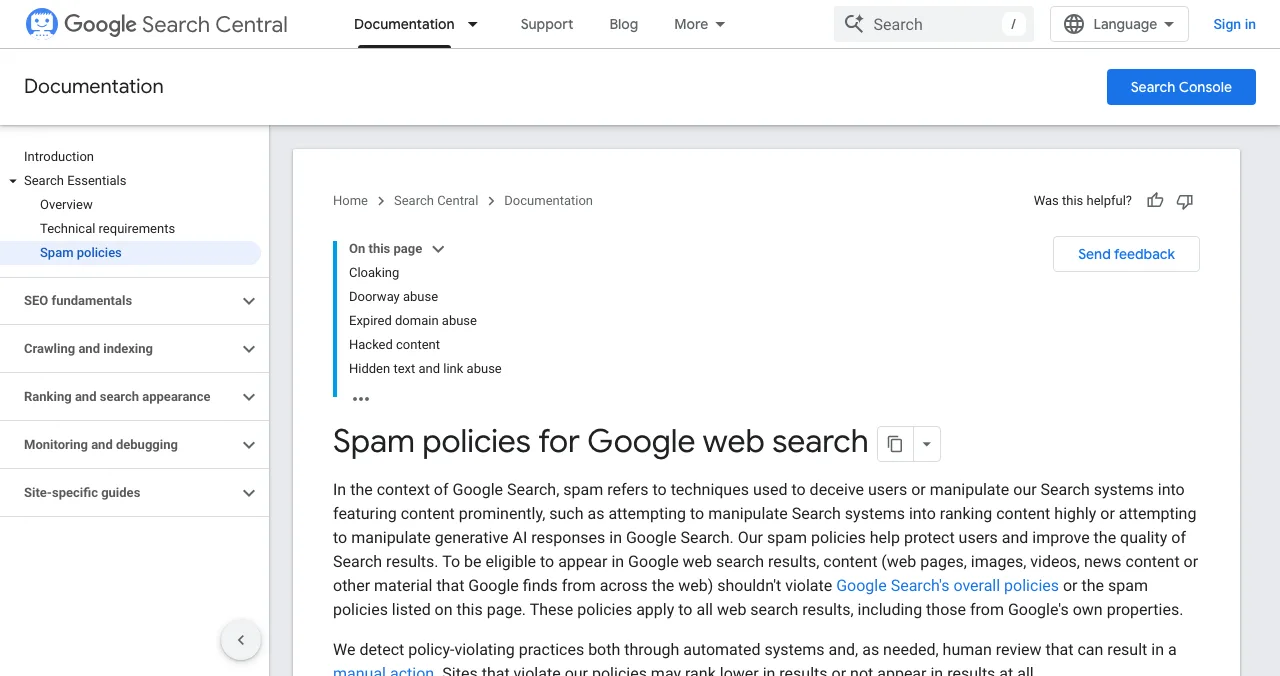
Two rules from Google, checked on 18 November 2026:
- No keyword-stuffed anchors: Google's spam policies list "links with optimized anchor text in articles, guest posts, or press releases distributed on other sites" as an example of link spam.
- Paid placements are qualified: Google asks for rel="sponsored" (or nofollow) on paid links, so a paid wire placement isn't a ranking shortcut.
So link once, plainly, to the page you want a writer and a reader to see. Tag it for analytics (Google recommends utm_source, utm_medium and utm_campaign) so you can tell which outlet sent visitors.
That page matters more than founders expect: a writer who clicks through and finds a confusing sign-up or a slow page stops writing. A free Science of Apps Launchpad listing gives the release a permanent destination with your screenshots, video and founder, ranked by relevance, never payment, and checks the product before the press does.
- Areas of your product tested
- 22
- Automatic measurements, desktop and mobile
- 39
- Expert checks behind your login
- 74
- Verdicts that rank what to fix first
- 5
Know what a journalist sees on your page
List free, then order the report that fits: the first impression, or the full diagnosis with a 90-day plan.

 Economy
See what new customers see
- Store listing and homepage, screen by screen
- Scorecard against 60 Laws of UX
- Customers, competitors and the fixes worth most
PremiumThe full diagnosis and the plan
- Every screen, every finding, every flow
- All 60 laws with evidence and fixes
- 8 strategy chapters and a 90-day roadmap
Researched from your live product and fact-checked against the evidence. Private to your team.
Where and when to send it

- Publish the release on your own site — a newsroom or launch page, on launch morning.
- Pick five to ten writers — people who've covered your category recently; read what they wrote.
- Email each one personally — two lines on why it's relevant to them, the release below, one link.
- Offer an embargo if you have time — a few days' notice with a clear date and time zone.
- Send to niche newsletters — the ones your users read.
- Follow up once — with a new fact, not "just checking in".
Mistakes in launch press releases

- "Proud to announce" headlines — say what the product does for whom
- Burying availability — date, platforms and price belong in the first paragraph
- Adjectives instead of proof — "revolutionary" gets deleted; numbers get quoted
- Invented or unverifiable claims — a writer will check, and you'll lose them
- Keyword-stuffed links — Google lists them as link spam
- Linking to a homepage that changes — link to a permanent product page
- Mass-blasting a list — personal emails to a few writers do better
Writers skim the start and the end of a release most closely, the serial-position effect: put the news first and the contact and link last.
Ready to launch?
How we built this template
The structure, template and annotated example are Science of Apps editorial guidance; the example company, product, people and numbers are invented for illustration. Google's rules on press release links, link qualification and UTM tags come from Google Search Central and Google Analytics Help, read on 18 November 2026. The Launchpad's terms come from its homepage, investigation page and pricing page, read the same day. The search volume is Google Keyword Planner's global 12-month average. Science of Apps runs the Launchpad.
Key terms, defined
- Product launch press release: a one-page announcement of a new product with the facts a writer needs to cover it.
- Dateline: the city and date at the start of a release.
- Embargo: an agreement that a writer won't publish before a set date and time.
- Boilerplate: the short, standard description of a company at the end of a release.
- Anchor text: the clickable words of a link.
- Permanent product page: a page about the product that stays live and unchanged after launch.
Frequently asked questions
How do you write a product launch press release?
Start with a headline that names the product and what it does for whom. Write a first paragraph that answers who, what, when, where and why. Add one proof point, a founder quote with a real point of view, availability and pricing, a short company description and a contact. Keep it to one page and link plainly to a permanent product page.
What is the format of a product launch press release?
Headline; optional subheadline; dateline (city and date); lead paragraph with the news; a paragraph on the problem and how the product solves it; proof; a quote; availability, pricing and platforms; boilerplate about the company; media contact; and '###' to mark the end. One page is enough.
How is a product launch press release different from a startup press release?
A general startup release can announce anything: funding, hires, partnerships. A launch release is about one product and needs launch-specific facts: what it does, who it's for, availability date, platforms, pricing, how to try it, and proof from beta users. It should link to the product page, not your homepage.
Should I put links in a press release?
Yes, but few and plain. Link your product name or the words 'product page' to one permanent product page. Google's spam policies list links with optimised anchor text in press releases distributed on other sites as an example of link spam, and Google says paid links should carry rel="sponsored" or rel="nofollow".
When should I send a product launch press release?
When there's news: a launch with early results, a notable customer or a meaningful number. Send it personally a few days ahead under embargo to writers you've chosen, or on launch morning. 'We launched' alone is rarely news, so wait until you have one proof point if you can.
Do I need a wire service to distribute a launch press release?
No. Wire services are optional and paid, and syndicated copies rarely lead to coverage on their own. Coverage usually comes from a writer who wants to tell the story. Publish the release on your own newsroom or product page, and send it personally to the few people who cover your space.
Sources
- Google Search Central — Spam policies for Google web search: link spam (checked 18 Nov 2026)
- Google Search Central — Qualify your outbound links to Google (checked 18 Nov 2026)
- Google Analytics Help — URL builders: collect campaign data with custom URLs (checked 18 Nov 2026)
- Science of Apps — Launchpad: launch your product free (checked 18 Nov 2026)
- Science of Apps — Product investigation (checked 18 Nov 2026)
- Science of Apps — Pricing: free listing, Economy and Premium reports (checked 18 Nov 2026)
- Checked November 18, 2026. Figures that change — fees, salaries, prices — are reviewed every six months; if something is out of date, tell us.
Where to go from here
- Startup press release — for funding, hires and more
- Product launch marketing — channels and a six-week plan
- Product launch strategy — plan the launch first
- Science of Apps - LaunchpadHow to write a startup press release that journalists read: a one-page template, a launch example, where to send it (journalists, Indian startup media, your newsroom) and what to avoidA startup press release template journalists will read, a launch example, where to send it, and the link mistakes Google treats as spam.
- Science of Apps - LaunchpadHow to announce your product launch on LinkedIn and X: post templates, what to show, timing around a Product Hunt day, and the rules on asking for votesHow to announce a product launch on LinkedIn and X: copy-ready post templates, what to show, launch-day timing, and why never to ask for upvotes.
- Science of Apps - LaunchpadHow to write a product directory listing: name, one-liner, description, categories, screenshots and the field rules of Product Hunt, SaaSHub and AlternativeToHow to write a directory listing that gets clicks: one-liner, description, categories, screenshots, and the rules of Product Hunt, SaaSHub and AlternativeTo.
- Science of Apps - LaunchpadA product launch email template you can copy: the launch-day email, the heads-up, the follow-up, and the rules that keep a Product Hunt launch safeA product launch email template to copy: heads-up, launch-day and follow-up emails, subject lines, and the Product Hunt rules on asking for upvotes.
- Science of Apps - LaunchpadHow to get backlinks for a new startup for free, and which link tactics Google treats as spamHow a new startup can earn backlinks for free in 2027: launch sites, reviewed directories, data, free tools, partners and press, plus the link tactics to avoid.
- How to make an appHow to write an app requirements document developers can actually build fromWrite an app requirements document that gets accurate quotes: goals, users, user stories, acceptance criteria, scope and a free copy-paste template.
Get the ideas, not the noise.
Sign up with Google and we’ll send you short UX psychology tips by email — why people tap, stall and leave, and what to do about it. Unsubscribe anytime. Prefer something to keep? Get the free Laws of UX guide as a PDF.
Launch day ends. Your listing shouldn't.
A launch release needs one link that still works when a journalist opens it weeks later. The Science of Apps Launchpad gives your product a free, permanent page, and tests the product with a detailed report before the press arrives.