 By
Quick answer: How do I submit my website to search engines?
- Google: Search Console; verify, submit a sitemap, request indexing for key pages.
- Bing: Bing Webmaster Tools; import from Search Console to skip verification and bring your sitemaps.
- IndexNow: one ping reaches Bing, Yandex, Naver, Seznam.cz and Yep; Google isn't a participant.
- DuckDuckGo: no submission; it largely sources traditional links from Bing.
- robots.txt Sitemap line: the free catch-all for every crawler.
- All free. Paid 'submit to 500 engines' services add nothing.
Key takeaways
- Two consoles and one protocol cover almost every search engine people use.
- Bing's Search Console import saves verification and carries your sitemaps across.
- IndexNow submissions are shared across every participating engine.
- Search engines discover most new sites by following links, so listings still matter.
- Submission gets you crawled; content and links get you ranked.
"Submit your site to 500 search engines" is one of the oldest offers on the web, and it was never worth paying for. People search "submit website to search engines" about 2,400 times a month and "free submit site to search engines" about 590 (Google Keyword Planner, global 12-month average). The honest answer is short: two free webmaster consoles and one open protocol reach almost every search engine people actually use. This guide covers each, using Google's, Microsoft's and IndexNow's own documentation read on 20 November 2026, then how to get the links that make search engines find you in the first place. Jump to the comparison, the one-hour setup or why links still matter.
Where to submit your website, free
 List free
Google Search Console Start here
The official, free way to submit a site and sitemap to Google.
FreeGoogle only
Bing Webmaster Tools
Bing's console; imports your Search Console sites and sitemaps.
FreeImports from Google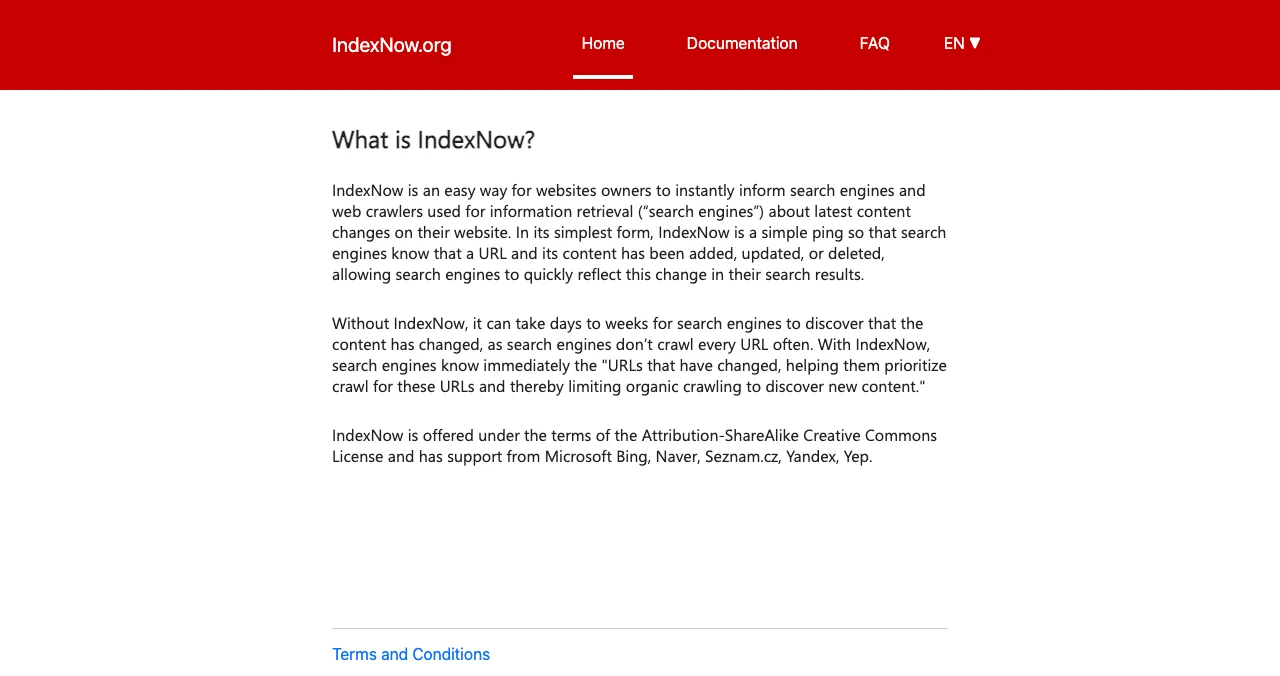
IndexNow
One ping, shared with Bing, Yandex, Naver, Seznam.cz and Yep.
FreeNot Google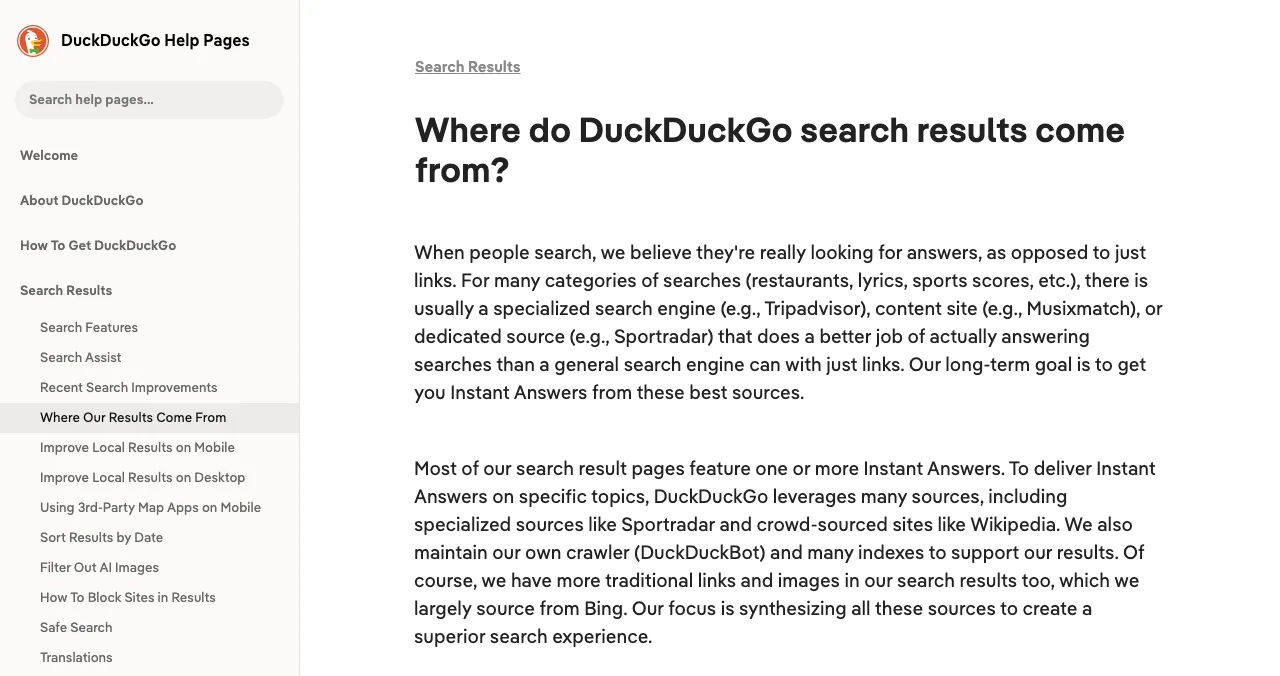
DuckDuckGo
No submission; largely sources traditional links from Bing.
Nothing to submitIndex in Bing
Science of Apps Launchpad
A free public product page that links to your site.
Free foreverFollowed link (18 Nov)
Every way to submit a website to search engines, side by side
| Route | Reaches | How you verify | Bulk submission | Cost |
|---|---|---|---|---|
| Google Search Console | DNS, HTML file, meta tag, Analytics, Tag Manager | Sitemaps (50,000 URLs per file) | Free | |
| Bing Webmaster Tools | Bing | Import from Search Console, XML file, meta tag, DNS CNAME | Sitemaps; URL Submission with a daily quota | Free |
| IndexNow | Bing, Yandex, Naver, Seznam.cz, Yep | A key file on your site | Up to 10,000 URLs per POST | Free |
| Sitemap line in robots.txt | Any crawler that reads robots.txt | None | Whole sitemap | Free |
| DuckDuckGo | Its own crawler plus sources, largely Bing for links | None | None | Nothing to submit |
| Paid mass submission | Mostly sites that send no traffic | None | 'Hundreds of engines' | Paid, and unnecessary |
Table: How to submit your website to search engines for free (Google Search Central, Bing Webmaster Tools, IndexNow and DuckDuckGo help, checked 20 Nov 2026)
1. Google Search Console: submit to Google
- Cost
- Free
- Submit
- Sitemap report; URL Inspection for single pages
- Limit
- 50,000 URLs or 50 MB per sitemap
- Timing
- A few days to a few weeks, per Google
- Catch
- Google retired sitemap pings in 2023
Google is where most of your search traffic will come from, and Search Console is the only official route in. Add a property, verify it (a DNS record covers the whole domain), submit your sitemap, then request indexing for your homepage and two or three key pages.
- Cost: free; Google doesn't sell faster indexing.
- Bulk: sitemaps of up to 50,000 URLs or 50 MB uncompressed each, or a sitemap index for more; submit them in Search Console, through its API, or with a
Sitemap:line in robots.txt. - Single pages: URL Inspection → Test live URL → Request indexing, within a daily per-property quota Google doesn't publish.
- Rules: Google calls a submitted sitemap "a hint"; requesting the same URL repeatedly doesn't speed it up.
Best for: everyone, first. The full walkthrough is in submit website to Google.
2. Bing Webmaster Tools: submit to Bing
- Cost
- Free
- Shortcut
- Import sites and sitemaps from Search Console
- Verify
- XML file, meta tag or DNS CNAME
- Single pages
- URL Submission, daily quota per site
- Catch
- Import needs view-only access to your Google account
Bing is the second console worth setting up, and the fastest one. Bing Webmaster Tools offers an "Import from Google Search Console" option: sign in to Google, grant view-only access, and it adds your verified sites with no separate verification. Its own help text says it also imports the sitemaps you submitted to Google, but "will not be importing any site analytics related data," and keeps the access to re-check verification and update sitemaps.
- Manual route: add the site and verify with an XML file, a meta tag, or a CNAME record; Bing supports Domain Connect to add the CNAME automatically at some DNS providers.
- Single URLs: the URL Submission tool shows your remaining daily quota per site; the number isn't fixed, so check it in your account.
- Automation: Bing points site owners to its IndexNow API or its own Submission API, and to an IndexNow WordPress plugin; on Cloudflare, turning on Crawler Hints starts IndexNow submissions.
Best for: every site, right after Search Console. DuckDuckGo users benefit too (below).
3. IndexNow: one ping, several engines
- Cost
- Free, open protocol
- Engines
- Bing, Naver, Seznam.cz, Yandex, Yep
- Shared
- A ping to one endpoint reaches all
- Bulk
- Up to 10,000 URLs per POST
- Catch
- Google isn't a participant
IndexNow is the closest thing to "submit to every search engine at once" that actually exists. You tell one participating engine that a URL changed, and the IndexNow FAQ says the submission is "shared across all IndexNow-enabled search engines." The homepage lists Microsoft Bing, Naver (big in South Korea), Seznam.cz (Czech Republic), Yandex and Yep.
- Setup: generate a key of 8–128 characters (letters, numbers, dashes), save it as
{key}.txtin your site's root, then callhttps://<searchengine>/indexnow?url=<changed-url>&key=<key>. - Bulk: POST JSON with
host,keyandurlList, up to 10,000 URLs per request. - Responses: 200 accepted, 202 received with key validation pending, 403 key not found, 422 URLs don't match the host, 429 too many requests.
- Easier: many CMSs, hosts and SEO plugins support IndexNow already, in which case the FAQ says you don't need a key file at all.
Best for: sites that publish or change pages often. It doesn't reach Google; keep sitemaps for that.
4. DuckDuckGo and other engines: nothing to submit
- Submission tool
- None
- Own crawler
- DuckDuckBot
- Links and images
- Largely sourced from Bing
- What to do
- Get indexed in Bing
- Catch
- Instant Answers come from other sources
DuckDuckGo has no submission form. Its help pages say it maintains its own crawler, DuckDuckBot, and that traditional links and images are "largely" sourced from Bing. So the practical step is being indexed in Bing.
For Yandex and Naver, which also run their own webmaster consoles, IndexNow covers change notifications; add their consoles only if those markets matter to you. For anything else, the free catch-all is a Sitemap: line in robots.txt, which any crawler that reads robots.txt can follow.
Best for: understanding why "submit to 500 engines" is unnecessary.
Is free search engine submission software worth it?
No. Every engine that sends meaningful traffic offers a free official route, and "submit to hundreds of engines" lists are padded with directories and long-dead engines. The risk isn't the ping itself; it's the bundles that add mass directory links, which Google's spam policies treat as link schemes. Read are free backlinks safe? before buying one.
Why submitted sites still go unfound: links
- Cost
- Free, forever
- Live in
- About 5 minutes, six short steps
- Link
- Your profile links to your site
- Ranking
- Relevance, never payment
- Included
- A product test and detailed report
Google's own "get on Google" guide says sites are often missed because no other sites link to them. Crawlers move from page to page, so the more places that link to your site, the more paths they have. The Science of Apps Launchpad gives your product a free, permanent public page at launchpad.scienceofapps.com, found by the problem it solves, linking to your site. On 18 November 2026 the profile's outbound link carried rel="noopener" only, a followed link; that's a dated observation, not a promise of rankings.
- Cost: free, forever; automated checks and a human review.
- Accepts: startups, SaaS, mobile apps, AI products, developer tools, browser extensions, games and open source.
- Earned badges: Featured on going live, then Verified, Community favourite, Editor's pick and more, plus vouches and followers.
- Tested: a free baseline diagnosis of landing page, discoverability and speed as you go live.
- Areas of your product tested
- 22
- Automatic measurements, desktop and mobile
- 39
- Expert checks behind your login
- 74
- Verdicts that rank what to fix first
- 5
See what new visitors see when they land
List free, then order the report that fits: the first impression, or the full diagnosis with a plan.

 Economy
See what new customers see
- Store listing and homepage, screen by screen
- Scorecard against 60 Laws of UX
- Customers, competitors and the fixes worth most
PremiumThe full diagnosis and the plan
- Every screen, every finding, every flow
- All 60 laws with evidence and fixes
- 8 strategy chapters and a 90-day roadmap
Researched from your live product and fact-checked against the evidence.
Best for: a new product with no inbound links. It's a product page, not a website host; keep your own site and domain.
Which search engines should you submit to?
| Your audience | Submit to | Notes |
|---|---|---|
| Global or English-speaking | Google Search Console, Bing Webmaster Tools, IndexNow | Covers DuckDuckGo through Bing |
| South Korea | Add Naver's webmaster console | IndexNow reaches Naver |
| Czech Republic | Rely on IndexNow for Seznam.cz | Plus Google and Bing |
| Russian-speaking markets | Add Yandex Webmaster | IndexNow reaches Yandex |
| Frequent publishing | IndexNow via your CMS or Cloudflare | Sitemaps with accurate lastmod for Google |
Table: Which search engines to submit your website to, by audience
The one-hour setup
- 0:00
Sitemap and robots.txt
Confirm /sitemap.xml works; add a Sitemap line to robots.txt.
- 0:10
Google
Verify a Domain property in Search Console; submit the sitemap; request indexing for the homepage.
- 0:25
Bing
Import from Search Console in Bing Webmaster Tools; confirm the sitemap came across.
- 0:35
IndexNow
Turn it on in your CMS, plugin or Cloudflare, or host a key file and send the first ping.
- 0:45
Links
List on the Launchpad and add your URL to your social profiles.
Mistakes to avoid

- Paying for mass submission — the official routes are free and complete
- Assuming IndexNow covers Google — it doesn't; use Search Console
- Verifying Bing from scratch — the Search Console import is faster
- Submitting before fixing noindex and robots.txt blocks — engines will crawl and drop the pages
- Treating submission as SEO — it gets you crawled, not ranked; see SEO for startups
Ready to be found?
How we know
Google's rules come from Search Central documentation; Bing's from the help text inside Bing Webmaster Tools; IndexNow's from its homepage, documentation and FAQ; DuckDuckGo's from its help pages, all read on 20 November 2026. Bing doesn't publish a fixed URL Submission quota and Google doesn't publish its URL Inspection quota, so we give neither. The Launchpad details and link observation are from its own pages on 18 November 2026. Search volumes are Google Keyword Planner's global 12-month averages. Science of Apps runs the Launchpad and has no relationship with any search engine named here.
Key terms, defined
- Search engine submission: telling a search engine your site or URLs exist, usually through a webmaster console or sitemap.
- Bing Webmaster Tools: Microsoft's free console for submitting sites and sitemaps to Bing and viewing Bing search data.
- IndexNow: an open protocol for notifying participating search engines that URLs were added, changed or deleted.
- IndexNow key: an 8–128 character string, hosted as a text file on your site, that proves you control the URLs you submit.
- Sitemap line: a
Sitemap:directive in robots.txt that points any crawler to your sitemap. - Crawler: the program a search engine uses to fetch pages by following links and sitemaps.
Frequently asked questions
How do I submit my website to search engines?
Verify your site in Google Search Console and submit your sitemap there; add the site to Bing Webmaster Tools, ideally by importing from Search Console; and turn on IndexNow so changes reach Bing, Yandex, Naver, Seznam.cz and Yep. Add a Sitemap line to robots.txt for every other crawler. All of it is free and takes under an hour.
Can I submit my website to search engines for free?
Yes, every official route is free: Google Search Console, Bing Webmaster Tools, IndexNow and a sitemap in robots.txt. No major search engine charges for crawling or indexing. Services that sell submission to hundreds of engines are charging for steps you can do yourself, and most of those 'engines' send no traffic.
What is IndexNow and does Google use it?
IndexNow is an open protocol that lets a site tell search engines a URL was added, changed or deleted. The IndexNow site lists Microsoft Bing, Naver, Seznam.cz, Yandex and Yep, and a submission to one endpoint is shared with all participants. Google isn't listed as a participant, so keep using Search Console and sitemaps for Google.
How do I submit my site to Bing?
Sign in to Bing Webmaster Tools and either import from Google Search Console, which adds your verified sites and their sitemaps without separate verification, or add the site manually and verify with an XML file, a meta tag or a DNS CNAME record. Then submit your sitemap and use URL Submission or IndexNow for new pages.
Do I need to submit my site to DuckDuckGo or Yahoo?
There's no DuckDuckGo submission tool. Its help pages say it runs its own crawler, DuckDuckBot, and largely sources traditional links and images from Bing, so getting indexed in Bing is the practical step. For any other engine without a webmaster console, a Sitemap line in robots.txt is how its crawler finds your URLs.
Are free search engine submission tools safe to use?
Tools that ping hundreds of engines are usually harmless but pointless: most targets aren't real search engines and send no visitors. Avoid any service that bundles submission with mass directory links or 'guaranteed rankings', which can break Google's spam policies. Use the official consoles and IndexNow instead.
Sources
- Google Search Central — Build and submit a sitemap (checked 20 Nov 2026)
- Google Search Central — Ask Google to recrawl your URLs (checked 20 Nov 2026)
- Bing Webmaster Tools — Import from Google Search Console, verification and URL Submission (in-app help text, checked 20 Nov 2026)
- IndexNow — Homepage: participating search engines (checked 20 Nov 2026)
- IndexNow — Documentation: key file, GET and POST formats (checked 20 Nov 2026)
- IndexNow — FAQ: endpoints and shared submissions (checked 20 Nov 2026)
- DuckDuckGo Help — Where do DuckDuckGo search results come from? (checked 20 Nov 2026)
- Science of Apps — Launchpad: launch your product free (checked 18 Nov 2026)
- Science of Apps — Product investigation (checked 18 Nov 2026)
- Checked November 20, 2026. Figures that change — fees, salaries, prices — are reviewed every six months; if something is out of date, tell us.
Where to go from here
- Submit website to Google — the Search Console steps in detail
- Free directory submission sites — listings that get crawled
- How Google Search works — crawling, indexing, ranking
- Science of Apps - LaunchpadThe best free backlink checkers for startups in 2027: six tools compared on their own pages, what each free version shows, its limits, and how to check my backlinks in ten minutesThe best free backlink checker depends on whose links you check: Search Console and Ahrefs Free for yours, Semrush, Moz and Bing for any site. Limits compared.
- Science of Apps - LaunchpadHow to submit your website to Google for indexing: verify it in Search Console, submit your sitemap, request indexing for key URLs, and give Google links to follow, using Google's own documentationSubmit website to Google free: verify in Search Console, submit your sitemap, request indexing for key URLs. Google's own rules, limits and timings.
- Science of Apps - LaunchpadThe best link building tools for startups, free and paid: what you need to find opportunities, find contacts, pitch, monitor mentions and earn links from launch sites, with prices checked on each tool's own pageThe best link building tools for startups: Search Console, Ahrefs, Semrush, Moz, Hunter, Qwoted, Google Alerts and the Launchpad. Free tiers and prices checked.
- Science of Apps - LaunchpadFree business listing submission sites for startups in 2027: seven quality-checked places to list, which suit local businesses and which suit online startups, and what each one costsThe best free business listing sites: Google Business Profile and Bing Places for local, LinkedIn, Crunchbase and the Launchpad for online startups.
- Science of Apps - LaunchpadFree startup directories in 2027: 16 checked sites to submit your startup to, grouped by what you want (investors, customers, a launch, India) with each one's rules16 free startup directories checked for 2027, grouped by goal: investors, customers, launch day and India, with each site's rules and the ones to skip.
- Science of Apps - LaunchpadSEO checker: free website SEO checker tools compared, from Google's own SEO checker in Search Console to Seobility, Ahrefs, Screaming Frog and HubSpot, with limits verifiedThe best free SEO checker is Google Search Console, then a website SEO checker online such as Seobility, Ahrefs Free or Screaming Frog. Free limits compared.






Get the ideas, not the noise.
Sign up with Google and we’ll send you short UX psychology tips by email — why people tap, stall and leave, and what to do about it. Unsubscribe anytime. Prefer something to keep? Get the free Laws of UX guide as a PDF.
Launch day ends. Your listing shouldn't.
Search engines find new sites by following links. A free Science of Apps Launchpad page links to your product, is found by the problem it solves, and comes with a detailed product report.