 By
Quick answer: Are free backlinks safe for a new website?
- Safe: links from real sites people use that you didn't buy, swap or automate.
- Risky: low-quality directories, automated link services, excessive swaps, optimised guest-post anchors.
- Google's term: link spam (many guides still say "link schemes").
- Toxic backlinks: a tool's label, not Google's; most sites never need to disavow.
- Manual action: Google's report tells you if links are a real problem.
Key takeaways
- Free isn't the risk; manipulation is.
- A link is safe if it would exist without any SEO motive.
- Google says most sites will not need the disavow tool.
- Disavow is an advanced feature that can harm performance if misused.
- A moderated, relevant listing is the safe kind of free link.
Every founder with a new site gets the emails: "500 high-DA backlinks, free trial", "Add your site to 300 directories for $19". The offer is tempting because a new domain has no links at all. So are free backlinks safe? Some are exactly what Google wants to see, and some are the textbook examples in Google's own spam policy. The difference isn't price; it's whether the link would exist without an SEO motive. This checklist uses Google's own documents, read on 18 November 2026, to show you which free backlinks are safe, how to spot spammy backlinks, and what to do (usually nothing) about so-called toxic backlinks. Jump to the checklist, toxic backlinks or safe free links.
- Link-spam examples in Google's spam policies
- 11
- Question that settles most cases: would this link exist without SEO?
- 1
- Sites Google says won't need to disavow
- Most
- Links worth buying for ranking
- 0
What does Google say about link schemes and link spam?
Many guides still talk about "link schemes google" rules. Google's current spam policies cover the same ground under link spam: links intended to manipulate rankings in Google Search results, including links to your site and outgoing links from it.
| Google's link-spam example | Free version founders get offered |
|---|---|
| Buying or selling links for ranking purposes | "Free" links in exchange for a product, a review or a service |
| Excessive link exchanges or partner pages for cross-linking | "Link to us and we'll link to you" swaps |
| Using automated programs or services to create links | "Submit to 300 directories" tools |
| Requiring a link in terms of service or a contract | Widgets or badges you must display to be listed |
| Paid advertorials, guest posts or press releases with links that pass ranking credit | Free guest posts with exact-match anchor text |
| Low-quality directory or bookmark site links | Directories that accept anything instantly |
| Keyword-rich, hidden or low-quality links in widgets | Free widgets with a hidden link back |
| Widely distributed links in footers or templates | "Designed by" or "Powered by" footer links with keywords |
| Forum comments with optimised links in the post or signature | Forum and comment-signature link building |
| Low-value content made mainly to manipulate linking | Thin pages built only to hold links |
Table: Google's link-spam examples and the free offers that match them (Google Search Central spam policies, checked 18 Nov 2026)
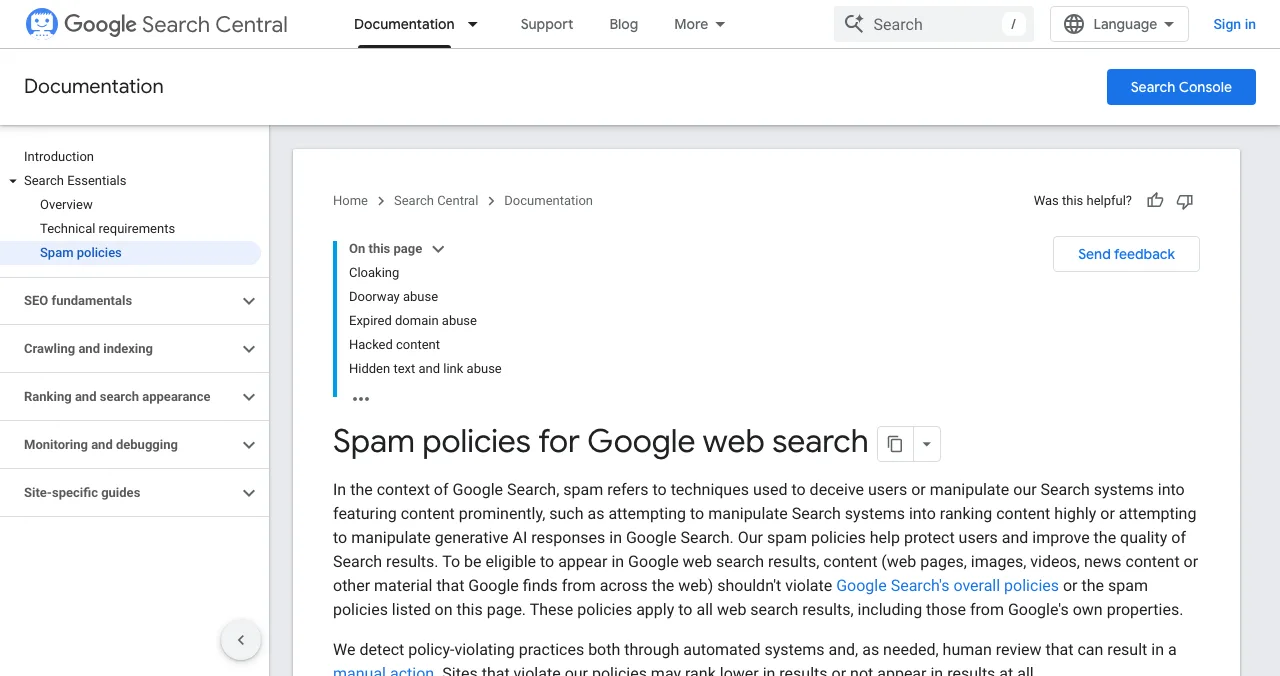
What happens if you break it? Google says human reviewers can issue a manual action, and sites that violate its policies "may rank lower in results or not appear in results at all." Google's ranking systems guide also notes that Penguin, its system against link spam, has been part of the core ranking systems since 2016.
Are free backlinks safe? The 12-point checklist
Run any free link offer through this before you accept it. One "no" in the first four is usually enough to walk away.
- Would people visit the page anyway? — real directories, launch sites and publications have an audience; link farms don't
- Is there a human review? — instant acceptance of anything is a low-quality directory signal
- Is the site about something? — a directory listing plumbers next to crypto next to SaaS is a bookmark dump
- Did you avoid a swap? — "link to us to get listed" is a reciprocal arrangement; one is a choice, a habit is a scheme
- Is the anchor text natural? — your brand name or URL, not "best project management software"
- Is it one link, not five hundred? — any service promising hundreds of links at once is automated link building
- No hidden or widget links? — embeddable widgets and themes with hidden links are on Google's list
- Paid or sponsored? — if money or a product changed hands, the link should be rel="sponsored" or "nofollow"
- Would you show it to a customer? — if you'd be embarrassed for a buyer to find your listing there, skip it
- Is the page indexed? — search site: plus the page URL; unindexed pages pass nothing and send nobody
- Does the site price links by "DA" or "DR"? — links priced by authority score are links sold for ranking
- Does it send visitors? — after a month, check your analytics; a safe link usually sends at least a few people
Which free backlinks are safe?
| Safe free link | Why it's safe | Where to start |
|---|---|---|
| Reviewed directories people use | Human review, real visitors, relevant category | SaaSHub, AlternativeTo, Science of Apps Launchpad |
| Launch platforms | A real audience on launch day and a permanent page | Product Hunt, Peerlist, Uneed, DevHunt |
| Company profiles | Facts about your company that people check | Crunchbase, LinkedIn Page, Google Business Profile if local |
| Partner and integration pages | The link exists because the integration does | Every tool you integrate with |
| Articles and roundups | An editor chose to mention you | Pitch a real story; answer journalist requests |
| Open-source and community | Developers link to useful code | GitHub README, documentation |
Table: Free backlinks that are safe for a new website (Science of Apps editorial guidance based on Google's link-spam policy)
Most of these links will be nofollow or ugc. That's normal and fine: see dofollow vs nofollow. For a checked list of real directories, see free directory submission sites.
The Science of Apps Launchpad: the moderated kind

A Launchpad listing passes the checklist for the right reasons: automated checks confirm your link works and nothing breaks its content policy, a person reviews every listing (usually within a day), placement is never sold ("0 paid placements" in organic ranking), and listings are found by people searching for the problem you solve. It's free forever, and when you go live a free baseline diagnosis checks your landing page, discoverability and speed.
- Areas of your product tested in a full investigation
- 22
- Automatic measurements, desktop and mobile
- 39
- Expert checks behind your login
- 74
- Verdicts, from Good to Critical
- 5
Know what visitors find when they click
List free, then order the report that fits: what new customers see first, or the full diagnosis and a plan.

 Economy
See what new customers see
- Store listing and homepage, screen by screen
- Scorecard against 60 Laws of UX
- Customers, competitors and the fixes worth most
PremiumThe full diagnosis and the plan
- Every screen, every finding, every flow
- All 60 laws with evidence and fixes
- 8 strategy chapters and a 90-day roadmap
Researched from your live product and fact-checked against the evidence.
What about toxic backlinks?
"Toxic backlinks" is a label some SEO tools give links using their own scoring. It isn't a Google term, and a tool flagging a link doesn't mean Google is penalising you. Google's disavow help page says that "in most cases, Google can assess which links to trust without additional guidance, so most sites will not need to use this tool."
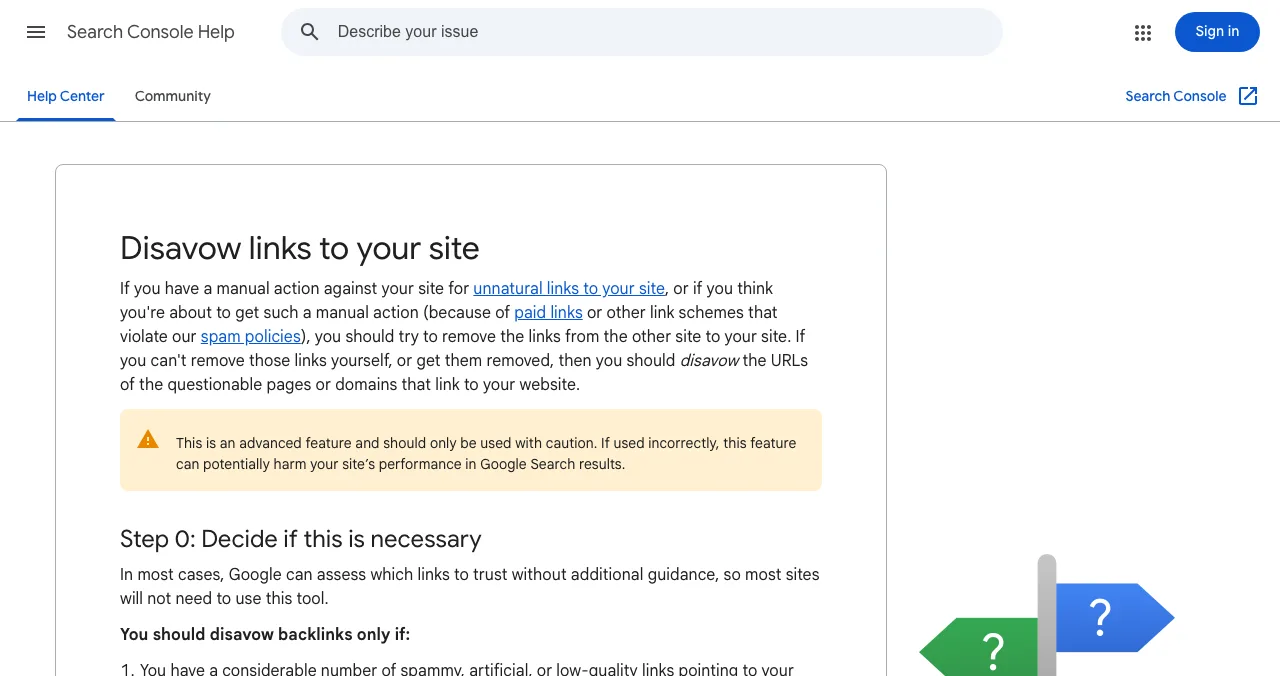
Google says to disavow only when both are true: you have a considerable number of spammy, artificial or low-quality links pointing to your site, and they have caused a manual action or likely will. It also warns the tool "can potentially harm your site's performance" if used incorrectly. Bing removed its own disavow feature in October 2023.
What to do if you have spammy backlinks

- Check Manual actions in Search Console — no "Unnatural links to your site" action usually means no action is needed.
- Stop the source — cancel any link service, directory blaster or swap arrangement you started.
- Export your links — Search Console's Links report (on-screen tables show up to 1,000 rows; exports up to 100,000).
- Ask for removal — for links you or an agency created; Google says disavowing without trying removal can get a review request rejected.
- Disavow only what remains, only if needed — then request a review and document what you removed.
How to vet a directory in five minutes
Most free backlink offers are directories, so it's worth having a quick routine. None of these steps needs a paid tool.

- Search for it — search the directory's name plus your category; a real directory ranks for something and has pages people link to.
- Read three listings — are they real, current products in a coherent category, or a mix of casinos, plumbers and SaaS?
- Find the rules — a submission page or FAQ that says what gets rejected is a sign of human review; "instant approval" is the opposite.
- Check what you're paying for — if the only paid feature is "a dofollow link" or an authority number, it's selling links for ranking.
- Look at your analytics later — after a month, a real directory has sent at least a few visitors; if it sent none, don't renew anything.
The directories that pass are usually ones founders already know by name. SaaSHub and AlternativeTo both publish what they reject and say submissions are reviewed, and AlternativeTo states that followed links can't be bought. That kind of transparency is one of the strongest safety signals there is.
Mistakes

- Panicking over a tool's toxic score — check Manual actions first
- Disavowing everything "to be safe" — Google warns it can harm performance
- Buying a directory package after cleaning up — the same pattern returns
- Treating "free" as "safe" — free swaps and automated links are still link spam
- Ignoring the page the link points to — a safe link to a confusing page wastes the visit
Ready for a safe, free listing?
How we know
Every rule here comes from Google's own documents: the spam policies, the disavow, Manual actions and Links help pages, the outbound-links guide and the ranking systems guide, all read on 18 November 2026, plus Bing's 2023 announcement on removing disavow. The checklist and "safe links" table are Science of Apps' editorial reading of those documents, not Google's wording. Science of Apps runs the Launchpad.
Key terms, defined
- Free backlink: a link to your site you didn't pay for; safe or not depending on why it exists.
- Link spam: Google's term for links intended to manipulate rankings.
- Link scheme: the older name for link spam, still used in many guides.
- Toxic backlink: a third-party SEO tool's label for a link it scores as risky; not a Google term.
- Disavow: asking Google to ignore specific links; an advanced, rarely needed step.
- Manual action: a penalty applied after a human reviewer finds a policy violation.
Frequently asked questions
Are free backlinks safe for a new website?
Yes, when they come from real sites with real visitors and exist for a reason other than SEO: a reviewed directory listing, a launch page, a partner's integrations page or an article about you. They're risky when they come from mass-submission directories, automated link services, link swaps or keyword-stuffed guest posts, which Google's spam policies list as link spam.
What are spammy backlinks?
Links created mainly to manipulate rankings. Google's spam policies give examples: buying or selling links for ranking, excessive link exchanges, automated link building, low-quality directory or bookmark links, keyword-rich links in widgets, widely distributed footer links, forum comments with optimised links, and paid guest posts or press releases with links that pass ranking credit.
What does Google mean by link schemes?
'Link schemes' is the older name many guides still use. Google's current spam policies cover the same practices under 'link spam': links intended to manipulate rankings, whether links to your site or outgoing links from it. Paid links are allowed for advertising if they're qualified with rel="sponsored" or rel="nofollow".
Do toxic backlinks hurt my site?
'Toxic' is a label some SEO tools apply using their own scores, not a Google term. Google says it can usually assess which links to trust without help and that most sites will not need to disavow. Check Search Console's Manual actions report: if there's no unnatural-links action, random spammy links usually aren't worth chasing.
Should I disavow spammy backlinks?
Only in the cases Google describes: you have a considerable number of spammy, artificial or low-quality links pointing to your site, and they have caused or will likely cause a manual action. Google calls disavow an advanced feature that can harm your site's performance if used incorrectly, and asks you to try removing links first.
Are free directory submissions safe?
Hand submissions to a short list of reviewed directories that people actually use are safe and normal. Blasting your link to hundreds of directories through a service matches two examples in Google's link-spam policy: automated link building and low-quality directory links. If a directory accepts anything instantly and has no visitors, skip it.
Can a competitor hurt my site with spammy backlinks?
Google's disavow help says it can usually work out which links to trust without additional guidance, which is why most sites don't need the tool. If you ever receive a manual action for unnatural links, follow Google's steps: export links, ask for removal, disavow what remains and request a review.
Sources
- Google Search Central — Spam policies for Google web search: link spam (checked 18 Nov 2026)
- Search Console Help — Disavow links to your site (checked 18 Nov 2026)
- Search Console Help — Manual Actions report (checked 18 Nov 2026)
- Search Console Help — Links report (checked 18 Nov 2026)
- Google Search Central — Qualify your outbound links to Google (checked 18 Nov 2026)
- Google Search Central — A guide to Google Search ranking systems (checked 18 Nov 2026)
- Bing Webmaster Blog — Bing Webmaster Tools to remove disavow links feature (Sept 2023; checked 18 Nov 2026)
- Science of Apps — Launchpad: launch your product free (checked 18 Nov 2026)
- Checked November 18, 2026. Figures that change — fees, salaries, prices — are reviewed every six months; if something is out of date, tell us.
Where to go from here
- Backlinks for startups — the safe ways to earn them
- Free directory submission sites — checked, real directories
- Dofollow vs nofollow — what rel values mean
- Science of Apps - LaunchpadHow to get backlinks for a new startup for free, and which link tactics Google treats as spamHow a new startup can earn backlinks for free in 2027: launch sites, reviewed directories, data, free tools, partners and press, plus the link tactics to avoid.
- Science of Apps - LaunchpadSEO for startups: a prioritised plan for the first six months, from getting indexed to pages that answer buyers' questions, using Google's own starter guideSEO for startups, month by month: get indexed, fix the basics, earn a few relevant links and publish pages answering buyers' questions, per Google's own guide.
- Science of Apps - LaunchpadDo backlinks still matter in 2027? What Google's own documents say about links and PageRank, how backlinks feed AI search, and why mentions and citations now count as much as linksDo backlinks still matter in 2027? Google says PageRank is still a core system and AI answers draw on the same index. What counts now, with sources.
- Science of Apps - LaunchpadDoes directory submission still help SaaS SEO in 2027? What Google's spam policies say, and which directories are worth itDoes directory submission still help SaaS SEO in 2027? Google calls low-quality directory links spam, but reviewed directories still bring users and citations.
- Science of Apps - LaunchpadThe best link building tools for startups, free and paid: what you need to find opportunities, find contacts, pitch, monitor mentions and earn links from launch sites, with prices checked on each tool's own pageThe best link building tools for startups: Search Console, Ahrefs, Semrush, Moz, Hunter, Qwoted, Google Alerts and the Launchpad. Free tiers and prices checked.
- Science of Apps - LaunchpadThe best free backlink checkers for startups in 2027: six tools compared on their own pages, what each free version shows, its limits, and how to check my backlinks in ten minutesThe best free backlink checker depends on whose links you check: Search Console and Ahrefs Free for yours, Semrush, Moz and Bing for any site. Limits compared.

Get the ideas, not the noise.
Sign up with Google and we’ll send you short UX psychology tips by email — why people tap, stall and leave, and what to do about it. Unsubscribe anytime. Prefer something to keep? Get the free Laws of UX guide as a PDF.
Launch day ends. Your listing shouldn't.
A moderated, free Launchpad listing is the safe kind of free link: checked automatically, reviewed by a person, ranked by relevance and never sold, plus your product tested with a detailed report.