 By
Quick answer: Do backlinks still matter in 2027?
- Still core: Google says PageRank "continues to be part of our core ranking systems."
- Not everything: Google's starter guide says there's "much more to Google Search than just links."
- AI search: AI Overviews and AI Mode need no extra requirements beyond normal SEO.
- Mentions count too: AI answers pull from pages that describe you, linked or not.
- Quality over count: link spam is filtered or penalised.
Key takeaways
- Backlinks still help Google discover, understand and rank pages.
- AI Overviews and AI Mode use Google's index, so classic SEO still applies.
- Being described consistently across many sources matters for AI answers.
- Relevant links that send visitors beat volume.
- Earn links with things worth citing, not with link schemes.
Every few months someone declares backlinks dead, usually right after AI answers take another bite out of search results. Founders hear it and wonder whether to bother with links at all. The honest answer, from Google's own documentation read on 18 November 2026: backlinks still matter, PageRank is still a core ranking system, and AI Overviews draw on the same index. What has changed is what a "good" link looks like and how much mentions, citations and consistent facts now matter alongside links. This analysis separates what Google and OpenAI actually say from what SEO folklore says. Jump to what Google says, backlinks and AI search or what to do this quarter.
- PageRank has been a Google ranking system since launch, and still is
- Day 1
- Extra requirements for Google's AI features beyond normal SEO
- 0
- Click rates with and without an AI summary (Pew, 2025)
- 8% vs 15%
- Visibility gain GEO methods achieved in research (up to)
- 40%
What does Google say about backlinks today?
Google is unusually direct about links in its own documents:
| Google says | Where | What it means for founders |
|---|---|---|
| PageRank "continues to be part of our core ranking systems" | Ranking systems guide | Links still feed ranking |
| Its systems use links "as a way to determine what pages are about" | Ranking systems guide | Anchor text and context matter, not just the link |
| "The vast majority of the new pages Google finds every day are through links" | SEO starter guide | No links, slow discovery |
| "There's much more to Google Search than just links" | SEO starter guide | Links are one signal among many |
| Buying links for ranking, automated link building and low-quality directories are link spam | Spam policies | Volume tactics backfire |
| Penguin, the link-spam system, joined the core ranking systems in 2016 | Ranking systems guide | Bad links are filtered continuously |
Table: What Google's own documents say about links (Google Search Central, checked 18 Nov 2026)
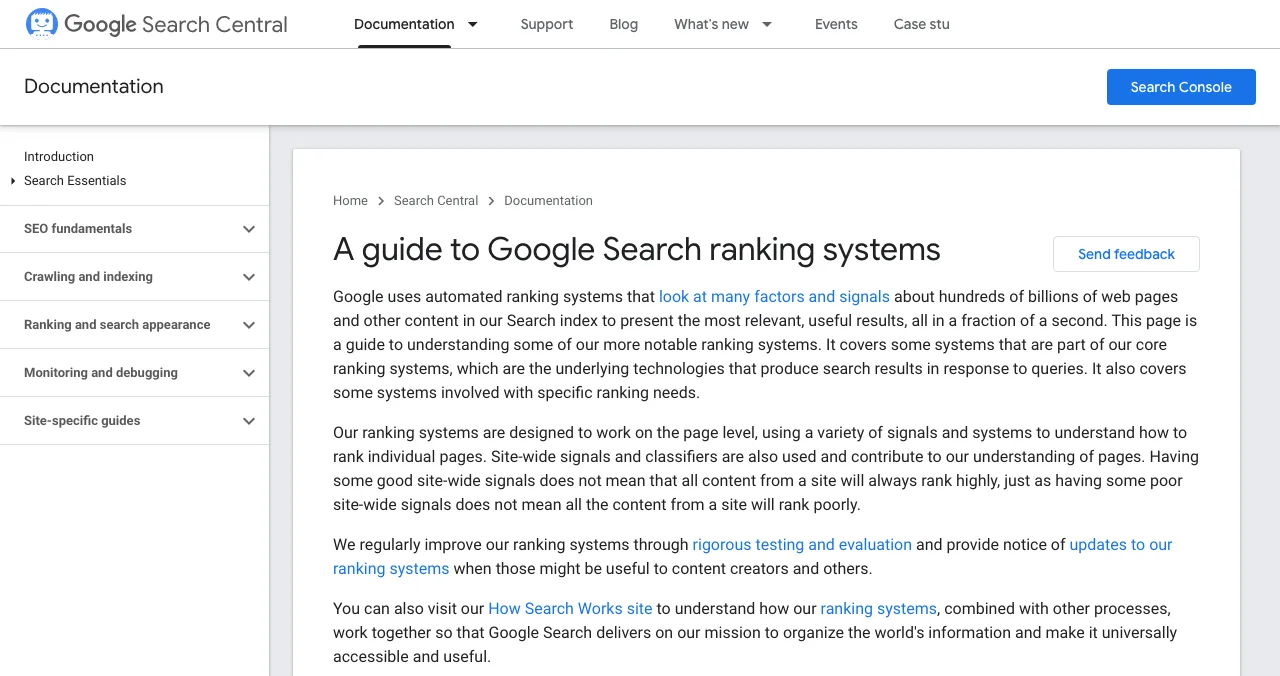
PageRank has been used "when Google first launched," and Google's guide says "how PageRank works has evolved a lot since then." So, are backlinks important? Yes, as one strong signal inside a much larger system, and most of all for being discovered.
Do backlinks matter for AI search?
Here's where "backlinks AI search" gets confusing. There are two kinds of AI answer, and links reach them differently.
| AI answer | How it finds pages | Role of backlinks |
|---|---|---|
| Google AI Overviews and AI Mode | Google's index; pages must be indexed and eligible for a snippet; "query fan-out" runs related searches | Same as SEO: links help pages get found, understood and ranked |
| ChatGPT search | OpenAI's OAI-SearchBot surfaces websites in ChatGPT's search features | Links help crawlers discover pages; being described on many sites helps the answer |
| Answers from a model's training data | What the model read during training | Being mentioned often and consistently across the web |
Table: How backlinks reach AI answers (Google Search Central and OpenAI documentation, checked 18 Nov 2026)
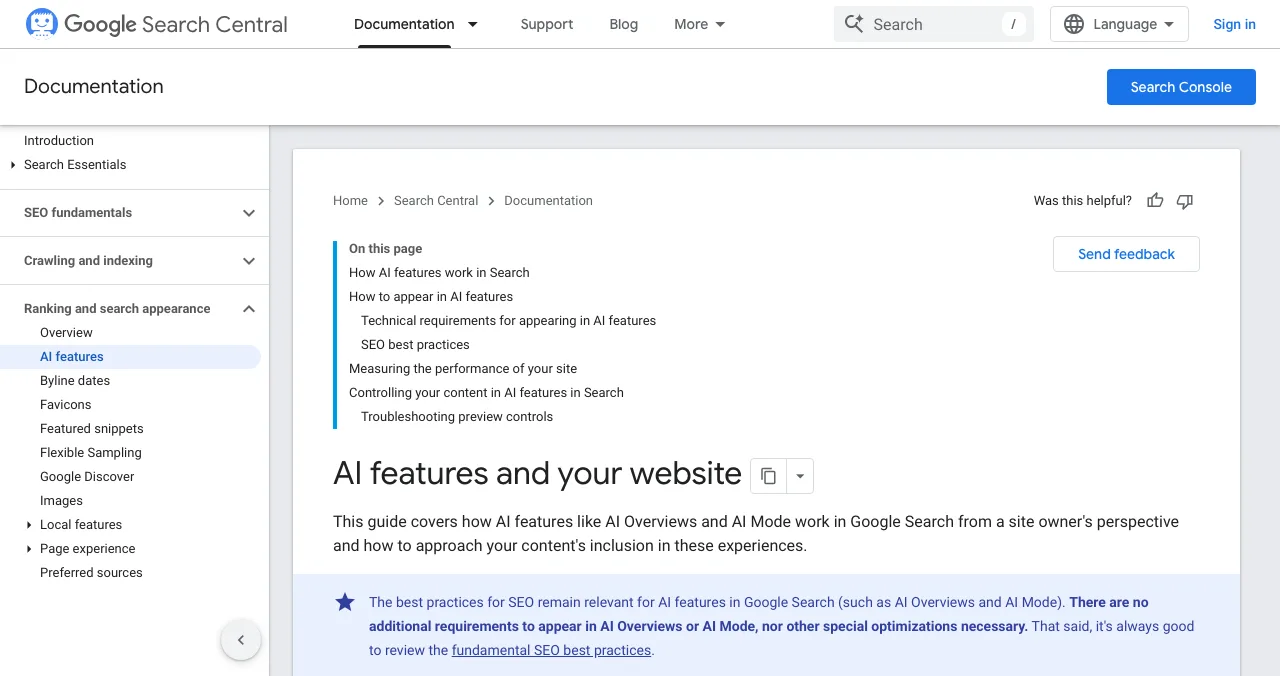
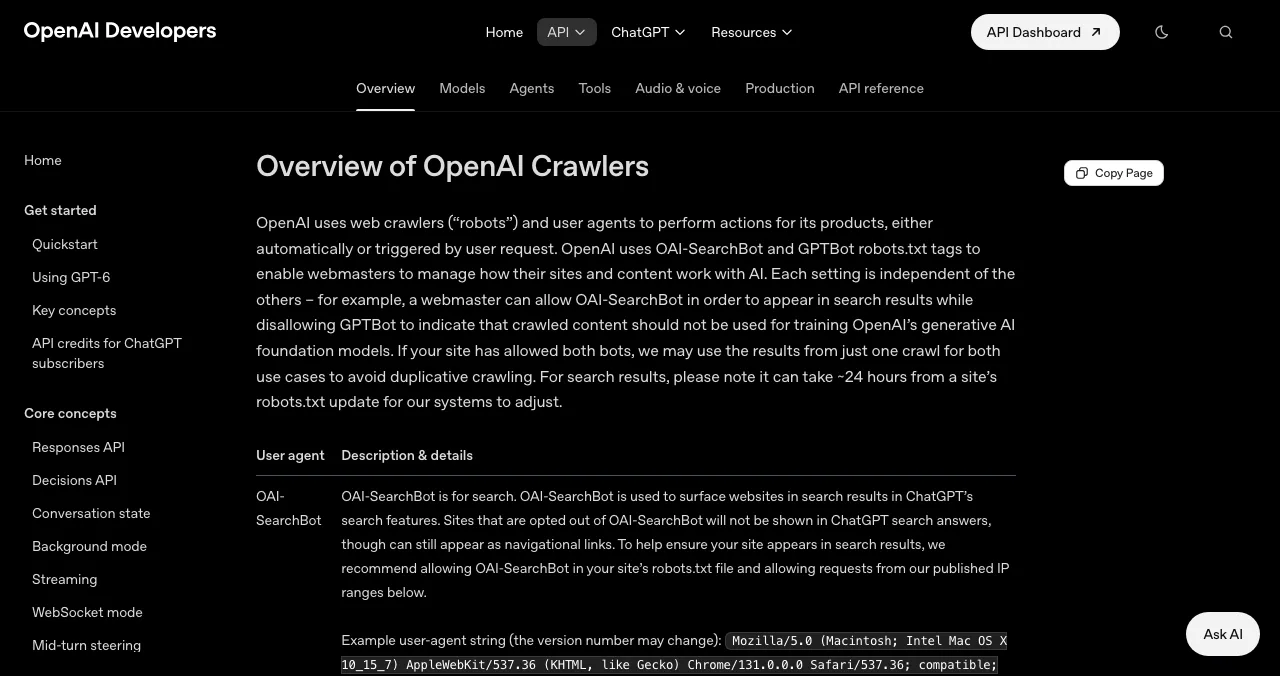
Google's page on AI features is explicit: "There are no additional requirements to appear in AI Overviews or AI Mode," and "all existing SEO fundamentals continue to be worthwhile." OpenAI recommends allowing OAI-SearchBot in robots.txt if you want to appear in ChatGPT's search results. Neither says links are irrelevant; both point back to being crawlable, indexed and well described.
Why mentions and citations matter now
An AI answer summarises what many pages say about a topic. If ten trustworthy pages describe your startup the same way, the model has something to repeat. If none do, it doesn't, however good your homepage is.

Citations
Pages that name you as an example or a source: reviews, comparisons, roundups, research. Linked or not, they're material an answer can draw on.
Consistent facts
The same name, category, one-liner and URL on your site, directories and company profiles makes you easier to recognise as one entity. See entity SEO for startups.
Citable content
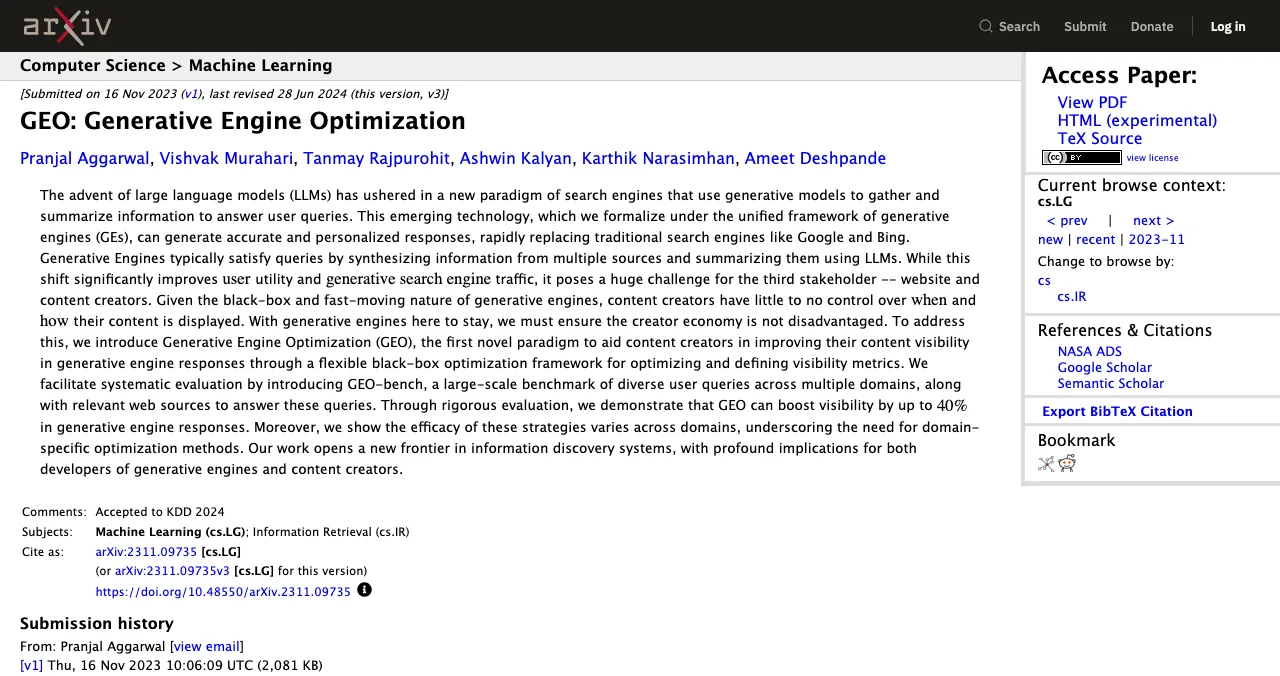
The GEO paper (Aggarwal et al., KDD 2024) reports that its methods could "boost visibility by up to 40% in generative engine responses."
Where engines look
Pew found Wikipedia, YouTube and Reddit were the most-linked sites in both AI summaries and standard results (15% and 17% of sources).
Clicks are scarcer, so each link has to earn its keep
Pew Research Center analysed 900 US adults' browsing in March 2025: users who saw an AI summary clicked a traditional result in 8% of visits, against 15% without one, and clicked a link inside the summary in 1%. Fewer clicks per search means a link that sends real visitors (a directory buyers browse, a launch page, a partner's integration page) is worth more than a link that exists only for a crawler.
Backlinks vs mentions vs citations
The three words get used interchangeably. They aren't the same thing, and each feeds a different part of discovery.
| Backlink | Mention | AI citation | |
|---|---|---|---|
| What it is | A hyperlink from another site to yours | Your name on a page, linked or not | A source an AI answer links to or draws on |
| Who reads it | Crawlers, and people who click | People, and systems that summarise pages | People reading the answer |
| Feeds | Discovery and ranking (PageRank) | Recognition: who you are, what you do | Visibility inside AI answers |
| How to earn it | Something worth linking to | Launches, listings, reviews, press | Being described clearly and consistently on pages engines already use |
| How to check | Search Console, Ahrefs Free | Google Alerts, searching your name | Ask ChatGPT, Gemini and Perplexity about your category |
Table: Backlinks, mentions and AI citations compared (Science of Apps definitions)
In practice the same actions produce all three. A good launch, a complete directory listing or a cited data point gives you a mention, often a link, and more material for an AI answer to draw on.
Backlinks in 2027: what counts, what doesn't
| Counts | Doesn't (or backfires) |
|---|---|
| A relevant article or review that mentions and links to you | Bought links priced by authority score |
| Partner and integration pages | Link swaps and partner pages that exist only to cross-link |
| Reviewed directories and launch pages people browse | Mass directory submissions |
| Original data others cite | Thin guest posts with exact-match anchors |
| Consistent mentions across your listings | A different description on every site |
Table: Backlinks in 2027, what counts (Science of Apps editorial view, based on Google's ranking and spam documentation)
The Launchpad's role: a consistent, moderated listing
A Launchpad listing is one more consistent, moderated description of your startup: name, category, one-liner and website, reviewed by a person and ranked by relevance, never payment. It's free forever, and once you're live a free baseline diagnosis checks your landing page, discoverability and speed, the things that decide whether a mention turns into a customer.
- Areas of your product tested
- 22
- Automatic measurements, desktop and mobile
- 39
- Expert checks behind your login
- 74
- Verdicts, from Good to Critical
- 5
Make sure the click converts
List free, then order the report that fits: what new customers see first, or the full diagnosis and a plan.

 Economy
See what new customers see
- Store listing and homepage, screen by screen
- Scorecard against 60 Laws of UX
- Customers, competitors and the fixes worth most
PremiumThe full diagnosis and the plan
- Every screen, every finding, every flow
- All 60 laws with evidence and fixes
- 8 strategy chapters and a 90-day roadmap
Researched from your live product and fact-checked against the evidence.
What to do this quarter
- Week 1
Be crawlable
Check Search Console indexing; allow Googlebot and OAI-SearchBot in robots.txt if you want to appear in both.
- Week 1
One description
Write a name, category, one-liner and 150-word description; use them everywhere.
- Week 2
Listings that send people
A permanent Launchpad profile, Crunchbase, and the two or three directories your buyers browse.
- Weeks 3–6
Something worth citing
Original data, a free tool or an honest comparison in your category.
- Weeks 6–12
Ask the right people
Partners, integration pages, journalists' requests; never buy links.
- Every month
Check AI answers
Ask ChatGPT, Gemini and Perplexity about your category; note who they cite.
Mistakes

- Believing "backlinks are dead" — Google's own guide says PageRank is still a core system
- Believing "only backlinks matter" — AI answers draw on how you're described, linked or not
- Blocking AI crawlers by accident — check robots.txt before wondering why you're never cited
- Chasing a link count — relevance and real visitors beat volume
- Different facts on every listing — inconsistency makes you harder to recognise
Ready to be described consistently?
How we know
Statements about links, PageRank, AI features and link spam come from Google Search Central's ranking systems guide, SEO starter guide, AI features page and spam policies; ChatGPT search details from OpenAI's crawler documentation; click data from Pew Research Center's July 2025 analysis; and the GEO figure from the arXiv abstract. All were read on 18 November 2026. The "counts / doesn't" table and the plan are Science of Apps' editorial reading of those sources. Science of Apps runs the Launchpad.
Key terms, defined
- Backlink: a link from another website to yours.
- PageRank: Google's link analysis system, still part of its core ranking systems.
- Mention: your startup named on a page, with or without a link.
- Citation (AI): a source an AI answer links to or draws on.
- Query fan-out: Google's AI features running several related searches to build one answer.
- GEO: generative engine optimization, making content easier for AI engines to cite.
Frequently asked questions
Do backlinks still matter in 2027?
Yes. Google's ranking systems guide says PageRank, its link analysis system, 'continues to be part of our core ranking systems', and its SEO starter guide says most new pages Google finds are found through links. What matters has shifted from link count to relevance, and from links alone to links plus mentions and citations.
Are backlinks important for a new startup?
They're important for being found, less as a ranking lever early on. A new site needs links for Google to discover and trust it, and for people to arrive from places they already browse. A handful of relevant links from launch sites, directories, partners and press do more than hundreds of weak ones.
Do backlinks matter for AI search?
Indirectly, yes. Google says there are no additional requirements to appear in AI Overviews or AI Mode beyond being indexed and eligible for a snippet, and that SEO fundamentals still apply. Links help pages get indexed and rank, which makes them candidates for AI answers. ChatGPT search relies on OpenAI's own crawler, OAI-SearchBot, to surface sites.
Do brand mentions without links help?
They help people and AI systems learn that you exist and what you do, even where no link passes ranking credit. AI answers summarise pages that describe products, so being named consistently on reviewed directories, comparisons and articles makes you easier to recommend. Google doesn't publish a 'mentions' ranking factor, so treat this as visibility, not a guaranteed signal.
Is link building dead?
Manipulative link building is risky, not new: Google's spam policies list bought links, automated link building and low-quality directory links as link spam. Earning links is very much alive: original data, useful tools, honest comparisons, integrations and genuine launches still attract links and citations from people and AI systems alike.
How many backlinks does a startup need to rank?
There's no published number, and anyone quoting one is guessing. Competition, relevance and content quality decide it. Look at the pages ranking for your target query, note who links to them, and aim to earn links from the same kinds of relevant sources rather than chasing a count.
Sources
- Google Search Central — A guide to Google Search ranking systems: link analysis and PageRank (checked 18 Nov 2026)
- Google Search Central — SEO starter guide (checked 18 Nov 2026)
- Google Search Central — AI features and your website (checked 18 Nov 2026)
- Google Search Central — Spam policies for Google web search: link spam (checked 18 Nov 2026)
- OpenAI — Overview of OpenAI crawlers: OAI-SearchBot (checked 18 Nov 2026)
- Pew Research Center — Google users are less likely to click on links when an AI summary appears (Jul 2025; checked 18 Nov 2026)
- Aggarwal et al. — GEO: Generative Engine Optimization (arXiv 2311.09735, KDD 2024; checked 18 Nov 2026)
- Science of Apps — Launchpad: launch your product free (checked 18 Nov 2026)
- Checked November 18, 2026. Figures that change — fees, salaries, prices — are reviewed every six months; if something is out of date, tell us.
Where to go from here
- AI search vs SEO — where a founder's hours go
- Entity SEO for startups — be recognised, not just ranked
- Backlinks for startups — how to earn them
- Science of Apps - LaunchpadDoes directory submission still help SaaS SEO in 2027? What Google's spam policies say, and which directories are worth itDoes directory submission still help SaaS SEO in 2027? Google calls low-quality directory links spam, but reviewed directories still bring users and citations.
- Science of Apps - LaunchpadLLM SEO vs traditional SEO side by side: what stays the same, what changes, which crawlers matter and how to measure each, using Google's and AI companies' own docsLLM SEO vs traditional SEO, side by side: the foundations that stay the same, what changes (crawlers, answers, citations, measurement) and what to skip.
- Science of Apps - LaunchpadThe best link building tools for startups, free and paid: what you need to find opportunities, find contacts, pitch, monitor mentions and earn links from launch sites, with prices checked on each tool's own pageThe best link building tools for startups: Search Console, Ahrefs, Semrush, Moz, Hunter, Qwoted, Google Alerts and the Launchpad. Free tiers and prices checked.
- Science of Apps - LaunchpadAre free backlinks safe for a new website? What Google's link-spam policy actually says, how to spot spammy backlinks and link schemes, and what to do about toxic backlinksAre free backlinks safe? Some are, some are link spam. Google's own rules, a 12-point checklist for spammy backlinks, and what to do about toxic backlinks.
- Science of Apps - LaunchpadIs SEO dead? What the data says about AI search vs SEO for startups: Pew's click study, Google's own traffic claims and where a founder's hours should goIs SEO dead? Pew found fewer clicks when AI summaries appear; Google says clicks are stable. What both mean for a startup's AI search vs SEO plan.
- Science of Apps - LaunchpadThe best free backlink checkers for startups in 2027: six tools compared on their own pages, what each free version shows, its limits, and how to check my backlinks in ten minutesThe best free backlink checker depends on whose links you check: Search Console and Ahrefs Free for yours, Semrush, Moz and Bing for any site. Limits compared.
Get the ideas, not the noise.
Sign up with Google and we’ll send you short UX psychology tips by email — why people tap, stall and leave, and what to do about it. Unsubscribe anytime. Prefer something to keep? Get the free Laws of UX guide as a PDF.
Launch day ends. Your listing shouldn't.
A free, permanent Launchpad listing adds a consistent, moderated mention of your startup that people and engines can find, plus your product tested with a detailed report.