 By
Quick answer: What are the best free guest post sites?
- Best free guest post sites: publications with editors and published guidelines.
- Smashing Magazine pays an honorarium and rejects content marketing.
- freeCodeCamp News runs a selective contributor program; it does not accept paid placements.
- DEV and Hashnode let developers publish instantly; DEV supports canonical URLs.
- Paid guest posts with followed links are on Google's link-spam list.
Key takeaways
- Write for readers first; the link is a by-product.
- A site that charges for guest posts is selling links.
- Pitch an outline, not a finished article.
- Your author bio and one natural link are enough.
- Before guest posting, collect the free links you're already owed.
Search "guest post sites" (about 4,400 searches a month worldwide) or "free guest posting sites" (2,900) and you'll find lists of thousands of domains sorted by DA, many of which quietly charge per post (Google Keyword Planner, global 12-month average). Those lists are mostly link sellers. This guide is shorter on purpose: a handful of guest blogging sites with real editors and published rules, how to find write for us sites in your own niche, a 10-point checklist to vet any of them, and what Google actually says about guest posts. Every rule below comes from each site's own guidelines, read on 20 November 2026. Jump to the sites, finding your own or the checklist.
5 free places to write (and one faster link)
 List free
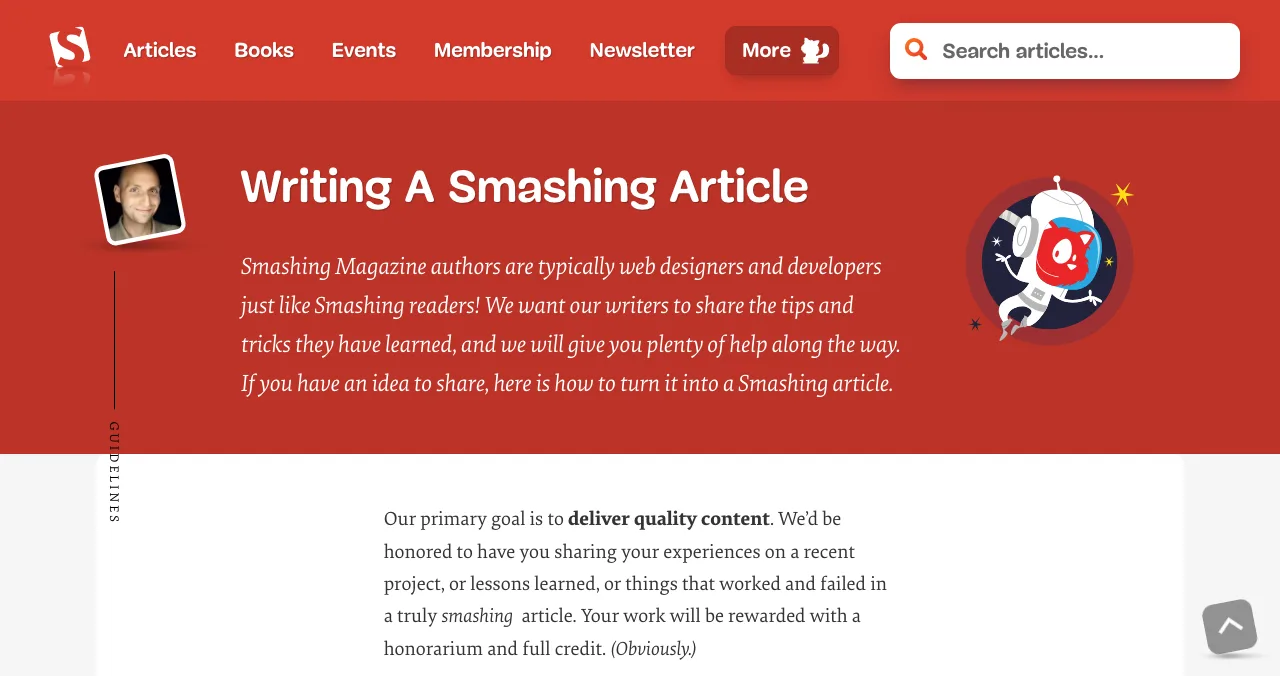
Smashing Magazine Edited
Web design and development; pays an honorarium.
Outline firstNo content marketing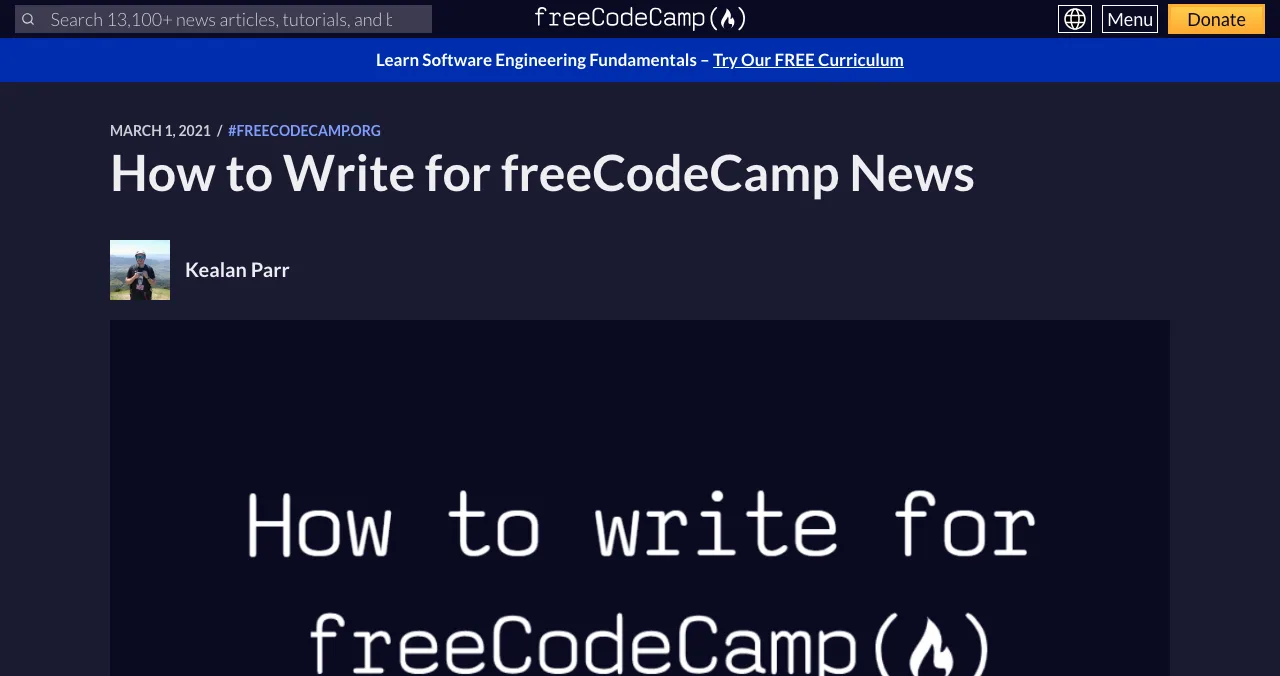
freeCodeCamp News
Developer tutorials from approved contributors.
SelectiveNo paid placements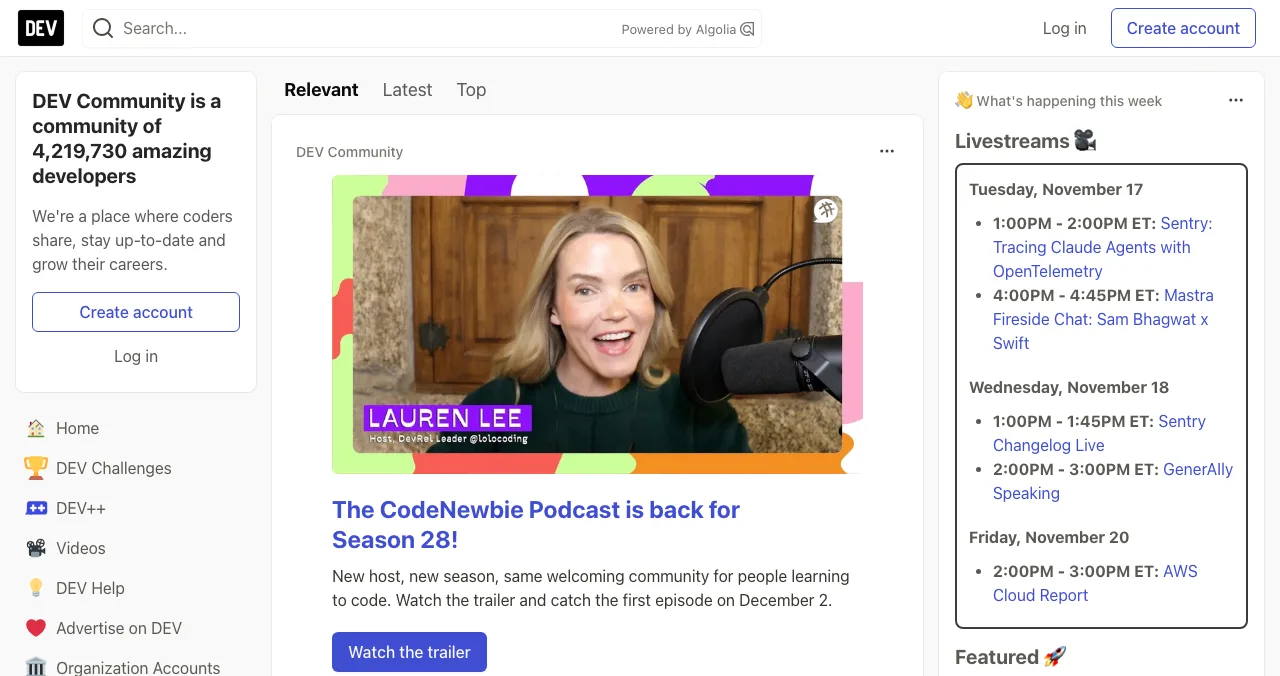
DEV Community
Open publishing for developers.
InstantCanonical URLs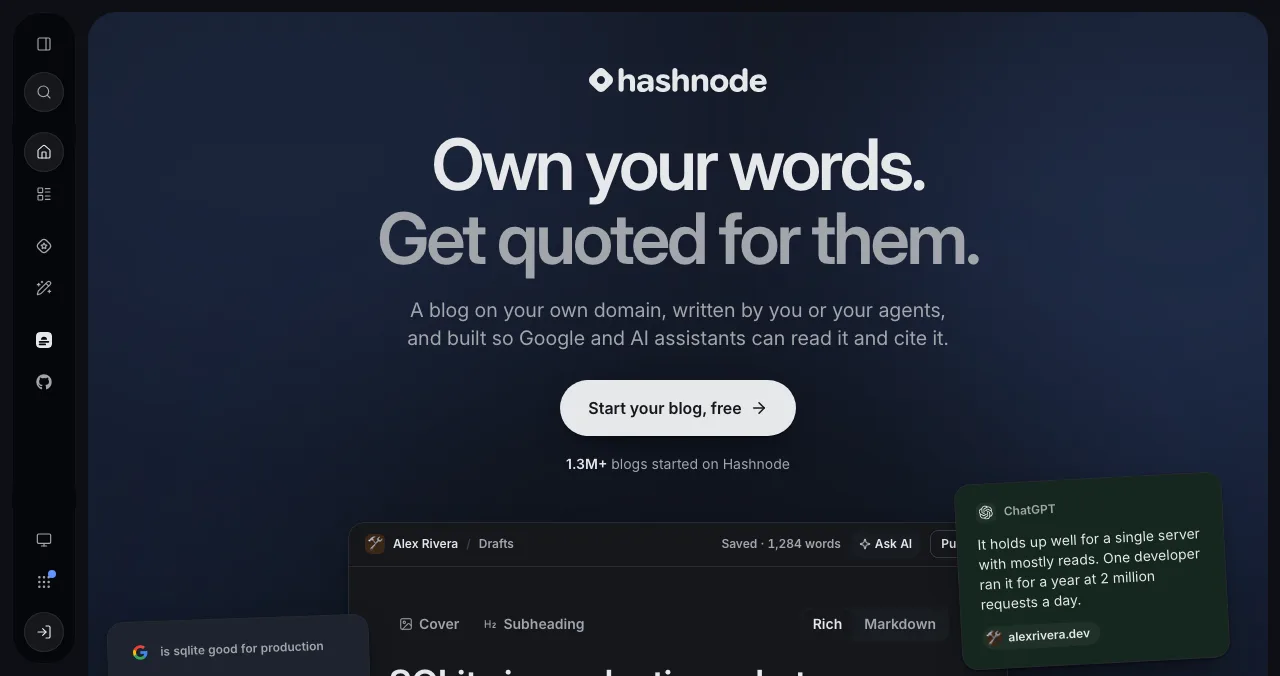
Hashnode
A free blog on your own domain.
Your domainFree start
Science of Apps Launchpad
Not a guest post: a moderated product profile with a link.
MinutesFree forever
Guest post sites compared
| Site | Audience | Editor? | Pays you? | Link rules | Time to publish |
|---|---|---|---|---|---|
| Smashing Magazine | Web designers and developers | Yes, plus subject reviewers | Honorarium on publication | No content marketing or product walkthroughs | Weeks (outline, draft, edits) |
| freeCodeCamp News | Learners and developers | Yes, proofread and edited | Not stated | One-sentence product CTA at the end; no affiliate links; links are followed per its style guide | After you're approved as a contributor |
| DEV Community | Developers | No (community moderation) | No | canonical_url supported for republishing | Instant |
| Hashnode | Your readers, on your domain | You | No | Your own blog | Instant |
| Launchpad listing | People searching for your problem | Human review | Free to list | A product profile with a link back | About five minutes, then review |
Table: Free guest posting sites and guest blogging sites compared (each site's own guidelines, checked 20 Nov 2026)
1. Smashing Magazine: the edited, paid guest post
- Cost
- Free to pitch; authors receive an honorarium
- How
- Contact form with a 200–300 word outline
- Accepts
- Tutorials, research-backed opinion, guides, case studies
- Rejects
- Content marketing, product walkthroughs, press releases
- Catch
- Pitches from "a CEO or an unnamed team member" are rejected
Smashing publishes "articles written by people who work on the web, for people who work on the web." It wants an outline before a draft, covering the audience, the takeaway, why you're the right author and links to your writing. Accepted authors work with an editor and subject reviewers. It says plainly that it does "not publish articles which are an obvious attempt at content marketing."
Best for: a founder or engineer with a genuine lesson from building the product.
2. freeCodeCamp News: the contributor program
- Cost
- Free
- How
- Apply via the style guide with links to three past articles
- Rules
- One-sentence product CTA at the end; no affiliate links; no branded accounts
- Links
- Its style guide says links on the publication are followed
- Catch
- Only "a small percentage" of applicants are approved; no guest posts or paid link placements
freeCodeCamp is a useful contrast. It accepts individual contributors who apply with three sample articles, edits their work and allows a single, tasteful call to action for your product at the end of a tutorial. But its style guide says guest posts and paid link placements aren't accepted, and cross-posting to sites like Medium is discouraged. In other words: it wants writers, not link builders. That's exactly why a link from it is worth something.
Best for: technical founders who can teach.
3. DEV Community: open publishing for developers
- Cost
- Free
- How
- Create an account and publish
- Republishing
- canonical_url field credits your original post
- Profile link
- rel="noopener me" on a profile we checked, 20 Nov 2026
- Catch
- No editor, so links carry less weight than an edited publication
DEV isn't a guest post site in the traditional sense; anyone can publish. Its value is reach: posts can be found by a large developer community. If you republish from your own blog, DEV's editor guide documents a canonical_url front-matter field for "the canonical version of the content", so search engines credit your site.
Best for: developer tools, open source and API products.
4. Hashnode: guest blogging on your own domain
- Cost
- Start free
- How
- A blog on your own domain
- Why
- The content and its links stay on your site
- Catch
- You bring the audience
Hashnode describes itself as "a blog on your own domain". It's here because freeCodeCamp itself suggests DEV or Hashnode for building the writing samples you'll need to get accepted elsewhere. Write there first, then pitch edited publications with links to your best pieces.
Best for: building a portfolio before pitching.
How do I find write for us sites in my niche?
The best guest blogging sites for you are the ones your customers read, which no generic list knows. Find them with search:

- Search your topic plus a contributor phrase — "your topic" "write for us", "contributor guidelines", "submit an article", "become a contributor".
- Check the audience — would your customers read this site? If not, the link won't send anyone.
- Read the last five posts — real authors and real topics, or thin articles stuffed with commercial links?
- Find the rules — a guidelines page with what gets rejected is a good sign.
- Pitch an outline — a 200–300 word plan, why you, and two links to your writing.
Is guest posting allowed by Google?
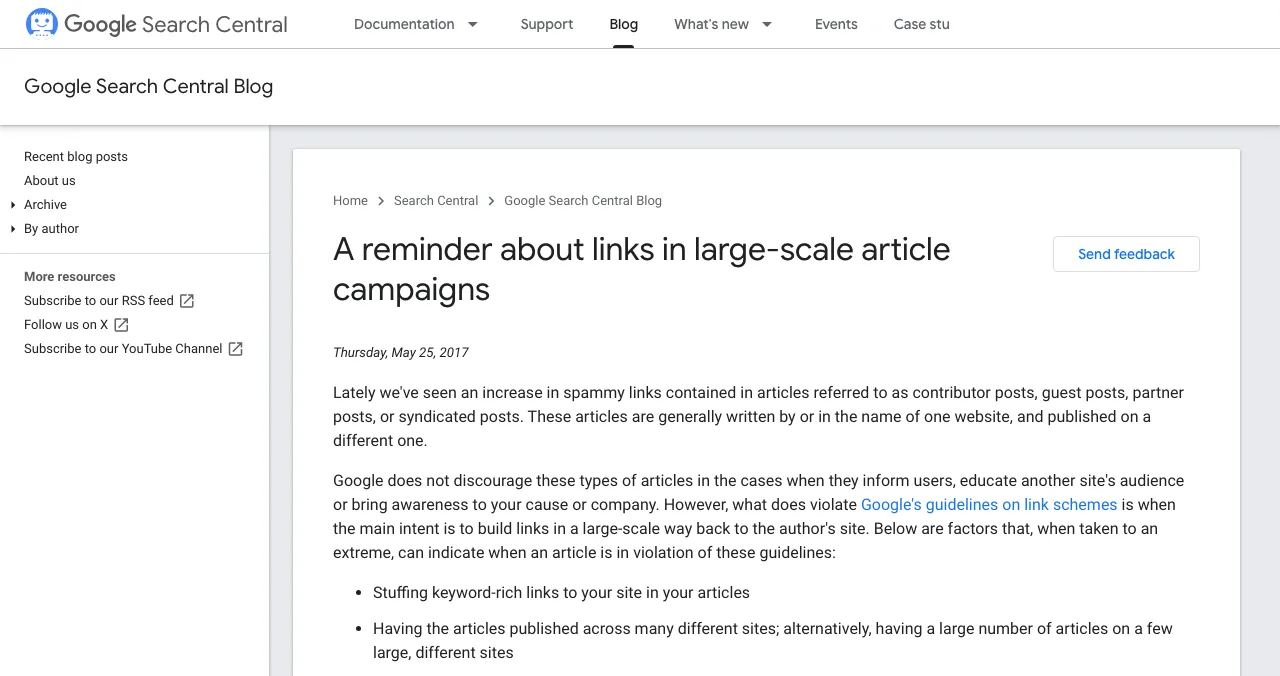
Yes, when it's genuinely for readers. Google's 2017 post on large-scale article campaigns says it "does not discourage these types of articles in the cases when they inform users, educate another site's audience or bring awareness to your cause or company." What crosses the line is when the main intent is building links at scale. Google lists the warning signs: keyword-rich links stuffed into articles, the same or similar content across many sites, writers who don't know the topic, and articles published across many different sites.
Google's current spam policies go further on paid posts: "advertorials or native advertising where payment is received for articles that include links that pass ranking credit, or links with optimized anchor text in articles, guest posts, or press releases distributed on other sites" are link spam. Its July 2021 post asked publishers to qualify guest-post links and warned that sites taking part in excessive unqualified sponsored or guest posting may see action.
The guest post site checklist

- No fee — a site that charges for a guest post is selling a link
- Real editors — someone reads, edits and can reject your article
- Published guidelines — and they say what gets rejected
- An audience you want — your customers would read it
- A clear topic — not casinos next to SaaS next to plumbing
- Author pages with real people — not "Admin" on every post
- No "DA 50+ guest post" pitches — pricing by score means links sold for ranking
- Brand or URL anchor text — not "best CRM software"
- One link, in context or in your bio — not five in the first paragraph
- Would you share it with a customer? — if not, don't publish there
Guest post vs listing: which first link?
A good guest post takes weeks: find the site, pitch, write, edit, wait. A product listing is the fast first link. A Launchpad profile is free forever, takes six short steps, gets automated checks and a human review, and is ranked by relevance, editorial picks and community interest, never payment. On 18 November 2026 (re-checked 20 November), the profile's website link carried rel="noopener" only, a followed link; a dated observation, not a promise.
- Areas of your product tested in a full investigation
- 22
- Automatic measurements, desktop and mobile
- 39
- Expert checks behind your login
- 74
- Verdicts, from Good to Critical
- 5
Know what readers find when they click
List free, then order the report that fits your stage.

 Economy
See what new customers see
- Store listing and homepage, screen by screen
- Scorecard against 60 Laws of UX
- Customers, competitors and the fixes worth most
PremiumThe full diagnosis and the plan
- Every screen, every finding, every flow
- All 60 laws with evidence and fixes
- 8 strategy chapters and a 90-day roadmap
Researched from your live product and fact-checked against the evidence.
Which should you do first?
| You are… | First | Then |
|---|---|---|
| Pre-launch, no writing samples | Launchpad listing | Two posts on Hashnode or DEV |
| A developer tool | DEV post with canonical URL | Pitch freeCodeCamp or Smashing |
| A design or web product | Launchpad listing | Outline to Smashing Magazine |
| Any niche | Search "topic" + "write for us" | Vet with the checklist |
Table: Which guest blogging sites to start with, by situation
Mistakes

- Buying from a "guest post sites list" vendor — Google lists paid guest posts with followed links as link spam
- Pitching a finished article — most editors want an outline first
- Writing an ad — Smashing rejects content marketing; freeCodeCamp allows one sentence of CTA at the end
- Keyword anchors — Google names keyword-rich links as a warning sign
- Republishing without a canonical — use canonical_url on DEV
- Skipping the links you're owed — list on reviewed directories first; see backlinks for startups
Ready for your first link?
How we chose
We included only sites with published contributor rules we could read today, and excluded any site that charges for posts. Each site's rules come from its own guidelines page, read on 20 November 2026; rel attributes were read from live pages the same day. Google's position comes from its spam policies and its 2017 and 2021 Search Central blog posts. Search volumes are from Google Keyword Planner (global 12-month average). Science of Apps runs the Launchpad.
Key terms, defined
- Guest post: an article written by one site's author and published on another site.
- Write for us page: a publication's page explaining how to pitch or contribute.
- Contributor program: an approved-author scheme with editing, such as freeCodeCamp News.
- Canonical URL: the address you tell search engines is the original version of a page.
- Paid guest post: a post published for a fee; Google treats followed links in it as link spam.
- Anchor text: the clickable words of a link.
Frequently asked questions
What are the best free guest post sites?
Publications your customers read that have real editors and public guidelines. For web and developer audiences, Smashing Magazine (which pays an honorarium), freeCodeCamp News (a selective contributor program) and the open platforms DEV and Hashnode are good starts. For other niches, search for your topic plus 'write for us' and vet each result with the checklist in this guide.
Is guest posting still good for SEO?
Guest posting is fine when the article genuinely informs readers. Google's 2017 guidance says it doesn't discourage such articles, but large-scale guest posting mainly for links is a problem, especially with keyword-rich links or the same content across many sites. Google's spam policies list paid guest posts with links that pass ranking credit as link spam.
How do I find write for us sites in my niche?
Search Google for your topic with phrases such as 'write for us', 'contribute', 'contributor guidelines' or 'submit an article'. Then check that the site has an audience you want, editors, a clear topic and no fee. Look at who writes there now; if every post is thin and full of commercial links, move on.
Should I pay for guest posts?
No, not for links. Google's spam policies list 'advertorials or native advertising where payment is received for articles that include links that pass ranking credit' as link spam. If you pay for sponsored content for its audience, the links should carry rel="sponsored" or rel="nofollow", which means they won't pass ranking credit.
Are guest blogging sites like Medium and DEV worth it?
For reaching readers, yes; for links, modestly. Open platforms let you publish without an editor, which also means links there carry less weight than an edited publication's. On DEV, use the canonical_url field when you republish from your own blog so search engines credit the original. On 20 Nov 2026 a DEV profile's website link had rel="noopener me".
How long should a guest post be?
As long as the topic needs and the publication's guidelines allow. Smashing Magazine asks for a 200 to 300 word outline first rather than a finished draft. Most edited publications prefer practical, original tutorials or case studies to generic listicles, and many reject product reviews and press releases outright.
What's faster than guest posting for a first link?
A listing. A guest post can take weeks from pitch to publication. A free Science of Apps Launchpad profile takes six short steps, is reviewed by a person and links to your site; on 18 November 2026 that link was followed (rel="noopener"), a dated check rather than a promise.
Sources
- Smashing Magazine — Writing a Smashing article: guidelines (checked 20 Nov 2026)
- freeCodeCamp — How to write for freeCodeCamp News (checked 20 Nov 2026)
- freeCodeCamp — Publication style guide: links, self-promotion, guest posts (checked 20 Nov 2026)
- DEV Community — Editor guide: canonical_url (checked 20 Nov 2026)
- Hashnode — Start your blog free (checked 20 Nov 2026)
- Google Search Central — Spam policies for Google web search: link spam (checked 20 Nov 2026)
- Google Search Central Blog — A reminder about links in large-scale article campaigns (May 2017; checked 20 Nov 2026)
- Google Search Central Blog — Link tagging and link spam update (July 2021; checked 20 Nov 2026)
- Science of Apps — Launchpad: launch your product free (checked 18 Nov 2026)
- Checked November 20, 2026. Figures that change — fees, salaries, prices — are reviewed every six months; if something is out of date, tell us.
Where to go from here
- How to get backlinks — the full playbook
- Are free backlinks safe? — spotting link spam
- Dofollow vs nofollow — what rel values mean
- Science of Apps - LaunchpadShould you buy backlinks? What paid backlinks cost, what Google's link-spam policy says about buying dofollow backlinks or a backlink service, and the free, earned alternativesShould you buy backlinks? Google lists paid links for ranking as link spam. What paid backlinks cost, what a backlink service sells, and free alternatives.
- Science of Apps - LaunchpadHow to launch an AI product: prove the outputs, describe the task not the model, pick free and paid launch sites, and make sure AI search can find youHow to launch an AI product in 2027: show real outputs, describe the task, launch on Product Hunt and AI directories, and get found by AI search engines.
- Science of Apps - LaunchpadAre free backlinks safe for a new website? What Google's link-spam policy actually says, how to spot spammy backlinks and link schemes, and what to do about toxic backlinksAre free backlinks safe? Some are, some are link spam. Google's own rules, a 12-point checklist for spammy backlinks, and what to do about toxic backlinks.
- Science of Apps - LaunchpadFree directory submission sites in 2027: a quality-checked list, and the directory links Google calls spamA quality-checked list of free directory submission sites for 2027, from Google Business Profile to SaaSHub, plus the low-quality directories to avoid.
- Science of Apps - LaunchpadProfile backlink site list for startups: how profile backlinks work, which profile creation sites are worth it, what 'high DA profile backlinks' really are, and the rel attributes we found on real profilesA profile backlink site list for startups: 7 profiles worth creating, the rel attributes we found, why 'high DA profile backlinks' mislead, and Google's rules.
- Science of Apps - LaunchpadThe best link building tools for startups, free and paid: what you need to find opportunities, find contacts, pitch, monitor mentions and earn links from launch sites, with prices checked on each tool's own pageThe best link building tools for startups: Search Console, Ahrefs, Semrush, Moz, Hunter, Qwoted, Google Alerts and the Launchpad. Free tiers and prices checked.



Get the ideas, not the noise.
Sign up with Google and we’ll send you short UX psychology tips by email — why people tap, stall and leave, and what to do about it. Unsubscribe anytime. Prefer something to keep? Get the free Laws of UX guide as a PDF.
Launch day ends. Your listing shouldn't.
A guest post takes weeks to pitch and publish. A free Science of Apps Launchpad listing is a moderated product profile with a link back, live in minutes, and your product gets tested with a detailed report.