 By
Quick answer: Should you buy backlinks?
- Verdict: don't buy backlinks for ranking.
- Google's rule: buying or selling links for ranking is link spam.
- Allowed: paid links for advertising, marked rel="sponsored" or "nofollow".
- Prices quoted by Ahrefs: about $83 per paid link on average; $361.44 for niche edits; $77.80 for guest posts.
- Instead: free reviewed listings, profiles, partner pages and things worth citing.
Key takeaways
- A bought link is a bet that Google won't notice; Google built SpamBrain to notice.
- If it's paid and followed, it breaks Google's policy, whatever the seller calls it.
- Buying ads with sponsored links is fine; buying ranking isn't.
- The money is better spent on something worth linking to.
- Free, earned links are slower but don't expire when a seller's network is caught.
"Buy backlinks" is searched about 5,400 times a month worldwide, and "backlink service" another 1,600 (Google Keyword Planner, global 12-month average). Most of the pages that rank are run by people selling them. This one isn't. Here's the plain answer to "should you buy backlinks?", what paid backlinks cost according to published studies, what Google's rules say word for word, and what to do with the money instead. Every rule below comes from Google's own pages, read on 20 November 2026. Jump to Google's rules, what sellers sell, the costs or safer options.
- Average paid link (Authority Hacker survey, cited by Ahrefs)
- $83
- Average niche edit (Ahrefs' outreach study)
- $361.44
- Average paid guest post (Ahrefs' outreach study)
- $77.80
- A moderated listing on the Launchpad
- $0
What does Google say about buying backlinks?
Google's spam policies define link spam as "the practice of creating links to or from a site primarily for the purpose of manipulating search rankings." The first example is buying or selling links for ranking purposes, which "includes" exchanging money for links or posts that contain links, exchanging goods or services for links, and sending someone a product in exchange for writing about it and including a link.
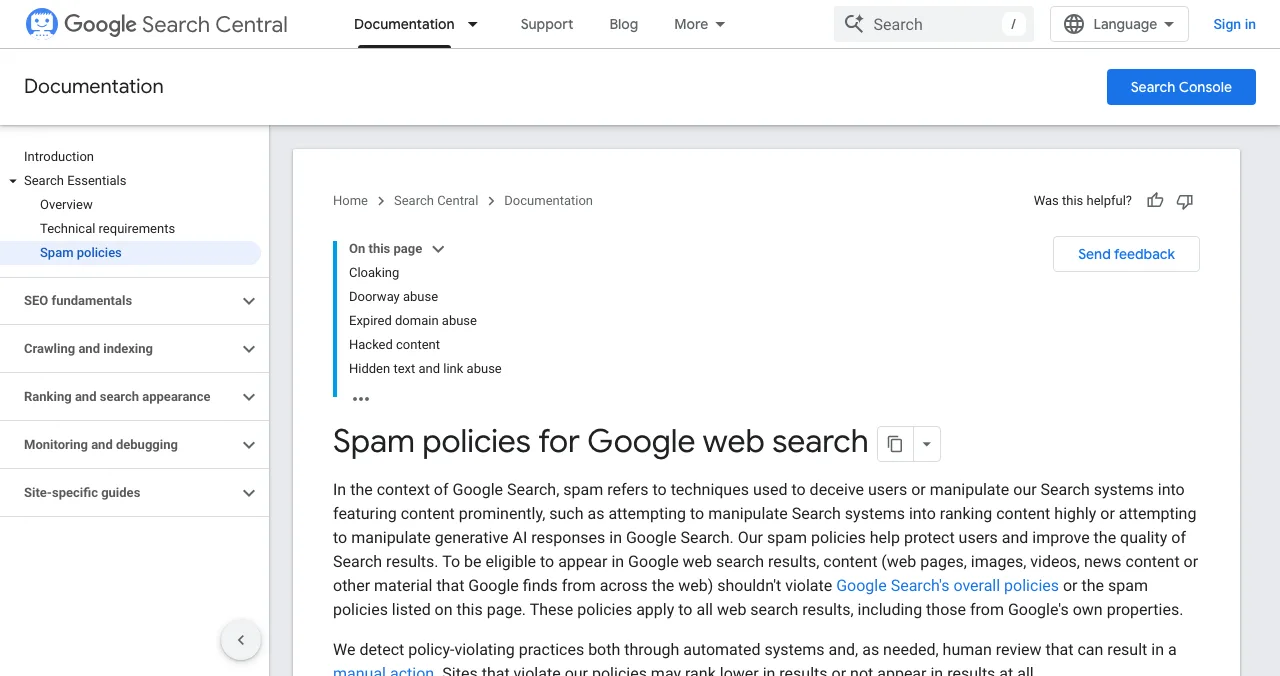
There's one clear exception: buying links for advertising. Google says buying and selling links for advertising or sponsorship is a normal part of the web, and isn't a violation when the links are qualified with rel="sponsored" or rel="nofollow". That means an honest paid placement exists, but it doesn't pass ranking credit, which is the thing link buyers are paying for. See dofollow vs nofollow for what each rel value means.
Google's guide to how Search works is blunt too: Google "doesn't accept payment to crawl a site more frequently, or rank it higher."
Does Google catch paid backlinks?
Google says it detects policy-violating practices with automated systems and, when needed, human review. Its December 2022 link spam update said SpamBrain "can now detect both sites buying links, and sites used for the purpose of passing outgoing links", and that when unnatural links are neutralised, the credit they passed is lost.
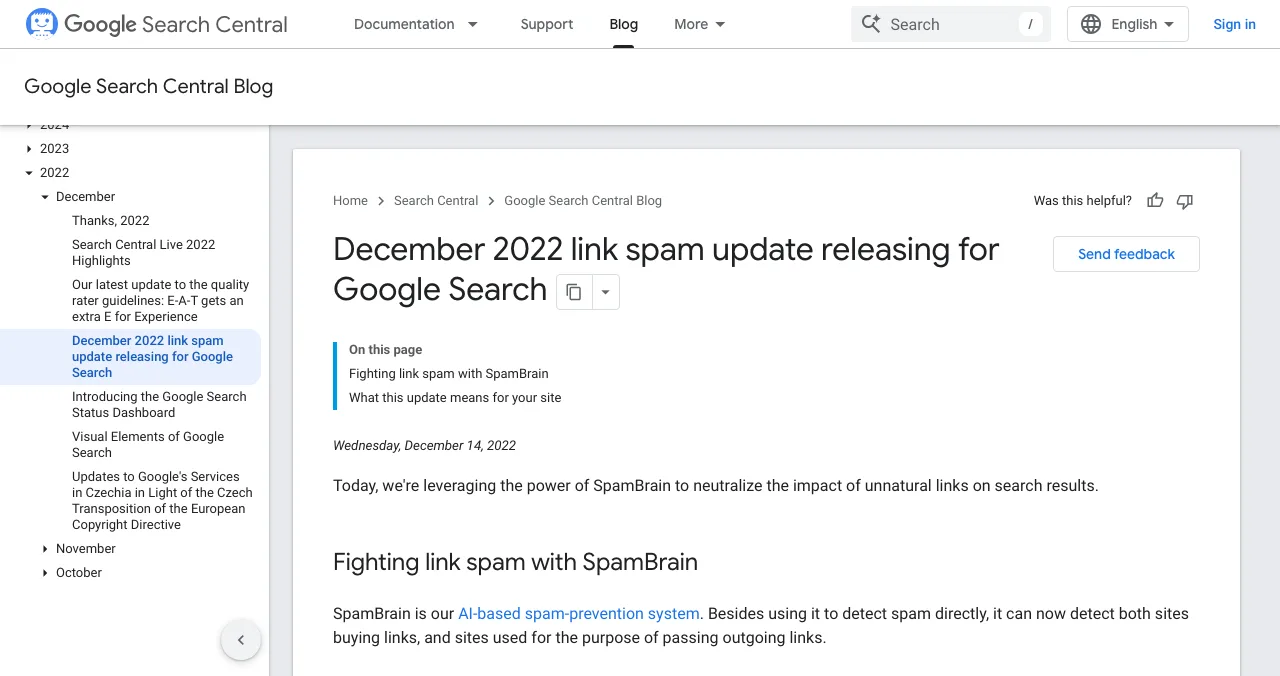
So the most likely outcome of buying links isn't a dramatic penalty. It's quieter: you pay, the link appears, and Google discounts it. The worse outcome is a manual action, after which Google says sites "may rank lower in results or not appear in results at all." Google's July 2021 post added that sites taking part in excessive sponsored or guest posting without qualifying the links may also see action.
What does a backlink service actually sell?
| What's offered | What it really is | Google's rule |
|---|---|---|
| "Niche edits" or "link insertions" | Money to add your link to an existing article | Buying links for ranking |
| "Guest posts on DA 50+ sites" | A paid article with a followed link | Paid guest posts that pass ranking credit |
| "Buy dofollow backlinks" packages priced by DA/DR | Links sold by a third-party score | Buying links for ranking |
| "PBN links" or "private network" | Links from sites the seller controls for the purpose | Link spam; sites passing outgoing links |
| "Free links for a free account / product" | A link in exchange for goods or services | Exchanging goods or services for links |
| Sponsored content marked rel="sponsored" | Advertising | Allowed |
Table: What a backlink service sells, and how Google's spam policies classify it (checked 20 Nov 2026)
If a seller says their paid backlinks are "safe", "white-hat", "natural-looking" or "permanent", nothing changes: the policy is about why the link exists, not how it looks.
How much do backlinks cost?
Ahrefs' article on link building costs (updated 18 July 2024) gives the most-quoted figures:
| Type | Average price | Source as cited by Ahrefs |
|---|---|---|
| Paid link | $83 | Authority Hacker survey of 755 link builders |
| Niche edit | $361.44 | Ahrefs' outreach to 450 sites in nine niches |
| Guest post | $77.80 | Ahrefs' outreach to 180 sites in the same niches |

Table: Published averages for paid backlinks (Ahrefs, updated 18 Jul 2024; checked 20 Nov 2026)
Those are prices for links that break Google's policy when they pass ranking credit. They also understate the real cost: you pay again if links disappear, and you pay in risk if the seller's network is caught.
Why do people still buy backlinks?
Because a new site has none, links matter, and earning them is slow. A seller's pitch plays on loss aversion: "your competitors already have thousands". Google's own advice on hiring SEO help says to "be wary of SEO firms and web consultants or agencies that email you out of the blue" and that "you should never have to link to an SEO."
What are the safer options?
| Instead of… | Do this (free) |
|---|---|
| Buying a "DA 50" link | A reviewed listing: the Launchpad, plus two or three directories in your category |
| Paying for a guest post | Pitch an outline to a publication with editors; see guest post sites |
| Niche edits | Ask sites that already mention you to link (unlinked mentions) |
| PBN packages | Ask integration partners for a listing on their integrations page |
| A "backlink service" retainer | Publish original data or a free tool, then tell people who'd care |
Table: Free alternatives to buying backlinks (Science of Apps editorial guidance)
A Launchpad listing is free forever, takes six short steps, gets automated checks and a human review, and is ranked by relevance, editorial picks and community interest, never payment. On 18 November 2026 (re-checked 20 November), the profile's website link carried rel="noopener" only, a followed link. That's a dated observation, not a promise, and nobody sold it to anyone.
It also checks where the link lands: a free baseline diagnosis of your landing page, discoverability and speed runs as you go live.
Arrive
First impression
Discoverability on Google, AI and social; landing page, pricing, trust and speed.
Join
The first minutes
Sign-up, sign-in, recovery and onboarding.
Use
The everyday job
Home, core flow, dashboards, search, microcopy and error states.
Pay
Value into revenue
Paywall, upgrade, checkout and payments.
Stay
Coming back
Notifications, account, settings and help.
Every screen
Throughout
Accessibility to WCAG 2.2, visual design and consistency.
Know what visitors find when they click
List free, then order the report that fits your stage.

 Economy
See what new customers see
- Store listing and homepage, screen by screen
- Scorecard against 60 Laws of UX
- Customers, competitors and the fixes worth most
PremiumThe full diagnosis and the plan
- Every screen, every finding, every flow
- All 60 laws with evidence and fixes
- 8 strategy chapters and a 90-day roadmap
Researched from your live product and fact-checked against the evidence.
When is paying for a link fine?
| Situation | OK? | What to do |
|---|---|---|
| A newsletter sponsorship with a link | Yes | Ask for rel="sponsored"; judge it on clicks |
| A paid directory listing for its traffic | Yes, if qualified | The link should be sponsored or nofollow if payment buys it |
| Affiliate links on your partners' sites | Yes | Google asks for rel="sponsored" on affiliate links |
| A "dofollow guarantee" for money | No | That's buying links for ranking |
| A free product in exchange for a review with a followed link | No | Google lists this as link spam |
Table: When paying for a link is within Google's rules (Google spam policies and 2021 link-tagging post, checked 20 Nov 2026)
Already bought backlinks?

- Stop buying — cancel any recurring package.
- Check Manual actions in Search Console — if there's no "unnatural links" action, Google is most likely just discounting them.
- Ask for removal or qualification — where you have a contact, ask for rel="sponsored" or removal.
- Disavow only if there's a manual action — see are free backlinks safe?.
- Replace them with earned links — the free options above.
Mistakes

- Trusting "safe paid links" — no wording makes a paid, followed link compliant
- Buying by DA or DR — scores Google doesn't use, priced for a practice Google penalises
- Swapping products for links — goods and services count as payment
- Answering cold link-selling emails — Google says to be wary of agencies that email out of the blue
- Forgetting the landing page — even a real link is wasted on a page that doesn't convert
Ready to earn instead of buy?
How we know
Google's rules come from its spam policies, its guide to how Search works, its "Do you need an SEO?" page and its 2021 and 2022 Search Central blog posts, all read on 20 November 2026. Prices are the figures Ahrefs publishes in its link building cost article (updated 18 July 2024); we didn't buy any links. Search volumes are from Google Keyword Planner (global 12-month average). Science of Apps runs the Launchpad.
Key terms, defined
- Paid backlink: a link placed in exchange for money, goods or services.
- Niche edit: a link inserted into an existing article, usually for a fee.
- PBN (private blog network): a group of sites run to pass links to other sites.
- rel="sponsored": the attribute Google asks for on paid and advertising links.
- Backlink service: a seller of links; distinct from an agency that does outreach and content.
- Link spam: Google's term for links created mainly to manipulate rankings.
Frequently asked questions
Should you buy backlinks?
Not for ranking. Google's spam policies list buying or selling links for ranking purposes as link spam, including exchanging money, goods or services for links. Google's December 2022 link spam update said SpamBrain can detect sites buying links and neutralise them, so the credit is lost. You can pay for advertising links if they carry rel="sponsored" or rel="nofollow".
Is buying backlinks illegal?
No, it isn't a crime, but it breaks Google's spam policies, so it's a search risk rather than a legal one. Depending on where you are, advertising rules can require you to disclose paid endorsements and sponsored content, so undisclosed paid placements can raise separate consumer-protection questions. Check the rules where you and the publisher operate.
How much do backlinks cost?
Ahrefs' link building cost article (updated 18 July 2024) cites an Authority Hacker survey of 755 link builders putting paid links at $83 on average, its own outreach study at $361.44 on average for niche edits, and $77.80 for guest posts. Those are prices for links Google treats as link spam when they pass ranking credit.
Can I buy dofollow backlinks safely?
No. A paid link that passes ranking credit is the definition of what Google's policy calls link spam. 'Safe', 'white-hat' or 'permanent' in a seller's description doesn't change that. If you pay for placement, the link should be qualified with rel="sponsored" or rel="nofollow", which means it won't pass ranking credit.
What does a backlink service sell?
Usually one of four things: links inserted into existing articles (niche edits), paid guest posts, packages of links priced by a domain score such as DA or DR, or placements on a network of sites the seller controls. All four are paid links for ranking. Legitimate services sell outreach and content work, not guaranteed links.
What happens if Google catches bought links?
Most often, Google's systems simply neutralise them and you lose whatever they were passing. In serious cases a human reviewer can issue a manual action, and Google says violating sites may rank lower or not appear at all. You'd see it in Search Console's Manual actions report, with steps to fix it.
What should I do instead of buying backlinks?
Collect the links you're owed: a free reviewed listing such as the Science of Apps Launchpad, reviewed directories in your category, company profiles, a launch-platform page and integration partners. Then make one thing worth linking to, such as original data or a free tool, and tell the people who'd care.
Sources
- Google Search Central — Spam policies for Google web search: link spam (checked 20 Nov 2026)
- Google Search Central Blog — December 2022 link spam update, SpamBrain (checked 20 Nov 2026)
- Google Search Central Blog — Link tagging and link spam update (July 2021; checked 20 Nov 2026)
- Google Search Central — In-depth guide to how Google Search works: no payment to rank (checked 20 Nov 2026)
- Google Search Central — Do you need an SEO? (checked 20 Nov 2026)
- Ahrefs — How much does link building cost? (updated 18 Jul 2024; checked 20 Nov 2026)
- Science of Apps — Launchpad: launch your product free (checked 18 Nov 2026)
- Checked November 20, 2026. Figures that change — fees, salaries, prices — are reviewed every six months; if something is out of date, tell us.
Where to go from here
- Link building services — costs and red flags
- Dofollow vs nofollow — what sponsored means
- Are free backlinks safe? — spotting link spam
- Science of Apps - LaunchpadAre free backlinks safe for a new website? What Google's link-spam policy actually says, how to spot spammy backlinks and link schemes, and what to do about toxic backlinksAre free backlinks safe? Some are, some are link spam. Google's own rules, a 12-point checklist for spammy backlinks, and what to do about toxic backlinks.
- Science of Apps - LaunchpadFazier review: what the free Basic launch requires, what Lite, Premium and Super cost, how to launch on Fazier step by step, and the permanent listing to link from your launchFazier's free Basic launch needs a backlink and lists you within 30 days; paid plans run $29 to $99. A Fazier review: pricing, how to launch, and what to pair.
- Science of Apps - LaunchpadDo backlinks still matter in 2027? What Google's own documents say about links and PageRank, how backlinks feed AI search, and why mentions and citations now count as much as linksDo backlinks still matter in 2027? Google says PageRank is still a core system and AI answers draw on the same index. What counts now, with sources.
- Science of Apps - LaunchpadDoes directory submission still help SaaS SEO in 2027? What Google's spam policies say, and which directories are worth itDoes directory submission still help SaaS SEO in 2027? Google calls low-quality directory links spam, but reviewed directories still bring users and citations.
- Science of Apps - LaunchpadGuest post sites worth writing for: free guest posting sites and guest blogging sites with real editors, how to find write for us sites in your niche, and why paid guest posts are link spamFree guest post sites with real editors, how to find write for us sites in your niche, a vetting checklist, and why paid guest posts break Google's rules.
- Science of Apps - LaunchpadFree backlinks sites for startups: which launch sites and directories give a followed link, which use nofollow or ugc, with dated rel-attribute checks, and how to get backlinks free without breaking Google's rulesFree backlinks sites for startups, with dated rel checks: which listings were followed, which nofollow or ugc, and how to get backlinks free, safely.
Get the ideas, not the noise.
Sign up with Google and we’ll send you short UX psychology tips by email — why people tap, stall and leave, and what to do about it. Unsubscribe anytime. Prefer something to keep? Get the free Laws of UX guide as a PDF.
Launch day ends. Your listing shouldn't.
Before you pay for a link, take the free ones you're owed. A Science of Apps Launchpad listing is a moderated product profile with a link back, never sold, and your product gets tested with a detailed report.