 By
Quick answer: How do you get backlinks for a new website?
- Week one: links you're owed: a reviewed listing, directories, company profiles.
- Month one: a launch page and integration partners.
- Months two and three: one thing worth citing, then outreach.
- Every link needs a reason that isn't SEO.
- Never: buy, swap or automate links; Google lists all three as link spam.
Key takeaways
- A new site's first ten links come from existing, not persuading.
- After that, you get backlinks by being the best page to cite.
- Outreach works when you're giving the writer something.
- Measure referring domains and referral visits, not link counts.
- Fix the page links point to before you send people to it.
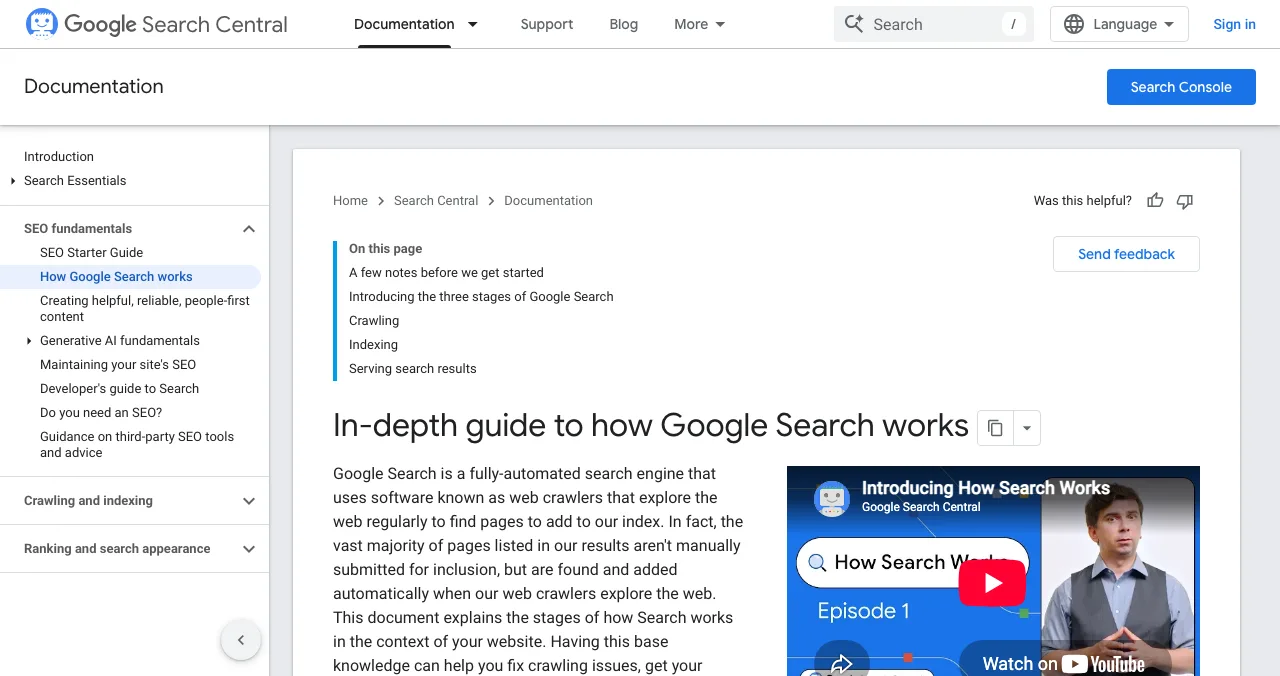
A new website starts with zero links, and zero links means Google has fewer ways to find it. Google's guide to how Search works says most new pages are discovered when Google follows a link from a page it already knows. "Get backlinks" is searched about 1,600 times a month worldwide, and "how to get backlinks", "how to create backlinks" and "how to build backlinks" about 1,300 each (Google Keyword Planner, global 12-month average). This playbook is the method, in order: the links you're owed in week one, the links you earn after that, and a 90-day plan. Rules come from Google's own pages, read on 20 November 2026. Jump to the four sources, week one, earning links or the 90-day plan.
- Sources of backlinks: exist, launch, earn, relate
- 4
- Links you're owed in week one, roughly
- 10
- Days to a healthy start
- 90
- Links worth buying
- 0
Where do backlinks come from? The four sources
Every legitimate backlink exists for a reason other than SEO. For a new site, those reasons fall into four groups:
| Source | Why the link exists | Examples | Speed |
|---|---|---|---|
| Exist | Your product exists and someone catalogues it | Reviewed listings, directories, Crunchbase, LinkedIn | Days |
| Launch | You launched and a platform featured it | Product Hunt, Peerlist, DevHunt | On launch day |
| Earn | Your page is the best thing to cite | Original data, free tools, comparisons, guides | Weeks to months |
| Relate | You work with someone | Integration partners, customers, investors, events | Weeks |
Table: The four sources of backlinks for a new website (Science of Apps editorial framework)
If a link fits none of these, it's probably bought, swapped or automated, which Google's spam policies define as link spam: "the practice of creating links to or from a site primarily for the purpose of manipulating search rankings."
Week one: how to create backlinks you're owed
These are the easiest backlinks to create because you fill them in yourself. Do them in this order, using the same name, one-line description and URL everywhere.

- A reviewed product listing — a free Science of Apps Launchpad profile: six short steps, automated checks and a human review. On 18 November 2026 (re-checked 20 November) the website link was followed (rel="noopener" only); a dated observation, not a promise.
- Two or three category directories — reviewed ones people actually browse; see free directory submission sites and SaaS directories.
- Crunchbase — a company profile investors and journalists check.
- A LinkedIn Page — your company's own page, linked from every founder's profile.
- GitHub or docs — if you ship code, your README links to your site.
- Google Business Profile — only if you serve customers at a location or area.
Many of these links are nofollow or ugc. That's fine: they still send people, and Google's guide says such links "will generally not be followed" rather than that they're worthless. See dofollow vs nofollow and profile backlinks for which profiles are worth it.
Month one: launch and relationship links

- One launch platform — pick the one your audience uses; prepare the page before the day
- Every integration partner — ask to be listed on their integrations or marketplace page
- Your investors and accelerator — most have a portfolio page
- Your first customers — a case study they publish, or a "built with" mention
- Communities you're already part of — share the launch where it's on-topic and allowed
How to build backlinks people choose to give
After the owed links, every new backlink has to be earned: someone decides your page is the best thing to cite. That happens when you publish something they need.
| Linkable asset | Why people link | Effort |
|---|---|---|
| Original data | Writers need numbers to quote | A survey, or analysis of public data |
| A free tool | People bookmark and recommend it | A calculator, checker or template |
| An honest comparison | Roundups cite fair comparisons | "X vs Y" with real trade-offs |
| A definitive guide | It answers the question completely | Long, but evergreen |
| A glossary of your niche | Writers link definitions | Short pages, quotable first sentences |
Table: Linkable assets that earn backlinks (Science of Apps editorial guidance)
Then tell people. Outreach that works gives the writer something:

- Find who'd care — writers who covered the topic in the last year; check competitor backlinks for names.
- Lead with what's new — "We analysed X and found Y", not "Please link to us".
- Make it quotable — one number, one chart, one sentence they can lift.
- Ask once, follow up once — then move on.
- Contribute where your customers read — an outline-first pitch to an edited publication; Smashing Magazine, for example, asks for a 200–300 word outline. See guest post sites.
Here's what a pitch that gives something looks like. It's an illustrative example, not a real email:
Google's guidance on contributed articles is the line to stay on: it "does not discourage these types of articles in the cases when they inform users", but warns against keyword-stuffed links and the same content across many sites.
How not to get backlinks
| Tactic | Why to skip it |
|---|---|
| Buying links or "DA 50+" packages | Buying links for ranking is Google's first link-spam example; see should you buy backlinks? |
| Backlink generators | "Using automated programs or services to create links" is link spam; see backlink generators |
| Link swaps | Excessive link exchanges are link spam |
| Hundreds of instant directories | Low-quality directory links are link spam |
| Forum and comment signatures | Optimised links in posts or signatures are link spam |
| Paid guest posts | Paid articles with links that pass ranking credit are link spam |
Table: Ways to get backlinks that break Google's spam policies (checked 20 Nov 2026)
Your product, tested end to end
A backlink brings a visitor to one page. If that page confuses them, the link is wasted. A Launchpad listing is free forever, ranked by relevance, editorial picks and community interest, never payment, and a free baseline diagnosis of your landing page, discoverability and speed runs as you go live. A full investigation tests the whole product.
- Areas of your product tested in a full investigation
- 22
- Automatic measurements, desktop and mobile
- 39
- Expert checks behind your login
- 74
- Verdicts, from Good to Critical
- 5
Know what visitors find when they click
List free, then order the report that fits your stage.

 Economy
See what new customers see
- Store listing and homepage, screen by screen
- Scorecard against 60 Laws of UX
- Customers, competitors and the fixes worth most
PremiumThe full diagnosis and the plan
- Every screen, every finding, every flow
- All 60 laws with evidence and fixes
- 8 strategy chapters and a 90-day roadmap
Researched from your live product and fact-checked against the evidence.
The 90-day backlink plan
- Week 1
Links you're owed
Launchpad listing, 2–3 directories, Crunchbase, LinkedIn, GitHub.
- Weeks 2–4
Launch and relationships
One launch platform; integration partners, investors, first customers.
- Weeks 5–8
One linkable asset
Original data, a free tool or an honest comparison.
- Weeks 9–12
Outreach
Ten personal pitches; one contributed article; turn mentions into links.
- Day 90
Measure
Search Console Links report, referral visits, sign-ups from referrals.
Search Console's Links report shows a sample of your top linking sites, top linked pages and top linking text; tables show up to 1,000 rows on screen. It doesn't say whether a link is nofollow. For other free views, see free backlink checkers.
Which backlinks should you get first?
| Your site | First | Next |
|---|---|---|
| SaaS or app, pre-launch | Launchpad listing + 2 directories | Launch platform |
| Developer tool | GitHub README + Launchpad + DEV post | Docs, integrations |
| Content site or blog | Profiles + one contributed article | Original data |
| Local business | Google Business Profile + local directories | Local press, partners |
Table: Which backlinks to get first, by type of website
Mistakes

- Starting with outreach — collect the links you're owed first
- Inconsistent facts — different names or descriptions across profiles confuse people and search engines
- Pitching with nothing to offer — lead with data, a tool or a story
- Keyword anchor text — let people link with your brand name
- Sending links to a weak page — reduce cognitive load on the landing page before outreach
- Measuring link counts — measure referring domains, visits and sign-ups
Ready for backlink #1?
How we know
Google's rules come from its spam policies, its guide to how Search works, the Links report help page its guide to qualifying outbound links and its 2017 post on article campaigns, all read on 20 November 2026. The four sources, asset table and 90-day plan are Science of Apps' editorial framework. Search volumes are from Google Keyword Planner (global 12-month average). Science of Apps runs the Launchpad.
Key terms, defined
- Backlink: a link from another website to yours.
- Referring domain: a distinct website that links to you.
- Linkable asset: a page built to be cited, such as original data or a free tool.
- Outreach: contacting writers or site owners about something useful you've published.
- Unlinked mention: a page that names you without linking.
- Link spam: Google's term for links created mainly to manipulate rankings.
Frequently asked questions
How do you get backlinks for a new website?
Start with the links you're owed because your product exists: a reviewed listing such as the Science of Apps Launchpad, two or three directories in your category, Crunchbase and LinkedIn profiles, and a launch-platform page. Then create one thing worth citing, such as original data or a free tool, and tell the writers and communities who'd find it useful.
How do I create backlinks for free?
Free backlinks come from listings and profiles you fill in yourself, partner pages you ask for, unlinked mentions you ask to be linked, and content people cite. None of them cost money; all of them cost time. Avoid 'free backlink generators' and swaps: Google's spam policies list automated link creation and excessive link exchanges as link spam.
How long does it take to get backlinks?
Listings and profiles can be live within days. Launch pages arrive on launch day. Earned links from articles take weeks to months, because someone has to find, read and decide to cite your work. A realistic first quarter for a new site is ten to twenty referring domains from listings, profiles, partners and one or two earned mentions.
What is the fastest way to get backlinks?
Reviewed listings and company profiles. They go live in minutes to days, and they exist for a reason other than SEO. A free Launchpad listing takes six short steps plus a human review. Anything faster, such as instant 'hundreds of links' services, usually matches Google's link-spam examples.
How do I build backlinks without outreach?
Make pages that get found and cited on their own: original statistics, free tools, templates, glossaries and honest comparisons. Writers searching for a source link to whatever answers their question best. Outreach speeds this up, but a genuinely useful page with clear, quotable facts earns links over time without emails.
Do nofollow backlinks help a new website?
They help in practical ways: they send visitors, get your brand seen and can lead to followed links when people discover you. Google says links with those attributes 'will generally not be followed', not that they're worthless. Most profile and community links are nofollow, and that's normal for a young site's link profile.
How do I know my backlinks are working?
Check three things monthly: Google Search Console's Links report for new linking sites, your analytics for referral visits from those sites, and whether the pages they point to rank for more searches. A link that sends visitors who sign up is working regardless of any authority score.
Sources
- Google Search Central — In-depth guide to how Google Search works: discovery through links (checked 20 Nov 2026)
- Google Search Central — Spam policies for Google web search: link spam (checked 20 Nov 2026)
- Google Search Central Blog — A reminder about links in large-scale article campaigns (May 2017; checked 20 Nov 2026)
- Search Console Help — Links report (checked 20 Nov 2026)
- Google Search Central — Qualify your outbound links to Google (checked 20 Nov 2026)
- Smashing Magazine — Writing a Smashing article: guidelines (checked 20 Nov 2026)
- Science of Apps — Launchpad: launch your product free (checked 18 Nov 2026)
- Checked November 20, 2026. Figures that change — fees, salaries, prices — are reviewed every six months; if something is out of date, tell us.
Where to go from here
- Backlinks for startups — the safe sources, listed
- Check competitor backlinks — find the gap
- Profile backlinks — the profiles worth having
- Science of Apps - LaunchpadFree backlinks sites for startups: which launch sites and directories give a followed link, which use nofollow or ugc, with dated rel-attribute checks, and how to get backlinks free without breaking Google's rulesFree backlinks sites for startups, with dated rel checks: which listings were followed, which nofollow or ugc, and how to get backlinks free, safely.
- Science of Apps - LaunchpadHow to get backlinks for a new startup for free, and which link tactics Google treats as spamHow a new startup can earn backlinks for free in 2027: launch sites, reviewed directories, data, free tools, partners and press, plus the link tactics to avoid.
- Science of Apps - LaunchpadAre free backlinks safe for a new website? What Google's link-spam policy actually says, how to spot spammy backlinks and link schemes, and what to do about toxic backlinksAre free backlinks safe? Some are, some are link spam. Google's own rules, a 12-point checklist for spammy backlinks, and what to do about toxic backlinks.
- Science of Apps - LaunchpadHow to promote my website for free: 15 ways that work for a new startup or small business site, grouped by where visitors actually come fromHow to promote your website for free: 15 ways grouped by where visitors come from (search, listings, communities and people), with what each costs in time.
- Science of Apps - LaunchpadFazier review: what the free Basic launch requires, what Lite, Premium and Super cost, how to launch on Fazier step by step, and the permanent listing to link from your launchFazier's free Basic launch needs a backlink and lists you within 30 days; paid plans run $29 to $99. A Fazier review: pricing, how to launch, and what to pair.
- Science of Apps - LaunchpadWhich launch sites and startup directories give dofollow backlinks? We inspected the rel attribute on real listing pages: most are nofollow or ugc, and that's fineWhich launch sites give dofollow backlinks? We checked real listings on 17 Nov 2026: Product Hunt is ugc, SaaSHub and AlternativeTo nofollow.
Get the ideas, not the noise.
Sign up with Google and we’ll send you short UX psychology tips by email — why people tap, stall and leave, and what to do about it. Unsubscribe anytime. Prefer something to keep? Get the free Laws of UX guide as a PDF.
Launch day ends. Your listing shouldn't.
Step one of this playbook: a free Science of Apps Launchpad listing, a moderated product profile with a link back, live in minutes, plus your product tested with a detailed report.