 By
Quick answer: Do backlink generators work?
- Verdict: backlink generators don't help, and they can hurt.
- How they work: your URL is inserted into auto-generated stats, whois or 'site analysis' pages, or blasted into comments and profiles.
- Google's rule: automated link creation is an example of link spam.
- YouTube backlink generators add nothing a video description link doesn't already do, and YouTube bans repetitive spam.
- Instead: a handful of reviewed listings, profiles and partner links.
Key takeaways
- If a tool can create a link without a human deciding to, Google treats it as link spam.
- Most generated pages are never indexed, so they pass nothing.
- Google's SpamBrain is built to neutralise unnatural links.
- A link that sends no visitors is worth little even before Google discounts it.
- Five reviewed links beat five hundred generated ones.
"YouTube backlink generator" gets about 27,100 searches a month worldwide, and "backlink generator" another 4,400 (Google Keyword Planner, global 12-month average). The promise is irresistible for a new site with no links: paste your URL, click a button, get hundreds of backlinks free. So do backlink generators work? We didn't run one against a real site, and we don't recommend you do. Instead we looked at how these tools describe themselves and checked that against Google's and YouTube's own rules, read on 20 November 2026. The verdict is short; the reasons are worth knowing. Jump to how they work, Google's rule, YouTube or what works instead.
How does a free backlink generator work?
Search for a free backlink generator tool and you'll find three kinds, judged by what their own pages describe:
| Type | What it does | What you get |
|---|---|---|
| Submission or "ping" generators | Open or submit your URL to many sites that auto-create a page for any domain (website stats, whois, "site worth", SEO analysis, archivers) | Hundreds of thin, machine-made pages that mention your URL |
| Blast generators | Post your link into comments, forums, guestbooks or new profiles in bulk | Links in places moderators delete or mark nofollow |
| "Opportunity list" generators | Give you a list of sites where you could create a profile | A to-do list; the links depend on what you do by hand |
Table: The three kinds of backlink generator tool and what they produce (Science of Apps editorial summary, 20 Nov 2026)
The first two are the generators people mean. The third isn't really a generator; it's a list, and it's only as good as the sites on it (see profile backlinks for which profiles are worth having).
What does Google say about automated links?
Google's spam policies define link spam as "the practice of creating links to or from a site primarily for the purpose of manipulating search rankings" and list examples. Two describe backlink generators almost word for word:
- "Using automated programs or services to create links to your site"
- "Forum comments with optimized links in the post or signature"
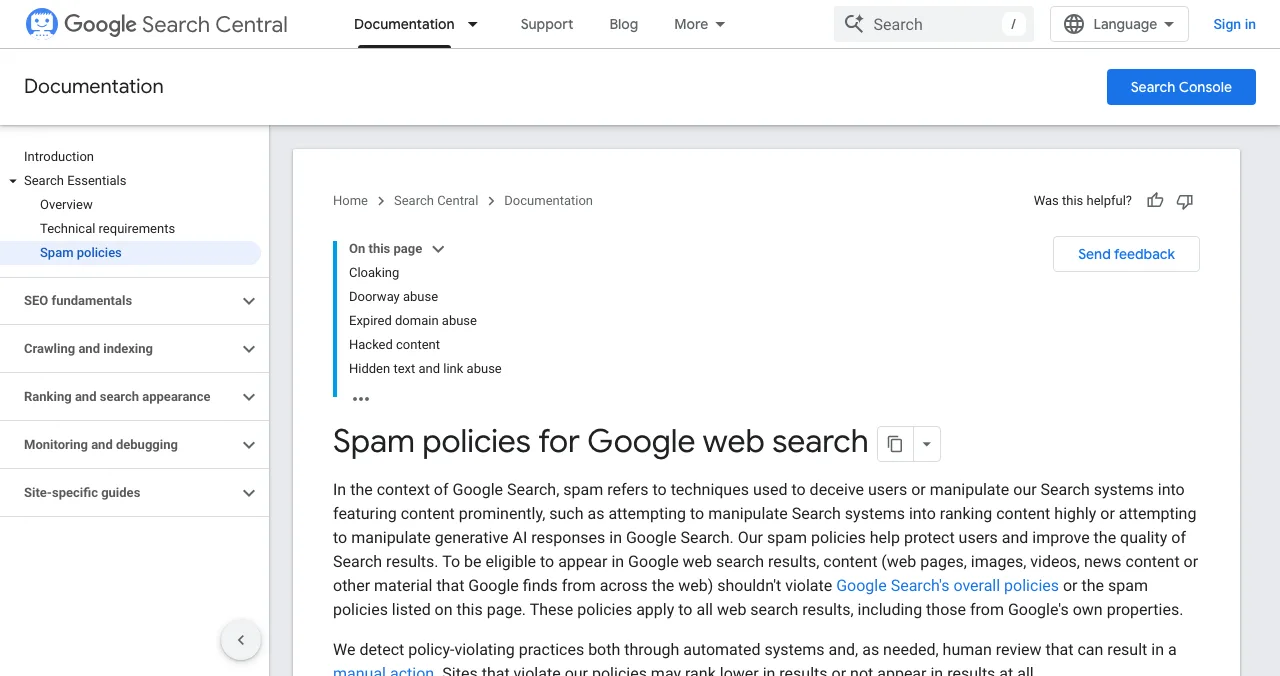
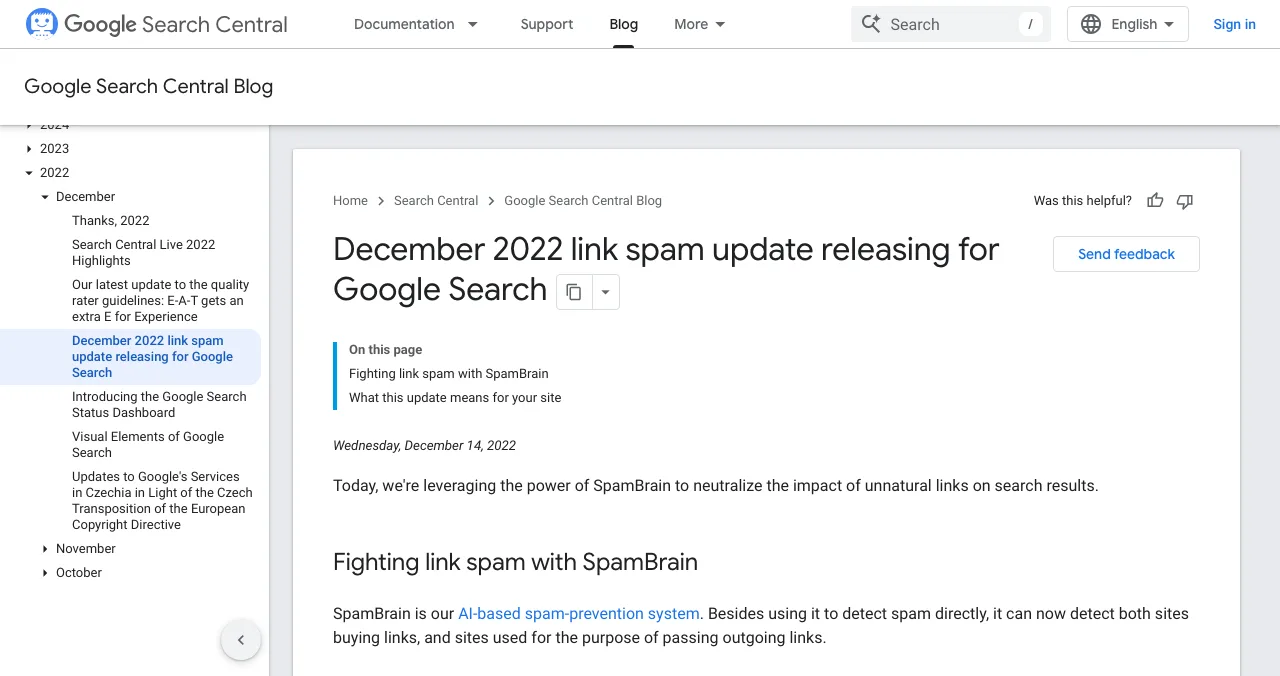
Google enforces this two ways. Automated systems, including SpamBrain, which Google's December 2022 update said can now detect "sites buying links, and sites used for the purpose of passing outgoing links", neutralise unnatural links, and the credit those links passed is lost. Human reviewers can also issue a manual action, and Google says violating sites "may rank lower in results or not appear in results at all."
Why generated backlinks fail even before Google judges them
Set the rules aside and the mechanics still don't work.

Never indexed
Google says "indexing isn't guaranteed; not every page that Google processes will be indexed". Pages auto-generated about millions of domains are the thinnest content on the web.
No visitors
Nobody browses a whois page for your startup, so the link sends no one.
Nofollow or removed
Comment and forum links are usually qualified or deleted by moderators.
A pattern, not a link
Hundreds of identical links appearing on the same day from the same kind of page is exactly what spam systems look for.
That's also why the sequel product, the backlink indexer, exists: generators make pages Google won't index, so someone sells a tool to force them in. It doesn't fix the underlying problem.
What about a YouTube backlink generator?
The most searched version, the YouTube backlink generator, usually does the same thing with a video URL: it drops youtube.com/watch?v=… onto auto-generated pages, or posts it into comments. Two facts make it pointless:
- Links from YouTube already go through YouTube. In the page source of a public video on 20 November 2026, description links pointed to
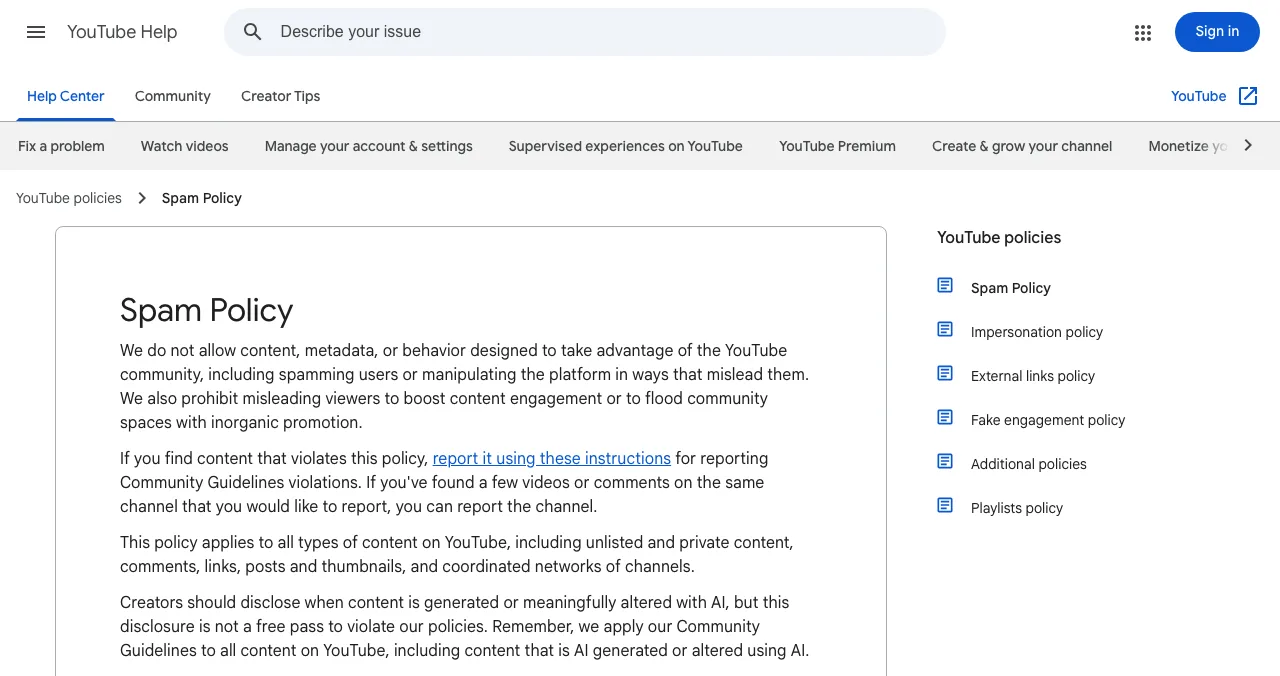
youtube.com/redirect?event=video_description…, YouTube's own redirect, not straight to the destination. - YouTube bans the comment-blast version. Its spam policy prohibits "high-volume, repetitive, or deceptive comments", giving the example of identical "check out my channel" messages across hundreds of videos, and says YouTube "may remove the content and issue a warning or a strike against your channel".
What actually grows a video: a clear title and description, a link to it from your own site and newsletter, and embedding it where it answers a real question.
How to spot a backlink generator dressed up as a service
Generators aren't always called generators. The same thing is sold as "link boosting", "SEO submission", "backlink packages" or a "traffic booster". The tells are consistent:

- A number of links up front — "500 backlinks" means nobody chose to link to you
- Minutes, not weeks — real links depend on other people's decisions
- No list of sites, or a list of stats and whois pages — those pages are made for every domain
- A follow-up offer to index them — an admission that the pages aren't indexed
- "Dofollow" or "high DA" in the headline — selling a score Google doesn't use
Will a backlink generator get my site penalised?
Usually the links are just ignored. But you're adding risk for no upside. If you've already used one:

- Stop — don't run it again, and cancel any subscription.
- Check Manual actions in Search Console — no "unnatural links" action usually means no action is needed.
- Don't panic-disavow — Google says most sites will not need the disavow tool; see are free backlinks safe?.
- Earn real links — they dilute the noise and actually send visitors.
What works instead of a backlink generator
The same ten minutes, spent on links a person decided to give you:
| Instead of… | Do this | Why it's better |
|---|---|---|
| 500 generated stats pages | One reviewed product listing | A human approved it; people searching your problem see it |
| Comment blasts | Answer one question well in a community you use | Real readers, and moderators leave it up |
| Bulk profile creation | 4–5 profiles you'd show a customer (Crunchbase, LinkedIn, GitHub, a launch page) | Each describes your company accurately |
| A YouTube backlink generator | Embed the video on your own site and link it from your docs | It's found by people who need it |
| An indexer subscription | Link new pages from pages already indexed | That's how Google discovers pages |
Table: Backlink generator alternatives that work (Science of Apps editorial guidance)
A Launchpad listing is the opposite of a generated link: six short steps, automated checks plus a human review, ranked by relevance, editorial picks and community interest, never payment, and free forever. Public profiles are allowed in the site's robots.txt, listed in its XML sitemap and marked "index, follow" (checked 20 November 2026), and on 18 November 2026 the website link carried rel="noopener" only, a followed link. Those are dated observations, not promises.
It also checks the page your link points to: a free baseline diagnosis of your landing page, discoverability and speed runs as you go live.
- Areas of your product tested in a full investigation
- 22
- Automatic measurements, desktop and mobile
- 39
- Expert checks behind your login
- 74
- Verdicts, from Good to Critical
- 5
Know what visitors find when they click
List free, then order the report that fits your stage.

 Economy
See what new customers see
- Store listing and homepage, screen by screen
- Scorecard against 60 Laws of UX
- Customers, competitors and the fixes worth most
PremiumThe full diagnosis and the plan
- Every screen, every finding, every flow
- All 60 laws with evidence and fixes
- 8 strategy chapters and a 90-day roadmap
Researched from your live product and fact-checked against the evidence.
A one-week plan instead of a generator
- Day 1
One reviewed listing
Create your Launchpad profile; read the free baseline diagnosis.
- Day 2
Company profiles
Crunchbase and a LinkedIn Page, with consistent facts.
- Day 3
Two reviewed directories
Pick two in your category from free directory submission sites.
- Day 4
Partners
Ask every tool you integrate with for an integrations-page listing.
- Day 5
Measure
Check Search Console's Links report and referral visits.
Mistakes

- Believing "free" means "safe" — free automated links are still link spam
- Measuring link count — five hundred links from junk pages are worth less than one real one
- Buying an indexer to fix generated links — you're paying twice for the same problem
- Comment-blasting a video — YouTube can remove it and strike the channel
- Falling for loss aversion — "your competitors already have 10,000 backlinks" is a sales line, not a reason
Ready for a link that counts?
How we know
We didn't run a backlink generator on a live site. We described how these tools work from how they present themselves, and checked them against Google's spam policies, its guide to how Search works, the Page indexing report help, the December 2022 link spam update and YouTube's spam policy, all read on 20 November 2026. The YouTube redirect and Launchpad link observations were read from live page source. Search volumes are from Google Keyword Planner (global 12-month average). Science of Apps runs the Launchpad.
Key terms, defined
- Backlink generator: a tool that creates links to a URL automatically, without a site owner choosing to link.
- Auto-generated page: a page a site creates for any domain entered, such as a stats or whois page.
- Link spam: Google's term for links created mainly to manipulate rankings.
- SpamBrain: Google's AI-based spam-prevention system.
- Manual action: a penalty applied after a Google reviewer finds a policy violation.
- Indexing: Google storing a page so it can appear in results; not guaranteed for any page.
Frequently asked questions
Do backlink generators work?
No. They produce links on pages nobody visits, created by software rather than by a person choosing to link to you. Google's spam policies name 'using automated programs or services to create links to your site' as link spam, and Google says its SpamBrain system detects and neutralises unnatural links, so any value they might pass is lost.
What does a free backlink generator actually do?
Most work in one of two ways. Some submit your URL to many sites that automatically create a page about any domain, such as website-stats, whois or 'site worth' pages, so your URL appears on each one. Others post your link into comments, forums or profiles in bulk. A third kind is just a list of sites where you could create profiles by hand.
Is a YouTube backlink generator worth using?
No. Tools sold as YouTube backlink generators push your video URL onto the same auto-generated pages. Links in YouTube video descriptions already route through YouTube's own redirect (youtube.com/redirect, seen in page source on 20 Nov 2026). YouTube's spam policy prohibits high-volume, repetitive comments and lets YouTube remove content or issue strikes.
Can backlink generators get my site penalised?
They can. Google's spam policies say human reviewers can issue a manual action and that sites violating its policies 'may rank lower in results or not appear in results at all'. More often, Google simply ignores the links. Check the Manual actions report in Search Console if you've used one; most sites never need to disavow anything.
Are generated backlinks indexed?
Mostly not, and that's part of why they fail. Google says indexing isn't guaranteed and that 'not every page that Google processes will be indexed'. Auto-generated pages about thousands of domains are thin by design. A link on a page that isn't in Google's index can't help that page's visitors find you, because there aren't any.
What should I use instead of a backlink generator tool?
Earn a handful of links people chose to give: a free reviewed listing such as the Science of Apps Launchpad, two or three reviewed directories in your category, a Crunchbase and LinkedIn profile, a launch-platform page, and integration partners' pages. Then make one thing worth citing, such as original data or a free tool.
Sources
- Google Search Central — Spam policies for Google web search: link spam (checked 20 Nov 2026)
- Google Search Central Blog — December 2022 link spam update, SpamBrain (checked 20 Nov 2026)
- Google Search Central — In-depth guide to how Google Search works: indexing isn't guaranteed (checked 20 Nov 2026)
- Search Console Help — Page indexing report (checked 20 Nov 2026)
- YouTube Help — Spam policy (checked 20 Nov 2026)
- Science of Apps — Launchpad: launch your product free (checked 18 Nov 2026)
- Checked November 20, 2026. Figures that change — fees, salaries, prices — are reviewed every six months; if something is out of date, tell us.
Where to go from here
- Are free backlinks safe? — the 12-point checklist
- How to get backlinks — what works instead
- Backlink indexers — the generator's sequel
- Science of Apps - LaunchpadAre free backlinks safe for a new website? What Google's link-spam policy actually says, how to spot spammy backlinks and link schemes, and what to do about toxic backlinksAre free backlinks safe? Some are, some are link spam. Google's own rules, a 12-point checklist for spammy backlinks, and what to do about toxic backlinks.
- Science of Apps - LaunchpadProfile backlink site list for startups: how profile backlinks work, which profile creation sites are worth it, what 'high DA profile backlinks' really are, and the rel attributes we found on real profilesA profile backlink site list for startups: 7 profiles worth creating, the rel attributes we found, why 'high DA profile backlinks' mislead, and Google's rules.
- Science of Apps - LaunchpadDo you need a hunter for your Product Hunt launch? No: here's what a hunter is, why self-hunting is recommended, and how featuring really worksYou don't need a hunter on Product Hunt: it says to hunt your own product and that who posts doesn't affect ranking. Here's what actually gets you featured.
- Science of Apps - LaunchpadDo backlinks still matter in 2027? What Google's own documents say about links and PageRank, how backlinks feed AI search, and why mentions and citations now count as much as linksDo backlinks still matter in 2027? Google says PageRank is still a core system and AI answers draw on the same index. What counts now, with sources.
- Science of Apps - LaunchpadShould you buy backlinks? What paid backlinks cost, what Google's link-spam policy says about buying dofollow backlinks or a backlink service, and the free, earned alternativesShould you buy backlinks? Google lists paid links for ranking as link spam. What paid backlinks cost, what a backlink service sells, and free alternatives.
- Science of Apps - LaunchpadDo you need a backlink indexer? How backlink indexing really works, why you can't make Google index backlinks on sites you don't own, what Google's Indexing API and IndexNow allow, and why a moderated, crawled profile mattersDo you need a backlink indexer? No. Why you can't force Google to index backlinks on sites you don't own, what the Indexing API and IndexNow allow.
Get the ideas, not the noise.
Sign up with Google and we’ll send you short UX psychology tips by email — why people tap, stall and leave, and what to do about it. Unsubscribe anytime. Prefer something to keep? Get the free Laws of UX guide as a PDF.
Launch day ends. Your listing shouldn't.
Instead of 500 generated links nobody sees, get one a person reviewed: a free Science of Apps Launchpad listing is a moderated, crawlable product profile with a link back, and your product gets tested with a detailed report.