 By
Quick answer: How do you increase domain authority?
- Domain authority is Moz's 1 to 100 forecast; domain rating is Ahrefs' equivalent.
- Both rise with real links from more, better, relevant sites.
- Google doesn't use DA, so the score is a symptom, never the goal.
- Fastest honest wins: reviewed directories, launch sites, company profiles, partner pages.
- Slow but strongest: original data, free tools and real press.
Key takeaways
- You can't increase domain authority directly; you earn links and the score follows.
- Linking root domains matter more than total links.
- A new site moves from 0 to 20 far more easily than from 50 to 60.
- Anything sold as a quick DA boost is a link scheme with a new label.
- Score changes lag reality by weeks; measure links and referral visits, not just the number.
Domain authority is searched about 9,900 times a month worldwide (Google Keyword Planner, global 12-month average), and almost every result promises a quick way to boost it. Here's the honest version. Domain Authority is Moz's score; domain rating is Ahrefs'. Google uses neither. Both go up for one reason: more real, relevant websites link to you. So "how to increase domain authority" is really "how to earn links", and there are twelve ways a founder can do that without breaking Google's rules. Every claim below comes from Moz's, Ahrefs' or Google's own pages, read on 20 November 2026. Jump to what DA measures, the 12 ways or the 90-day plan.
- Moz's Domain Authority scale
- 1–100
- Ahrefs' Domain Rating scale, logarithmic
- 0–100
- Times Google has said it uses DA
- 0
- Honest ways to earn the links that move it
- 12
What is domain authority, and what moves it?
Moz defines Domain Authority as a score "that predicts how likely a website is to rank" compared with competitors, from 1 to 100, calculated by a machine-learning model that relies primarily on link data: the number of linking root domains and the quality of those links. Ahrefs' domain rating "shows the relative strength of a website's backlink profile" on a logarithmic 0 to 100 scale.
| Lever | Moves DA/DR? | Why |
|---|---|---|
| A new linking domain (a site that never linked to you before) | Yes, the most | Both scores weight linking root domains |
| More links from a site that already links to you | A little | Ten links from one site still count as one domain |
| Links from strong, relevant sites | Yes | Quality is part of both formulas |
| Content, speed, on-page SEO | No, not directly | DA and DR are link-based |
| Internal links | No | They're your own links |
| Google rankings | No | DA predicts rankings; it doesn't read them |
Table: What moves domain authority and domain rating (Moz and Ahrefs definitions, checked 20 Nov 2026)
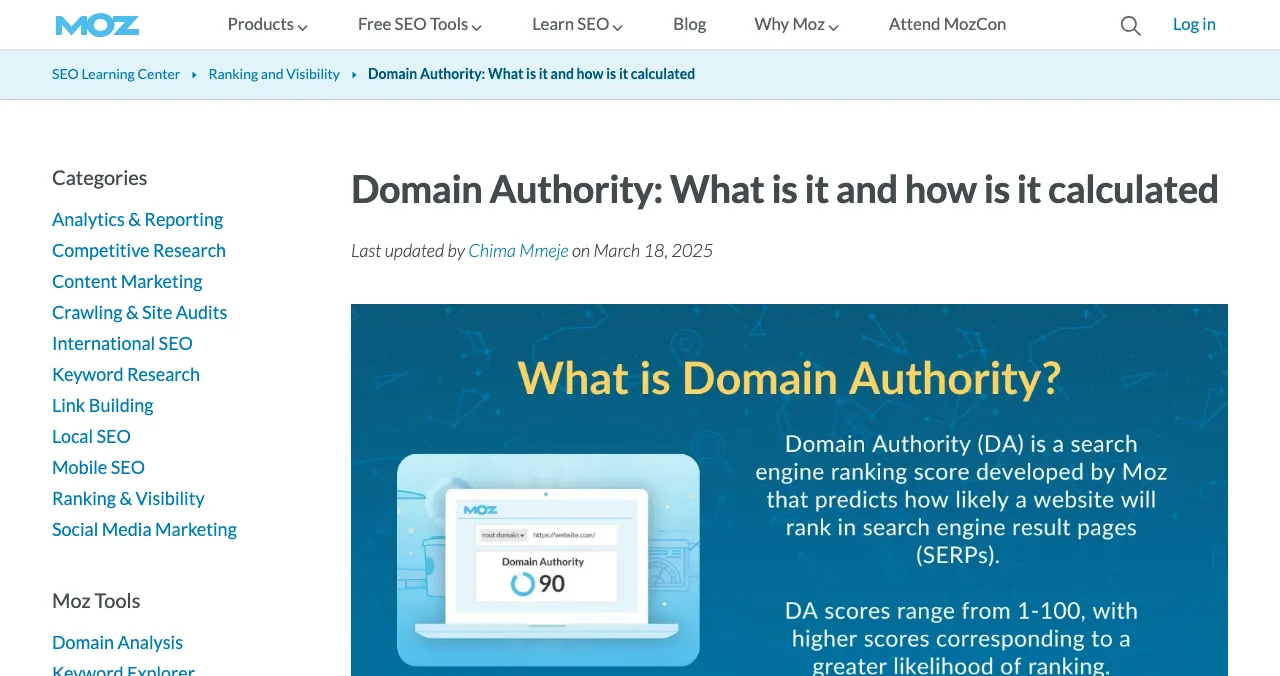
Google's position is plain. John Mueller has said "Google doesn't use Domain Authority at all when it comes to Search crawling, indexing, or ranking" (2020, compiled by Search Engine Journal). Links themselves still matter: Google's guide to how Search works says it discovers new pages by following links from pages it already knows. So earn the links for discovery, trust and visitors, and let the score follow.
How to increase domain authority: 12 honest ways
Ordered from fastest to slowest. The first five are "links you're owed": they exist because your product exists. The last seven are links you earn by making something worth citing.
- List on a moderated launch directory — a free Science of Apps Launchpad profile is reviewed by a person and links back; on 18 November 2026 (re-checked 20 November) the profile's website link was followed (rel="noopener" only). A dated observation, not a promise.
- Submit to two or three reviewed directories in your category — SaaSHub and AlternativeTo review submissions; see free directory submission sites.
- Create company profiles — Crunchbase, a LinkedIn Page and, if you serve a local area, Google Business Profile. Many of these links are nofollow, which is normal.
- Launch on a launch platform — Product Hunt, Peerlist or DevHunt give you a permanent page and a day of attention.
- Ask every integration partner for a listing — if you integrate with a tool, its integrations or marketplace page is a link that exists for a real reason.
- Publish original data — a small survey, a benchmark or an analysis of public data gives journalists and bloggers something to cite.
- Build a free tool — a calculator, checker or template people bookmark earns links for years.
- Write the honest comparison — "X vs Y" and alternatives pages that are fair get cited in roundups.
- Answer journalist requests — services that connect sources with reporters lead to quotes with links.
- Turn unlinked mentions into links — set a Google Alert for your brand and politely ask sites that mention you to link.
- Reclaim broken links — find pages on your site that have links but return 404, and redirect them to the right page.
- Contribute to real publications — an outline-first pitch to a site your customers read; Google says such articles are fine "when they inform users", not when the main intent is large-scale link building.
How long does it take to improve domain authority?
Moz says it's easier to grow a score from 20 to 30 than from 70 to 80, because the biggest sites take up the top of the scale. For a new site that's good news: the first dozen linking domains move the number most. Expect a lag: a link must exist, be crawled by the vendor and be counted in its next update before the score moves.
- Week 1
Links you're owed
Launchpad listing, two reviewed directories, Crunchbase and LinkedIn.
- Weeks 2–4
Launch
One launch platform; ask integration partners for listings.
- Month 2
Something to cite
Publish one piece of original data or a free tool.
- Month 3
Outreach
Pitch the data to five relevant writers; answer journalist requests weekly.
- Month 3
Measure
Check linking domains in Search Console and one DA PA checker; check referral visits.
Why does domain authority drop?
A falling score usually isn't a penalty. DA is relative, so if the web's big sites gain links faster than you, your number can slip. You may also have lost links (a directory closed, a partner redesigned its page), or the vendor may have updated its index or model. Check lost linking domains in a free backlink checker first. If you never bought links, there's almost never anything to "fix".
What not to do: the shortcuts that break Google's rules
Google's spam policies define link spam as "the practice of creating links to or from a site primarily for the purpose of manipulating search rankings." Most "DA boost" offers sit squarely inside that definition.
| Shortcut | Google's spam-policy example it matches |
|---|---|
| "DA 50+ links" packages | Buying or selling links for ranking purposes |
| Link swaps and partner-page rings | Excessive link exchanges |
| Backlink generators and blasts | Using automated programs or services to create links |
| Paid guest posts with keyword anchors | Paid guest posts or optimised anchor text in articles |
| Hundreds of instant directories | Low-quality directory or bookmark site links |
| Forum and comment signatures | Forum comments with optimised links in the post or signature |
Table: DA shortcuts and the Google link-spam examples they match (Google spam policies, checked 20 Nov 2026)
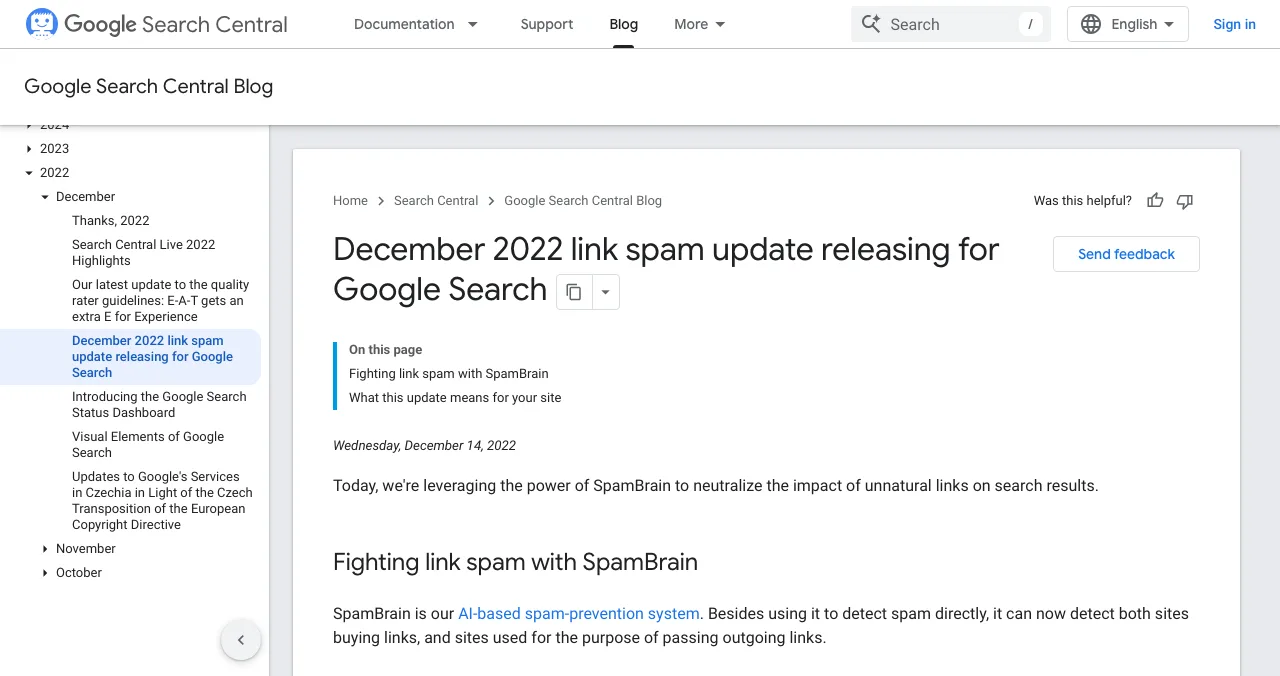
Google's December 2022 link spam update said SpamBrain can "detect both sites buying links, and sites used for the purpose of passing outgoing links", and that once unnatural links are neutralised, the credit they passed is lost. That's the trap: a bought link can nudge a third-party DA score while doing nothing, or harm, in Google.
The link that also tests your product
A Launchpad listing is free forever, six short steps, checked automatically and reviewed by a person. It's ranked by relevance, editorial picks and community interest, never payment, and listings earn badges (Featured on going live, Verified with a work email on your domain, Community favourite, Editor's pick and more). The point isn't the number; it's a real page that sends people who searched for your problem to your site. And it checks what they find: a free baseline diagnosis of your landing page, discoverability and speed runs as you go live.
Arrive
First impression
Discoverability on Google, AI and social; landing page, pricing, trust and speed.
Join
The first minutes
Sign-up, sign-in, recovery and onboarding.
Use
The everyday job
Home, core flow, dashboards, search, microcopy and error states.
Pay
Value into revenue
Paywall, upgrade, checkout and payments.
Stay
Coming back
Notifications, account, settings and help.
Every screen
Throughout
Accessibility to WCAG 2.2, visual design and consistency.
Know what visitors find when they click
List free, then order the report that fits your stage.

 Economy
See what new customers see
- Store listing and homepage, screen by screen
- Scorecard against 60 Laws of UX
- Customers, competitors and the fixes worth most
PremiumThe full diagnosis and the plan
- Every screen, every finding, every flow
- All 60 laws with evidence and fixes
- 8 strategy chapters and a 90-day roadmap
Researched from your live product and fact-checked against the evidence.
Which ways should you start with?
| Your stage | Start with | Then |
|---|---|---|
| Pre-launch, no links | Ways 1–3 | Way 4 on launch day |
| Just launched | Ways 4–5 | Way 10 every month |
| A few months live, some users | Ways 6–8 | Way 9 weekly |
| Established, content team | Ways 6, 7, 12 | Way 11 each quarter |
Table: Which domain authority tactics to start with, by stage
Mistakes

- Making DA the goal — it's a vendor's forecast; links, visits and sign-ups are the goal
- Counting links, not domains — fifty links from one site are one linking domain
- Buying a "DA boost" — Google's spam policies call it link spam, and SpamBrain neutralises it
- Expecting overnight change — vendor indexes update on their own schedule
- Ignoring what visitors find — a link that lands on a confusing page wastes the click; keep cognitive load low on the landing page
- Comparing across tools — DA and DR aren't the same scale
Ready for way #1?
How we know
Definitions come from Moz's Domain Authority page and Ahrefs' Domain Rating article; Google's position from its spam policies, its guide to how Search works, its 2017 and 2022 Search Central blog posts, and John Mueller's statements compiled by Search Engine Journal, all read on 20 November 2026. The 12 ways and the stage table are Science of Apps' editorial guidance. Science of Apps runs the Launchpad.
Key terms, defined
- Domain authority (DA): Moz's 1 to 100 forecast of how likely a domain is to rank, built mainly from links.
- Domain rating (DR): Ahrefs' logarithmic 0 to 100 score of a site's backlink profile strength.
- Linking root domain: a distinct website that links to you; the unit both scores weight most.
- Link spam: Google's term for links created mainly to manipulate rankings.
- SpamBrain: Google's AI-based spam-prevention system, which Google says detects sites buying links.
- Unlinked mention: a page that names your brand without linking to you.
Frequently asked questions
How do you increase domain authority?
By earning links from more real, relevant websites. Moz calculates Domain Authority mainly from linking root domains and their quality, so new links from sites that haven't linked to you before move it most. Start with reviewed directories, launch platforms and company profiles, then build things worth citing: original data, free tools, honest comparisons and real press.
How long does it take to improve domain authority?
Weeks to months. A link has to exist, be found by Moz's crawler and be counted in an index update before your score changes. Moz notes it's easier to grow from 20 to 30 than from 70 to 80. For a new site, a handful of good linking domains in the first quarter is a realistic, healthy start.
What is the difference between domain authority and domain rating?
Domain Authority is Moz's 1 to 100 score predicting how likely a domain is to rank. Domain Rating is Ahrefs' logarithmic 0 to 100 score of a site's backlink profile strength. Both are link-based but use different crawlers and formulas, so a DA of 30 and a DR of 30 mean different things. Compare sites within one tool.
Does domain authority affect Google rankings?
Not directly. Google's John Mueller has said Google doesn't use Domain Authority for crawling, indexing or ranking, and Moz calls DA 'not a direct ranking factor'. The links that raise DA can help with Google, because links help Google find and assess pages, but the number itself does nothing.
Why did my domain authority drop?
Often for reasons outside your control. DA is relative: Moz says it changes as the web changes, so if big sites gain links faster than you, your score can slip. You may also have lost links, or Moz may have updated its index or model. Check for lost linking domains in Moz Link Explorer before reacting.
Can I buy links to increase domain authority?
You can, and it may move a third-party score, but Google's spam policies list buying or selling links for ranking as link spam, and Google says its SpamBrain system detects sites that buy links and neutralises those links. You'd be paying for a number Google doesn't use with links Google may ignore or penalise.
What is a good domain authority for a new website?
For a site under a year old, anything from 1 to 20 is normal. What matters is your score relative to the sites ranking for the searches you want. If they sit at 25 and you're at 8, the gap is a few dozen good linking domains, which is a plan, not a crisis.
Sources
- Moz — Domain Authority: what is it and how is it calculated (updated 18 Mar 2025; checked 20 Nov 2026)
- Ahrefs — Domain Rating (checked 20 Nov 2026)
- Google Search Central — Spam policies for Google web search: link spam (checked 20 Nov 2026)
- Google Search Central Blog — December 2022 link spam update (checked 20 Nov 2026)
- Google Search Central — In-depth guide to how Google Search works (checked 20 Nov 2026)
- Search Engine Journal — Domain Authority: is it a Google ranking factor? (Jan 2023; checked 20 Nov 2026)
- Google Search Central Blog — A reminder about links in large-scale article campaigns (May 2017; checked 20 Nov 2026)
- Science of Apps — Launchpad: launch your product free (checked 18 Nov 2026)
- Checked November 20, 2026. Figures that change — fees, salaries, prices — are reviewed every six months; if something is out of date, tell us.
Where to go from here
- DA PA checker — free ways to check the score
- How to get backlinks — the playbook for a new site
- Backlinks for startups — the safe sources, listed
- Science of Apps - LaunchpadDA PA checker guide: the free domain authority checkers worth using (Moz DA checker, MozBar, Ahrefs, Semrush), bulk DA PA checks, and why Google doesn't use any of these scoresThe best free DA PA checker is Moz Link Explorer (10 free queries a month). Five free domain authority checkers compared, bulk checks, and what DA really means.
- Science of Apps - LaunchpadStartup idea validator tools ranked honestly: AI validators (ValidatorAI, DimeADozen, IdeaProof) for research, and the real-world tests (interviews, waitlists, a live listing) that measure demandStartup idea validators ranked honestly: AI tools like ValidatorAI, DimeADozen and IdeaProof for research, and the real tests that measure demand.
- Science of Apps - LaunchpadHow to track referral traffic from startup directories and launch sites in GA4: UTM links for every listing, the reports to open, and how to measure launch traffic that actually convertsTrack referral traffic from startup directories in GA4: a UTM link for every listing, the report to open, and how to measure launch traffic that converts.
- Science of Apps - LaunchpadDo you need a hunter for your Product Hunt launch? No: here's what a hunter is, why self-hunting is recommended, and how featuring really worksYou don't need a hunter on Product Hunt: it says to hunt your own product and that who posts doesn't affect ranking. Here's what actually gets you featured.
- Science of Apps - LaunchpadSEO for startups: a prioritised plan for the first six months, from getting indexed to pages that answer buyers' questions, using Google's own starter guideSEO for startups, month by month: get indexed, fix the basics, earn a few relevant links and publish pages answering buyers' questions, per Google's own guide.
- Career guides by Science of Apps for 2027Top 10 tech certifications that boost salary in 2027: the credentials behind the best-paid engineering rolesThe top 10 tech certifications that boost salary in 2027: AWS Solutions Architect, CKA, Terraform, AI-102, Google Cloud ML Engineer and more, with costs.




Get the ideas, not the noise.
Sign up with Google and we’ll send you short UX psychology tips by email — why people tap, stall and leave, and what to do about it. Unsubscribe anytime. Prefer something to keep? Get the free Laws of UX guide as a PDF.
Launch day ends. Your listing shouldn't.
Way #1 on this list takes five minutes: a free Science of Apps Launchpad listing, a moderated product profile with a link back, plus your product tested with a detailed report.