 By
Quick answer: What skills will be needed in 2030?
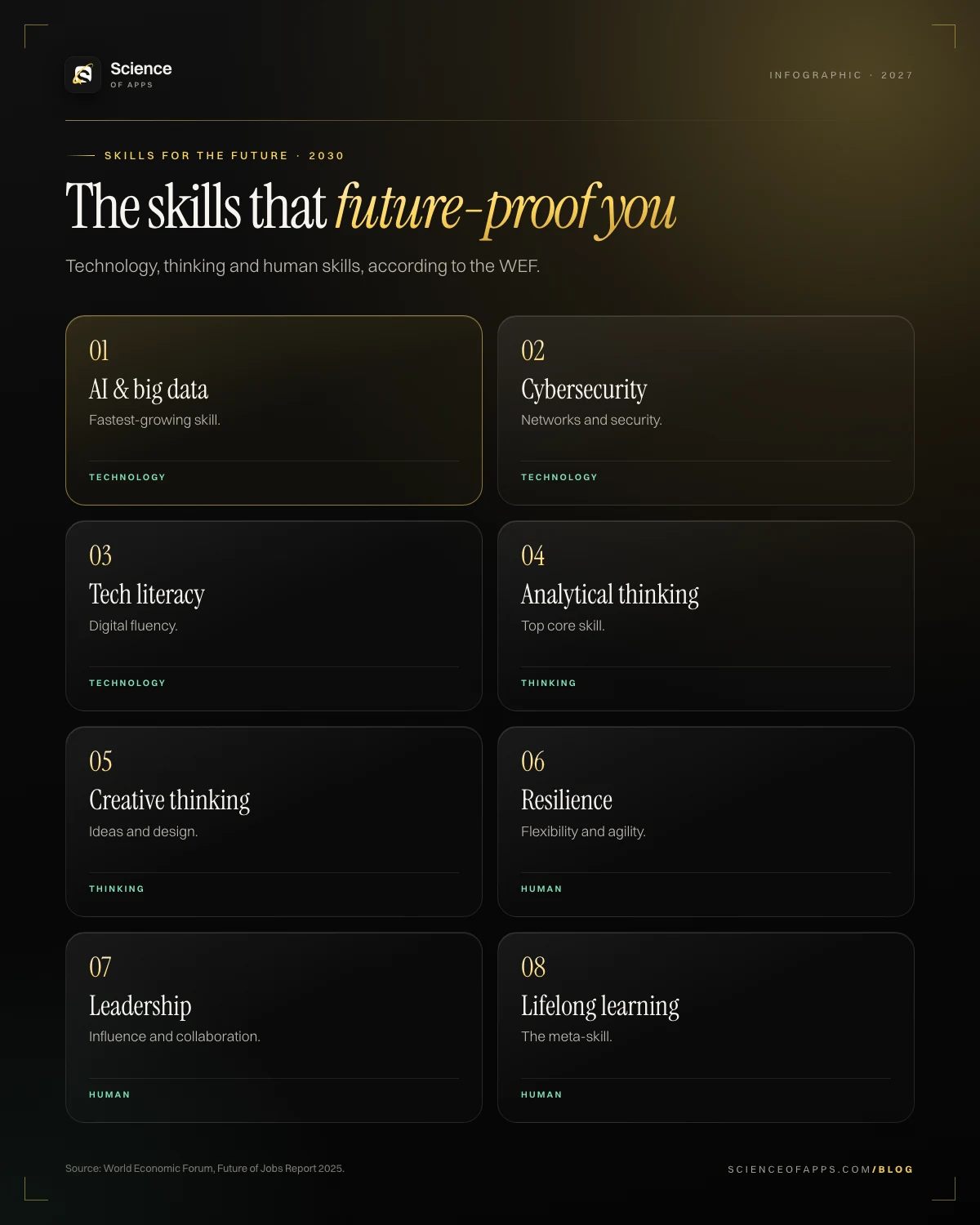
- Technology — AI & big data, cybersecurity, tech literacy.
- Thinking — analytical and creative thinking.
- Human — resilience, flexibility, leadership.
- Meta-skill — curiosity and lifelong learning.
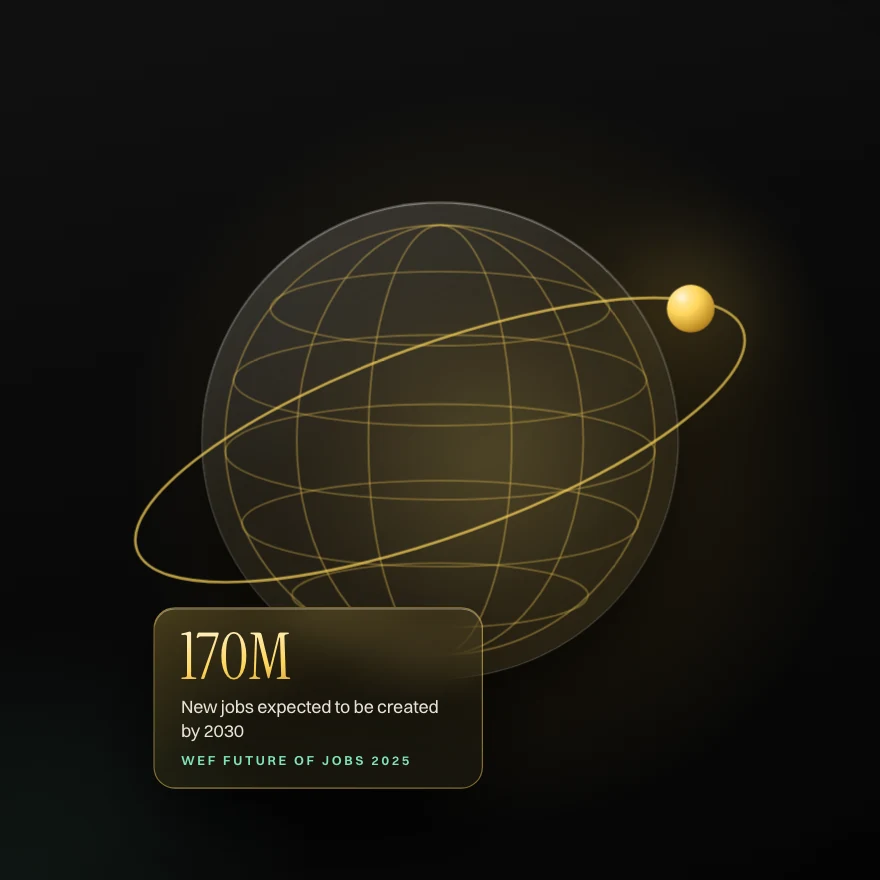
- Context — 170M jobs created, 92M displaced (WEF).
Key takeaways
- AI and big data is the fastest-growing skill to 2030 (WEF).
- Analytical thinking remains the most important core skill.
- Human skills (resilience, leadership, creativity) grow in importance alongside tech.
- Lifelong learning is the meta-skill: skills keep changing.
- Prove future skills with certifications and projects.
Top skills for the future workforce

| Group | Skills | How to learn and prove |
|---|---|---|
| Technology | AI and big data; networks and cybersecurity; technological literacy1 | AWS AI Practitioner, Security+, Microsoft fundamentals, SOA AI certifications |
| Thinking | Analytical thinking; creative thinking | Data projects, design challenges, PL-300 |
| Human | Resilience, flexibility and agility; leadership and social influence | Leading projects, PMP, mentoring |
| Meta-skill | Curiosity and lifelong learning | A steady stream of new credentials |
Why these skills?
The WEF's Future of Jobs Report 2025 expects job disruption equivalent to 22% of jobs by 2030, with 170 million roles created and 92 million displaced1. Technology drives the fastest-growing skills, but employers still rank analytical thinking as the top core skill, with resilience, flexibility, leadership and creative thinking close behind.
Other frameworks
Organizations such as ETS also research "skills for the future", focusing on durable skills like collaboration, communication and critical thinking that are harder to measure but crucial for success2.
A plan to learn future skills
- Pick one technology skill relevant to your field (AI, data or security).
- Baseline it with a free SOA skill test.
- Learn and certify with a recognized credential.
- Apply it in a project at work or in a portfolio.
- Build one human skill deliberately: lead a project, mentor someone, present.
- Repeat yearly.
Prove it free: the tests that match this guide
Certify the skills for the future, starting today. (Disclosure: Science of Apps publishes these tests.)
- Generative AI Certification Test (Fundamentals)AI and big data: the WEF's fastest-growing skill to 2030.Start free test →
- Cybersecurity Certification Test (Fundamentals)Networks and cybersecurity: the WEF's #2 fastest-growing skill.Start free test →
- Critical Thinking TestAnalytical thinking: the WEF's top core skill.Start free test →
- Leadership Fundamentals CertificationLeadership and social influence keep rising in importance.Start free test →
Skills for the future for students
For students, the best preparation is strong foundations (reading, maths, reasoning), digital and AI literacy, communication, and the habit of learning on their own. Short certifications help students explore interests early. See free courses for high school students.
Related
Frequently asked questions
What skills will be in demand in the future?
AI and big data, networks and cybersecurity, technological literacy, analytical and creative thinking, resilience, leadership and lifelong learning.
What skills will be needed in 2030?
According to the WEF, the fastest-growing are AI and big data, cybersecurity and tech literacy, with analytical thinking the top core skill.
What is the most important skill for the future?
The ability to keep learning, because skills are changing fast; analytical thinking is the top core skill employers cite.
Why these skills?
The WEF's Future of Jobs Report 2025 expects job disruption equivalent to 22% of jobs by 2030, with 170 million roles created and 92 million displaced. Technology drives the fastest-growing skills, but employers still rank analytical thinking as the top core skill, with resilience, flexibility, leadership and creative thinking close behind.
What skills should students learn for the future?
For students, the best preparation is strong foundations (reading, maths, reasoning), digital and AI literacy, communication, and the habit of learning on their own. Short certifications help students explore interests early. See free courses for high school students.
Sources
- World Economic Forum: Future of Jobs Report 2025
- ETS: Skills for the Future
- Science of Apps: free online certifications
- Checked November 11, 2026. Figures that change — fees, salaries, prices — are reviewed every six months; if something is out of date, tell us.
Where to go from here
- Best AI tutors 2027 — the best ai tutors for personalized learning and certification prep, compared on
- Microlearning & mobile learning — why microlearning and mobile learning work, with research on bite-sized lessons
- Stackable credentials — what stackable credentials are, how they build toward degrees and real examples
- Career guides by Science of Apps for 2027The top skills to learn in 2027, with ten certifications that prove themThe top skills to learn in 2027, from WEF data: AI, data, cybersecurity, cloud, tech literacy and more, with 10 certifications that prove each one.
- Career guides by Science of Apps for 2027Is Data Analytics Still a Good Career in 2027? — answered for 2027Is data analytics still a good career in 2027? AI and big data top the WEF's growing skills. What's changing and the certifications to start.
- Career guides by Science of Apps for 2027Is Cybersecurity Still Worth Getting Into in 2027? — answered for 2027Is cybersecurity still worth getting into in 2027? Networks and cybersecurity rank among the WEF's fastest-growing skills. How to start and what to expect.
- CertificationsMost in-demand skills 2027–2030The most in-demand skills for 2027 to 2030, based on millions of job postings, and the certifications that prove them.
- AI & vibe codingThe AI skills that will be in demand in 6 months, 2 years and beyondWhich AI skills will be in demand in 6 months, 1–2 years and beyond — with the evidence for each and which ones to add to your toolkit now.
- Career guidesStatistical reasoning at work in 2027: base rates, bias and misleading numbers — how employers test judgement with dataStatistical reasoning skills for analysts and managers in 2027: base rates, sampling bias, Simpson's paradox, risk, how employers test it and a plan.
Get the ideas, not the noise.
Sign up with Google and we’ll send you short UX psychology tips by email — why people tap, stall and leave, and what to do about it. Unsubscribe anytime. Prefer something to keep? Get the free Laws of UX guide as a PDF.
Prove the skill before you pay for the exam.
1,200+ free, test-based certifications graded on our server. Pass and get a founder-signed certificate with a credential ID employers can verify.