 By
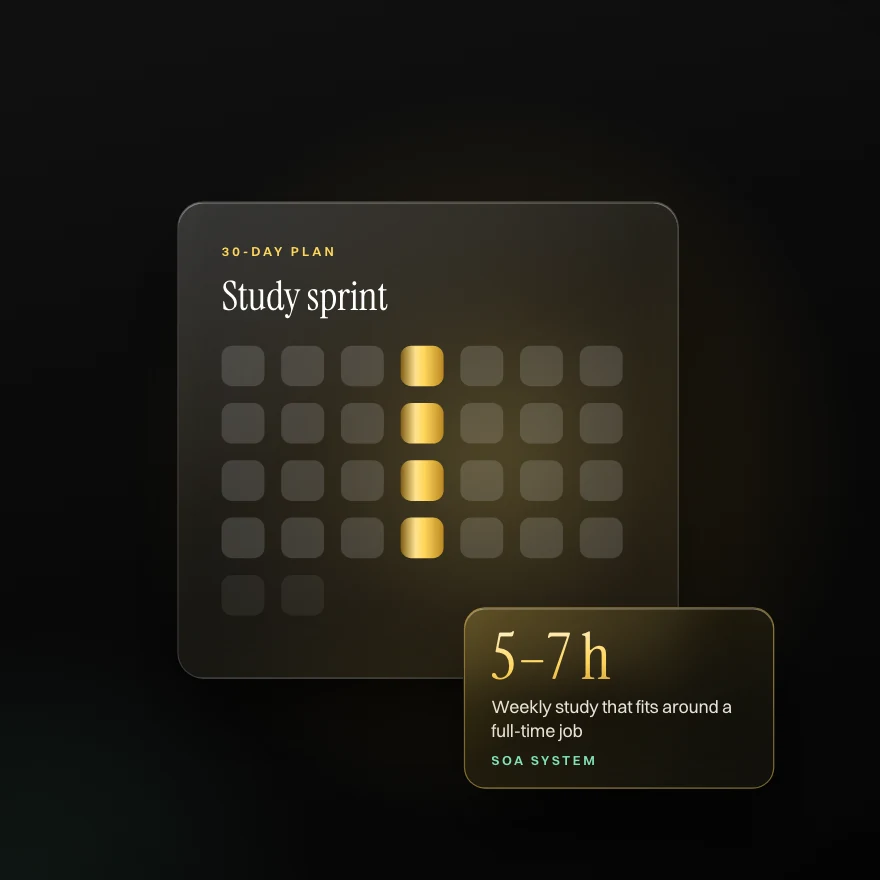
Quick answer: How do I study while working full-time?
- Weekly target — 5–7 hours.
- Weekdays — 4–5 × 45–60 min, same times.
- Weekend — one 2–3 hour block.
- Micro-sessions — flashcards on commutes and breaks.
- One goal — one certification at a time.
Key takeaways
- Plan around 5–7 hours a week; it's sustainable alongside a full-time job.
- Fixed, recurring sessions beat waiting for free time.
- Early mornings protect study from work overruns and fatigue.
- Use micro-sessions (10–15 minutes) for flashcards and review.
- Ask your employer about learning budgets and study leave.
A weekly study system for full-time workers

| Day | Session | Focus |
|---|---|---|
| Mon | 45–60 min (morning) | New lesson |
| Tue | 45–60 min | Practice questions |
| Wed | 15 min | Flashcards only (recovery day) |
| Thu | 45–60 min | New lesson |
| Fri | Off | Rest |
| Sat | 2–3 hours | Practice test + review |
| Sun | 30 min | Plan the week; spaced review |
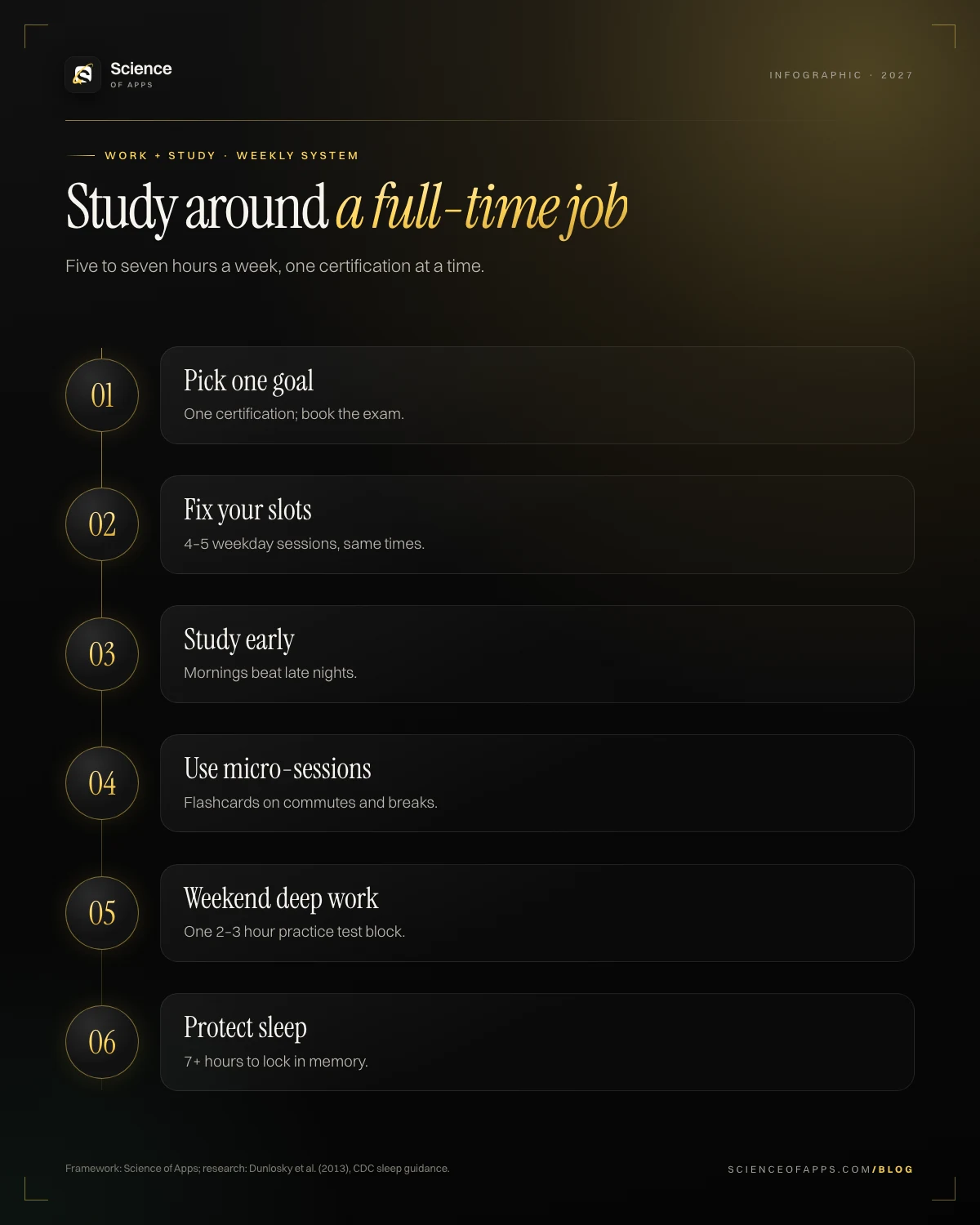
The best way to study while working full-time
- Choose one goal. One certification at a time; finish before starting another.
- Book the exam. A date turns "someday" into a plan.
- Schedule sessions like meetings. Same times every week.
- Study before work if you can. Energy is higher and fewer things interrupt.
- Use active methods. Practice questions and flashcards, not rereading1.
- Protect sleep. Adults need 7+ hours; sleep supports memory2.
Balancing work and study
Research on working students consistently finds that long work hours compete with study time, so the key is reducing friction: shorter sessions, clear goals and support from family and employers. Tell your manager what you're studying; many organizations have learning budgets, study leave or exam reimbursement.
Studying nursing, LSAT or long programmes while working
For long programmes (nursing degrees, LSAT, CPA), extend the timeline rather than increasing weekly hours beyond what you can sustain. LSAT candidates working full-time often plan three to six months; nursing students may choose part-time or evening programmes and negotiate shift patterns.
Prove it free: the tests that match this guide
Quick wins that fit around a full-time job. (Disclosure: Science of Apps publishes these tests.)
Studying when you're tired
- Do easy tasks (flashcards) on low-energy days rather than skipping.
- Study in 25-minute Pomodoro blocks with 5-minute breaks3.
- Move first: a 10-minute walk before studying helps focus.
- Keep a "next task" note so you can start instantly.
Quick wins to build momentum
Short, free certifications give early wins that sustain motivation. A Science of Apps skill test takes 10–30 minutes and ends with a verifiable certificate. Then move to your main certification with the 30-day study plan.
Frequently asked questions
How can I study while working full-time?
Plan 5–7 hours a week in fixed sessions, study early if possible, use micro-sessions for flashcards, focus on one certification and protect sleep.
How many hours should I study while working full-time?
Five to seven hours a week is sustainable for most people and enough for most certifications over 4–12 weeks.
How long should I study for the LSAT while working full-time?
Many working candidates plan three to six months of part-time study.
Is it possible to study nursing while working full-time?
It's possible with part-time or evening programmes and flexible shifts, but timelines are usually longer.
How do you balance work and study?
Research on working students consistently finds that long work hours compete with study time, so the key is reducing friction: shorter sessions, clear goals and support from family and employers. Tell your manager what you're studying; many organizations have learning budgets, study leave or exam reimbursement.
Sources
- Dunlosky et al. (2013): Improving students' learning with effective learning techniques
- CDC: how much sleep do I need?
- Francesco Cirillo: the Pomodoro Technique
- Science of Apps: free online certifications
- Checked November 11, 2026. Figures that change — fees, salaries, prices — are reviewed every six months; if something is out of date, tell us.
Where to go from here
- The 30-day exam study plan — a free 30-day exam study plan template for any certification, with daily goals,
- The 7 best note-taking methods — Cornell, mind maps, charting and more
- Pass any certification exam first time — proven strategies to pass any certification exam on your first attempt, from stu
- CertificationsStudy motivation that lastsHow to stay motivated and focused when studying for a long certification program, with tips that actually work.
- CertificationsProfessional certifications for working adultsThe best professional certification courses you can finish while working full-time, with flexible schedules and employer recognition.
- Career guides by Science of Apps for 2027Top 5 online certifications and courses for 2027 you can finish around a full-time jobThe top 5 online certifications and courses for 2027 that are fully self-paced: two free, three paid, with real hours per week, costs and direct links.
- CertificationsMicro-credentials vs degreesWhat micro-credentials are, how they compare with degrees on cost, time and recognition, and whether they will replace traditional college.
- Career guidesTime management skills for 2027: prioritising by impact, planning your week, protecting focus time, managing interruptions and email, saying no, estimating tasks and avoiding burnoutTime management skills for 2027: prioritising by impact, planning your week, protecting focus time, interruptions, email, saying no and avoiding burnout.
- Making moneyHow to earn money online for students in India — 15 real ways (and scams to avoid)15 real ways students in India can earn money online — internships, freelancing, tutoring, content and building apps — plus the 'task' scams to avoid.




Get the ideas, not the noise.
Sign up with Google and we’ll send you short UX psychology tips by email — why people tap, stall and leave, and what to do about it. Unsubscribe anytime. Prefer something to keep? Get the free Laws of UX guide as a PDF.
Prove the skill before you pay for the exam.
1,200+ free, test-based certifications graded on our server. Pass and get a founder-signed certificate with a credential ID employers can verify.