 By
Quick answer: When does a startup need a 409A?
- What: an estimate of the fair market value (FMV) of a private company's common stock.
- Why: options priced at or above FMV on the grant date avoid Section 409A deferred-compensation rules.
- When: before the first option grant, at least every 12 months, and after material events like a priced round.
- Safe harbors: independent appraisal, a qualifying formula, or a written report for an illiquid start-up.
- Penalty for getting it wrong: income inclusion, a 20% additional tax and interest for the option holder.
Key takeaways
- A 409A values common stock, not the company your investors priced.
- Get one before the first option grant, not after.
- A valuation older than 12 months, or one that ignores a material event, isn't reasonable.
- The independent-appraisal safe harbor shifts the burden of proof to the IRS.
- It's a US tax rule; founders elsewhere follow their own country's valuation rules.
You've hired your first engineer and promised options. Before you can grant them, a US startup needs a number most founders have never heard of until a lawyer mentions it: the 409A valuation. It sets the exercise price of every option you grant, and getting it wrong lands the tax bill on your employees, not you. This guide explains what a 409A valuation is, exactly when a startup needs one, the three safe-harbor methods in the Treasury regulations, the penalties, and what one costs from a named provider. Facts were checked on the statute, the regulations and providers' own pages on 18 November 2026. Jump to when you need one, the safe harbors or cost.
What is a 409A valuation?
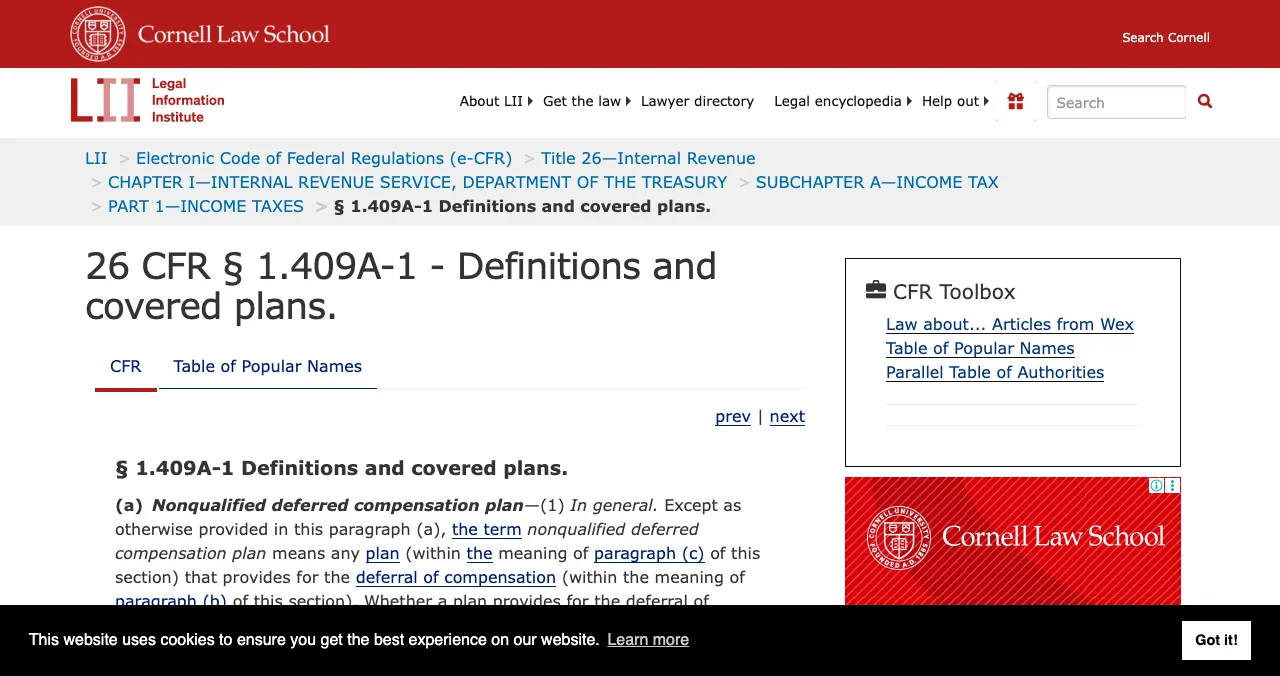
A 409A valuation is an estimate of the fair market value (FMV) of a private company's common stock. The name comes from Section 409A of the US Internal Revenue Code, which governs nonqualified deferred compensation. The link to startups is in the Treasury regulations: a stock option doesn't count as deferred compensation if its exercise price can never be less than the FMV of the underlying stock on the grant date (26 CFR § 1.409A-1(b)(5)(i)(A)). A 409A valuation is how a private company shows what that FMV was.
The final regulations were published as T.D. 9321 in Internal Revenue Bulletin 2007-19 and took effect on 17 April 2007.
Note what a 409A doesn't value: the company your investors priced. A funding round prices preferred stock, with liquidation preferences and other rights. A 409A values common stock, which has none of those rights and can't easily be sold, so it's normally lower. That gap is part of what makes options valuable to employees.
When does a startup need a 409A valuation?
| Trigger | Why it matters |
|---|---|
| Before the first stock option grant | The exercise price must be at least FMV on the grant date |
| At least every 12 months | A valuation calculated more than 12 months earlier isn't reasonable under the regulations |
| After a priced funding round | New information that may materially affect value makes an old valuation unreasonable |
| After other material events | An acquisition offer, big contract, pivot or major change in results |
| Before a large grant to a key hire | To be sure the current FMV still applies |
Table: When a startup needs a 409A valuation, based on 26 CFR § 1.409A-1(b)(5)(iv)(B) (checked 18 Nov 2026)
The 12-month and material-event rules come straight from the regulation: a previously calculated value isn't reasonable if it fails to reflect later information that may materially affect value, or if it was calculated for a date more than 12 months before the date it's used.
What are the 409A safe harbor methods?
The regulations say any reasonable valuation method can be used, considering factors such as assets, the present value of future cash flows, the market value of similar businesses, recent arm's-length transactions in the stock and discounts for lack of marketability. Three methods are presumed reasonable, which means the IRS would have to show the valuation was "grossly unreasonable" to challenge it.
| Safe harbor | Conditions | Note |
|---|---|---|
| Independent appraisal | Meets the independent-appraiser standard and is dated no more than 12 months before the grant | The appraiser must meet the regulation's independence standard |
| Formula-based valuation | A formula used consistently, including for purchases from large shareholders | Doesn't cover every kind of stock right |
| Illiquid start-up stock | Written report, made reasonably and in good faith, by a person with significant experience (generally at least five years); company under 10 years old; no public trading; no change in control expected within 90 days or IPO within 180 days | Only for early-stage, illiquid companies |
Table: The three 409A safe-harbor presumptions, from 26 CFR § 1.409A-1(b)(5)(iv)(B)(2) (checked 18 Nov 2026)
How is a 409A valuation calculated?
The regulation doesn't prescribe a formula; it lists what a reasonable method has to consider. A valuation that ignores "all available information material to the value of the corporation" is unreasonable.
| Factor in the regulation | What it looks like in a startup 409A |
|---|---|
| Value of tangible and intangible assets | Cash, IP, the product itself |
| Present value of anticipated future cash flows | Forecasts, heavily discounted at early stages |
| Market value of stock in similar businesses | Public comparables or recent private deals |
| Recent arm's-length transactions in the stock | Your latest priced round, which is why a round triggers a refresh |
| Control premiums and discounts for lack of marketability | Common stock in a private company can't easily be sold, so it's discounted |
Table: Valuation factors listed in 26 CFR § 1.409A-1(b)(5)(iv)(B)(1) (checked 18 Nov 2026)
Because investors hold preferred stock with extra rights, the report should also show how the value attributed to common stock was derived from the company's overall value. Ask your provider to explain each step; you'll be asked about it in due diligence.
What happens if a 409A valuation is wrong or missing?
If options are granted below FMV and the plan fails Section 409A, the statute (26 U.S.C. § 409A(a)(1)) applies three consequences to the option holder:

- Immediate income — the deferred compensation becomes includible in gross income for the year
- A 20% additional tax — on the amount required to be included in income
- Interest — at the IRS underpayment rate plus one percentage point, from when the amount was first deferred
That's why investors' lawyers and acquirers ask for your 409A history in due diligence. A clean record of timely valuations is part of a clean data room; our startup due diligence checklist covers the rest.
How much does a 409A valuation cost, and who provides one?
409A valuations are sold by independent valuation firms, cap-table platforms and accounting firms. As an example of published pricing, here's one provider's page as we found it.
- Pre-revenue / pre-funding
- $990 a year, as listed on 18 Nov 2026
- Seed
- $1,990 a year
- Series A
- $2,590 a year; Series B+ custom
- Turnaround
- 5–10 working days, with a paid expedite option
- Includes
- Unlimited 409A valuations for 12 months, audit support, per the page
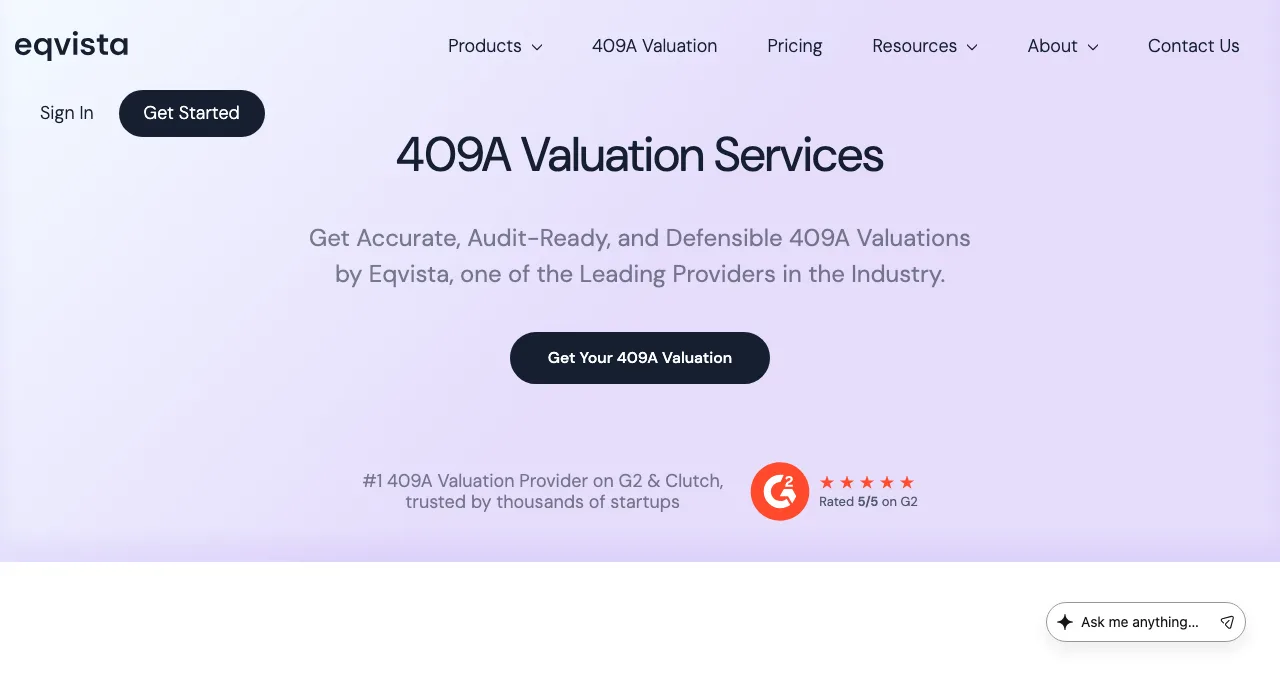
Eqvista's page says pricing can vary with revenue, number of stakeholders and capital structure, and markets its reports as prepared to IRS safe-harbor standards. We haven't used the service, and we're not recommending one provider over another. When you compare providers, ask:

- Is it an independent appraisal that fits the safe harbor, and who signs it?
- What triggers a refresh, and is a post-round refresh included?
- Turnaround time, so it's ready before your next grant
- Audit support if the IRS or an acquirer questions it
- Credentials of the analysts doing the work
A 409A timeline for a typical startup (illustrative)
- Incorporation
Founders' shares
Founders buy common stock at a nominal price; no options yet.
- First hire
First 409A
Get a valuation before the first option grant; set the exercise price at or above FMV.
- Seed round
Refresh
A priced round is a material event; refresh before granting more options.
- 12 months later
Annual refresh
Even without a round, the old valuation expires for safe-harbor purposes.
- Series A
Refresh
New preferred price, new 409A, new exercise price.
Is 409A only for US startups?
Yes, Section 409A is US tax law. It can matter for any company granting options to people taxed in the US, so check with an adviser if you have US-based staff. Founders in other countries follow their own rules: in India, for example, share issues and ESOPs have their own fair-market-value requirements under company, tax and foreign-investment law, covered in our startup valuation guide and ESOPs explained. Take local advice.
A 409A values your stock; investors value your evidence
A 409A is a compliance number. The valuation that decides how much of your company you sell is negotiated with investors, on evidence: the team, the market, traction and the product. Our startup valuation hub and how to evaluate a startup cover how investors weigh those.
For the product part of that evidence, list free on the Science of Apps Launchpad: a permanent public profile, ranked by relevance, editorial picks and community interest, never payment, and an end-to-end test of your product across 22 areas in a real browser, with a detailed report that stays private to your team.
Show investors a tested product
List free, then order the report that fits your stage.

 Economy
See what new customers see
- Store listing and homepage, screen by screen
- Scorecard against 60 Laws of UX
- The fixes worth most
PremiumThe full diagnosis and the plan
- Every screen, every finding, every flow
- All 60 laws with evidence and fixes
- 8 strategy chapters and a 90-day roadmap
Fact-checked against the evidence. Private by default.
Common 409A mistakes

- Granting options before the valuation — the exercise price must be at least FMV on the grant date
- Using last year's number after a round — a material event makes it unreasonable
- Letting it lapse past 12 months — the safe harbor no longer applies
- Confusing preferred and common prices — options are priced on common
- No paper trail — keep every report and board approval for due diligence
Ready to launch?
How we know
The penalties come from 26 U.S.C. § 409A(a)(1); the stock-option rule, valuation factors, safe harbors and 12-month rule from 26 CFR § 1.409A-1(b)(5), both read on Cornell's Legal Information Institute; the effective date from IRS Internal Revenue Bulletin 2007-19. Provider pricing and turnaround come from Eqvista's own 409A page. All were read on 18 November 2026. The timeline is illustrative. Science of Apps runs the Launchpad and doesn't provide valuations.
Key terms, defined
- 409A valuation: an estimate of the fair market value of a private company's common stock.
- Fair market value (FMV): the price the stock would fetch between a willing buyer and seller.
- Exercise (strike) price: what an option holder pays per share; must be at least FMV at grant.
- Safe harbor: a valuation method presumed reasonable unless shown grossly unreasonable.
- Material event: a change that may materially affect the stock's value, such as a priced round.
- Common vs preferred stock: founders and employees hold common; investors usually hold preferred with extra rights.
Frequently asked questions
When does a startup need a 409A?
A US startup needs a 409A valuation before it first grants stock options, so the exercise price is at least the fair market value of the common stock on the grant date. It then needs a fresh one at least every 12 months and after any material event, such as a priced funding round, that could change the value.
What is a 409A valuation?
It's an estimate of the fair market value of a private company's common stock, named after Section 409A of the US Internal Revenue Code. Under the Treasury regulations, a stock option whose exercise price is never below fair market value on the grant date is not treated as deferred compensation, so the valuation protects option holders from 409A penalties.
What happens if you don't get a 409A valuation?
If options are granted below fair market value and fail Section 409A, the statute makes the deferred amounts taxable immediately and adds a 20% additional tax plus interest at the underpayment rate plus one percentage point. The burden falls on the employees who hold the options, which is why investors and acquirers check 409A history in due diligence.
How much does a 409A valuation cost?
It varies by provider and stage. As one example, Eqvista's 409A page listed annual plans on 18 November 2026 starting at $990 a year for pre-revenue or pre-funding companies, $1,990 for seed and $2,590 for Series A, with custom pricing from Series B. Prices change; check the provider's own page before you buy.
How long is a 409A valuation valid?
Under the Treasury regulations, a valuation is no longer reasonable if it was calculated more than 12 months before the date it's used, or if it fails to reflect later information that may materially affect value. In practice, startups refresh annually and after each priced round, acquisition offer or other material event.
What are the 409A safe harbor methods?
The regulations presume three methods are reasonable: an independent appraisal dated no more than 12 months before the grant; a formula-based valuation used consistently; and, for illiquid stock of a start-up under 10 years old, a written report by a qualified person, generally with at least five years of relevant experience, where no sale or IPO is expected soon.
Is a 409A valuation the same as my funding round valuation?
No. Your funding round prices preferred stock, which carries rights such as liquidation preferences. A 409A values common stock, which lacks those rights and is illiquid, so it's normally lower than the price investors paid. That gap is what makes options attractive to employees.
Sources
- Cornell Law School LII — 26 U.S. Code § 409A (checked 18 Nov 2026)
- Cornell Law School LII — 26 CFR § 1.409A-1, Definitions and covered plans (checked 18 Nov 2026)
- IRS — Internal Revenue Bulletin 2007-19: T.D. 9321, Application of Section 409A to Nonqualified Deferred Compensation Plans (checked 18 Nov 2026)
- Eqvista — 409A Valuation Services and pricing (checked 18 Nov 2026)
- Science of Apps — Product investigation: 22 areas (checked 18 Nov 2026)
- Science of Apps — Launchpad: list your startup free (checked 18 Nov 2026)
- Checked November 18, 2026. Figures that change — fees, salaries, prices — are reviewed every six months; if something is out of date, tell us.
Where to go from here
- ESOPs explained — the options a 409A prices
- Startup valuation — how the whole company is valued
- How to evaluate a startup — what investors weigh
- Science of Apps - LaunchpadCrunchbase vs PitchBook: who each is built for, what each costs, and why most founders need one and not the otherCrunchbase vs PitchBook: Crunchbase is self-serve from $49 a month with a free account; PitchBook is enterprise, price on request. Who should use which.
- Science of Apps - LaunchpadScience of Apps Launchpad vs Uneed vs Peerlist: which free launch site suits your startup, compared by cost, waiting time, ranking, audience and how long you stay visibleUneed, Peerlist and the Science of Apps Launchpad compared: cost, waiting time, ranking, audience and permanence, with a plan for using all three in one month.
- Science of Apps - LaunchpadCB Insights vs Crunchbase compared for founders, investors and corporate teams: what each covers, how pricing works (self-serve vs request a quote) and which one a startup needsCB Insights vs Crunchbase: enterprise intelligence priced on request vs self-serve company data with a free account. Which fits founders, investors and teams.
- Science of Apps - LaunchpadThe best Crunchbase alternatives in 2027, free and paid, sorted by the job you need doneThe best Crunchbase alternatives for 2027: free options (Tracxn Lite, Owler, SEC EDGAR, Apollo) and paid ones (PitchBook, Dealroom), with prices checked.
- Science of Apps - LaunchpadAverage Series A valuation: what Carta's State of Private Markets Q3 2026 data shows, how it compares with seed and Series B, why medians mislead, and the traction a startup needs to showThe median Series A valuation in 2026 was $63.3 million through Q3, per Carta's data on US startups. What sits behind it and the traction investors expect.
- Science of Apps - LaunchpadA go-to-market strategy for startups on one page: the eight boxes of a GTM canvas, a worked example, the B2B and self-serve motions, and a 90-day launch planA go-to-market strategy template for startups: an eight-box GTM canvas covering customer, problem, promise, price, channels and motion, plus a 90-day plan.






Get the ideas, not the noise.
Sign up with Google and we’ll send you short UX psychology tips by email — why people tap, stall and leave, and what to do about it. Unsubscribe anytime. Prefer something to keep? Get the free Laws of UX guide as a PDF.
Launch day ends. Your listing shouldn't.
A 409A prices your common stock; investors price the whole company on evidence. List free on the Science of Apps Launchpad and get your product tested end to end, with a detailed report.