 By
Quick answer: What is conversion rate optimization and how do startups do it?
- CRO = more of your visitors doing the thing that matters.
- Research before testing: analytics, session recordings, five-user tests, a heuristic review.
- Fix the biggest leak first: usually value clarity, sign-up friction or trust.
- A/B test only with enough traffic; otherwise make evidence-based changes and watch.
- Free tools: Google Analytics, Microsoft Clarity, PageSpeed Insights.
Key takeaways
- Low-traffic startups can't A/B test their way to growth; they research and fix.
- The biggest conversion gains usually come from clarity, not button colours.
- Measure the whole funnel; a landing page win can hide an onboarding loss.
- Every change needs a hypothesis tied to evidence.
- Hire a CRO agency only when you have traffic and a testing backlog.
Most CRO advice is written for companies with a million visitors a month and a testing team. A startup has neither, and copying their playbook (endless A/B tests on button colours) wastes the one thing you can't buy back: time. This conversion rate optimization guide is for the other case: modest traffic, a small team, a funnel that leaks somewhere. It shows how to find the leak with evidence, what to fix first, when testing is worth it, and when CRO marketing agencies make sense. Tool details were read on 20 November 2026. Jump to the CRO process, the usual leaks or the plan.
- Users per round find most usability problems (NN/g)
- 5
- Leaks that cause most startup drop-off
- 4
- Change at a time, so you know what worked
- 1
- A/B tests needed to start
- 0
What is conversion rate optimization?
Conversion rate optimization (in British English, conversion rate optimisation) is raising the share of people who complete a goal. The goal depends on the step: a visitor signing up, a sign-up activating, a trial user paying. Conversion rate is goal completions divided by people who had the chance.
| Funnel step | Conversion to measure | Typical tool |
|---|---|---|
| Visit → sign-up | Sign-ups ÷ unique visitors | Google Analytics |
| Sign-up → activated | Users reaching first value ÷ sign-ups | Product analytics |
| Activated → paying | Paying ÷ activated | Billing data |
| Paying → retained | Still paying after N months | Billing cohorts |
Table: The conversion rates a startup should track, step by step (Science of Apps editorial)
The CRO process for startups

- Measure the funnel — find the step with the biggest drop you can influence.
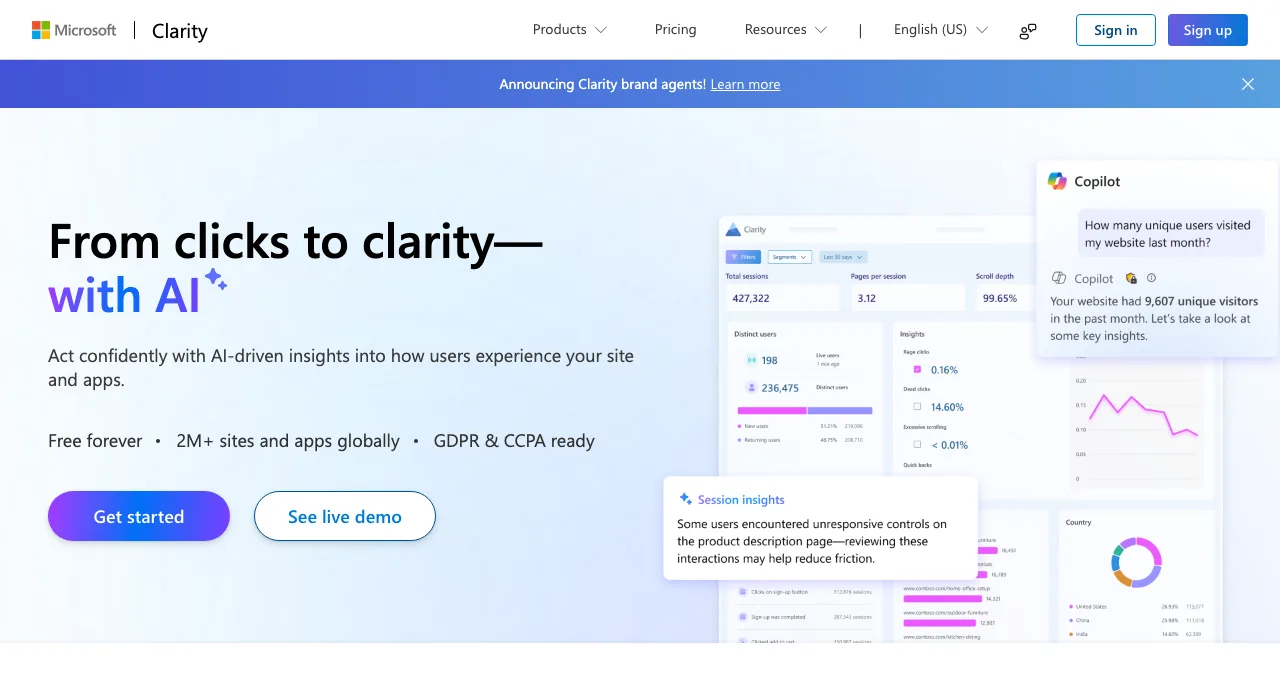
- Watch real sessions — Microsoft Clarity recordings on that step.
- Test with five people — NN/g's research found five users per round reveal most usability problems.
- Review against heuristics — clarity, feedback, error prevention, consistency.
- Write a hypothesis — "Because we saw X, changing Y will improve Z."
- Make one change — and record the date.
- Measure, then decide — A/B test if traffic allows; otherwise compare before and after over equal periods.
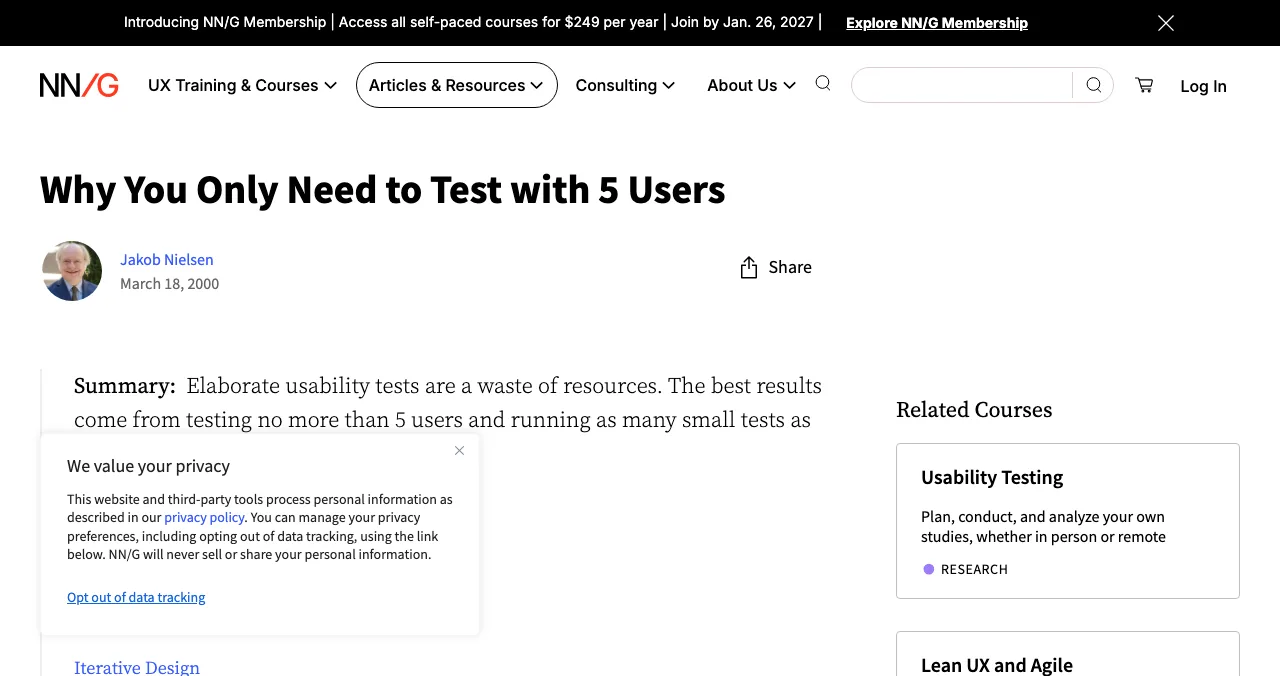
Jakob Nielsen's article argues that about 85% of usability problems are found by the first study with five participants, and recommends several small rounds rather than one big study. For a startup, that's the cheapest CRO research there is.
Where do startups usually lose conversions?
| Leak | Symptom | Evidence to look for | First fix |
|---|---|---|---|
| Unclear value | High bounce on the landing page | Visitors scroll without clicking; testers can't say what you do | Rewrite the headline in the buyer's words |
| Sign-up friction | Starts but doesn't finish sign-up | Recordings stall on a field; many fields | Cut fields; allow social or magic-link sign-in |
| Missing trust | Visits pricing, then leaves | No reviews, policies or named people | Add proof and policies near the decision |
| Empty onboarding | Signs up but never returns | First session ends without a result | Get users to a first result in session one |
Table: The four leaks behind most startup drop-off (Science of Apps editorial)
Our landing page conversion checklist covers the first leak in detail, and traffic but no signups helps diagnose which one you have.
Free CRO tools
| Tool | CRO job | Free terms |
|---|---|---|
| Google Analytics | Funnel and source data | Free |
| Microsoft Clarity | Heatmaps, recordings | Free forever, no traffic limits |
| PageSpeed Insights | Speed, a silent conversion killer | Free |
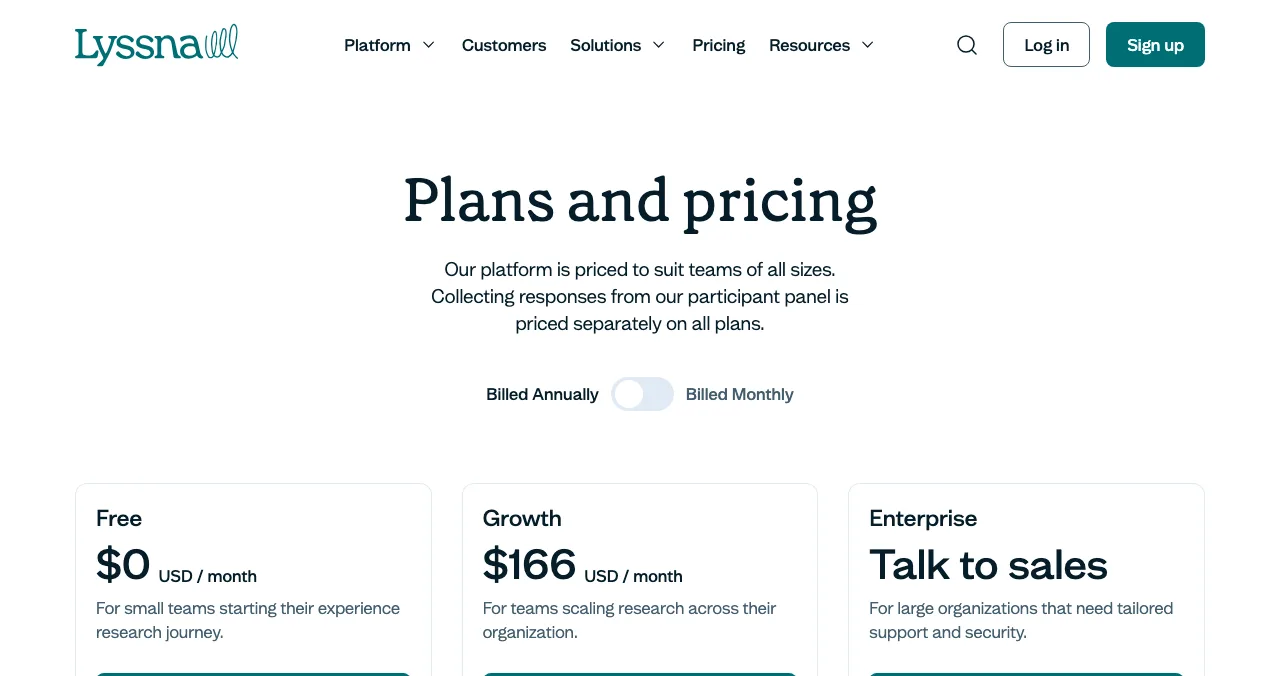
| Lyssna | Five-second tests, preference tests, surveys | Free plan ($0/month shown) |
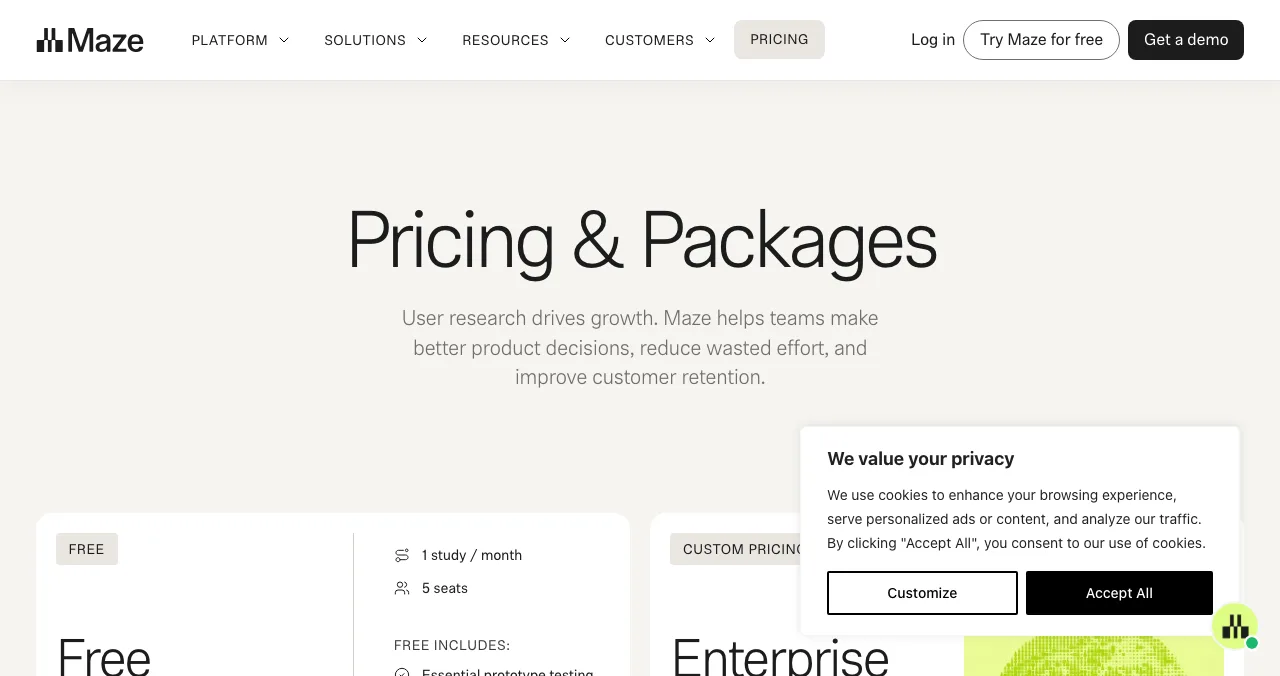
| Maze | Prototype and usability tests | Free plan (1 study a month, 5 seats, as shown 17 Nov) |
| Hotjar (Contentsquare) | Heatmaps, recordings, surveys | See its pricing page; alternatives in our Hotjar alternatives |
Table: Free CRO tools (each tool's own page, checked 17–20 Nov 2026)
When is A/B testing worth it?
A/B testing compares two versions with live traffic. It needs enough conversions in each version to tell a real difference from noise, which most early startups don't have on a single page. Until you do:

- Make bold, evidence-based changes — not small tweaks a test couldn't detect anyway
- Change one thing at a time — and log the date
- Compare equal periods — same weekdays, similar traffic sources
- Watch the next step too — more sign-ups that never activate isn't a win
- Start testing when one variant can collect enough conversions in a few weeks
Are conversion rate optimization agencies worth it?
| Stage | Better choice | Why |
|---|---|---|
| Pre-launch or little traffic | Self-research + a product audit | Not enough traffic to test; evidence is cheaper |
| Steady traffic, no analytics discipline | Fix tracking first | An agency can't optimise what isn't measured |
| Steady traffic, backlog of ideas, no time | CRO agency or freelancer | They bring testing process and capacity |
| Scale-up | In-house CRO with agency support | Continuous testing pays back |
Table: When CRO marketing agencies make sense (Science of Apps editorial)
Find the leaks with a Launchpad investigation
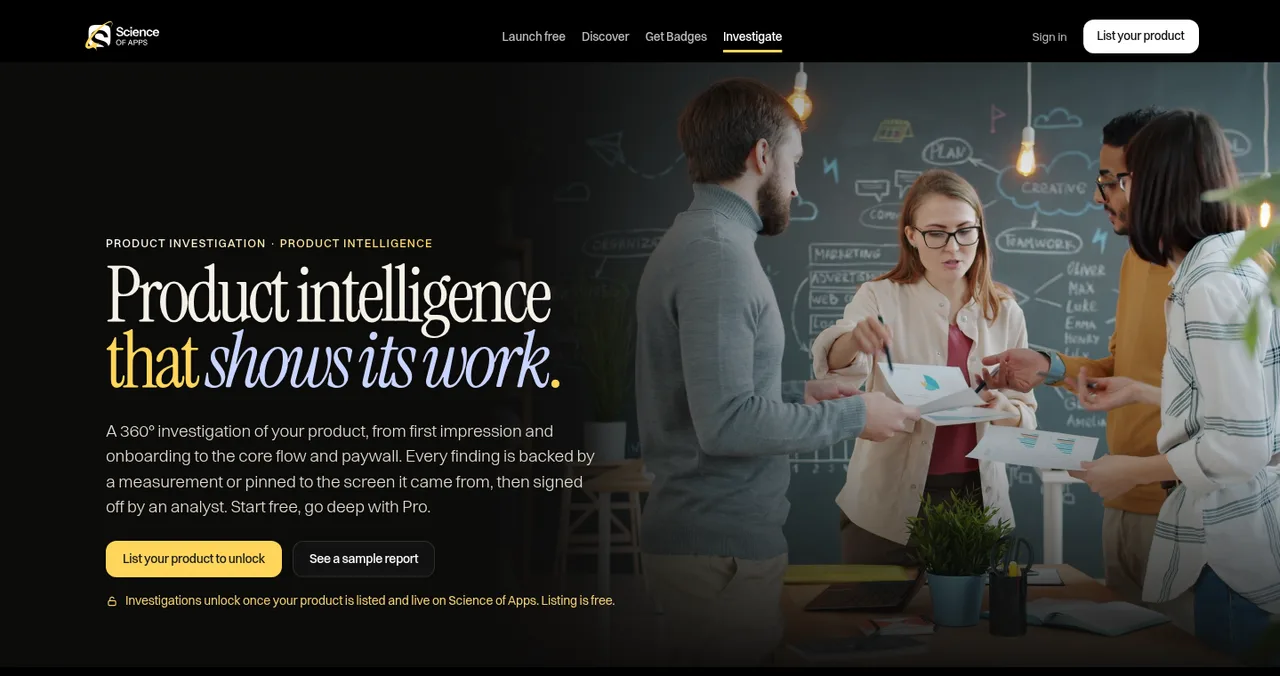
CRO starts with evidence, and the investigation is a structured way to get it from outside the team. Your product is loaded in a real browser on desktop and mobile; 39 automatic measurements cover the landing page, sign-up and sign-in forms, pricing page, speed, trust and accessibility; 74 expert heuristics, grounded in the Laws of UX and Nielsen's ten usability heuristics, cover the screens behind the login. Each finding carries a verdict, so you know what to fix first. Listing is free, forever; the investigation is optional and private.
- Areas of your product tested
- 22
- Automatic measurements, desktop and mobile
- 39
- Expert checks behind your login
- 74
- Verdicts that rank what to fix first
- 5
Arrive
First impression
Discoverability on Google, AI and social; landing page, pricing, trust and speed.
Join
The first minutes
Sign-up, sign-in, recovery and onboarding.
Use
The everyday job
Home, core flow, dashboards, search, microcopy and error states.
Pay
Value into revenue
Paywall, upgrade, checkout and payments.
Stay
Coming back
Notifications, account, settings and help.
Every screen
Throughout
Accessibility to WCAG 2.2, visual design and consistency.
The leaks, with evidence and fixes
List free, then order the report that fits your stage.

 Economy
See what new customers see
- Store listing and homepage, screen by screen
- Scorecard against 60 Laws of UX
- The fixes worth most
PremiumThe full diagnosis and the plan
- Every screen, every finding, every flow
- All 60 laws with evidence and fixes
- 8 strategy chapters and a 90-day roadmap
Analyst-reviewed. Private to your team. Never affects ranking.
A 30-day CRO plan
- Week 1
Measure
Set up funnel events; install Clarity; list on the Launchpad and order an investigation if you want outside evidence.
- Week 2
Research
Watch 30 sessions on the leakiest step; run five-user tests.
- Week 3
Fix
Write hypotheses; ship the top fix for the biggest leak.
- Week 4
Measure again
Compare equal periods; keep, revert or iterate; pick the next leak.
Mistakes to avoid

- Testing without traffic — inconclusive tests waste weeks
- Optimising button colours first — clarity and trust move more
- Copying a competitor's page — their buyers and context differ
- Adding choices — Hick's law: more options, slower decisions
- Declaring victory on sign-ups — check activation and payment too
Ready to launch?
How we know
The five-user finding comes from Nielsen Norman Group; tool terms from each tool's own page, read 17–20 November 2026. The funnel, leaks and agency tables are Science of Apps' editorial framework; we don't quote industry benchmark conversion rates because they vary too much by product and traffic source to be useful. Search volumes are from Google Keyword Planner, global 12-month average. Science of Apps runs the Launchpad.
Key terms, defined
- Conversion rate optimization (CRO): increasing the share of people who complete a goal.
- Conversion rate optimisation: the British English spelling of the same practice.
- CRO marketing: conversion work on marketing assets such as landing and pricing pages.
- A/B test: showing two versions to split traffic and comparing results.
- Activation: a new user reaching their first meaningful result in the product.
- Hypothesis: a testable statement linking evidence, a change and an expected effect.
Frequently asked questions
What is conversion rate optimization?
Conversion rate optimization (CRO), also spelled conversion rate optimisation, is the practice of increasing the percentage of visitors or users who complete a goal, such as signing up, starting a trial, activating or paying. It combines research into why people don't convert with changes to pages and flows, and testing to confirm the changes helped.
How do startups do CRO with little traffic?
Skip A/B tests at first, since low traffic rarely reaches a reliable result. Instead, watch session recordings, run five-user usability tests, review the funnel step by step, and fix the clearest problems. Compare conversion over the weeks before and after each change, and keep notes so you can tell what helped.
What is CRO marketing?
CRO marketing is the side of conversion work focused on marketing assets: landing pages, ads' destination pages, pricing pages, email sign-up forms and calls to action. It sits alongside acquisition. Spending on traffic without CRO means paying for visitors who leave; CRO makes every acquired visitor more likely to convert.
Are conversion rate optimization agencies worth it for startups?
Usually not at the earliest stage. Conversion rate optimization agencies are most useful when you have steady traffic, analytics in place and a backlog of test ideas but no time to run them. Before that, a structured audit of the journey plus your own fixes gives more value for far less money.
What should I optimise first?
The step with the biggest drop that you can influence. For most startups it's one of four things: the first screen doesn't explain the value, sign-up asks for too much, trust signals are missing, or onboarding doesn't get users to a first result. Your funnel data and session recordings show which.
Which free tools help with conversion rate optimization?
Google Analytics for funnels and sources, Microsoft Clarity for free heatmaps and session recordings with no traffic limits, PageSpeed Insights for speed, and free plans of user-testing tools such as Maze or Lyssna for quick tests. A heuristic review against usability principles costs nothing but time.
Sources
- Microsoft — Clarity (checked 20 Nov 2026)
- Google — Analytics (checked 20 Nov 2026)
- Google — PageSpeed Insights (checked 20 Nov 2026)
- Nielsen Norman Group — Why You Only Need to Test with 5 Users (checked 20 Nov 2026)
- Nielsen Norman Group — 10 Usability Heuristics for User Interface Design (checked 17 Nov 2026)
- Lyssna — Pricing (checked 20 Nov 2026)
- Science of Apps — Product investigation: 22 areas (checked 20 Nov 2026)
- Checked November 20, 2026. Figures that change — fees, salaries, prices — are reviewed every six months; if something is out of date, tell us.
Where to go from here
- Landing page conversion checklist — page-level fixes
- Traffic but no signups — diagnose the leak
- Hotjar alternatives — recording tools
- Science of Apps - LaunchpadWebsite traffic but no conversions: 15 causes of visitors but no sign-ups, how to tell which one is yours, and the fix for eachWebsite traffic but no conversions? 15 causes of visitors but no sign-ups, from the wrong audience to slow pages, with a diagnosis for each and a free check.
- Career guidesHow to get a conversion rate optimization job in 2027: research, hypotheses, experiments and the evidence hiring managers wantHow to get a CRO specialist job in 2027: research methods, hypotheses, A/B test design, analysis, the portfolio that proves it, pay and a plan.
- Science of Apps - LaunchpadHow to market a startup with no money: the free channels that work, in the order to use them, and what each costs in time insteadHow to market a startup with no money: direct outreach, communities, free launch sites, directories, content and AI search, in order, with the time each costs.
- Science of Apps - LaunchpadCore Web Vitals for startups: what LCP, INP and CLS mean, the good and poor thresholds from web.dev, how to test page speed free, and what to fix first to improve Core Web VitalsCore Web Vitals for startups: LCP, INP and CLS thresholds from web.dev, free ways to test page speed, and the fixes that improve Core Web Vitals first.
- Science of Apps - LaunchpadPerplexity SEO: how to show up in Perplexity answers, from allowing PerplexityBot and fixing your firewall to writing pages it citesHow to show up in Perplexity: allow PerplexityBot and its IP ranges, fix firewall rules, understand Perplexity-User, and write pages Perplexity cites.
- Science of Apps - LaunchpadIs SEO dead? What the data says about AI search vs SEO for startups: Pew's click study, Google's own traffic claims and where a founder's hours should goIs SEO dead? Pew found fewer clicks when AI summaries appear; Google says clicks are stable. What both mean for a startup's AI search vs SEO plan.



Get the ideas, not the noise.
Sign up with Google and we’ll send you short UX psychology tips by email — why people tap, stall and leave, and what to do about it. Unsubscribe anytime. Prefer something to keep? Get the free Laws of UX guide as a PDF.
Launch day ends. Your listing shouldn't.
CRO starts with evidence. List free on the Launchpad, then order an investigation that finds the leaks across 22 areas, from landing page and pricing to sign-up, onboarding and checkout.