 By
Quick answer: How do I start a startup from scratch?
- Start with a problem, not an idea: people should already spend time or money on it.
- Talk to users before and after you build.
- Build the smallest useful product in weeks, not months.
- Register the company when you need contracts, a bank account or investment.
- Launch, diagnose, fix, repeat: retention shows you're on track.
Key takeaways
- Most of starting a startup is learning what customers need, fast.
- Co-founder agreements and equity are easier to settle on day one.
- Launch is a series of waves, not one day.
- An outside diagnosis finds what founders can't see.
- Choose funding to fit the business, not the other way round.
Starting a startup is less about a brilliant idea and more about a fast loop: find a real problem, test whether people care, build something small, put it in front of strangers, and fix what they trip over. The legal paperwork is the easy part. This guide sets out how to start a startup in nine steps, wherever you are, from choosing a problem to funding growth, with free resources for each. If you're building in India, our India guide covers registration, DPIIT recognition and compliance in detail. Facts were checked on each source's own page on 18 November 2026. Jump to the steps, launch and diagnose or the plan.
The nine steps at a glance
| # | Step | Output | Typical time |
|---|---|---|---|
| 1 | Find a problem | One problem, one customer type | 1–4 weeks |
| 2 | Talk to users | 10–20 interviews, written up | 2–3 weeks |
| 3 | Pick co-founders and split equity | A signed founders' agreement | 1–2 weeks |
| 4 | Build the MVP | The smallest product that solves the problem | 2–12 weeks |
| 5 | Register the company | A legal entity and a bank account | Days to weeks |
| 6 | Launch | A public listing and first users | 1–2 weeks of waves |
| 7 | Diagnose | An outside report on the product | Hours to days |
| 8 | Win and keep customers | Retention you can measure | Ongoing |
| 9 | Fund growth | Revenue, or a raise with evidence | When ready |
Table: How to start a startup in nine steps (Science of Apps editorial framework)
Step 1: Find a problem worth solving
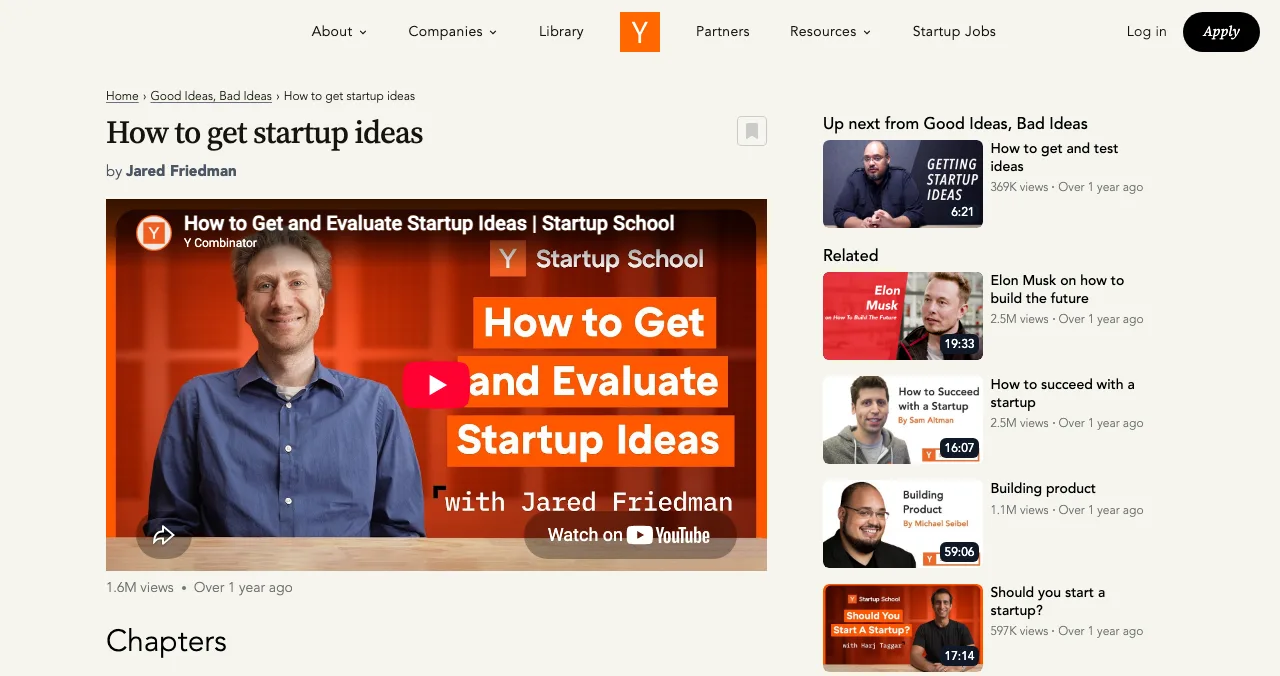
Good startup ideas usually come from problems the founders know well: from their work, their hobbies or their own frustration. Look for problems people already spend time or money on, with spreadsheets, agencies or workarounds. Y Combinator's How to get startup ideas is a free, detailed guide. Our startup ideas guide has more methods.
Step 2: Talk to users before you build
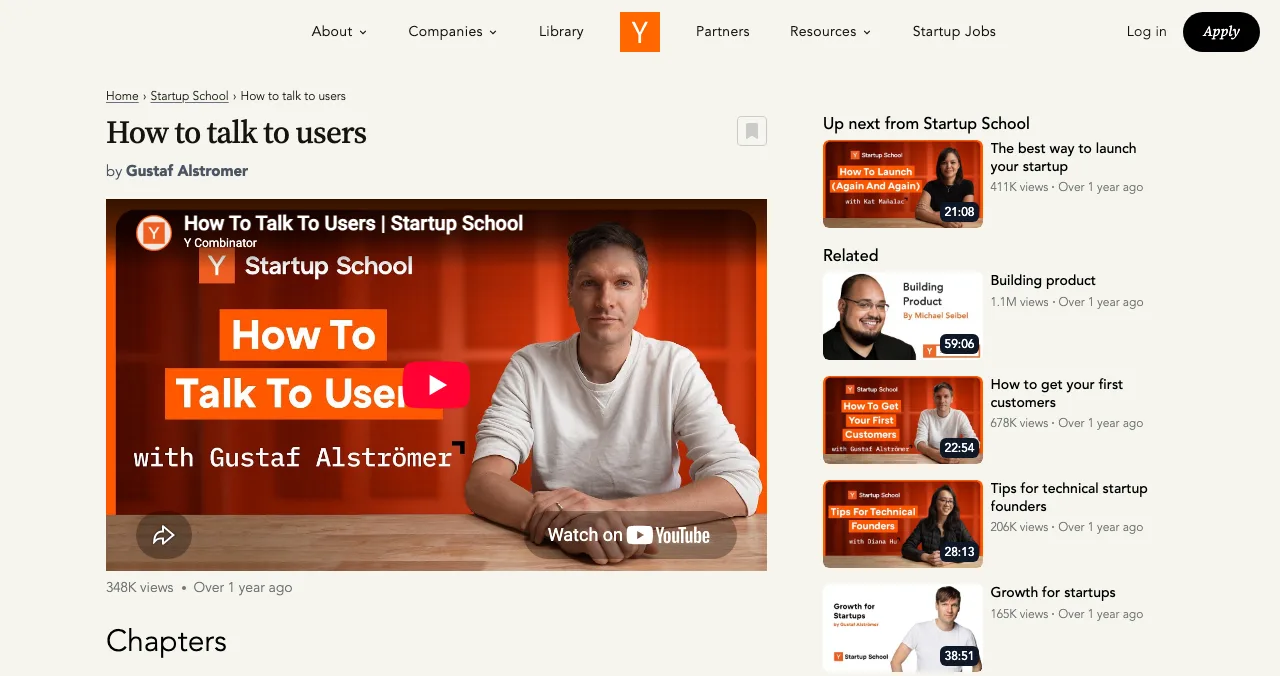
Interview people who have the problem about what they did last time it happened. Don't pitch. Ten to twenty conversations usually show whether the problem is common and painful. YC's How to talk to users and our guide to validating a startup idea cover the method.
Step 3: Choose co-founders and settle equity
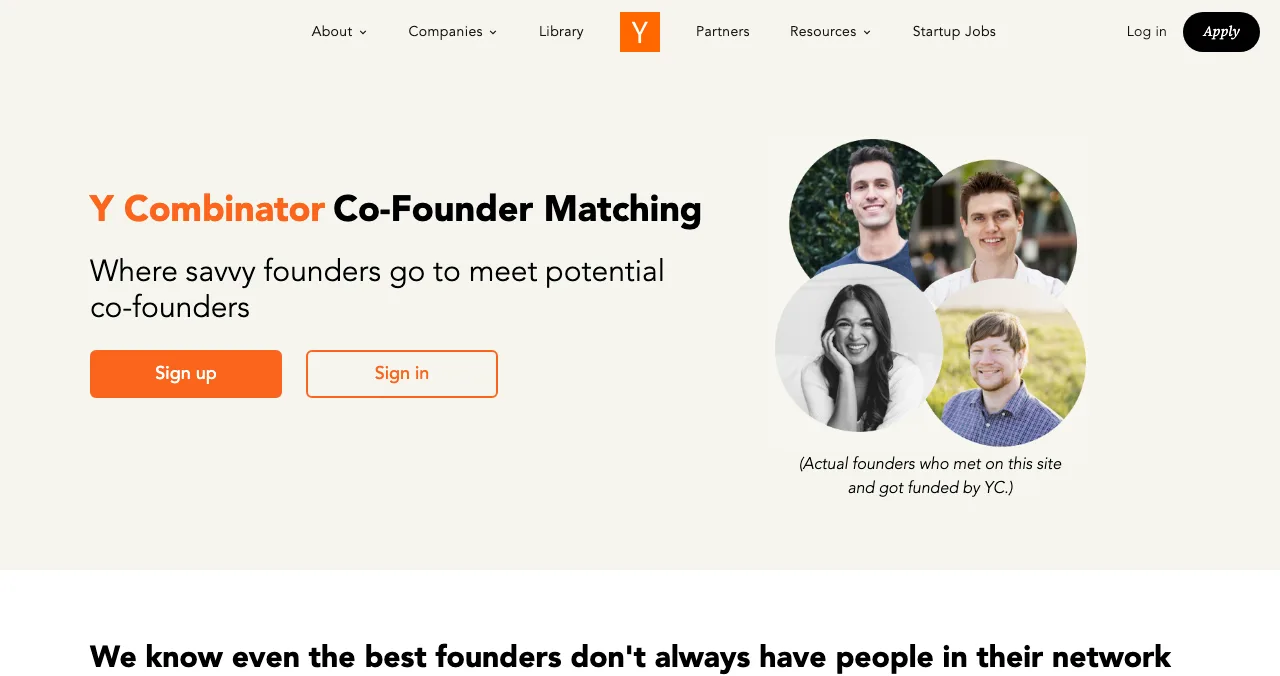
Many startups have two or three founders with complementary skills, often one who builds and one who sells. Agree on roles, equity, vesting and who owns the code before significant work begins; it's far easier on day one. If you need a partner, YC Co-Founder Matching is free, and our technical co-founder guide covers the search.
Step 4: Build the smallest useful product
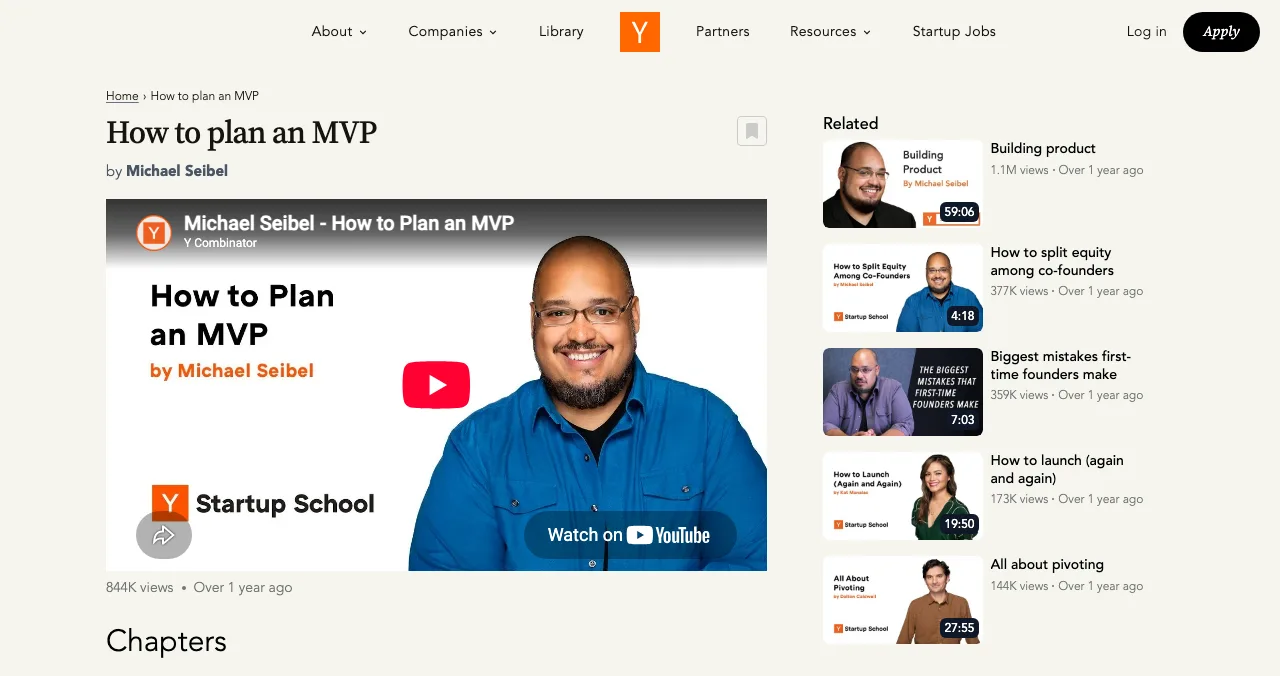
An MVP solves the core problem for one type of customer, and nothing else. YC's How to plan an MVP argues for launching quickly, getting feedback and iterating. You don't need to code: no-code tools and AI app builders can get a first version live (see how to start a tech company without coding). Our tech stack guide has a practical default if you do.
Step 5: How to start a startup company legally
Register the company when you need to sign contracts, take payments, hire or raise money. The steps are similar in most countries:

- Choose a structure. If you plan to raise investment, pick one that can issue shares to investors.
- Register with the official registry. For example, GOV.UK's Set up a private limited company guide for the UK, or our India guide for Pvt Ltd and LLP.
- Open a business bank account and keep company money separate.
- Sign a founders' agreement covering equity, vesting and IP assignment.
- Register for taxes that apply to you, and set up simple bookkeeping.
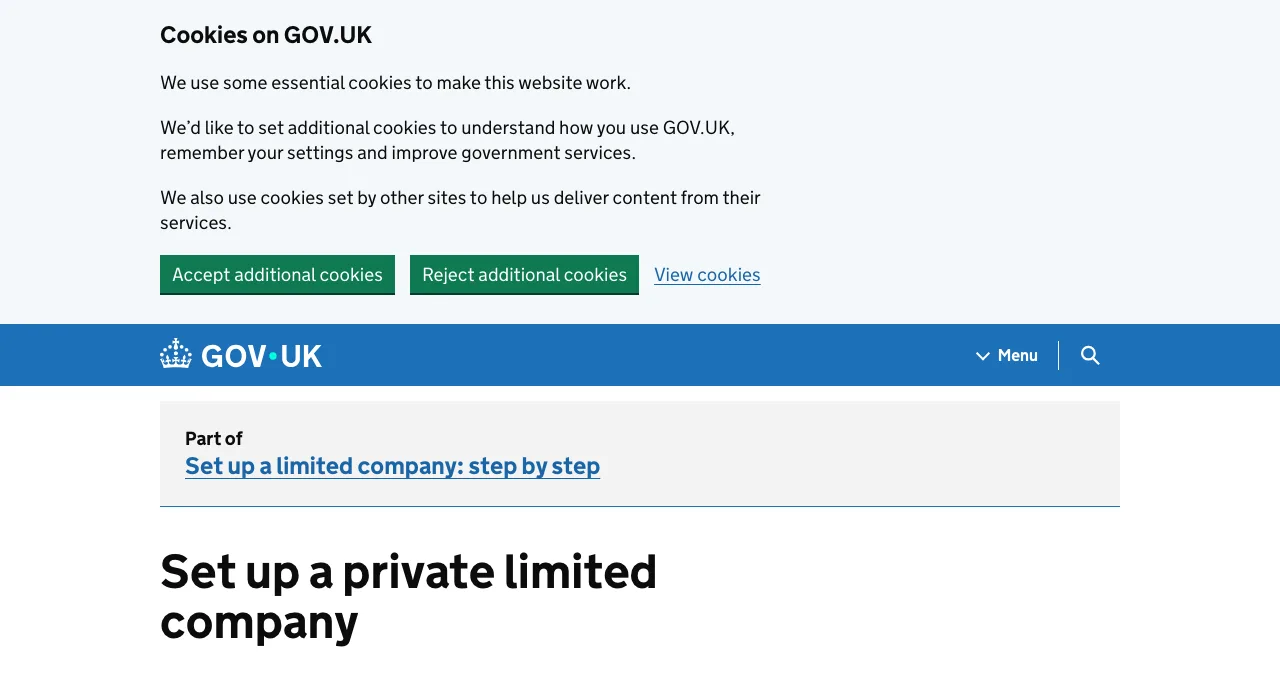
Rules, fees and tax registrations differ by country and change often, so use your government's own pages and take local legal and tax advice.
Step 6: Launch, in waves
Launch isn't one day. YC's How to launch (again and again) makes the case for many launches. Start with a permanent listing, then add launch days and communities. Our how to launch a startup guide covers each wave.
The Science of Apps Launchpad is a free, permanent place to list a startup, SaaS, mobile app, AI product, developer tool, browser extension, game or open-source project. Listing takes six short steps; each listing is checked automatically and reviewed by a person, usually within a day. Ranking depends on relevance, editorial picks and community interest, never payment, and every live listing gets a Featured badge.
Step 7: Diagnose the product with outside eyes
Founders know where every button is, so they can't see what confuses a stranger. As your Launchpad listing goes live, a free baseline diagnosis checks your landing page, discoverability and speed. The full product investigation then tests the product end to end and hands you a detailed report.
- Areas, first visit to renewal
- 22
- Automatic measurements, desktop and mobile
- 39
- Expert checks behind the login
- 74
- Verdicts that set the fix order
- 5
From launch to a fix list
List free, then order the report that fits your stage.

 Economy
See what new customers see
- Store listing and homepage, screen by screen
- Scorecard against 60 Laws of UX
- The fixes worth most
PremiumThe full diagnosis and the plan
- Every screen, every finding, every flow
- All 60 laws with evidence and fixes
- 8 strategy chapters and a 90-day roadmap
Fact-checked against the evidence. Private by default.
Step 8: Win customers and keep them
Your first customers come from people you can reach directly: interviewees, communities and your network. Then watch retention: of the users who signed up in a given week, how many are still active weeks later? If the curve flattens, you've found something people need; if it falls to zero, fix the product before spending on growth. Our first 100 users guide and product-market fit guide go deeper.
Step 9: Fund growth
| Route | Best when | Trade-off |
|---|---|---|
| Bootstrapping | Customers pay early; you can grow steadily | Slower; you keep control |
| Angels and pre-seed | You have early evidence and need months of runway | You give up equity |
| Accelerators | You want a network, advice and a small investment | Equity and a fixed programme |
| Venture capital | The market rewards speed and scale | High growth expectations |
Table: Ways to fund a startup
Our bootstrapping vs VC guide and pitch deck template help you choose and prepare.
Which step are you on?
| You have | Do next |
|---|---|
| An idea only | Steps 1–2: problem and interviews |
| Interviews that confirm the problem | Steps 3–4: co-founders and MVP |
| A working MVP | Steps 5–7: register, launch, diagnose |
| Users, but they leave | Step 7 again, then fix and relaunch |
| Users who stay | Steps 8–9: grow and fund |
Table: Where to start, by stage
A first-90-days plan
- Weeks 1–3
Problem and users
Pick one problem; run 10–20 interviews.
- Weeks 4–5
Team
Agree roles, equity and vesting in writing.
- Weeks 6–11
MVP
Build the smallest useful product; test with five users.
- Week 12
Register and launch
Register when needed; list on the Launchpad; read the baseline diagnosis.
- Weeks 13+
Diagnose and fix
Get the full report; fix Critical findings; launch the next wave.
Mistakes when starting a startup

- Building before talking to users — weeks of code for a problem nobody has
- No founders' agreement — equity disputes kill more startups than competitors
- Registering too late — unclear ownership of code and brand
- A big-bang launch — launch in waves and keep going
- Measuring sign-ups, not retention — sign-ups that leave don't count
- Raising before evidence — it's harder and more expensive
Ready to launch your startup?
How we know
The steps are Science of Apps' editorial framework, drawing on Y Combinator's free Startup Library; registration steps on GOV.UK's guide as one example; Launchpad facts from launchpad.scienceofapps.com and /investigate. All were read on 18 November 2026. Rules differ by country; this guide isn't legal or tax advice. Science of Apps runs the Launchpad.
Key terms, defined
- Startup: a young company built to grow quickly by solving a problem for many customers.
- MVP (minimum viable product): the smallest product that solves the core problem for one customer type.
- Founders' agreement: a contract between co-founders on roles, equity, vesting and IP.
- Vesting: earning shares over time, so a founder who leaves early doesn't keep them all.
- Retention: the share of users who keep using the product over time.
- Product–market fit: when a product satisfies a market strongly enough that it keeps its users and grows.
Frequently asked questions
How do I start a startup from scratch?
Pick a problem you understand and that people already spend time or money on. Interview 10–20 people who have it. Build the smallest product that solves it, ideally in weeks. Register a company when you need to sign contracts or take money. Launch publicly, get outside feedback on the product, fix what stops users, and grow from there.
How do I start a startup company legally?
Register a company with your country's business registry, choose a structure that fits your plans (investors often expect a company that can issue shares), open a business bank account, and sign a founders' agreement covering equity, vesting and IP. Rules differ by country, so check your official registry and take local legal and tax advice.
How do I create a startup with no money?
Keep the first version tiny and use free tiers: no-code or AI app builders, free hosting, free analytics and free launch platforms. Validate with conversations and a landing page before building. Charge early, even a small amount, so customers fund growth. Apply to accelerators and grant programmes only once you have evidence of demand.
How do I build a startup that lasts?
Focus on retention. A startup that keeps its users can afford to grow slowly; one that loses them can't be fixed with marketing. Keep talking to users, measure weekly active use by cohort, fix the product problems that make people leave, and grow only the channels that bring users who stay.
When should I register my startup?
Usually when you're about to sign a contract, take payment, hire, or raise money, and before co-founders do significant work without an agreement. Registering early costs little in many countries but adds filing duties. Registering late risks disputes over who owns the code and the brand. Check your local registry's requirements.
How long does it take to start a startup?
Registering a company can take days. Building a first version takes weeks to a few months. Finding product–market fit usually takes much longer, often years, and many startups never do. Plan for a long learning phase: launch early, measure, fix and relaunch rather than waiting for a perfect first release.
Should I raise money or bootstrap?
Bootstrap if customers will pay early and the market doesn't reward speed above all. Raise if you need to build something expensive before revenue, or if a competitor with funding could win the market first. Many founders start by bootstrapping to prove demand, which also makes raising easier later.
Sources
- Y Combinator — How to get startup ideas (checked 18 Nov 2026)
- Y Combinator — How to talk to users (checked 18 Nov 2026)
- Y Combinator — How to plan an MVP (checked 18 Nov 2026)
- Y Combinator — Co-Founder Matching (checked 18 Nov 2026)
- GOV.UK — Set up a private limited company (checked 18 Nov 2026)
- Y Combinator — How to launch (again and again) (checked 18 Nov 2026)
- Science of Apps — Launchpad and product investigation (checked 18 Nov 2026)
- Checked November 18, 2026. Figures that change — fees, salaries, prices — are reviewed every six months; if something is out of date, tell us.
Where to go from here
- How to start a startup in India — the India version: DPIIT, structures, compliance
- How to launch a startup — step 6 in depth
- Validate a startup idea — step 2 in depth
- Science of Apps - LaunchpadHow to start an AI startup in 2027: pick a problem AI solves better, choose models and data, build trust in outputs, check the rules, then launch on the Launchpad and AI directoriesHow to start an AI startup in 2027: choose a problem AI solves better, pick models and data, earn trust in outputs, check the EU AI Act, then launch.
- How to make an appHow to build a SaaS product from scratchBuild a SaaS product from idea to paying customers: a painful problem, validation, a narrow MVP, auth, billing, multi-tenancy and your first 10 customers.
- Science of Apps - LaunchpadHow to get your first 100 users without paid ads: a channel-by-channel plan founders can start todayHow to get your first 100 users without paid ads in 2027: your network, communities, launch sites, directories, content and one-to-one outreach, step by step.
- Science of Apps - LaunchpadHow to launch a startup in 2027: from a validated problem to a working product, a public launch and your first customersHow to launch a startup in 2027, step by step: validate the problem, build a small product, test it, publish a permanent page, launch and win first users.
- Science of Apps - LaunchpadHow to launch an MVP: what to build, how fast, where to launch it and what to do with the feedback, following YC's advice to launch something bad, quicklyHow to launch an MVP in 2027: scope it in weeks not months, launch it to your first users, collect feedback and iterate, following YC's MVP advice.
- Science of Apps - LaunchpadHow to start a tech company without being technical: four ways to build the product without coding, what the non-technical founder must own, and how to launch and get the product testedHow to start a tech company without coding: no-code tools, AI app builders, a technical co-founder or hired developers, and the jobs only you can do.

Get the ideas, not the noise.
Sign up with Google and we’ll send you short UX psychology tips by email — why people tap, stall and leave, and what to do about it. Unsubscribe anytime. Prefer something to keep? Get the free Laws of UX guide as a PDF.
Launch day ends. Your listing shouldn't.
Steps 6 and 7 in one place: list free on the Science of Apps Launchpad for a permanent profile, and get your product tested end to end with a detailed report.