 By
Quick answer: How do I start an AI company?
- Pick a narrow task AI does well and a customer pays for.
- Prototype on a model API; don't train a model first.
- Build an evaluation set of real examples before you launch.
- Design for trust: users must be able to check and fix outputs.
- Check the rules (EU AI Act transparency duties apply from August 2026), then launch.
Key takeaways
- Your moat is the workflow, the data and the customer, not the model.
- Measure output quality on real examples, every release.
- Model costs scale with usage; price with that in mind.
- Trust is a product feature: show sources, confidence and an undo.
- Launch where AI buyers browse, and keep a permanent listing.
Starting an AI startup has never been cheaper. A founder can call a capable model through an API, wire it into a workflow and have a prototype in front of users within days. That's also the problem: everyone else can too. The AI startups that last pick a narrow problem, own the workflow and data around it, and earn trust in what the model produces. This guide covers how to start an AI startup in seven steps, from choosing the problem to launching, including model choices, evaluation, pricing and the EU AI Act. Facts were checked on each source's own page on 18 November 2026. Jump to the steps, models, the rules or launch.
How to start an AI startup: seven steps
| # | Step | Output |
|---|---|---|
| 1 | Pick a narrow, valuable task | One task, one customer type, a measurable result |
| 2 | Prototype on a model API | A working demo in days |
| 3 | Build an evaluation set | Real examples with known good answers |
| 4 | Design for trust | Users can check, correct and undo outputs |
| 5 | Price for usage costs | A margin that survives heavy users |
| 6 | Check the rules | Transparency, data and sector duties covered |
| 7 | Launch and get reviewed | A permanent listing, directories, an outside test |
Table: Seven steps to start an AI startup (Science of Apps editorial framework)
Step 1: Pick a task AI now does well
Look for work that's repetitive, language- or image-heavy, and expensive when people do it by hand: reading documents, drafting, classifying, summarising, extracting data, answering routine questions. The narrower the task, the easier it is to measure and the harder for a general chatbot to replace. Our AI startup ideas guide lists 40 niches, and Y Combinator's How to get startup ideas covers finding problems you're well placed to solve.
Test: can you state the result in a number? "Cuts invoice processing from 10 minutes to 1" beats "AI for finance".
Step 2: Prototype on a model API
Don't train a model to find out whether anyone wants your product. Start with a hosted model API or an open model, and spend your time on the workflow around it.
| Option | Good for | Watch |
|---|---|---|
| Hosted model API (e.g. OpenAI, Anthropic) | Fast start, strong general models | Usage costs, data terms, dependence on one provider |
| Open models (e.g. via Hugging Face) | Control, self-hosting, specific tasks | Hosting and maintenance effort |
| Fine-tuning later | Specific style or format, lower cost at scale | Needs good data and evidence it helps |
Table: Model options for an AI startup
Design so you can switch models. Providers release new versions often, and the best choice for your task may change.
Step 3: Build an evaluation set
An evaluation set is a collection of real inputs with known good outputs, used to score every change. Start with 50–100 examples from your interviews or pilot users, add the cases that failed, and re-run it before each release. Without one, you're guessing whether a new prompt or model made things better or worse.
Step 4: Design for trust
Users have to decide whether to rely on an AI's answer. Help them:

- Show your sources — link outputs to the documents or data they came from
- Make editing easy — a draft to correct beats an answer to accept or reject
- Signal uncertainty — flag low-confidence results instead of hiding them
- Undo — every AI action can be reversed
- Say it's AI — label AI-generated content and chatbots clearly
- Protect data — say what's stored, what's sent to model providers and why
The Science of Apps product investigation re-cuts its 22 areas for each category; for AI products it adds checks on prompt and output trust. Our AI agent guide covers the extra trust questions when the product takes actions.
Step 5: Price for usage costs
Every request to a model costs money, so a heavy user costs more than a light one. Track cost per active user from the first pilot. Common answers: usage-based pricing or credits, plan limits, caching repeated work, and routing simple tasks to cheaper models. Our SaaS pricing page best practices cover how to present plans.
Step 6: Check the rules where you sell
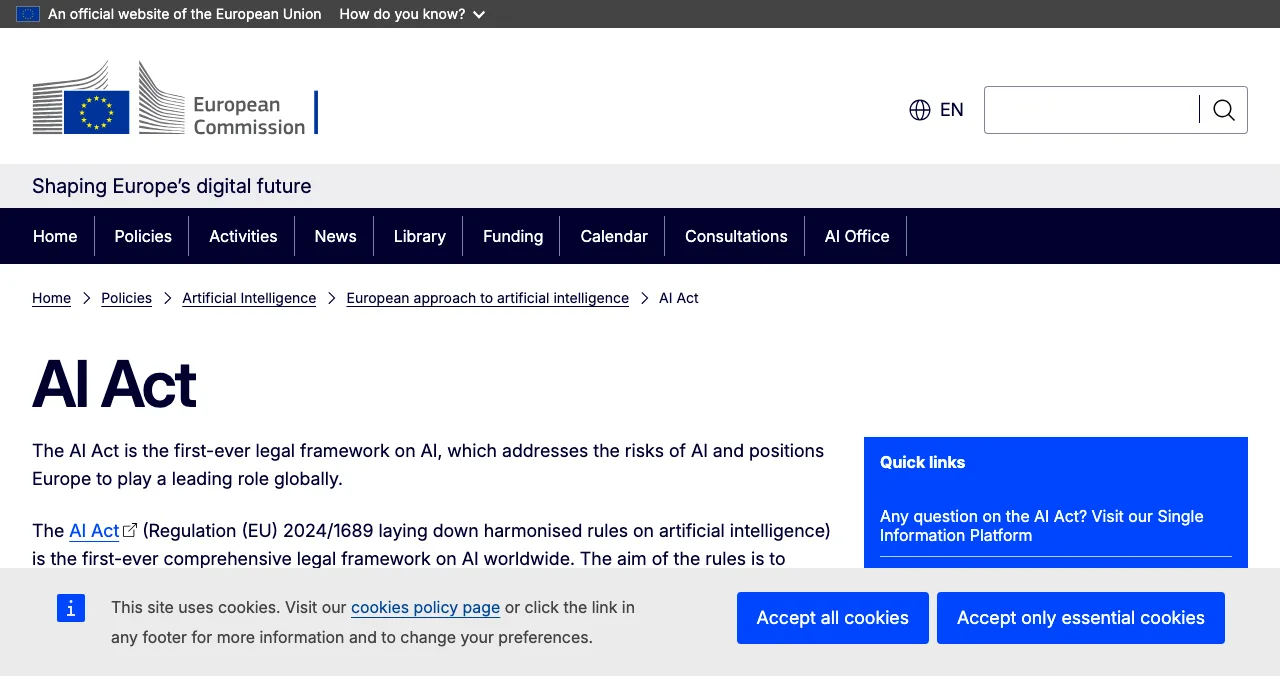
AI rules vary by country and sector. In the EU, the AI Act is the main framework. According to the European Commission, it entered into force on 1 August 2024 and becomes fully applicable on 2 August 2026, with exceptions.
| Date | What applies (per the European Commission) |
|---|---|
| 2 Feb 2025 | Prohibited practices; AI literacy duties |
| 2 Aug 2025 | Governance rules; general-purpose AI model obligations |
| Aug 2026 | Transparency rules, such as telling people they're talking to a chatbot |
| 2 Dec 2027 | High-risk rules for Annex III uses such as employment and education |
| 2 Aug 2028 | High-risk rules for AI in regulated products |
Table: EU AI Act timeline (European Commission, checked 18 Nov 2026)
Most AI products fall into minimal or transparency risk; high-risk uses (hiring, education, credit and similar) carry strict duties. Sector rules on health, finance and privacy apply too. Take legal advice for your use case.
Step 7: Launch your AI startup and get it reviewed
Launch where AI buyers browse, and keep a permanent listing that outlasts launch day.
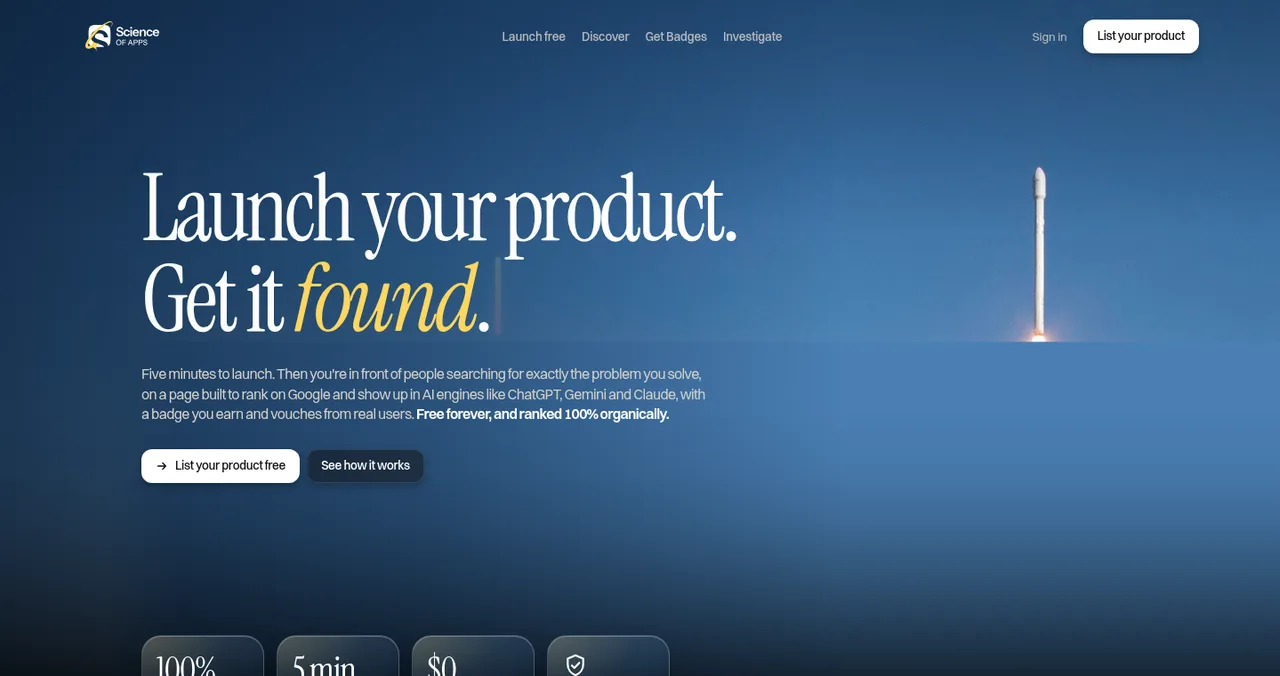
The Science of Apps Launchpad is a free, permanent place to list AI products, startups, SaaS and apps. Listing takes six short steps and is free forever; ranking depends on relevance, editorial picks and community interest, never payment. As your listing goes live, a free baseline diagnosis checks your landing page, discoverability and speed. The product investigation then tests your AI product end to end, with prompt and output trust added for AI, and hands you a detailed report.
- Areas, re-cut for AI products
- 22
- Automatic measurements, desktop and mobile
- 39
- Expert checks behind the login
- 74
- Verdicts that set the fix order
- 5
From launch to a fix list
List free, then order the report that fits your stage.

 Economy
See what new customers see
- Store listing and homepage, screen by screen
- Scorecard against 60 Laws of UX
- The fixes worth most
PremiumThe full diagnosis and the plan
- Every screen, every finding, every flow
- All 60 laws with evidence and fixes
- 8 strategy chapters and a 90-day roadmap
Fact-checked against the evidence. Private by default.
Then list on AI directories. Each has its own submission process, review and fees; check their pages before you submit.
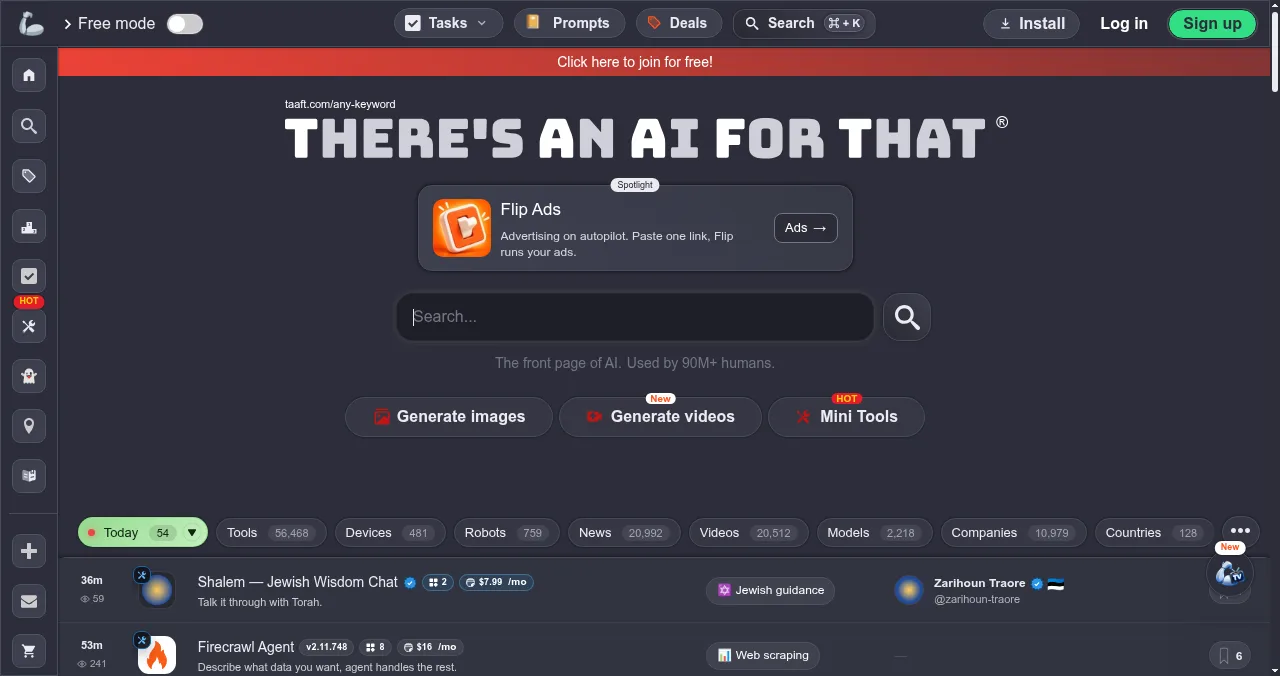
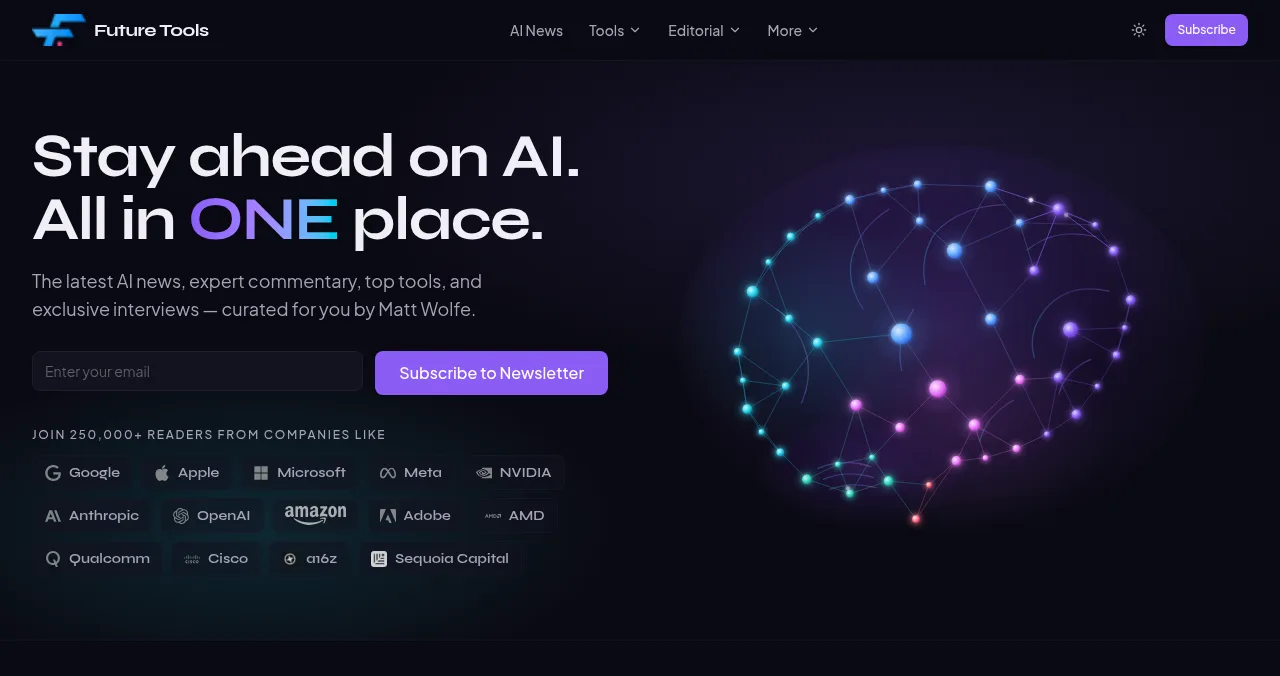
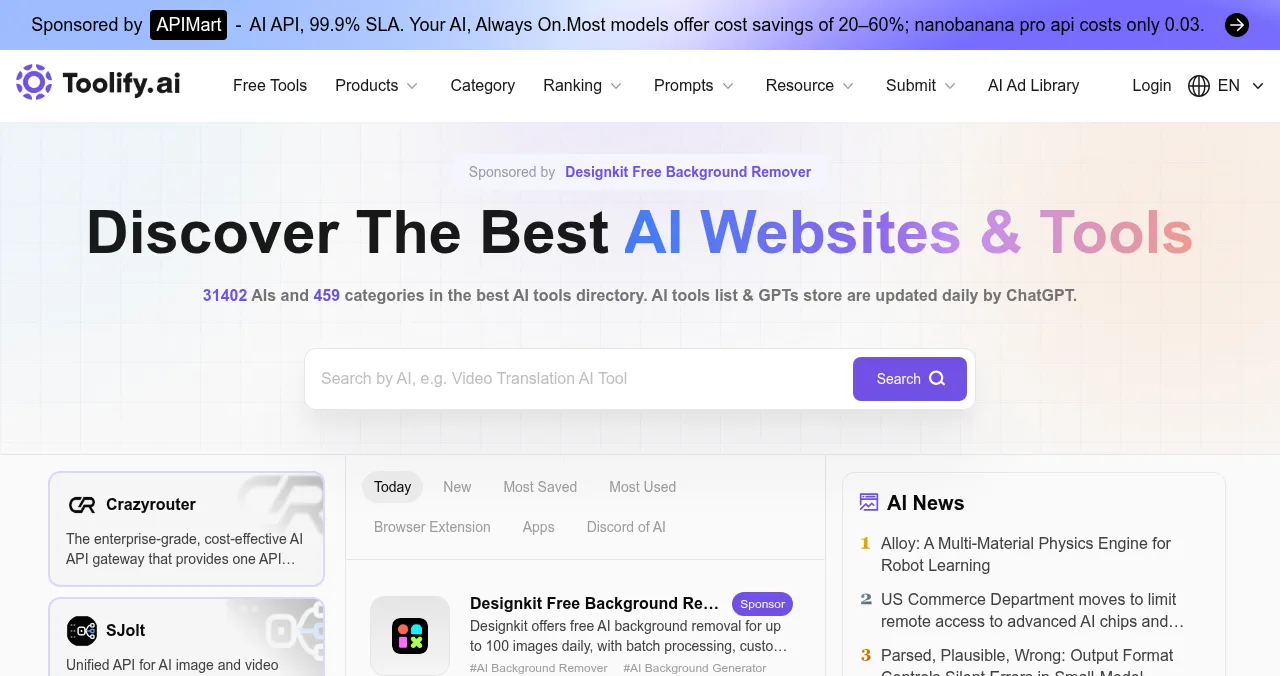
Our guides to the best websites to launch AI startups, getting listed on There's An AI For That and how to launch an AI product cover each one's rules.
Which step are you on?
| You have | Do next |
|---|---|
| An interest in AI, no problem yet | Step 1: interview people in an industry you know |
| A problem and a demo | Steps 3–4: evaluation set and trust design |
| Pilot users | Step 5: measure cost per user; set pricing |
| A product ready for the public | Steps 6–7: rules check, then launch and review |
Table: Where to start, by stage
A 90-day plan
- Weeks 1–3
Problem
Interview 10–20 people; pick one task with a measurable result.
- Weeks 4–6
Prototype
Build on a model API; collect 50–100 real examples.
- Weeks 7–9
Pilot
Run with three to five pilot users; score every change on the evaluation set.
- Weeks 10–11
Trust, pricing, rules
Add sources and undo; set pricing; check legal duties.
- Week 12
Launch
List on the Launchpad; read the baseline diagnosis; submit to AI directories.
Mistakes when starting an AI startup

- A thin wrapper on a general model — own a workflow, data or a niche
- No evaluation set — you can't tell if changes help
- Ignoring usage costs — heavy users can wipe out the margin
- Hiding that it's AI — label chatbots and AI content clearly
- Locking into one model — design so you can switch
- Describing the model, not the task — buyers want the result
Ready to launch your AI startup?
How we know
The AI Act timeline comes from the European Commission's AI Act page; model platform descriptions from OpenAI, Anthropic's Claude Platform docs and Hugging Face; Launchpad facts from launchpad.scienceofapps.com and /investigate. All were read on 18 November 2026. The steps are Science of Apps' editorial framework. This guide isn't legal advice. Science of Apps runs the Launchpad.
Key terms, defined
- AI startup: a startup whose core product uses AI models to do a task for customers.
- Model API: a paid service that runs an AI model and returns results to your app.
- Open model: a model whose weights are published so you can run it yourself.
- Evaluation set: real inputs with known good outputs, used to score changes.
- Fine-tuning: further training a model on your own examples.
- EU AI Act: the EU's legal framework for AI, applying rules by level of risk.
Frequently asked questions
How do I start an AI company?
Choose a specific, valuable task that AI now does well for a defined customer. Prototype on a model API from a provider such as OpenAI or Anthropic, or an open model from Hugging Face. Build a set of real examples to evaluate quality, design the product so users can check outputs, check regulations where you sell, then launch and get the product reviewed.
Do I need to train my own AI model to start an AI startup?
Usually not at the start. Most AI startups begin on a hosted model API or an open-weight model and focus on the workflow, data and user experience around it. Fine-tuning or training your own model can make sense later, when you have proprietary data and clear evidence that it improves results or cost.
How much does it cost to start an AI startup?
A prototype can cost little: model APIs charge by usage, and many tools have free tiers. Costs grow with users because every request costs money, so watch cost per active user from the start. Registering a company, hosting and any specialist hires add to it. Price your product so usage costs fit inside your margin.
What makes an AI startup defensible?
Rarely the model, since competitors can call the same APIs. Defensibility comes from owning a specific workflow, proprietary or hard-to-get data, integrations into tools customers already use, a trusted brand in a niche, and evaluation know-how that keeps quality high. Distribution, being where buyers already look, matters too.
Does the EU AI Act apply to my AI startup?
It can, if you place AI systems on the EU market or your outputs are used in the EU. The Act entered into force on 1 August 2024 and becomes fully applicable on 2 August 2026, with exceptions. Chatbots must tell people they're talking to a machine, and high-risk uses carry strict duties. Take legal advice for your use case.
Where should I launch an AI startup?
List on a permanent launch platform such as the Science of Apps Launchpad, then on AI directories such as There's An AI For That, Future Tools and Toolify, each with its own submission rules and fees. Add launch days such as Product Hunt, and make sure AI search engines can find and describe your product accurately.
Sources
- European Commission — AI Act: regulatory framework and timeline (checked 18 Nov 2026)
- Anthropic — Claude Platform Docs: Intro to Claude (checked 18 Nov 2026)
- OpenAI — API Platform (checked 18 Nov 2026)
- Hugging Face — Models (checked 18 Nov 2026)
- Science of Apps — Product investigation: AI products re-cut (checked 18 Nov 2026)
- Science of Apps — Launchpad homepage (checked 18 Nov 2026)
- Y Combinator — How to get startup ideas
- Checked November 18, 2026. Figures that change — fees, salaries, prices — are reviewed every six months; if something is out of date, tell us.
Where to go from here
- AI startup ideas — 40 underserved niches
- How to launch an AI product — launch in depth
- How to start a startup — the general nine steps
- Science of Apps - LaunchpadHow to start a startup in 2027: nine steps from a real problem to paying customers, including how to create a startup company, build an MVP, launch, diagnose and fund itHow to start a startup in 2027, step by step: find a real problem, talk to users, build an MVP, register the company, launch, diagnose and fund it.
- Science of Apps - LaunchpadHow to market an AI tool in 2027: positioning by task, AI directories, AI search, demos and the trust that makes people payHow to market an AI tool in 2027: position by task, list in AI directories, get cited by AI search, show real outputs and earn trust that converts.
- Science of Apps - LaunchpadHow to launch an AI product: prove the outputs, describe the task not the model, pick free and paid launch sites, and make sure AI search can find youHow to launch an AI product in 2027: show real outputs, describe the task, launch on Product Hunt and AI directories, and get found by AI search engines.
- Science of Apps - LaunchpadHow to get your first 100 users without paid ads: a channel-by-channel plan founders can start todayHow to get your first 100 users without paid ads in 2027: your network, communities, launch sites, directories, content and one-to-one outreach, step by step.
- Science of Apps - LaunchpadHow to start a tech company without being technical: four ways to build the product without coding, what the non-technical founder must own, and how to launch and get the product testedHow to start a tech company without coding: no-code tools, AI app builders, a technical co-founder or hired developers, and the jobs only you can do.
- Science of Apps - LaunchpadHow to launch a startup in 2027: from a validated problem to a working product, a public launch and your first customersHow to launch a startup in 2027, step by step: validate the problem, build a small product, test it, publish a permanent page, launch and win first users.
Get the ideas, not the noise.
Sign up with Google and we’ll send you short UX psychology tips by email — why people tap, stall and leave, and what to do about it. Unsubscribe anytime. Prefer something to keep? Get the free Laws of UX guide as a PDF.
Launch day ends. Your listing shouldn't.
List free on the Science of Apps Launchpad for a permanent profile, and get your AI product tested end to end, including prompt and output trust, with a detailed report.