 By
Quick answer: What is the best Lovable alternative?
- Closest to Lovable: Bolt.new, Base44 and Emergent: describe an app in chat, get frontend, backend and hosting.
- For developers: Replit and Cursor give you the code and a real environment.
- For front ends: v0 by Vercel builds Next.js interfaces and deploys to Vercel.
- For visual control: Bubble, FlutterFlow, Softr and Glide let you edit what the AI made without prompting.
- After you build: list the app free on the Launchpad and get a report on what users will hit.
Key takeaways
- Every Lovable competitor here has a free plan, but free credits run out fast on a real app.
- Credit-based pricing (Lovable, Base44, Emergent, v0) is hard to compare; count what one feature costs you.
- Pick by output: a full-stack web app, a Next.js front end, a native mobile app or a portal on your data.
- Code export matters if you might outgrow the builder: check it before you commit.
- Building is the fast part now; launching and knowing what users will hit is what's missing.
People search "lovable alternative" about 4,400 times a month (Google Keyword Planner, global 12-month average), usually after the free credits ran out, the app outgrew the chat, or they wanted a native mobile app Lovable doesn't make. This list compares ten apps like Lovable on what they build, what the free plan really includes and what paid plans cost, using each builder's own pricing page as checked on 20 November 2026. It ends where most comparisons stop: once the app works, how to launch it and find out what users will hit. Jump to the comparison table, which to pick or the launch plan.
10 Lovable alternatives
 Launch free
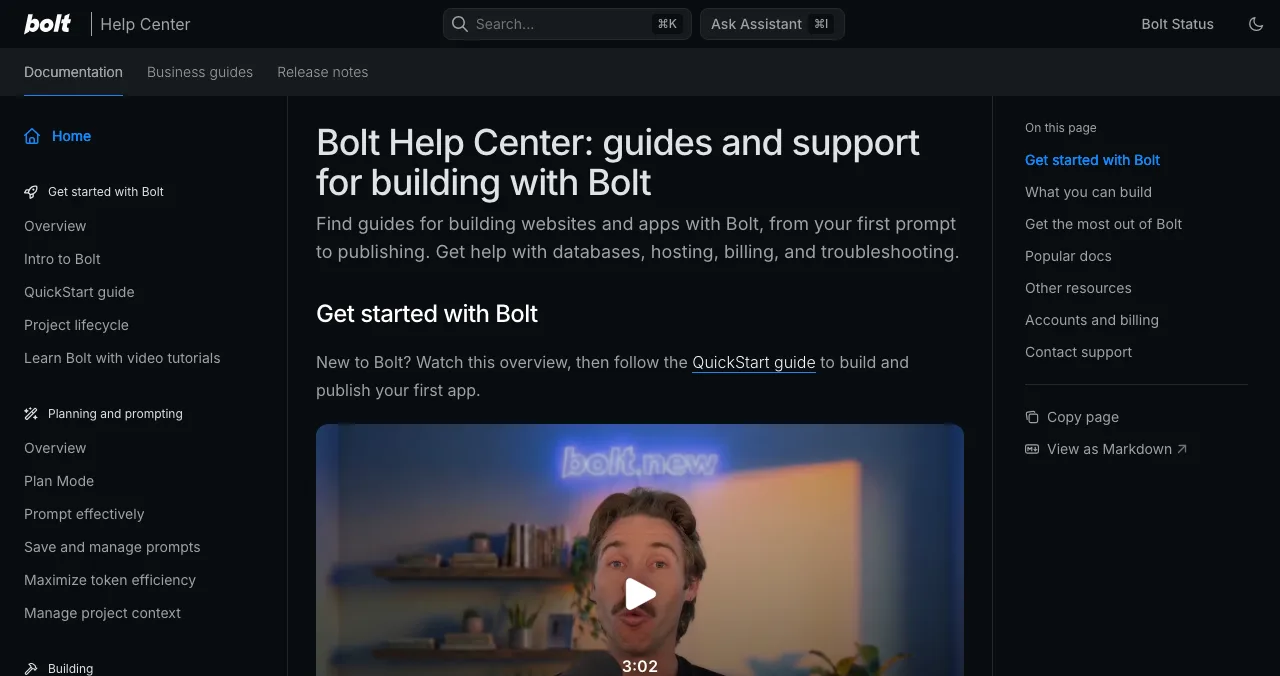
Bolt.new Closest match
Chat to a hosted web app, with a real code environment in the browser.
Free 1M tokens/moPro $25/mo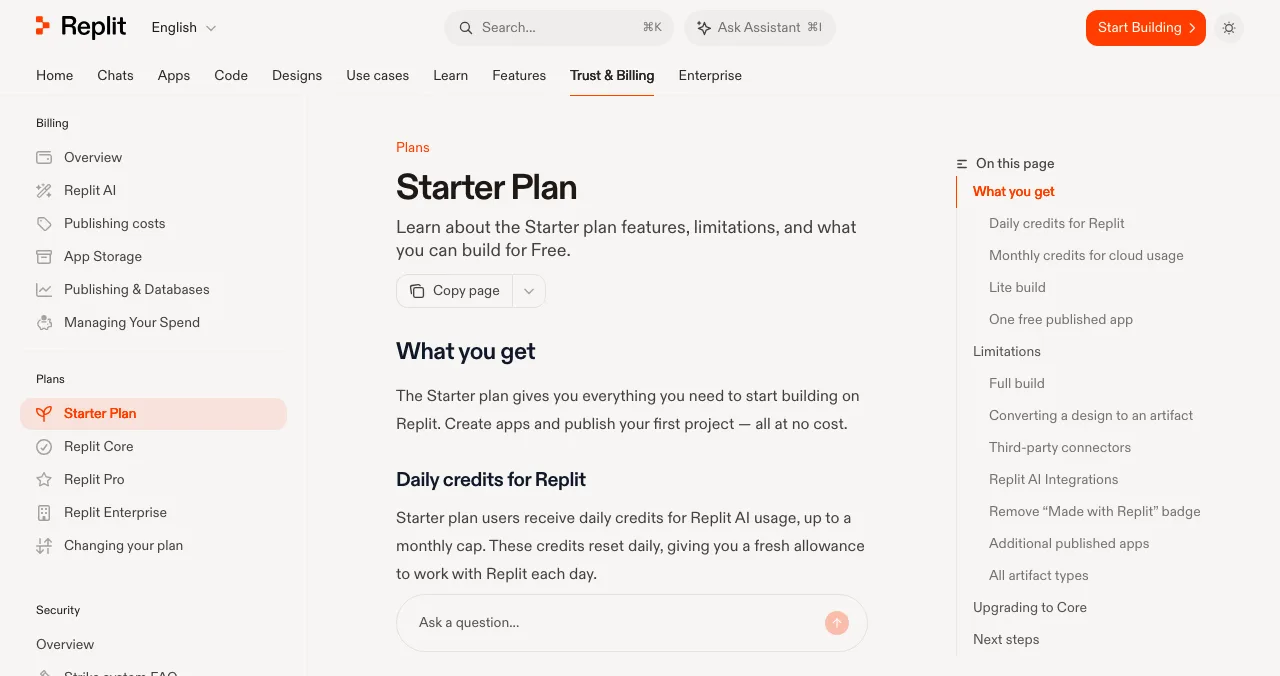
Replit
A full cloud development platform with an AI agent.
Free StarterCore $20/mo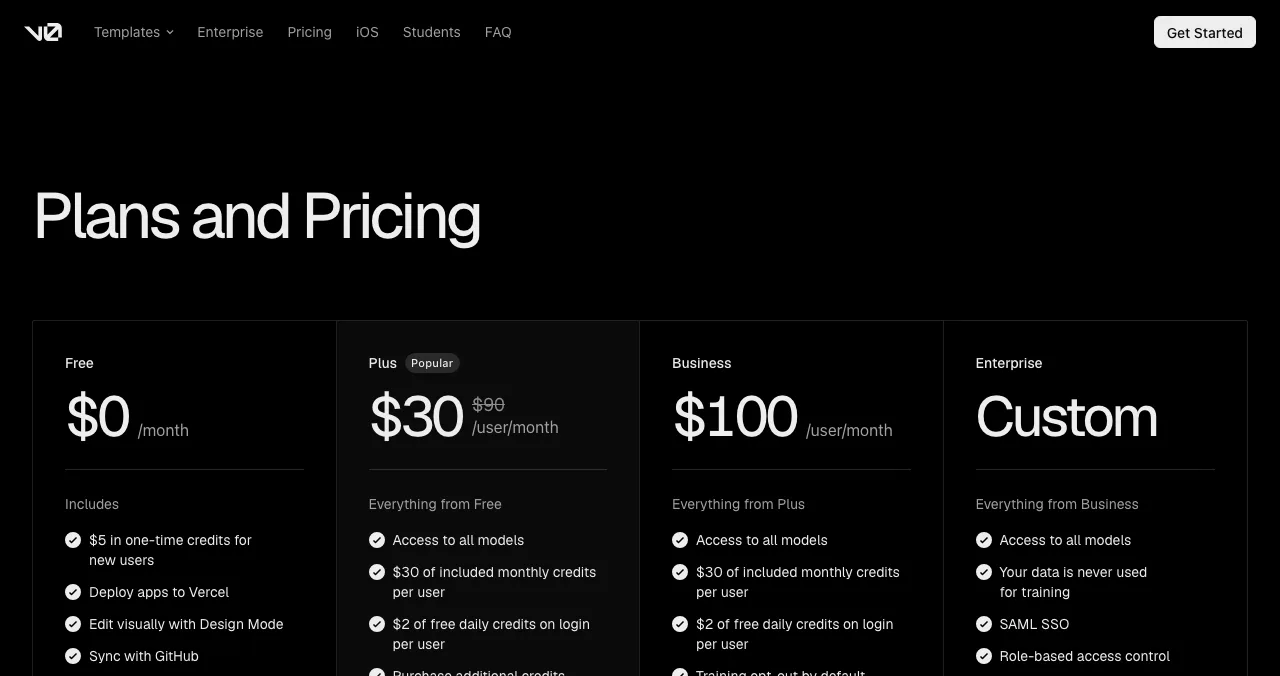
v0 by Vercel
Next.js front ends and full-stack apps, deployed on Vercel.
Free 7 msgs/dayPlus $30/user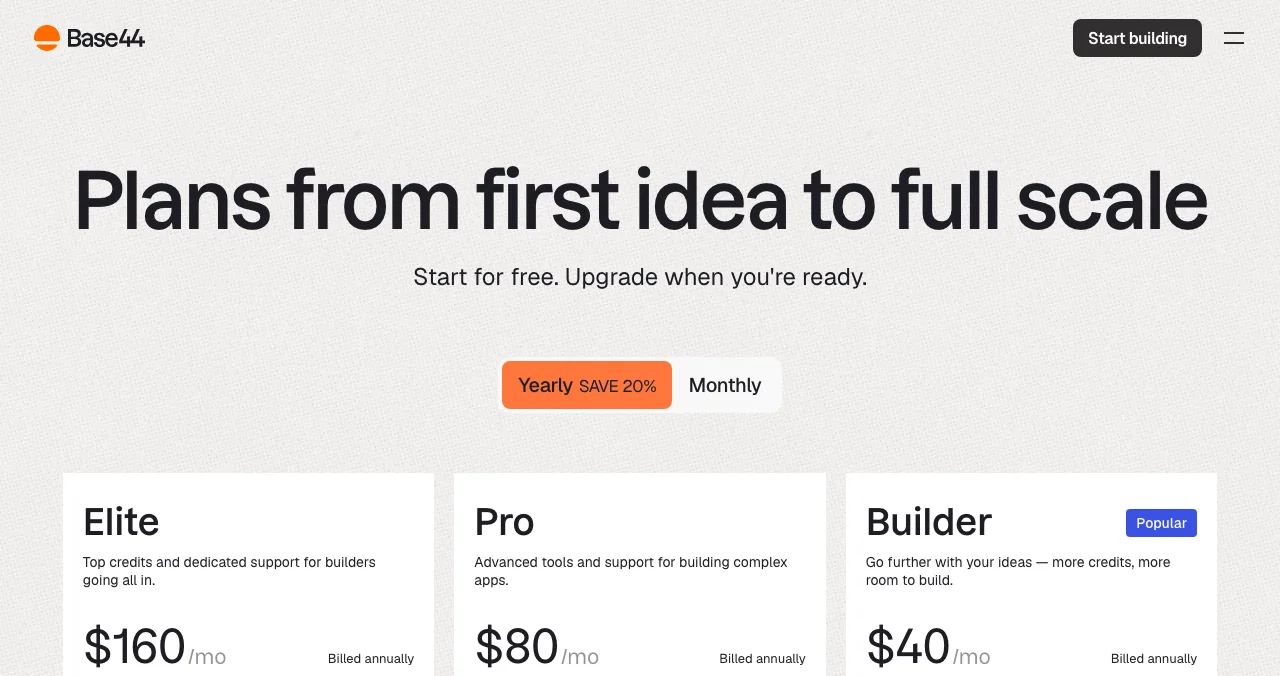
Base44
Prompt-to-app with backend, auth and hosting built in.
Free 25 credits/moFrom $16/mo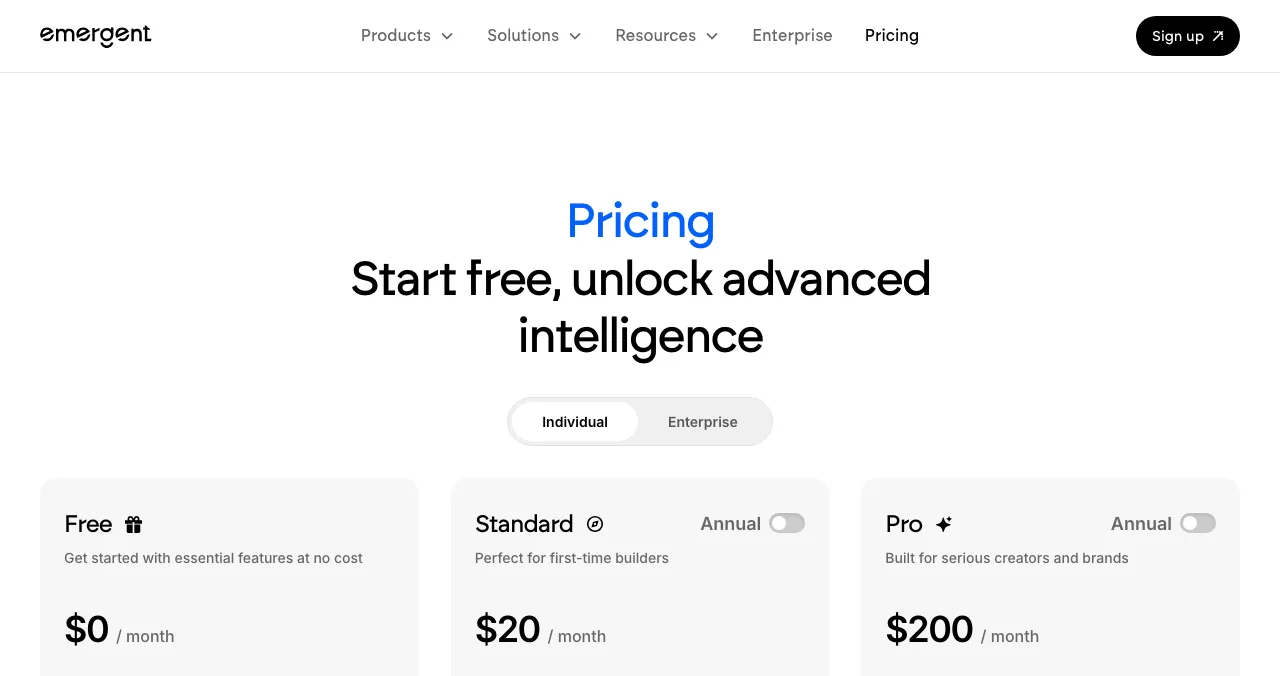
Emergent
Web and mobile apps from a description, with built-in hosting.
Free 10 credits/moFrom $17/mo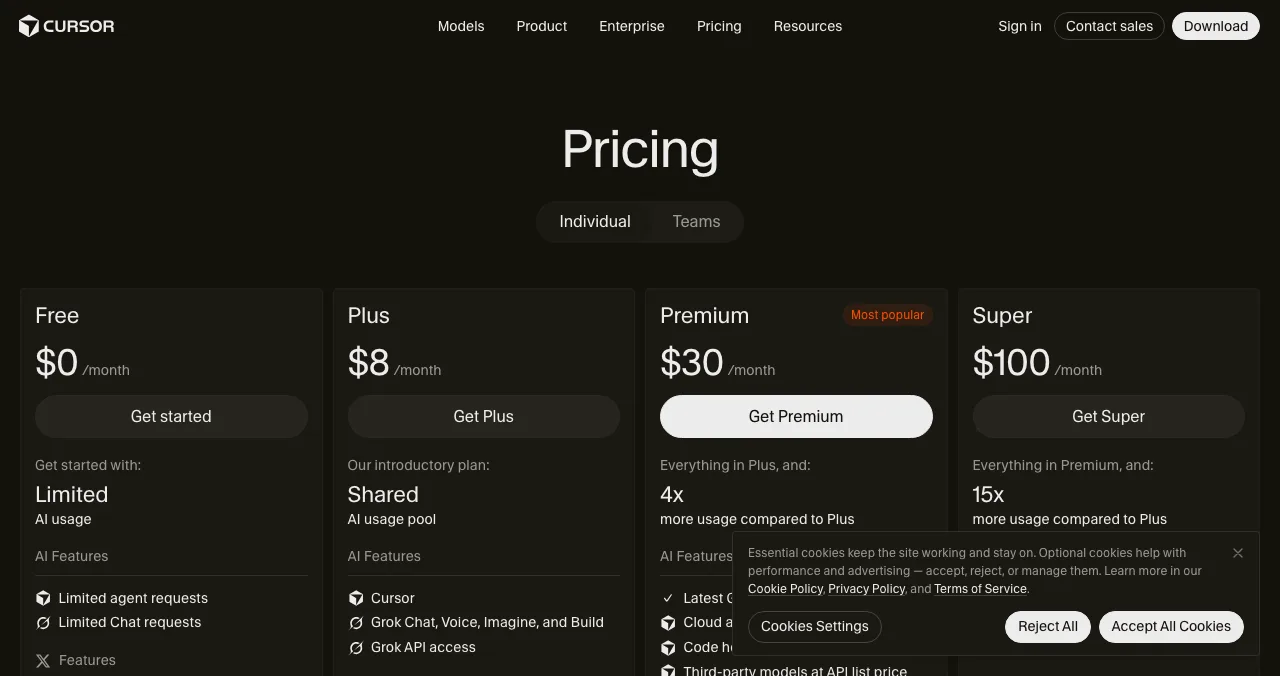
Cursor
An AI code editor for people who'll read the code.
FreeFrom $8/mo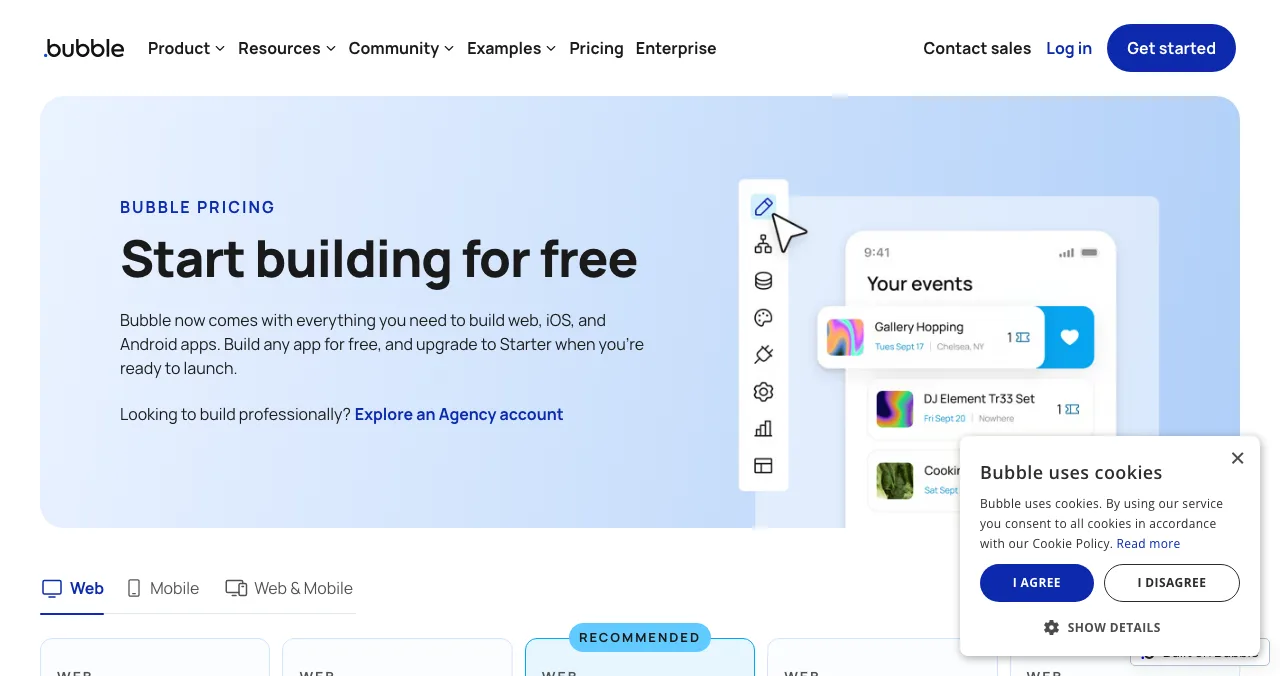
Bubble
AI-generated no-code apps you keep editing visually.
Free to buildFrom $32/mo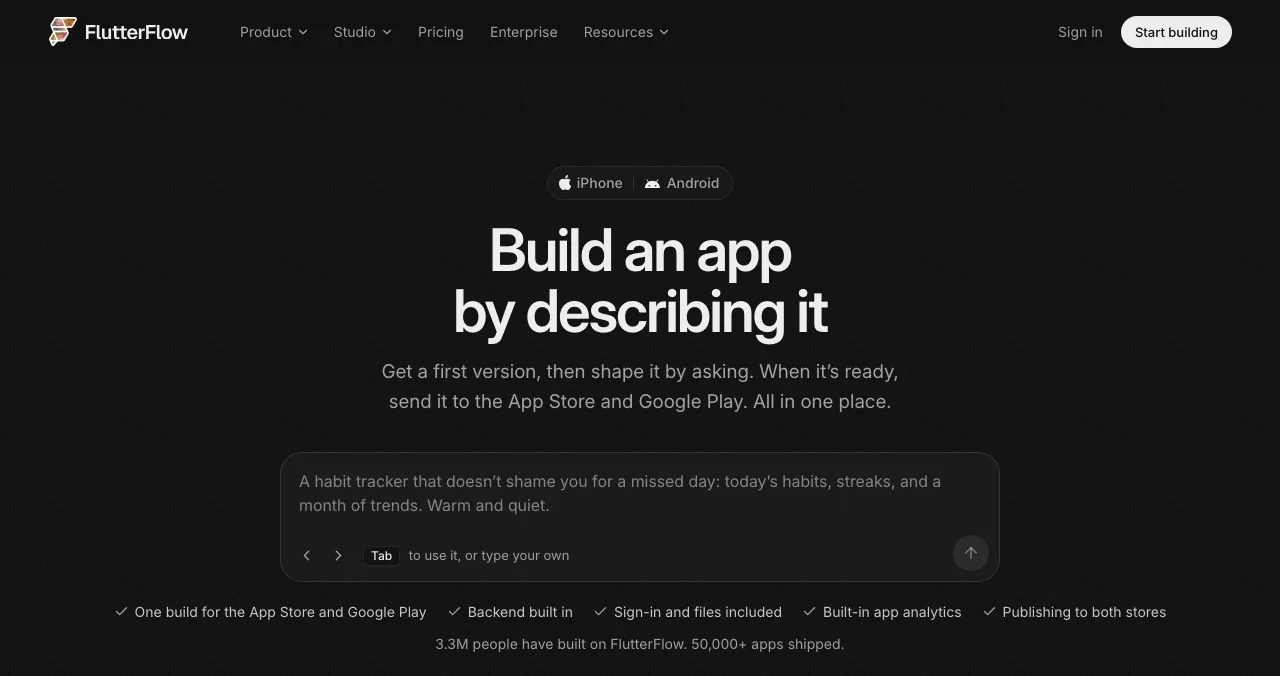
FlutterFlow
Native mobile apps with exportable Flutter code.
Free 2 projectsFrom $29/mo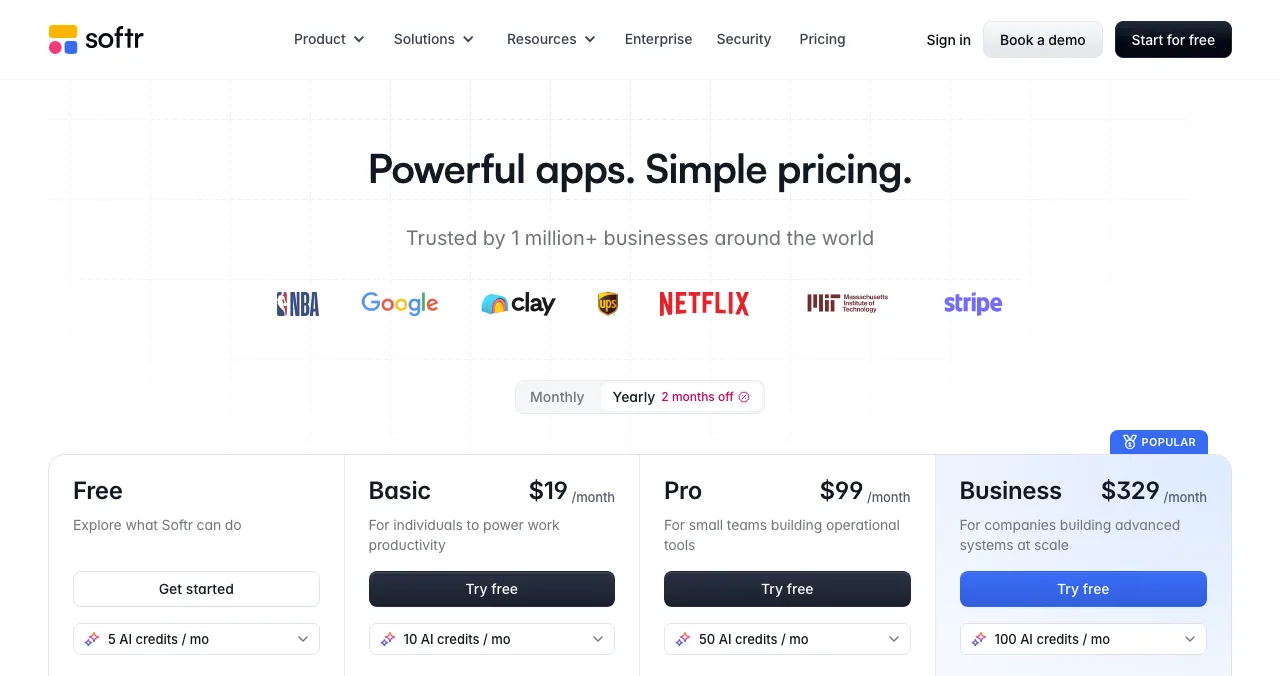
Softr
Portals and internal tools on Airtable, Sheets or its database.
FreeFrom $19/mo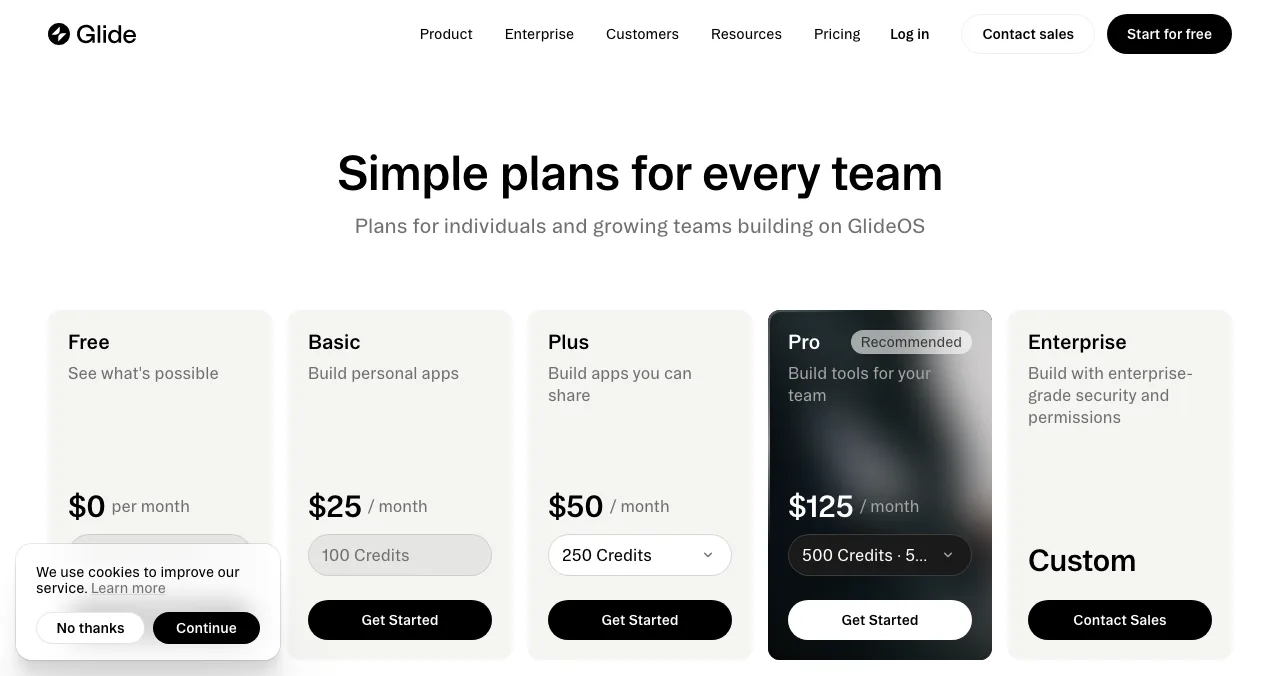
Glide
Apps and agents on your spreadsheets.
Free to buildFrom $25/mo
Lovable alternatives compared side by side
Lovable's own plans, for reference: Free (5 build credits a day, up to 30 a month), Pro at $25 a month with 100 monthly credits, and Business at $50 a month; yearly billing gives "2 months free". Here is how the alternatives line up.
| Tool | Best for | Free plan (as listed) | Paid from (USD) | You get the code? |
|---|---|---|---|---|
| Bolt.new | Like-for-like chat builder | 1M tokens/mo, 300K/day, hosting | $25/mo (Pro, monthly) | Yes, it's a code environment |
| Replit | Apps that will grow into code | Daily credits, 1 published app (link expires after 30 days) | $20/mo Core ($18 billed annually) | Yes |
| v0 by Vercel | Next.js front ends | 7 messages/day; deploy to Vercel | $30/user/mo (Plus) | Yes, GitHub sync |
| Base44 | Non-coders wanting backend built in | 25 message + 100 integration credits/mo, 5 apps | $16/mo (Starter, billed annually) | GitHub on Builder and up |
| Emergent | Web and mobile from one prompt | 10 credits/mo | $20/mo ($17 annually) | GitHub on Standard and up |
| Cursor | Developers | Limited AI usage | $8/mo (Plus) | Yes, it's your codebase |
| Bubble | Complex web apps, visual editing | Build free; no live site listed | $32/mo (Starter, billed annually) | No |
| FlutterFlow | Native mobile apps | 2 projects, no code download | $39/mo ($29 yearly) | Yes, on paid plans |
| Softr | Portals, internal tools | 3 builders, 5 app users, 5K records | $19/mo (Basic) | No |
| Glide | Apps on spreadsheets | 2 members, 10 projects, no published apps | $25/mo (Basic) | No |

Table: Lovable alternatives compared on free plan, starting price and code ownership (each builder's pricing page, checked 20 Nov 2026; prices in US dollars as shown)
1. Bolt.new: the closest like-for-like Lovable alternative
- Free
- 1M tokens/mo, 300K a day
- Pro
- $25/mo billed monthly, from 10M tokens
- Teams
- $30 per member/mo
- Hosting
- Included; custom domains on Pro
- Catch
- Free sites carry Bolt branding
Bolt describes itself as a way to "create stunning apps & websites by chatting with AI", and its Bolt Cloud adds hosting, databases and authentication. It sits closest to Lovable in how you work, but its interface keeps the code and the file tree in view, which suits people who want to look under the hood.
- Cost: free forever with 1M tokens a month and a 300K daily limit (free tokens don't roll over); Pro is $25 a month billed monthly, starting at 10M tokens, with rollover; yearly billing saves "up to 28%".
- Hosting: included on every plan; Pro adds custom domains and removes Bolt branding.
- Catch: tokens, not credits, so a long project context burns allowance faster.
Best for: founders who want Lovable's speed with the code in view. Head to head: Lovable vs Bolt vs Replit.
2. Replit: an AI agent inside a full development platform
- Free
- Starter: daily credits, 1 published app
- Core
- $20/mo, $18/mo billed annually
- Pro
- $100/mo, $90/mo billed annually
- Catch
- Free published link goes down after 30 days
Replit is a complete cloud IDE, database and hosting platform with an agent on top. That makes it the Lovable alternative you're least likely to outgrow, and the one that asks most of you once things break.
- Cost: the free Starter plan gives daily AI credits up to a monthly cap, monthly cloud credits and Lite build only; autonomous Full build needs Core. Core is shown as $20, or $18 a month billed annually, with $20 of usage credits; Pro is $100, or $90 billed annually.
- Publishing: one free published app, whose link "will automatically go down after 30 days", with a "Made with Replit" badge.
- Catch: usage-based credits; keep an eye on spend once you deploy.
Best for: builders who expect to edit code and keep the project for years.
3. v0 by Vercel: front ends that ship to Vercel
- Free
- 7 messages a day; deploy to Vercel
- Plus
- $30 per user/mo, $30 credits + $2 daily
- Business
- $100 per user/mo
- Stack
- Next.js, Tailwind, shadcn/ui
- Catch
- Strongest on the interface layer
v0 calls itself "an AI agent that helps anyone create real code and full-stack apps and agents", built on Next.js, Tailwind and shadcn/ui, with one-click deploys to Vercel or a pull request for review. Developers like it because the output is ordinary, readable React.
- Cost: Free has a 7-message daily limit; new users get $5 in one-time credits. Plus is $30 per user a month (shown against a crossed-out $90) with $30 of monthly credits and $2 of free daily credits on login.
- Catch: you still wire up a real backend yourself for anything data-heavy.
Best for: polished interfaces and Next.js apps you'll hand to a developer.
4. Base44: the backend is already built in
- Free
- 25 message + 100 integration credits/mo, 5 apps
- Starter
- $16/mo billed annually, 100 credits
- Builder
- $40/mo billed annually, GitHub
- Includes
- Auth, database, hosting, integrations
- Catch
- No monthly-billed prices shown
Base44 describes itself as "a no-code AI platform for building apps, websites and AI agents", with user management, database, payments and hosting built in, and one-click integrations such as Gmail, Slack and HubSpot. Its footer carries a Wix.com copyright.
- Cost: free with 25 message credits and 100 integration credits a month and up to 5 apps; Starter $16, Builder $40, Pro $80 and Elite $160 a month, all billed annually (yearly saves 20%).
- Custom domain: from Starter, which includes a free domain for a year.
- Catch: GitHub integration (two-way sync for code export) is listed only from Builder up.
Best for: non-coders who want sign-in, data and hosting without wiring anything.
5. Emergent: one prompt for web and mobile
- Free
- 10 credits a month
- Standard
- $20/mo, or $17/mo annually; 100 credits
- Pro
- $200/mo, or $167/mo annually; 750 credits
- Builds
- Web and mobile apps
- Catch
- Free plan lists no hosting
Emergent calls itself "an AI-powered development platform that transforms your ideas into fully functional applications", with built-in hosting, databases and APIs, and says you own all the code it generates.
- Cost: 10 free credits a month; Standard is $20 a month ($17 on the annual option) with 100 credits, private hosting and GitHub; Pro is $200 ($167 annually) with 750 credits.
- Catch: 10 free credits is a taste, not a build.
Best for: founders who want a web app and a mobile app from one description.
6. Cursor: for when you'll read the code
- Free
- Limited agent and chat requests
- Plus
- $8/mo
- Premium
- $30/mo, 4× Plus usage
- Teams
- From $30 per user/mo
- Catch
- An editor, not a hosted app builder
Cursor is an AI code editor, not a prompt-to-hosted-app tool, so it belongs on this list only for one kind of reader: the person whose Lovable project has outgrown the chat and who is ready to own the codebase.
- Cost: Free with limited usage; Plus $8, Premium $30, Super $100 and Ultra $200 a month; Teams from $30 per user.
- Catch: you handle hosting, databases and deploys yourself.
Best for: exporting a Lovable project to GitHub and continuing in code.
7. Bubble: generate an app, then edit it visually
- Free
- Build free: 500 AI credits, 50K workload units
- Starter
- $32/mo billed annually
- Growth
- $119/mo billed annually
- Builds
- Web and native iOS/Android
- Catch
- No code export; live site needs a paid plan
Bubble's pitch is "Generate an app. Then turn it into a business": an AI agent drafts the app, and a full visual editor lets you change every workflow without prompting. It claims a community of 6 million builders.
- Cost: free to build (500 AI credits and 50K workload units a month); Starter $32, Growth $119 and Team $349 a month billed annually.
- Catch: no live website or custom domain on Free, and you can't export the code.
Best for: complex web apps and marketplaces you'll maintain without a developer.
8. FlutterFlow: the mobile-first Lovable alternative
- Free
- 2 projects; no code download or store deploy
- Basic
- $39/mo, $29/mo billed yearly
- Pro
- $80/mo, $60/mo billed yearly
- Output
- Flutter, for App Store and Google Play
- Catch
- Free AI allowance isn't quantified
FlutterFlow's headline is "Build an app by describing it", with "one build for the App Store and Google Play" and the promise to "export clean Flutter whenever you want".
- Cost: Free covers 2 projects without code download or store deploy; Basic is $39 a month ($29 billed yearly), Pro $80 ($60), Max $150 ($113).
- Catch: store publishing and code export start on Basic.
Best for: real native mobile apps that a developer can take over later.
9. Softr: portals and internal tools on your data
- Free
- 3 builders, 5 app users, 5K records
- Basic
- $19/mo, custom domain
- Pro
- $99/mo
- Data
- Airtable, Notion, Google Sheets and more
- Catch
- 5 app users on Free
Softr builds "AI agents, client portals, internal tools, and workflows" on data you already keep in Airtable, Google Sheets, Notion or its own database.
- Cost: free with up to 3 builders, 5 app users and 5K records; Basic $19, Pro $99 and Business $329 a month; yearly billing gives two months off.
- Catch: consumer apps with many users get expensive; it shines for portals and teams.
Best for: client portals and internal tools, not consumer apps.
10. Glide: apps on the spreadsheet you already run
- Free
- 2 members, 10 projects, no published apps
- Basic
- $25/mo, 2 published apps
- Plus
- $50/mo, 5 published apps
- Annual
- "Coming soon" per its FAQ
- Catch
- Free can't publish
Glide turns "the Excel files and Google Sheets your team runs on into apps and AI agents". It's the fastest route from a spreadsheet to a working team app.
- Cost: free to build (no published apps); Basic $25, Plus $50 and Pro $125 a month.
- Catch: built for business operations, not public consumer products.
Best for: turning an operations spreadsheet into an app your team uses.
Which Lovable alternative should you pick?
| You want | Pick | Why |
|---|---|---|
| The same chat-to-app feel, different pricing | Bolt.new | Token-based free plan with hosting |
| A project you'll grow into code | Replit or Cursor | Real environment; you own the codebase |
| A polished Next.js front end | v0 | Readable React, Vercel deploys |
| Sign-in, data and hosting with zero setup | Base44 or Emergent | Backend built in |
| A native mobile app in the stores | FlutterFlow | One build for iOS and Android |
| Visual control after the first draft | Bubble | Edit every workflow without prompts |
| A portal or internal tool on your data | Softr or Glide | Airtable, Sheets, databases |
Table: Which Lovable alternative fits which project
You built it with AI. Now launch it
Every tool above solves the same problem: getting from idea to working app fast. None of them tells you whether a stranger can sign up, understand the first screen or trust what the AI in your product says. That's the gap the Science of Apps Launchpad fills.
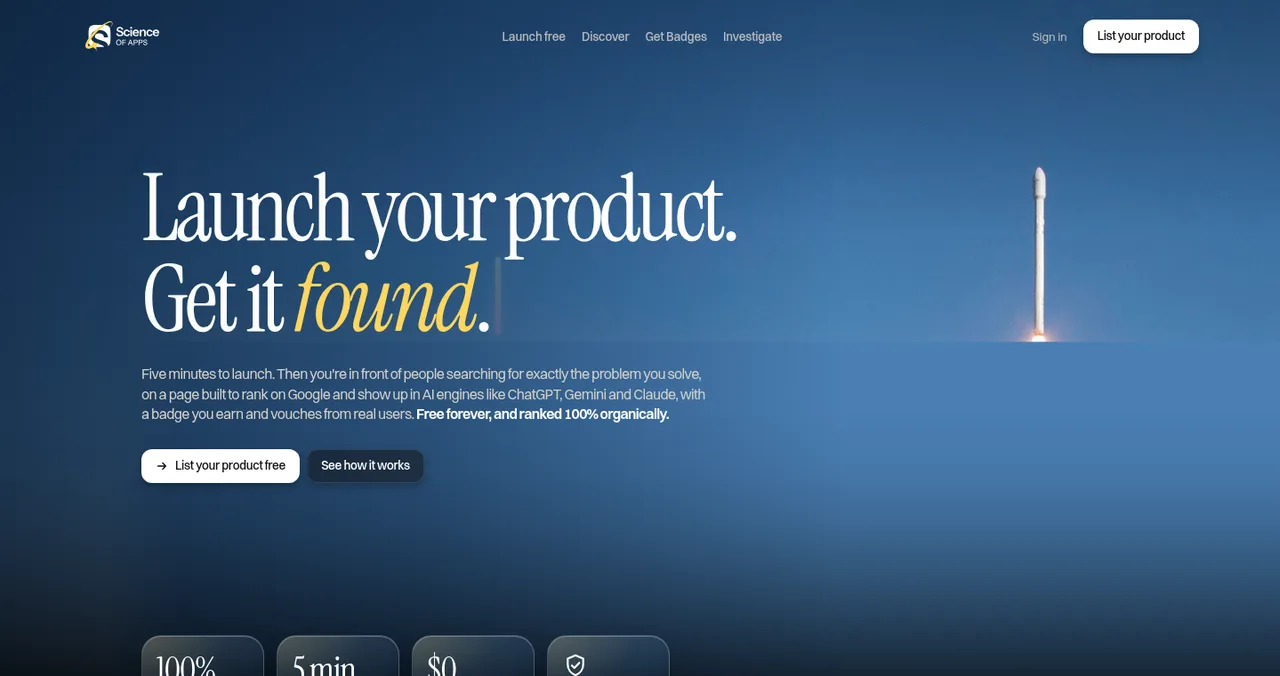
- Cost: free to list, forever, in six short steps; checked automatically and reviewed by a person.
- Found by: the problem you solve, collections and editorial picks; ranked by relevance and community interest, never payment.
- Proof: a Featured badge on going live, then earned badges (Verified with a work email on your domain, Community favourite, Editor's pick and more), plus vouches and followers.
- Accepts: AI products, SaaS, mobile apps, developer tools, browser extensions, games and open source, at any stage.
Your AI-built app, tested end to end
- Areas of your app tested
- 22
- Automatic measurements, desktop and mobile
- 39
- Expert checks behind your login
- 74
- Verdicts that rank what to fix first
- 5
Arrive
First impression
Landing page, discoverability on Google and AI search, speed and trust.
Join
The first minutes
Sign-up, sign-in, recovery and onboarding.
Use
The everyday job
The core flow, empty states, errors and, for AI products, prompt and output trust.
Pay
Value into revenue
Paywall, upgrade and checkout.
Stay
Coming back
Notifications, account and help.
Every screen
Throughout
Accessibility, visual design and consistency.
Evidence for every finding
Each finding is pinned to its screen or backed by a measurement.
Five verdicts
Good, Needs improvement, Needs to be fixed, Critical, Recommendation.
Analyst-reviewed
A Science of Apps analyst approves every finding before you see it.
Private to your team
Reports never affect your listing's ranking.
AI builders are good at the happy path you described and weaker at what you didn't: the expired link, the empty dashboard, the AI answer a user can't verify. A free baseline diagnosis of your landing page, discoverability and speed runs as you go live; the reports go through every screen.
See what your first users will hit
List free, then order the report that fits: the first impression, or the full diagnosis with a plan.

 Economy
See what new customers see
- Store listing and homepage, screen by screen
- Scorecard against 60 Laws of UX
- Customers, competitors and the fixes worth most
PremiumThe full diagnosis and the plan
- Every screen, every finding, every flow
- All 60 laws with evidence and fixes
- 8 strategy chapters and a 90-day roadmap
Researched from your live product and fact-checked against the evidence.
A launch plan for an app built with AI
- Day 1
Own the address
Connect a custom domain if your plan allows; a builder subdomain is fine to start.
- Day 2
List it
Create your Launchpad listing and read the free baseline diagnosis.
- Day 3
Fix the first five minutes
Sign-up, empty states and the first AI answer, from the findings.
- Day 4
Five real users
Watch five people try the core task without help.
- Day 5–7
Go wider
Product Hunt, Indie Hackers and your communities, all pointing at one page.
Mistakes to avoid

- Choosing on the free plan alone — free credits rarely cover a finished app; price the plan you'll actually need
- Ignoring code export — if you might outgrow the builder, check GitHub sync before you commit
- Launching on a link that expires — Replit's free published link goes down after 30 days; use a permanent page
- Shipping AI output nobody checked — users stop trusting an app after one confident wrong answer
- Switching builders instead of fixing the product — a new tool won't fix an unclear first screen
People find attractive interfaces easier to use and forgive them more, the aesthetic-usability effect. AI builders make a polished first screen easy, which can hide the broken flows behind it until real users find them.
Ready to launch?
How we chose
We picked the ten most relevant Lovable competitors across three groups: prompt-to-app builders, a code editor for people leaving the chat, and no-code platforms with AI generation. Every price, credit and limit comes from the builder's own pricing page or documentation, read on 20 November 2026; prices are in US dollars as shown on those pages, and some pages show local currency depending on where you are. We did not build an app on each tool for this comparison. Search volume is Google Keyword Planner's global 12-month average. Science of Apps runs the Launchpad and has no commercial relationship with any builder listed.
Key terms, defined
- AI app builder: a tool that turns a plain-language description into a working app, usually with hosting.
- Credits / tokens: the units builders use to meter AI work; one prompt can use many.
- Code export: getting the app's source code into your own repository, often through GitHub sync.
- Native mobile app: an app installed from the App Store or Google Play, rather than a website.
- Vibe coding: building software by describing it to an AI and iterating on the result.
- Permanent listing: a public product page that stays live and findable after launch day.
Frequently asked questions
What is the best Lovable alternative?
It depends on what you're building. Bolt.new is the closest like-for-like chat builder; Replit suits people who want an environment and will grow into code; v0 is best for Next.js front ends on Vercel; Base44 and Emergent bundle backend, auth and hosting for non-coders; Bubble and FlutterFlow suit apps you'll keep editing visually. Try two on their free plans with the same prompt.
What are some apps like Lovable that are free?
All ten apps like Lovable in this list have a free plan, checked on 20 November 2026. Bolt gives 1M tokens a month (300K a day), Base44 gives 25 message credits a month, Emergent 10 credits a month, v0 7 messages a day and Replit a daily allowance with one published app. Bubble, FlutterFlow, Softr and Glide are free to build on, with publishing limits.
Who are Lovable's main competitors?
Lovable's closest competitors are other prompt-to-app builders: Bolt.new, Replit, v0 by Vercel, Base44 and Emergent. AI code editors such as Cursor compete for developers. No-code platforms that added AI generation, such as Bubble, FlutterFlow, Softr and Glide, compete for founders who want visual control after the first draft.
How much does Lovable cost compared with its alternatives?
Lovable's pricing page shows Free, Pro at $25 a month and Business at $50 a month, with yearly billing giving two months free. Bolt Pro is also $25 a month, Replit Core $20 a month ($18 billed annually), Base44 Starter $16 a month billed annually and v0 Plus $30 per user a month. Credit allowances differ, so compare on your own app.
Is Bolt.new better than Lovable?
Neither is better for everyone. Both turn a chat prompt into a hosted web app. Bolt's free plan is measured in tokens with a daily cap and includes hosting; Lovable's is measured in daily credits. Bolt feels closer to a developer environment; Lovable is tuned for people who never open the code. Our Lovable vs Bolt vs Replit comparison goes deeper.
Which Lovable alternative is best for mobile apps?
For apps in the App Store and Google Play, FlutterFlow is the strongest pick here: its page promises one build for both stores and exportable Flutter code, though store deployment needs a paid plan. Bubble now builds native iOS and Android apps too, and Emergent says it builds web and mobile apps. Lovable itself builds web apps.
Where should I launch an app built with Lovable or an alternative?
Start with a permanent product page that doesn't expire: the Science of Apps Launchpad lists AI-built apps free, forever, and tests them end to end with a report, including prompt and output trust checks for AI products. Then add Product Hunt, Indie Hackers and communities where your users are, all pointing to the same page.
Sources
- Lovable — Pricing (checked 20 Nov 2026)
- Lovable — Documentation: Welcome to Lovable (checked 20 Nov 2026)
- Bolt — Pricing (checked 20 Nov 2026)
- Replit — Pricing (checked 20 Nov 2026)
- Replit Docs — Starter Plan (checked 20 Nov 2026)
- v0 by Vercel — Pricing (checked 20 Nov 2026)
- Base44 — Pricing (checked 20 Nov 2026)
- Emergent — Pricing (checked 20 Nov 2026)
- Cursor — Pricing (checked 20 Nov 2026)
- Bubble — Pricing (checked 20 Nov 2026)
- FlutterFlow — Pricing, US view archived by the Wayback Machine on 15 Nov 2026 (checked 20 Nov 2026)
- Softr — Pricing (checked 20 Nov 2026)
- Glide — Pricing (checked 20 Nov 2026)
- Science of Apps — Launchpad (checked 20 Nov 2026)
- Science of Apps — Product investigation (checked 18 Nov 2026)
- Checked November 20, 2026. Figures that change — fees, salaries, prices — are reviewed every six months; if something is out of date, tell us.
Where to go from here
- Lovable vs Bolt vs Replit — the three most-searched builders, head to head
- Best AI app builders for non-coders — by what you're building
- How to launch an AI product — after the build
- Science of Apps - LaunchpadBolt new alternatives: what Bolt.new costs, where its tokens run out, and eight AI app builders to try instead, plus how to launch what you shipBolt new pricing explained (free 1M tokens, Pro $25/mo) and the best Bolt new alternative for each job: Lovable, Replit, v0, Base44 and four more.
- Science of Apps - LaunchpadBubble io alternatives: what Bubble's no-code plans cost today, seven alternatives with verified free tiers and prices, and where to launch the app once it's builtBubble io pricing, checked today, plus 7 Bubble alternatives with real free tiers: FlutterFlow, Glide, Softr, Adalo, WeWeb, Lovable and Base44.
- Science of Apps - LaunchpadWebsites like Replit: what Replit costs now, what its free plan really includes, and seven alternatives for coding in the browser and building apps with AIReplit pricing (free Starter, Core $20/mo) and 7 websites like Replit: GitHub Codespaces, Cursor, Lovable, Bolt, v0, Base44 and Emergent.
- Science of Apps - LaunchpadFramer alternatives for startup websites: Webflow, Wix, WordPress.com, Squarespace, Carrd, Hostinger, Durable and Tilda compared on free plans, prices and limitsThe best Framer alternative depends on your site: Webflow for CMS, WordPress.com for content, Carrd for one page. Free plans, prices and limits, checked.
- AI & vibe codingLovable vs Bolt vs Replit: which AI app builder fits your project?Lovable vs Bolt vs Replit compared: how each builds apps from prompts, who it suits, how usage is billed, backend and deployment, code ownership and limits.
- Science of Apps - LaunchpadBase44 review: what the AI app builder makes from a prompt, what each plan costs in credits, the alternatives worth comparing, and how to launch and test what you buildBase44 builds apps from a prompt with backend, auth and hosting built in. Base44 pricing, limits, alternatives, and how to launch and test the app you make.
Get the ideas, not the noise.
Sign up with Google and we’ll send you short UX psychology tips by email — why people tap, stall and leave, and what to do about it. Unsubscribe anytime. Prefer something to keep? Get the free Laws of UX guide as a PDF.
Launch day ends. Your listing shouldn't.
Whichever builder you pick, the app still has to be launched and found. The Science of Apps Launchpad gives it a free, permanent product page and tests it end to end with a detailed report, including prompt and output trust checks for AI products.