 By
Quick answer: Who will review my pitch deck for free?
- Self-review first: Sequoia's outline and YC's seed deck advice.
- Peers: founders who raised recently in your sector.
- Practice audience: angels and operators you won't pitch soon.
- Structured: investor assessments such as LVX's Elvix.
- Communities: roast threads for quick, rough reactions.
Key takeaways
- Feedback from people who've raised beats general opinions.
- Don't spend your best investor meetings as practice.
- Ask specific questions, not 'what do you think?'.
- Clarity and concision win at seed stage.
- Fix the story before the design.
You've rewritten the deck four times and can no longer tell whether slide three makes sense. Every founder reaches that point, and the instinct is to send the deck to a few investors "for feedback". That burns the meetings you'll need later. Better feedback, for free, comes from people who've recently raised, people you won't pitch soon and a few structured reviews. This guide lists where to get it and how to self-review first, using Sequoia's and Y Combinator's published outlines as read on 17 November 2026. Jump to self-review, where to get feedback or what to ask.
- Sections in Sequoia's pitch outline
- 10
- Sentence for your company purpose
- 1
- Review included with LVX's Elvix assessment
- 30 min
- Real investor meetings to spend as practice
- 0
Self-review first
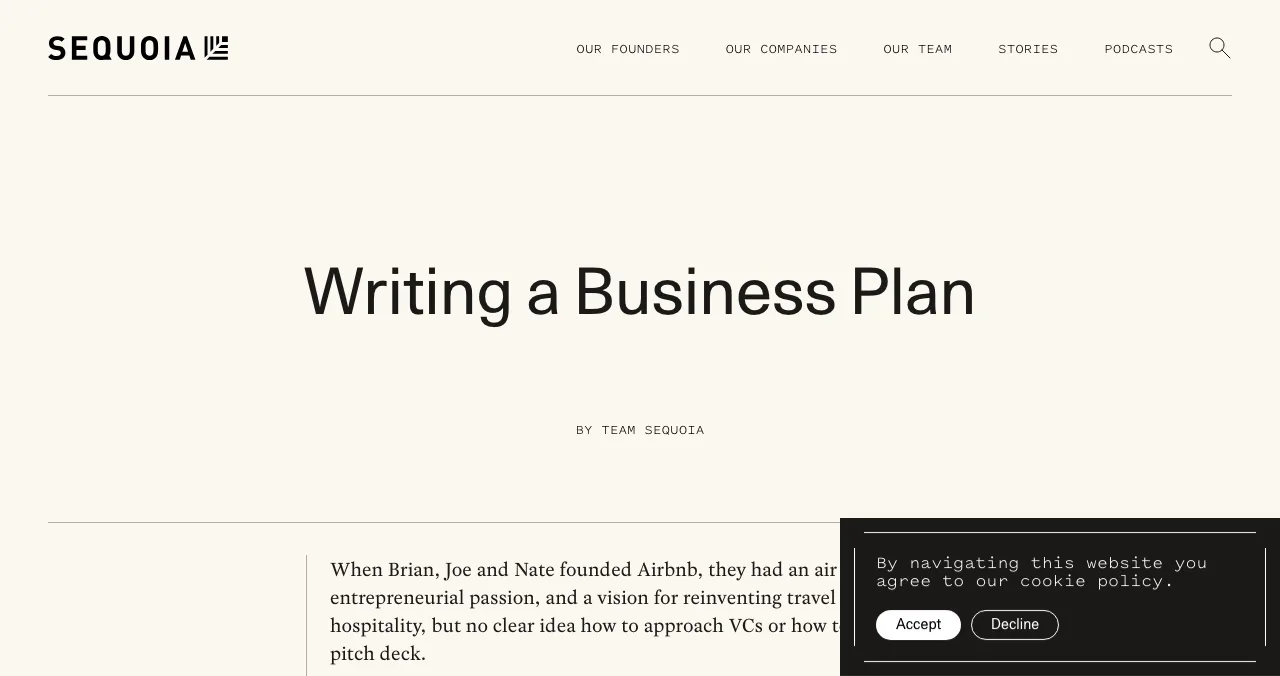
Sequoia's guide, which it says Airbnb's founders used, sets out the sections of a pitch. Check your deck against it before anyone else sees it:

- Company purpose — one declarative sentence, not a list of features
- Problem — the customer's pain and why current solutions fall short
- Solution — your eureka moment and why it will endure
- Why now — why this hasn't been built before
- Market potential — your customer and market
- Competition / alternatives — direct and indirect, and your plan to win
- Business model — how you'll thrive
- Team — the story of the founders and key people
- Financials — if you have any
- Vision — what you'll have built in five years
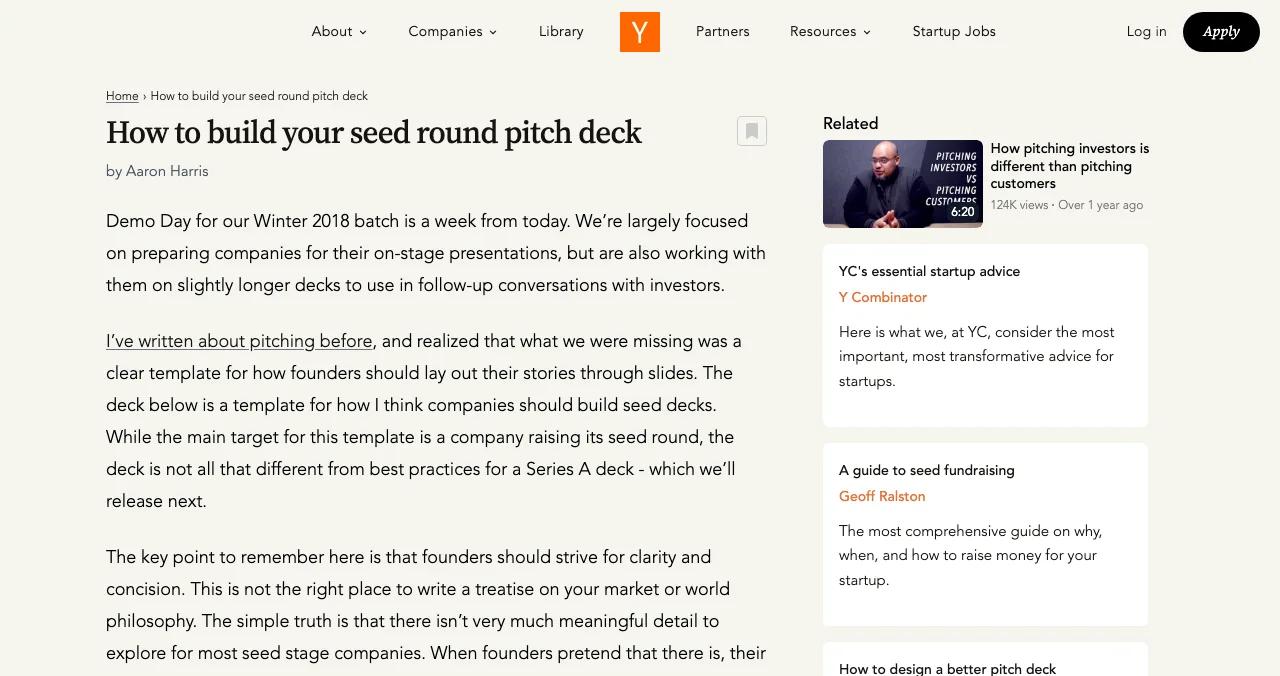
YC's Aaron Harris adds the most useful rule for a seed deck: strive for clarity and concision, because there isn't much meaningful detail to explore at seed stage, and pretending otherwise muddles the story. His title slide is just the company name and a one-line description.
Where to get free pitch deck feedback
| Source | Why it's useful | How to ask |
|---|---|---|
| Founders who raised recently | They know what investors asked last month | A specific 20-minute ask with the deck attached |
| Angels or operators you won't pitch soon | Investor eyes, no meeting spent | "I'm not raising from you; could you tell me where you'd stop reading?" |
| Investor assessments (e.g. LVX's Elvix) | Structured scoring and a review call | Follow the platform's process |
| Accelerator mentors and office hours | Seen hundreds of decks | Through the programme |
| Founder communities and roast threads | Fast, rough reactions | Remove sensitive numbers first |
Table: Free pitch deck feedback sources (editorial guidance; LVX details from its homepage, checked 17 Nov 2026)
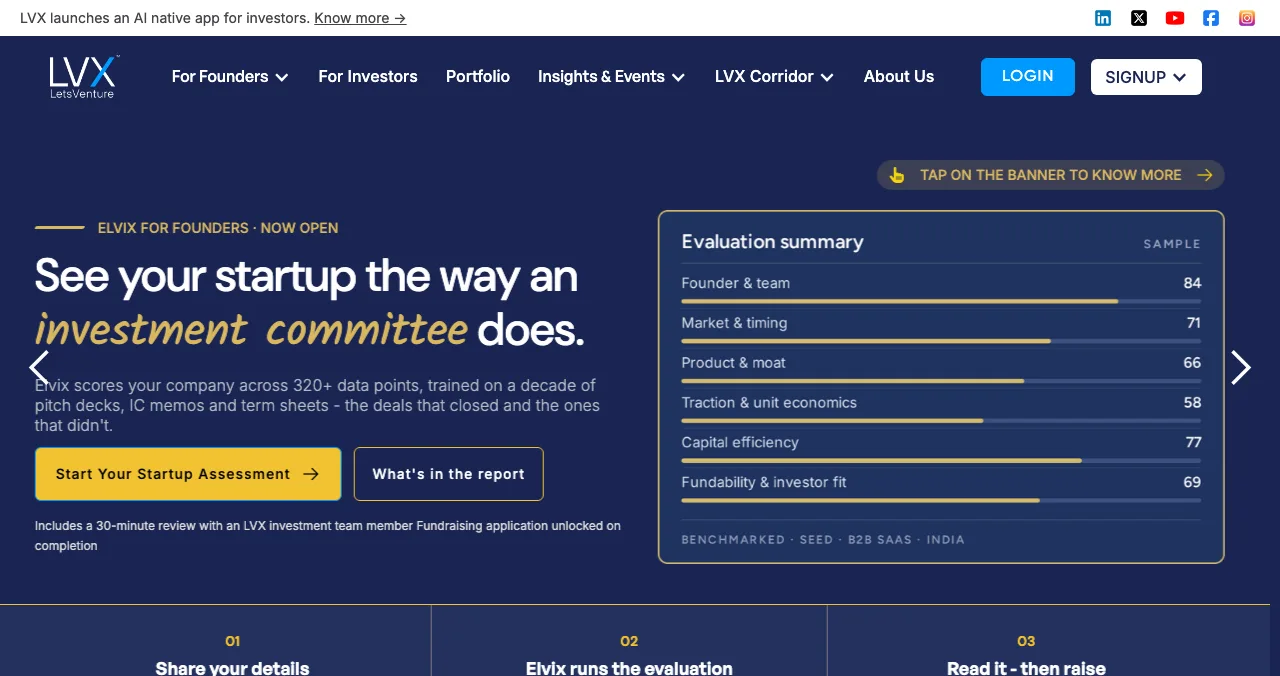
LVX (formerly LetsVenture) says Elvix scores a company across 320+ data points, takes about 48 business hours, and includes a 30-minute review with an LVX investment team member; completing it unlocks LVX's fundraising application.
What to ask reviewers

- After slide 1 — "What do you think we do?"
- At the end — "Which slide confused you?"
- As an investor — "What would you ask in the meeting?"
- On traction — "Which number would you want to see that isn't here?"
- The decision — "What would make you take a second call?"
Mistakes

- Practising on real target investors — you get one first impression
- Asking "what do you think?" — ask specific questions
- Redesigning before rewriting — fix the story first
- Paying anyone who promises funding
- Ignoring patterns — if three people stop at the same slide, it's the slide
Ready for the product slide?
How we know
The outline comes from Sequoia's "Writing a Business Plan", the clarity guidance from Aaron Harris's YC article, and Elvix details from LVX's homepage, all read on 17 November 2026. The sources table and the reviewer questions are our editorial guidance.
Key terms, defined
- Pitch deck: a short slide presentation used to raise investment.
- Seed round: an early investment round, often the first institutional one.
- Why now: the reason your idea works today and didn't before.
- Traction: evidence of demand such as users, revenue or growth.
- Office hours: scheduled advice sessions with mentors or partners.
Frequently asked questions
Who will review my pitch deck for free?
Founders who raised in the last year or two, angels or operators you don't plan to pitch soon, accelerator mentors, and founder communities. Some investor platforms offer structured reviews; LVX's Elvix assessment, for example, includes a 30-minute review with its investment team.
What should a seed pitch deck include?
Sequoia's outline covers company purpose, problem, solution, why now, market potential, competition, business model, team, financials and vision. YC's Aaron Harris stresses clarity and concision: at seed stage there isn't much detail to explore, so focus on narrative.
Should I post my deck publicly for a roast?
You'll get quick reactions, but also unfiltered opinions and visible numbers. Remove sensitive figures, and weigh feedback by whether the person has raised or invested.
What questions should I ask reviewers?
Ask what they think the company does after one slide, which slide confused them, what they'd ask in a meeting, and what would make them take a second call. Specific questions get usable answers.
Should I pay for pitch deck feedback?
Usually not first. Free feedback from founders and angels is often better. If you pay, choose someone with a verifiable record of raising or investing, and avoid anyone promising funding.
How long should a pitch deck be?
Long enough to tell the story clearly and no longer. Sequoia's outline has ten sections; treat it as a guide to what to cover, not a slide count.
Sources
- Sequoia Capital — Writing a Business Plan (checked 17 Nov 2026)
- Y Combinator — How to build your seed round pitch deck (Aaron Harris; checked 17 Nov 2026)
- LVX (formerly LetsVenture) — Elvix for founders (checked 17 Nov 2026)
- Indie Hackers
- Checked November 17, 2026. Figures that change — fees, salaries, prices — are reviewed every six months; if something is out of date, tell us.
Where to go from here
- Use a launch profile in your pitch — traction proof
- Find angel investors — who to pitch
- Validate your app idea — proof before the deck
- Science of Apps - LaunchpadHow to use launch traction in a startup pitch: which launch signals investors can verify, where they belong in the deck, and how to present them honestlyHow to use a launch profile and launch traction in your pitch: signals investors can verify, where they go in the deck and what not to overclaim.
- Science of Apps - LaunchpadRoast my landing page: 25 fixes founders hear in landing page roasts, each with the principle that explains itRoast my landing page, done properly: 25 landing page fixes for headlines, CTAs, pricing, trust and speed, each tied to a usability or behavioural principle.
- Startups in IndiaPitch deck template: the 12 slides investors expect, what goes on each, and common mistakesA startup pitch deck template with the 12 slides investors expect, what to put on each, examples of strong slides and the mistakes that get decks skipped.
- Science of Apps - LaunchpadDealroom vs Crunchbase: seat-based ecosystem data from €250 a seat versus self-serve plans from $49, and which one fits founders, investors and governmentsDealroom vs Crunchbase: Dealroom from €250 per seat a month with a 3-seat minimum; Crunchbase self-serve from $49 with a free account. Who each suits.
- Science of Apps - LaunchpadA landing page review checklist for startups: 36 evidence-based checks for clarity, trust, speed, mobile and the call to action, with the research behind eachA landing page review checklist for startups: 36 checks for the first 10 seconds, trust, speed, mobile and the call to action, from NN/g and Google research.
- Science of Apps - LaunchpadRoast my startup: the best places to get brutally honest feedback, and how to post so the roast is usefulWhere to get your startup roasted in 2027: r/roastmystartup, Show HN, Indie Hackers, Microlaunch and an evidence-based product test, and how to post.




Get the ideas, not the noise.
Sign up with Google and we’ll send you short UX psychology tips by email — why people tap, stall and leave, and what to do about it. Unsubscribe anytime. Prefer something to keep? Get the free Laws of UX guide as a PDF.
Launch day ends. Your listing shouldn't.
A free, permanent Launchpad profile is a product link for your deck, with verifiable badges, plus a free report on your landing page, discoverability and speed.