 By
Quick answer: How do SaaS companies do SEO?
- Use-case pages: one job, one audience per page.
- Integration pages: each tool you connect with.
- Alternatives and comparisons: honest, with when to pick the other.
- Templates and free tools: things people search for and share.
- Avoid: mass-produced thin pages (scaled content abuse).
Key takeaways
- SaaS buyers search by job, tool and competitor; build pages for each.
- Specific, original detail beats volume.
- Comparison pages must be fair to be trusted, and cited.
- Programmatic pages are fine only when each adds real value.
- The same pages serve Google and AI assistants.
A SaaS buyer rarely searches your product's name before they know it exists. They search the job ("invoice reminders on WhatsApp"), the tool they already use ("Zoho Books integration") or the product they're leaving ("FreshBooks alternatives"). SaaS SEO is building a good page for each of those searches, then earning a few links so Google trusts them. This guide covers the page types that work for software, how to build them without falling foul of Google's spam policies, and a 90-day plan, with Google's guidance as read on 17 November 2026. Start with SEO for startups if your site isn't indexed yet. Jump to the page types, scaled content or the plan.
- SaaS page types that match buyer searches
- 5
- Strong pages to start with
- 5
- Thin, mass-produced pages worth publishing
- 0
- Typical time for new pages to rank (Google)
- Months
The SaaS pages that rank
| Page type | Search it answers | What makes it good |
|---|---|---|
| Use case / audience | "invoicing software for freelancers" | One job, one audience, real screenshots and outcomes |
| Integration | "Acme Zoho Books integration" | What syncs, setup steps, limits |
| Alternatives | "FreshBooks alternatives" | Honest list, including when the competitor is better |
| Comparison | "Acme vs FreshBooks" | Side-by-side facts, dated, with sources |
| Template / free tool | "invoice template India GST" | Genuinely useful without signing up |
Table: SaaS SEO page types (editorial guidance)

Use-case pages
One page per job and audience. Show the workflow with real screens, not a list of features.
Integration pages
One per tool you connect with: what syncs, how to set it up, what doesn't work yet.
Alternatives and comparisons
Fair pages win trust and citations. Say who should pick the competitor.
Templates and tools
Things people search for and share, with your product as the natural next step.
Programmatic pages without scaled content abuse
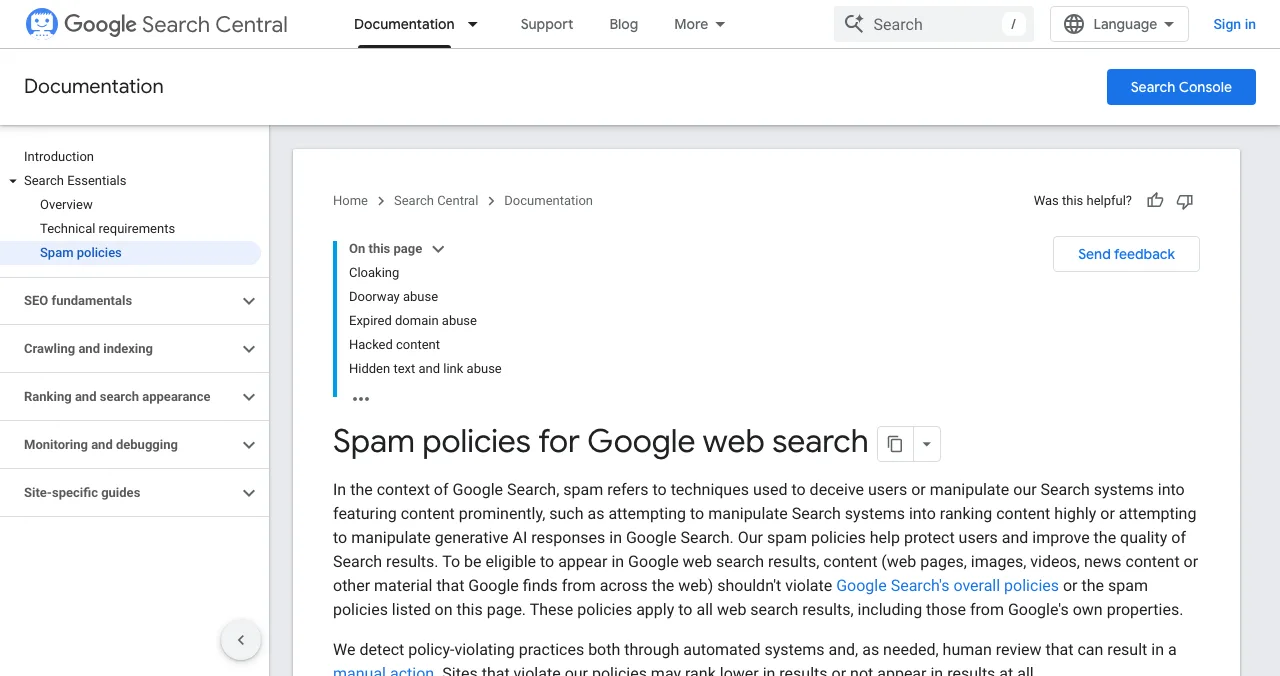
Integration and use-case pages are tempting to generate in bulk. Google's spam policies define scaled content abuse as generating many pages primarily to manipulate rankings rather than help users, no matter how they're made. The test is whether each page would be useful to a person who landed on it.

- Unique facts per page — real setup steps, screenshots, limits
- Only pages you can support — no integration pages for integrations you don't have
- Merge thin variants — one strong page beats ten near-duplicates
- Update when things change — date your comparisons
Technical basics for SaaS sites

- Marketing pages indexable — not hidden behind the app's login or client-side rendering only
- App and marketing separated — app.yourdomain.com kept out of the index if it's private
- One page per topic — avoid several pages competing for the same search
- Descriptive titles — the search, not your internal page name
- Fast — LCP within 2.5 seconds on mobile (free website audit)
The 90-day SaaS SEO plan
- Weeks 1–2
Basics
Search Console, sitemap, titles; list on launch sites and directories.
- Weeks 3–6
Five core pages
Two use cases, one integration, one alternatives page, one comparison.
- Weeks 7–10
One useful asset
A template, calculator or checklist your buyers search for.
- Weeks 11–13
Review
Search Console queries and clicks; expand what's working.
Mistakes

- Blogging about trends instead of buyer searches
- Hundreds of generated pages — scaled content abuse risk
- Unfair comparison pages — readers and AI engines notice
- App pages indexed by accident — check what Google sees
- Ignoring links — a few relevant listings and partners help (backlinks)
Ready to start?
How we know
Timing comes from Google's SEO starter guide, the scaled-content definition from Google's spam policies, and the AI features note from Google's AI features documentation, all read on 17 November 2026. The page types, examples and plan are our editorial guidance; example product names are illustrative.
Key terms, defined
- SaaS SEO: search optimisation for a software-as-a-service product.
- Use-case page: a page about one job for one audience.
- Programmatic SEO: generating many pages from a template and data.
- Scaled content abuse: mass-producing pages mainly to manipulate rankings.
- Alternatives page: a page listing options to replace a known product.
Frequently asked questions
How do SaaS companies do SEO?
They build pages for the searches buyers make before choosing software: use cases, integrations, alternatives, comparisons and templates, plus the technical basics (indexable pages, a sitemap, clear titles). They earn links from launch sites, directories, partners and content others cite.
What pages should a SaaS website have for SEO?
A clear home page, pricing, one page per main use case or audience, one per key integration, honest comparison and alternatives pages, and helpful resources like templates or calculators. Each should answer one search well.
Are programmatic SEO pages safe for SaaS?
Only if each page has unique, useful content. Google's spam policies describe scaled content abuse as generating many pages primarily to manipulate rankings rather than help users, whatever tool produced them.
Should I write 'X alternatives' pages about competitors?
Yes, if they're honest: name real alternatives, say who each suits, and include when a competitor is the better choice. Fair pages are more trusted by readers and more likely to be cited by AI assistants.
How long does SaaS SEO take?
Google's SEO starter guide says changes can take from a few hours to several months to show. Expect months for new pages to rank; launch-site listings and directories give earlier visibility.
Does SaaS SEO help with AI search?
Yes. Google says its AI features need no extra technical requirements, and assistants with their own search crawlers read the same crawlable pages. Clear, specific pages are easier to quote.
Sources
- Google Search Central — SEO Starter Guide (checked 17 Nov 2026)
- Google Search Central — Spam policies: scaled content abuse (checked 17 Nov 2026)
- Google Search Central — Creating helpful, reliable, people-first content
- Google Search Central — AI features and your website (checked 17 Nov 2026)
- Checked November 17, 2026. Figures that change — fees, salaries, prices — are reviewed every six months; if something is out of date, tell us.
Where to go from here
- SEO for startups — months 0–6
- Free startup directories — first links
- Rank in ChatGPT — AI search
- Science of Apps - LaunchpadHow to market a SaaS in 2027: positioning, being found by buyers, content that gets cited, launches and a product that convertsHow to market a SaaS in 2027: sharp positioning, alternatives directories, search and AI visibility, launches, founder-led sales and a trial that converts.
- Science of Apps - LaunchpadSEO for startups: a prioritised plan for the first six months, from getting indexed to pages that answer buyers' questions, using Google's own starter guideSEO for startups, month by month: get indexed, fix the basics, earn a few relevant links and publish pages answering buyers' questions, per Google's own guide.
- Science of Apps - LaunchpadA go-to-market strategy for startups on one page: the eight boxes of a GTM canvas, a worked example, the B2B and self-serve motions, and a 90-day launch planA go-to-market strategy template for startups: an eight-box GTM canvas covering customer, problem, promise, price, channels and motion, plus a 90-day plan.
- Science of Apps - LaunchpadProduct launch strategy for 2027: how to plan, run and follow up a launch that brings users, not just a spikeA product launch strategy for 2027: set goals, size the launch, build a permanent page, sequence launch days, run launch week and follow up, step by step.
- Science of Apps - LaunchpadHow to get organic visibility for your startup on Google and in AI search, without paying for adsHow to get organic visibility for your startup in 2027: get indexed, let AI search crawlers in, build profiles and citations, and write pages engines quote.
- Science of Apps - LaunchpadFree G2 and Capterra alternatives for collecting your first reviews: Product Hunt reviews, AlternativeTo, SaaSHub and Launchpad vouches, and how to ask for them honestlyFree G2 alternatives for a new SaaS's first reviews: Product Hunt, AlternativeTo, SaaSHub, Launchpad vouches and G2's own free plan.
Get the ideas, not the noise.
Sign up with Google and we’ll send you short UX psychology tips by email — why people tap, stall and leave, and what to do about it. Unsubscribe anytime. Prefer something to keep? Get the free Laws of UX guide as a PDF.
Launch day ends. Your listing shouldn't.
A free, permanent Launchpad profile describes what your SaaS does and links to your site, found by the problem you solve and ranked by relevance, never payment.