 By
Quick answer: What is AI SEO and how do you rank in AI answers?
- AI SEO is still SEO: Google says its AI features are rooted in its core ranking and quality systems.
- Eligibility: a page must be indexed and able to show a snippet; nothing extra is required.
- No special files: Google Search ignores llms.txt; no AI text files or new markup are needed.
- What works: unique, first-hand content, crawlable pages, good page experience and genuine mentions.
- Consistency: the same product facts on your site and on trusted listings make you easier to cite.
Key takeaways
- Treat AI search optimization as SEO plus clarity, not a new discipline with new tricks.
- First-hand detail is the content AI answers can't get elsewhere.
- Scaled pages aimed at query variations can break Google's spam policies.
- Measure with Search Console, then sample real AI answers by hand.
- Consistent entity facts across your site and listings help engines connect the dots.
Founders keep hearing that SEO is dead and that "AI SEO" needs new tricks: special files, AI-only rewrites, prompt-stuffed pages. Google's own documentation says the opposite. This guide explains what AI SEO is, what Google's AI optimisation guide actually tells site owners, what to skip, and a 30-day plan to rank in Google and get cited in AI answers from AI Overviews, AI Mode, ChatGPT, Gemini and Perplexity. Every claim about Google comes from its Search Central pages, read on 20 November 2026. Jump to what Google says, the AI SEO optimization checklist or the 30-day plan.
- Special AI files Google needs
- 0
- Eligibility rule: indexed, with a snippet
- 1
- Fundamentals that decide AI visibility
- 5
- Days to run the plan below
- 30
What is AI SEO?
AI SEO (also called AI search optimization or generative engine optimization) is the work of getting a site to rank in search results and to be quoted, cited or recommended inside AI-generated answers. Those answers now appear in three places a buyer meets:
| Where the answer appears | Who runs it | What decides whether you're cited |
|---|---|---|
| AI Overviews and AI Mode | Google's core ranking and quality systems; indexed with a snippet | |
| Copilot and Bing answers | Microsoft | Bing's index; Bing Webmaster Tools shows crawl and index status |
| ChatGPT search, Perplexity, Claude, Gemini app | Each AI company | Each one's crawler and index, plus what trusted sources say about you |
Table: Where AI answers appear and what decides citations (each company's documentation, checked 20 Nov 2026)
What does Google's AI optimisation guide say?
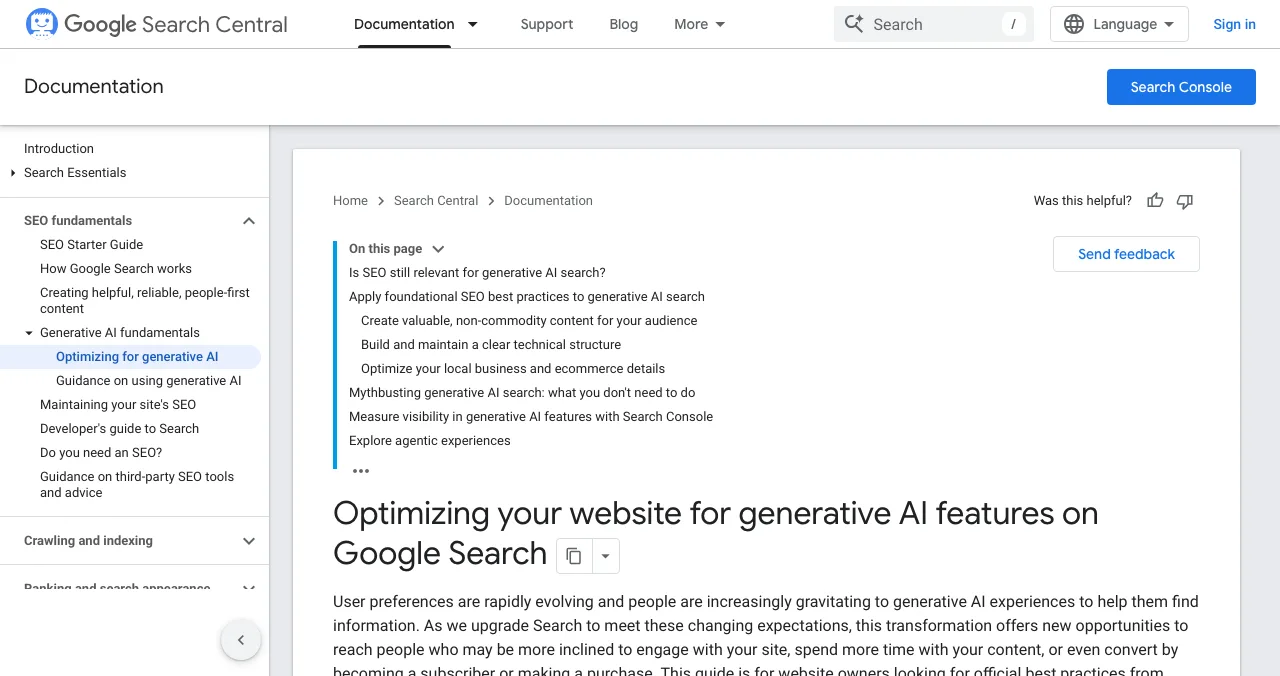
Google published a dedicated guide for site owners who want to appear in its generative AI features. Its main points, as read on 20 November 2026:
- It is still SEO. Google says its generative AI features "are rooted in our core Search ranking and quality systems", and it doesn't treat AEO or GEO as something separate from SEO.
- Eligibility is simple. A page must be indexed and eligible to appear in Search with a snippet. Google's AI features page adds that "there are no additional technical requirements", and that crawling, indexing and serving are never guaranteed.
- No special files. "You don't need to create new machine readable files, AI text files, markup, or Markdown to appear in Google Search." Google Search ignores llms.txt; it neither helps nor harms.
- Structured data is optional for AI features but still useful for rich results, and it should match the visible text.
- Content that wins: unique, compelling, useful content with a distinct viewpoint and first-hand experience, rather than restated common knowledge.
- What to avoid: mass-producing pages for query variations (which can breach the scaled content abuse policy), "chunking" content or rewriting it only for AI systems, and seeking inauthentic mentions.
- Measure it in Search Console. Google says AI feature traffic is included in the Performance report under the Web search type.
AI SEO optimization: the five fundamentals
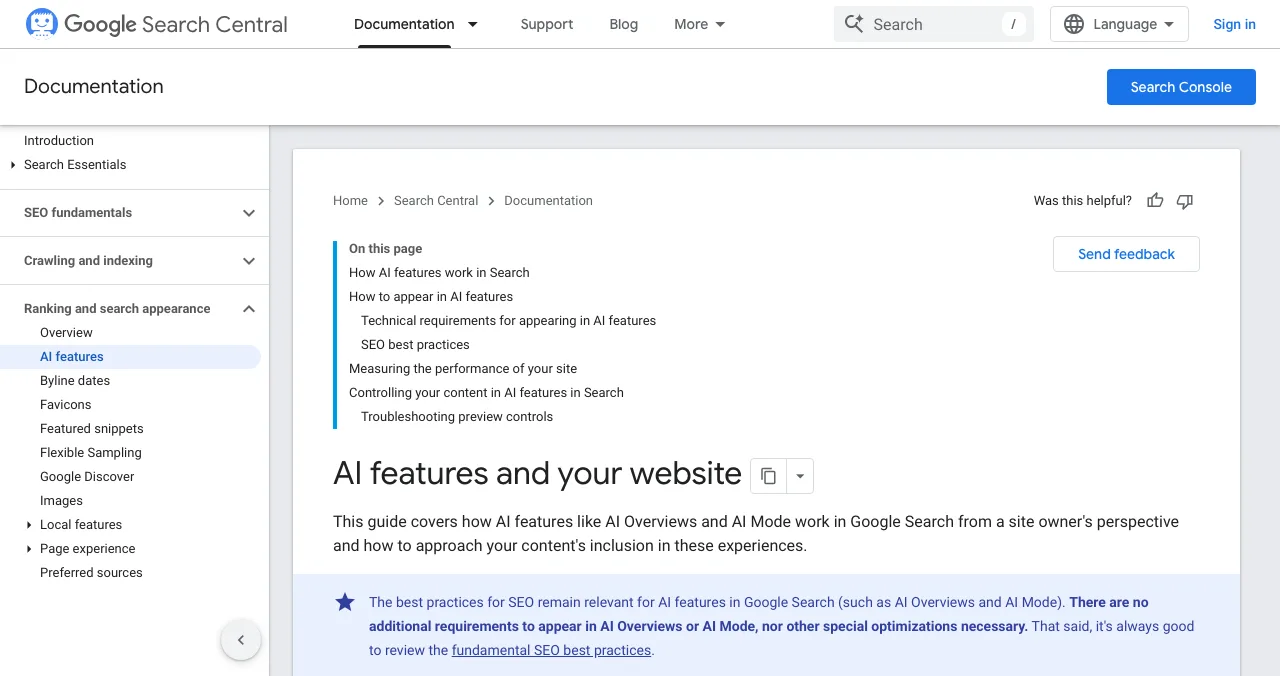

- Indexable with a snippet — check URL Inspection in Search Console; don't use nosnippet on pages you want cited
- Crawlable for every engine you care about — robots.txt allows Googlebot and Bingbot, and the AI crawlers you choose to permit
- Important content in text — not only in images, video or client-side code that may not render
- First-hand, specific answers — your data, your screenshots, your process; the detail nobody else can write
- Good page experience — fast on a phone, no intrusive pop-ups, readable on a small screen
- One canonical version — reduce duplicates; one URL per topic
- Structured data that matches the page — Organization, Product or SoftwareApplication where it describes what's visible
- Genuine mentions — listings, reviews and articles where real buyers look; never bought or faked
Why do consistent facts matter for AI search optimization?
AI answers are summaries. When an engine writes "X is a tool for Y", it is more confident when several sources agree. If your homepage calls you "an AI meeting assistant", your directory listings say "a transcription app" and your LinkedIn page says "a productivity suite", you've made the job harder.

- Write one plain one-liner — what it is, who it's for, the problem it solves.
- Pick one primary category — the words a buyer would type.
- Use the same name, one-liner and category everywhere — your site, your Organization markup, LinkedIn, Crunchbase and each listing.
- Link everything back to one canonical URL — your homepage.
- Review quarterly — update every profile when the product changes.
Our entity SEO guide goes deeper on this, and how AI engines recommend products explains why mentions matter.
Which tools help with AI SEO?
You can run AI SEO with free tools; paid ones add monitoring and scale. Our comparison of AI SEO tools covers the paid trackers in depth.
| Job | Free option | Paid option |
|---|---|---|
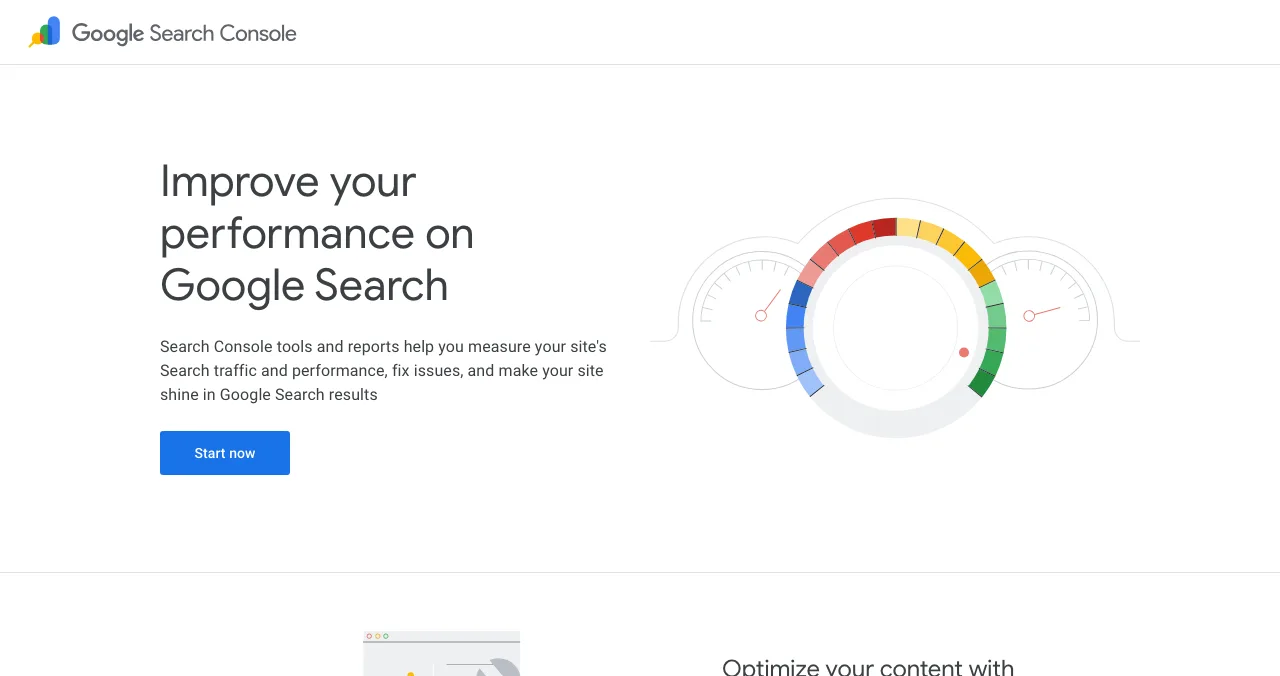
| Is the page indexed with a snippet? | Google Search Console | — |
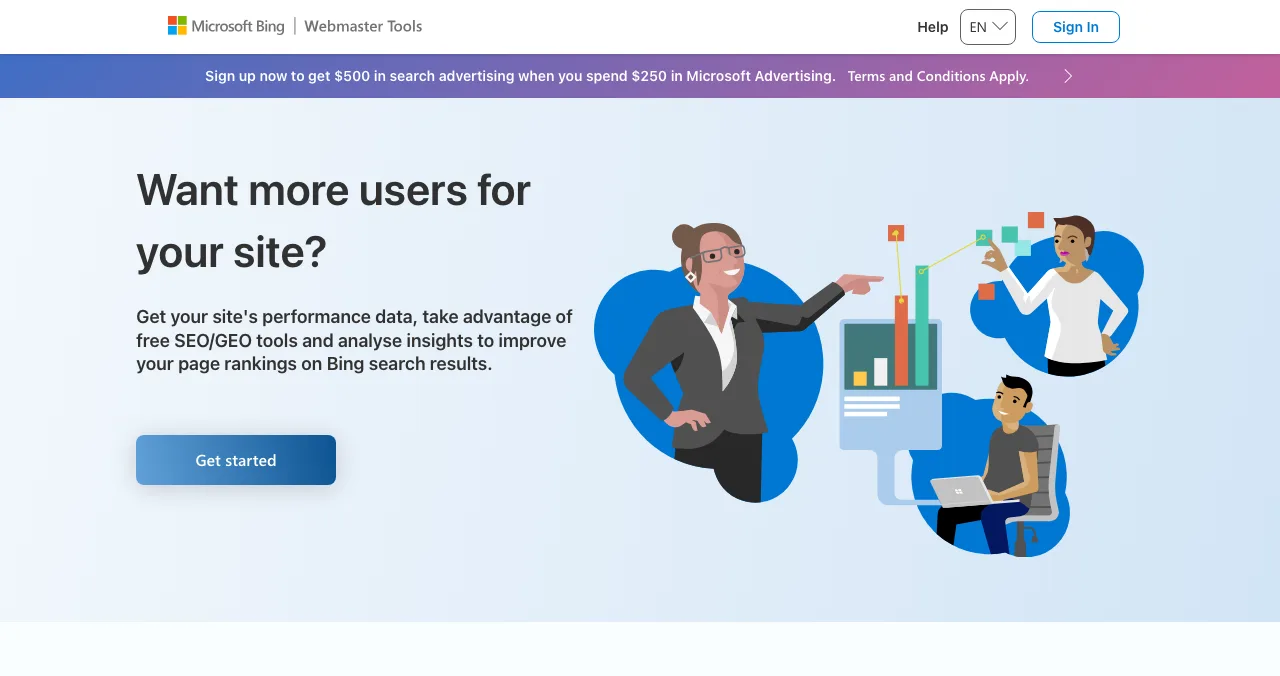
| Is Bing indexing you? | Bing Webmaster Tools | — |
| Are AI assistants mentioning you? | Ask them by hand, monthly | AI visibility trackers (see our AI visibility tools list) |
| Technical health | Lighthouse, PageSpeed Insights | Site crawlers |
| Is the whole product findable and convincing? | Self-review | Launchpad product investigation |
Table: Free and paid tools for each AI SEO job (Science of Apps editorial, checked 20 Nov 2026)
What should you not do?
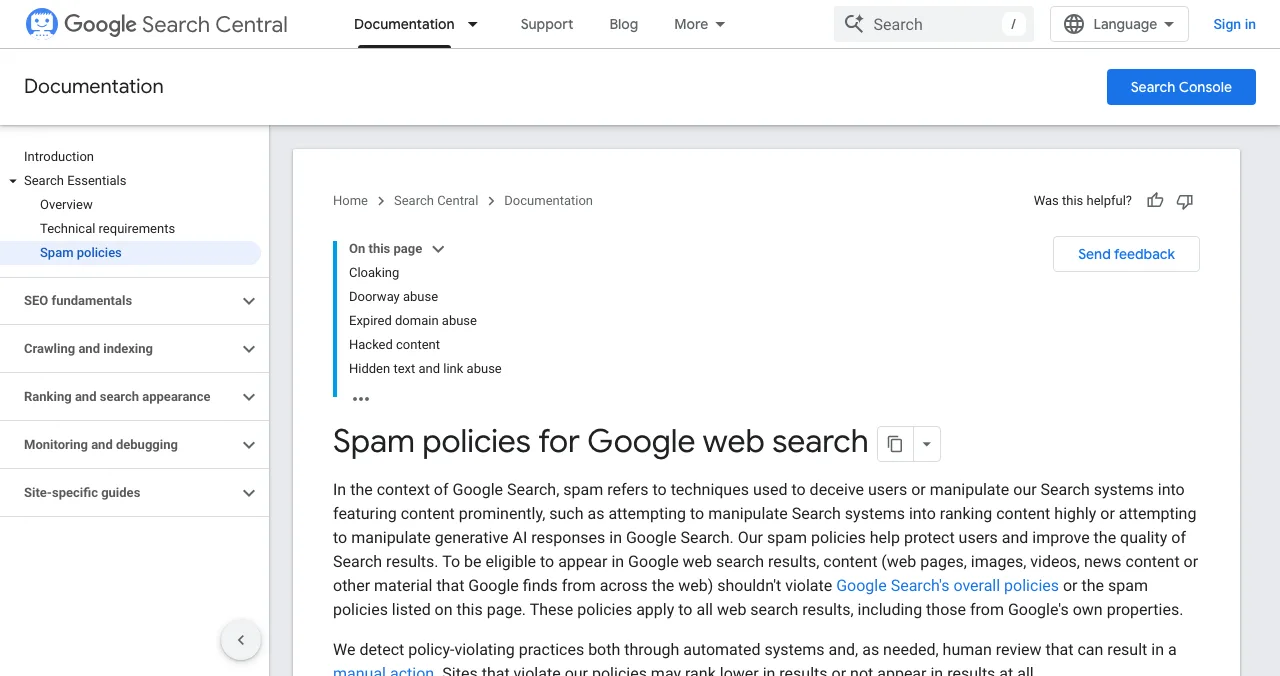

- Publishing hundreds of near-identical pages — Google names this as a scaled content abuse risk
- Rewriting pages "for AI" — Google advises against chunking or rewriting only for AI systems
- Buying mentions or fake reviews — inauthentic mentions are exactly what Google warns about
- Treating llms.txt as a ranking factor — Google Search ignores it
- Blocking crawlers by accident — a stray robots.txt rule can remove you from an engine entirely
- Ignoring the product — a cited page that leads to a confusing sign-up loses the visitor anyway
Where the Launchpad fits in AI SEO

The Launchpad is a free, permanent public page for your product. It helps AI SEO in two honest ways. First, it's one more trusted place that states your name, one-liner, category and link the same way, which is the consistency engines look for. Second, if you order an investigation, discoverability on Google, AI assistants and social is one of the 22 areas tested, alongside the landing page, speed, trust and accessibility to WCAG 2.2.
- Areas of your product tested
- 22
- Automatic measurements, desktop and mobile
- 39
- Expert checks behind your login
- 74
- Verdicts that rank what to fix first
- 5
Arrive
First impression
Discoverability on Google, AI and social; landing page, pricing, trust and speed.
Join
The first minutes
Sign-up, sign-in, recovery and onboarding.
Use
The everyday job
Home, core flow, dashboards, search, microcopy and error states.
Pay
Value into revenue
Paywall, upgrade, checkout and payments.
Stay
Coming back
Notifications, account, settings and help.
Every screen
Throughout
Accessibility to WCAG 2.2, visual design and consistency.
See what an AI-referred visitor sees
List free, then order the report that fits your stage.

 Economy
See what new customers see
- Store listing and homepage, screen by screen
- Scorecard against 60 Laws of UX
- The fixes worth most
PremiumThe full diagnosis and the plan
- Every screen, every finding, every flow
- All 60 laws with evidence and fixes
- 8 strategy chapters and a 90-day roadmap
Analyst-reviewed. Private to your team. Never affects ranking.
What it isn't: a guarantee of AI citations, or a substitute for your own site. Use it as the consistent, permanent profile every other listing can point to.
A 30-day AI SEO plan
- Week 1
Get indexable
Verify in Search Console and Bing Webmaster Tools; fix any page that isn't indexed or can't show a snippet.
- Week 2
Fix the facts
Write your one-liner and category; update your site, Organization markup and every profile to match. List on the Launchpad.
- Week 3
Publish first-hand answers
Turn the five questions buyers ask most into pages with your own data, screenshots and process.
- Week 4
Measure
Check the Performance report; ask ChatGPT, Gemini, Perplexity and Copilot the same five questions and log the answers.
Ready to launch?
How we know
Statements about Google come from Google Search Central's AI optimisation guide, its AI features page, its spam policies and its SEO starter guide, all read on 20 November 2026. Bing details come from Bing Webmaster Tools. Launchpad details come from its homepage, investigation and pricing pages, read the same day. Science of Apps runs the Launchpad. We make no claim that any tactic guarantees citations.
Key terms, defined
- AI SEO: optimising a site to rank in search and be cited in AI-generated answers.
- AI search optimization: another name for AI SEO, covering Google's AI features and standalone assistants.
- AI Overviews: Google's AI-generated summaries shown above or within search results, with links to sources.
- AI Mode: Google's conversational search experience built on the same ranking and quality systems.
- Snippet eligibility: whether Google is allowed to show text from your page; nosnippet removes it.
- Scaled content abuse: Google's spam policy against mass-producing low-value pages to target many queries.
- Entity consistency: describing your product with the same name, category and facts everywhere it appears.
Frequently asked questions
What is AI SEO?
AI SEO is the work of making a site rank in search and get cited in AI-generated answers, such as Google's AI Overviews and AI Mode, ChatGPT search, Gemini and Perplexity. In practice it is classic SEO done carefully: indexable pages, unique and useful content, sound technical structure and consistent facts about your product across the web.
What is AI SEO optimization, and is it different from SEO?
Google's AI optimisation guide says optimising for its generative AI features is still SEO, and that it doesn't treat AEO or GEO as separate. Other AI assistants use their own crawlers and indexes, so allowing those crawlers and being mentioned on trusted sites matters too, but the fundamentals are the same: crawlable, useful, accurate pages.
Do I need llms.txt for AI search optimization?
Not for Google. Google's guide says Search ignores llms.txt files and that you don't need new machine-readable files, AI text files, markup or Markdown to appear in Google Search. A file may be useful for other services, but it is not a ranking lever. Spend the time on content and crawlability first.
How do I get cited in Google AI Overviews?
A page has to be indexed and eligible to appear in Search with a snippet; Google states there are no additional technical requirements. Beyond that, the same quality systems decide. Answer the question clearly, add first-hand detail, keep important content in text, and avoid blocking snippets with nosnippet if you want to be shown.
How do I measure AI SEO results?
Google counts traffic from AI features inside the Search Console Performance report under the Web search type, and its AI optimisation guide also points to a generative AI performance report. For ChatGPT, Gemini, Perplexity and others, sample the questions buyers ask each month and record whether, and how accurately, your product is mentioned.
Can AI SEO tools guarantee rankings in ChatGPT?
No. No tool or agency can guarantee that an AI assistant will recommend a product. Tools can track mentions, find content gaps and draft briefs. Visibility still depends on what the engines can crawl, what trusted sources say about you, and whether your pages answer the question better than others.
Does listing my product on directories help AI SEO?
Trusted listings give engines more places to confirm the same facts about your product, which helps them connect your name to a category. Google warns against seeking inauthentic mentions, so list where real buyers look, describe the product the same way everywhere, and keep each profile accurate.
Sources
- Google Search Central — Optimizing your website for generative AI features on Google Search (checked 20 Nov 2026)
- Google Search Central — AI features and your website (checked 20 Nov 2026)
- Google Search Central — Spam policies for Google web search (checked 20 Nov 2026)
- Google Search Central — SEO starter guide (checked 20 Nov 2026)
- Google — Search Console (checked 20 Nov 2026)
- Bing — Webmaster Tools (checked 20 Nov 2026)
- Science of Apps — Product investigation: 22 areas (checked 20 Nov 2026)
- Science of Apps — Launchpad homepage and pricing (checked 20 Nov 2026)
- Checked November 20, 2026. Figures that change — fees, salaries, prices — are reviewed every six months; if something is out of date, tell us.
Where to go from here
- LLM SEO vs SEO — what changes, what doesn't
- GEO for startups — the startup playbook
- Get recommended by ChatGPT — mentions, step by step
- Career guidesGenerative engine optimization skills employers want in 2027: getting brands mentioned and cited in ChatGPT, Gemini, Perplexity and AI OverviewsGEO skills employers want in 2027: how AI assistants choose sources, quotable facts, authority and mentions, crawler access and tracking AI citations.
- Science of Apps - LaunchpadGenerative engine optimization for startups: what the research shows, and a plan to get cited by AI answersGEO for startups in 2027: what the original GEO research found, how to get cited by ChatGPT, Perplexity, Claude and Google AI, and a 30-day plan.
- Science of Apps - LaunchpadHow to rank in ChatGPT, Gemini, Claude and Perplexity: each engine's own rules, side by side, and what works across all of themHow to rank in ChatGPT, Gemini, Claude and Perplexity in 2027: each engine's crawler rules side by side, and the content that gets cited by all four.
- Science of Apps - LaunchpadContent marketing for startups that ranks on Google and gets cited in AI search: what to publish first, what Google says works in its AI features, a 90-day plan and how to measure itContent marketing for startups that ranks on Google and gets cited in AI answers: what to publish first, what Google says works, a 90-day plan, how to measure.
- Science of Apps - LaunchpadLLM SEO vs traditional SEO side by side: what stays the same, what changes, which crawlers matter and how to measure each, using Google's and AI companies' own docsLLM SEO vs traditional SEO, side by side: the foundations that stay the same, what changes (crawlers, answers, citations, measurement) and what to skip.
- Science of Apps - LaunchpadThe AI search optimization checklist: crawler access, content, corroboration and measurement for Google AI Overviews, ChatGPT, Claude and PerplexityA 2027 AI search optimization checklist: crawler access, answer-first content, corroboration and measurement for AI Overviews, ChatGPT, Claude and Perplexity.
Get the ideas, not the noise.
Sign up with Google and we’ll send you short UX psychology tips by email — why people tap, stall and leave, and what to do about it. Unsubscribe anytime. Prefer something to keep? Get the free Laws of UX guide as a PDF.
Launch day ends. Your listing shouldn't.
AI answers repeat facts they can confirm in several places. A free, permanent Launchpad page states your product's facts plainly, and an optional investigation tests discoverability on Google and AI alongside 21 other areas.