 By
Quick answer: Where can I launch fintech startups for free?
- Science of Apps Launchpad: free forever; a permanent listing plus a product test re-cut for fintech (KYC and money movement).
- FCA Regulatory Sandbox: apply any time if you're testing a genuinely new financial product with UK consumers.
- Fintech Sandbox: free data feeds for up to six months for early-stage fintechs under $1M ARR; no fees, no equity.
- Product Hunt: free launch day at 12:01 AM Pacific, scheduled up to 30 days ahead.
- This Week in Fintech (now FNN): 175,000+ subscribers; pitch news, there's no public launch form.
Key takeaways
- Fintech launches have two gates the rest of the internet doesn't: regulators and trust. Plan for both before launch day.
- Regulator sandboxes aren't marketing channels, but being accepted into one is a credibility signal you can talk about.
- Apple asks for banking, financial-services and crypto-exchange apps to be submitted by the legal entity that provides the service, not by an individual developer.
- General launch sites still work for fintech if people can try the product without a bank-grade onboarding wall.
- Your KYC and payment flows decide whether launch traffic becomes customers; test them like a stranger would before you launch.
A fintech launch is harder than most. Before a stranger signs up, they want to know who holds their money, why you need their passport, and whether you're allowed to do what you do. The usual launch sites still matter, but fintech founders also need places that build trust: regulator programmes, fintech-specific communities and newsletters, and a permanent page that answers the "is this legit?" question. We read every platform's own pages on 18 November 2026, so each rule below is current and sourced. Jump to the comparison table, which place to use first or the fintech launch plan.
Where to launch a fintech startup for free
 Launch free
Science of Apps Launchpad Top pick
A permanent listing, plus your product tested, including KYC and money movement.
Free foreverFintech re-cut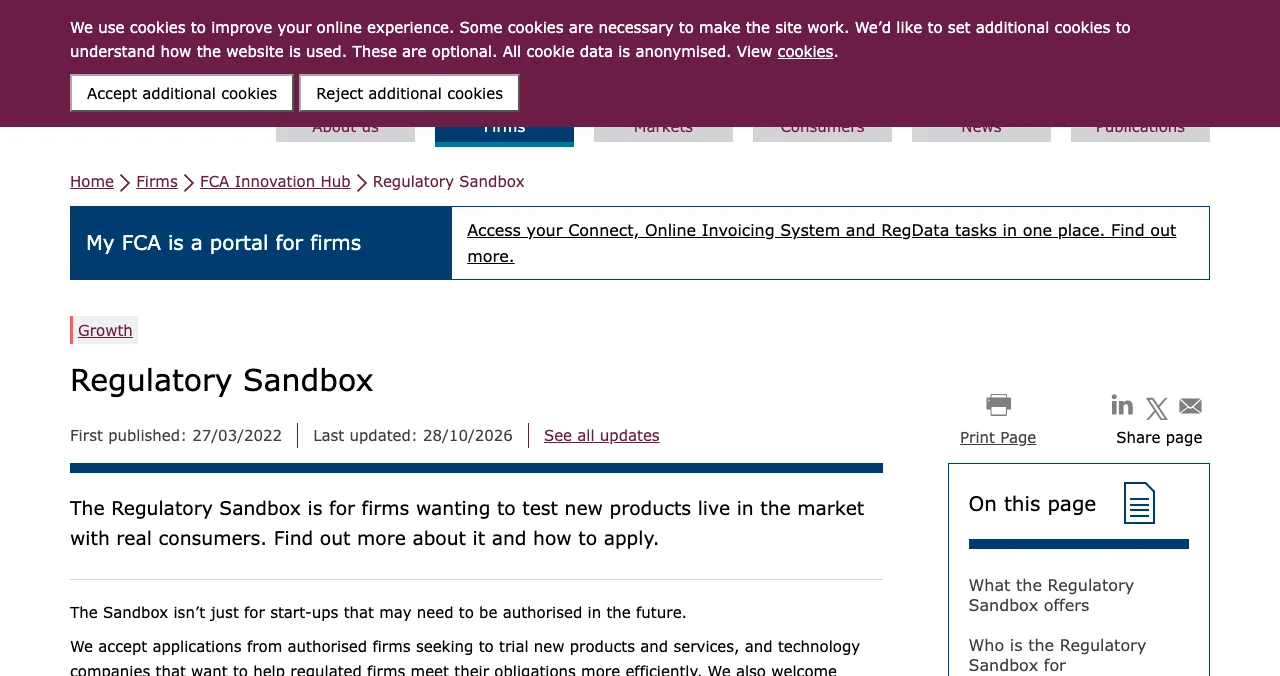
FCA Regulatory Sandbox
Test a genuinely new product live with UK consumers, with the regulator's support.
No fee listedApply any time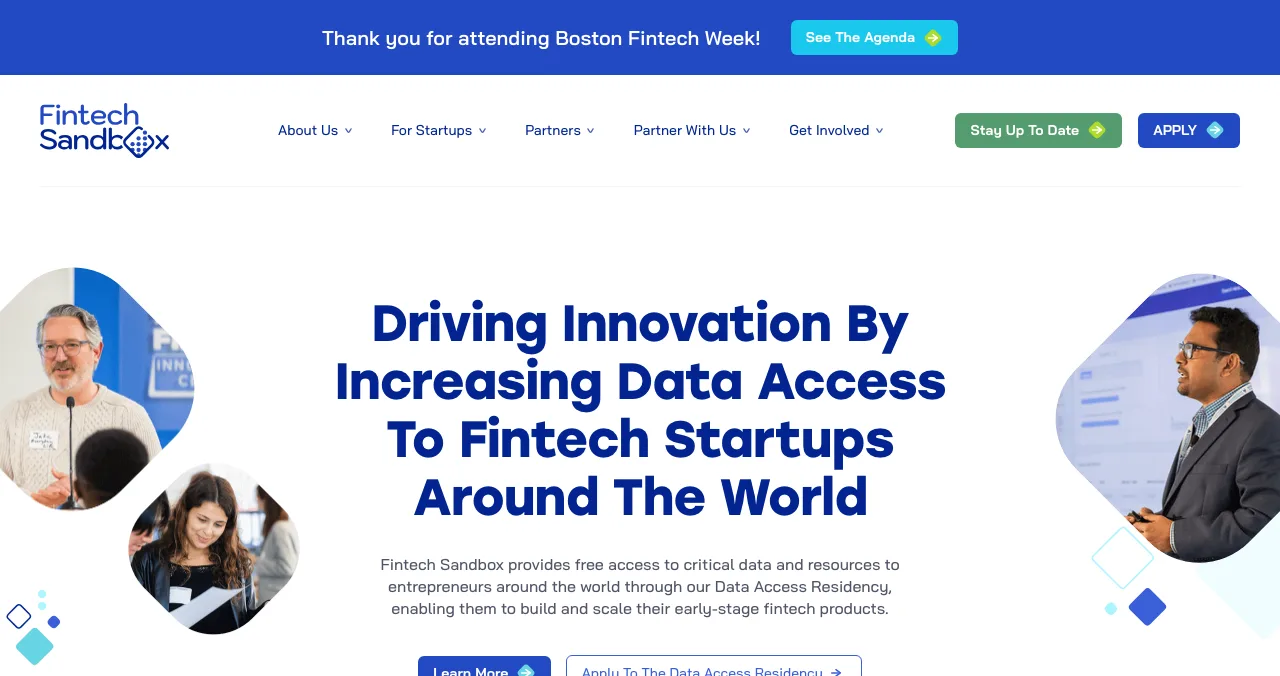
Fintech Sandbox
Free data feeds and APIs for early-stage fintechs, plus a founder community.
FreeUnder $1M ARR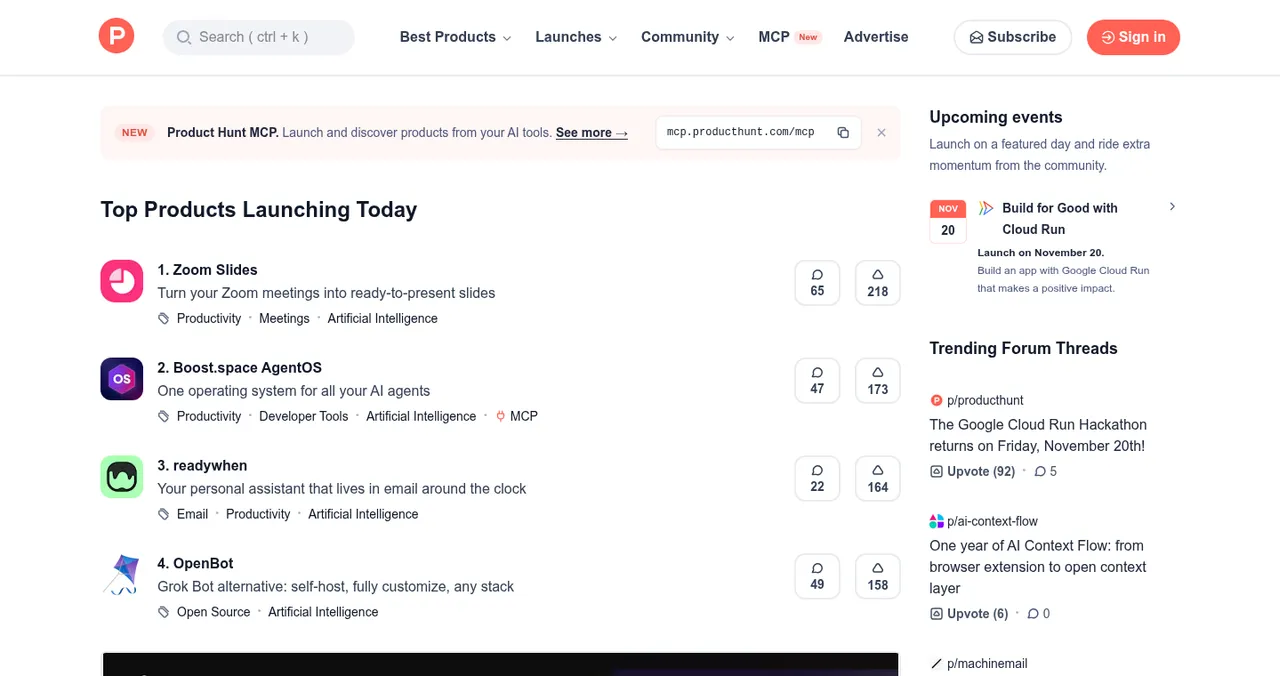
Product Hunt
The biggest single launch day for products people can try now.
Free12:01 AM PT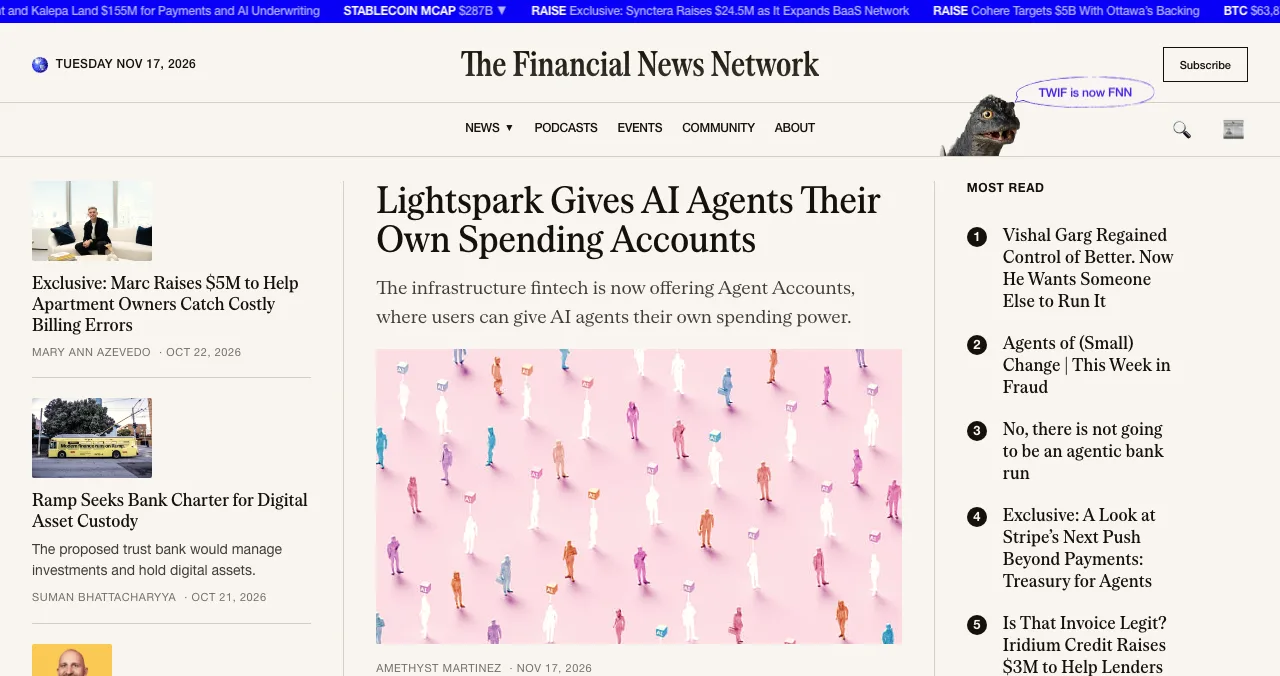
This Week in Fintech (FNN)
The fintech newsletter where industry news gets read.
175,000+ subscribersPitch, don't pay
Fintech startup directories and launch sites, compared
Fintech has fewer open "directories" than SaaS or AI. What it has instead are programmes and channels that each do one job: a listing that keeps working, a regulator that lets you test, a data programme that lets you build, and launch days and newsletters that bring attention.
| Place | Cost | What you get | Best moment to use it | Catch |
|---|---|---|---|---|
| Science of Apps Launchpad | Free, forever | Permanent listing; product test with KYC and money movement | As soon as the product is live | Reports beyond the free check are paid |
| FCA Regulatory Sandbox | No fee on its pages | Live testing with real consumers, regulatory support | Before a UK launch of something new | Must meet five criteria; not an exemption |
| Fintech Sandbox | Free; no equity | Free data from 40+ providers for up to 6 months | While building | Under $1M ARR; data for testing only |
| Product Hunt | Free | One launch day, permanent product page | When people can sign up and try it | Never ask for upvotes |
| This Week in Fintech (FNN) | Free to pitch | Reach to 175,000+ subscribers if covered | When you have real news | Editorial; no submission form |
| Apple App Store | Apple Developer Program membership | Distribution for a fintech app | When the regulated entity can submit | Banking apps from the legal entity only |
Table: Fintech startup directories and launch places compared (each site's own pages, checked 18 Nov 2026)
1. Science of Apps Launchpad: a listing, plus your fintech tested
- Cost
- Free, forever
- Time to list
- About 2 minutes, six steps
- Ranking
- Relevance, never payment
- Fintech extra
- KYC and money movement tested
- Visible for
- Permanent
The Science of Apps Launchpad gives your product a permanent, free public profile, found by the problem it solves rather than by launch date. It's ranked by relevance, editorial picks and community interest (vouches and follows), never by payment; the site states "0 paid placements". Listing takes about two minutes in six steps, and every listing is checked automatically and reviewed by a person.
- Cost: free to list, forever. A free baseline diagnosis of your landing page, discoverability and speed runs as you go live.
- Badges: a Featured badge when you go live, then badges you earn, such as Verified (confirm a work email on your domain), which matters in a category where impostor sites are common.
- Who it accepts: startups, SaaS, mobile apps, AI products, developer tools, browser extensions, games and open-source projects.
Best for: the canonical page every pitch, sandbox application and launch post links to.
Your fintech, tested end to end
A fintech product can lose a customer at the identity check or at the first transfer, and launch-day visitors rarely tell you which. Once your listing is live, Science of Apps can put the product through a full investigation in a real browser, on desktop and mobile, then review the screens behind your login.
- Areas of your product tested, from search result to settings
- 22
- Automatic measurements, desktop and mobile
- 39
- Expert checks on the screens behind your login
- 74
- Verdicts, from Good to Critical
- 5
The 22 areas run across the whole journey: Arrive, Join, Use, Pay, Stay, and checks on every screen. Science of Apps says the areas are re-cut for your category, and fintech gets KYC and money movement. In practice, that puts the moments fintech users fear most under the same scrutiny as the landing page:
Arrive
Can I trust this?
Discoverability, landing page, pricing and the trust, privacy and security signals a new user looks for before handing over data.
Join
Who are you, and why do you need my ID?
Sign-up, sign-in and account recovery, onboarding and, for fintech, the KYC steps.
Use
Does it do the job?
The core task flow, dashboards and insights, microcopy, and empty, loading and error states.
Pay
Where money moves
Paywall and upgrade, checkout and payments, and, for fintech, money movement.
Stay
Will I come back?
Notifications, account and profile, settings, and help and support.
Every screen
Judged throughout
Accessibility to WCAG 2.2, and visual design and consistency.

Evidence for every finding
Each finding is backed by a measurement or pinned to the exact screen it came from.
A verdict and a next step
Good, Needs improvement, Needs to be fixed, Critical or Recommendation, so you know what to fix first.
Checked by people
An analyst approves, edits or rejects findings before they reach you.
Private by default
Reports are seen only by your team and never affect your listing's ranking.
Find the broken step before your customers do
List free, and once you're live, order the report that fits your stage.

 Economy
See what new customers see
- Store listing and homepage, screen by screen
- Scorecard against 60 Laws of UX
- Customers, competitors and the fixes worth most
PremiumThe full diagnosis and the plan
- Every screen, every finding, every flow
- All 60 laws with evidence and fixes
- 8 strategy chapters and a 90-day roadmap
Researched from your live product and fact-checked against the evidence.
2. FCA Regulatory Sandbox: test a new product with real UK customers
- Cost
- No fee on the FCA's pages
- When
- Applications any time of year
- Who
- Authorised and unauthorised firms, any size
- Test
- Small-scale, time-limited, real consumers
- Catch
- Not a regulatory exemption
A regulator isn't a launch site, but for a UK fintech doing something new, the FCA's sandbox is often the first real launch: a small, time-limited test with real consumers. The FCA offers regulatory expertise and tools such as restricted authorisation, informal steers, and waivers or modifications to rules.
- Who can apply: authorised and unauthorised firms of any size, from any financial services sector, plus technology businesses delivering innovation to UK consumers or firms.
- When: at any point during the year. The FCA also runs themed cohorts (its page lists climate scenarios and stablecoins).
- The five criteria: in scope for the UK market; genuine innovation; consumer benefit; readiness (a defined proposal, testing plan and safeguards); and a genuine need for the sandbox rather than another route.
- The catch: the sandbox "is not regulatory exemption"; regulated activities still need authorisation or registration.
Best for: UK fintechs whose product doesn't fit existing rules neatly. Elsewhere, look for your own regulator's programme: Singapore's MAS runs a FinTech Regulatory Sandbox with a Sandbox Plus track (see more places).
3. Fintech Sandbox: free financial data while you build
- Cost
- Free; no equity taken
- What you get
- Data from 40+ providers, up to 6 months
- Who
- Early-stage, under $1M ARR
- Process
- Rolling review, two video interviews
Data is often the most expensive part of building a fintech MVP. Fintech Sandbox's Data Access Residency removes it: free access to data feeds and APIs from its data partners for up to six months, across more than 40 providers. "There are no fees and no equity is taken."
- Eligibility: incorporated; early-stage (it says typically bootstrapped through Series A); under $1 million in annual recurring revenue; a full-time leadership team or a clear path to one; a CTO or developers able to handle large data volumes; an alpha product or demo.
- Process: apply any time; a roughly 25-minute video call, then possibly a 45-minute call with a live demo, then a decision.
- The rule: the data is for testing and development, not direct commercialisation.
Best for: data-heavy fintechs (investing, lending, risk, analytics) before launch. Acceptance also connects you to a community of founders, financial institutions and data providers, which is where early pilots often come from.
4. Product Hunt: a launch day for fintech people can try
- Cost
- Free
- Goes live
- 12:01 AM Pacific
- Book ahead
- Tomorrow to 30 days out
- Accounts
- Personal, not company
Product Hunt's help center confirms that submitting a launch, commenting and reaching Product of the Day are all free, and that you can hunt your own product. Launches go live at 12:01 AM Pacific Time on the date you schedule, from tomorrow up to 30 days ahead, and must come from personal accounts.
For fintech it works best when visitors can see value before handing over documents: a budgeting view with demo data, an invoice tool that works before bank connection, an API with a sandbox key. If the first screen is an ID upload, most launch-day visitors will stop there.
Best for: B2B fintech tools and consumer apps with a demo mode. Our Product Hunt launch guide has the hour-by-hour plan.
5. This Week in Fintech: where fintech news gets read
- Audience
- 175,000+ subscribers (its figure)
- Format
- Independent fintech news
- Submission
- No public form; pitch news
- Now
- Moved to The Financial News Network
This Week in Fintech (TWIF) is one of the best-known fintech newsletters, and it has moved to The Financial News Network (thefnn.com). Its old homepage invites readers to "Join 175,000+ subscribers". It's editorial: we found no public form for startups to submit launches, and the only contact listed on the page is for partnerships and sponsorships.
- How to use it: pitch real news (a licence, a bank partnership, a funding round, a launch with numbers) to the editorial team, briefly, with a link to your permanent page.
- Don't: pay for a "feature" unless it's clearly labelled as sponsorship.
Best for: fintechs with news. For more newsletters that do feature products, see startup newsletters that feature products.
6. Before the App Store: Apple's rules for finance apps
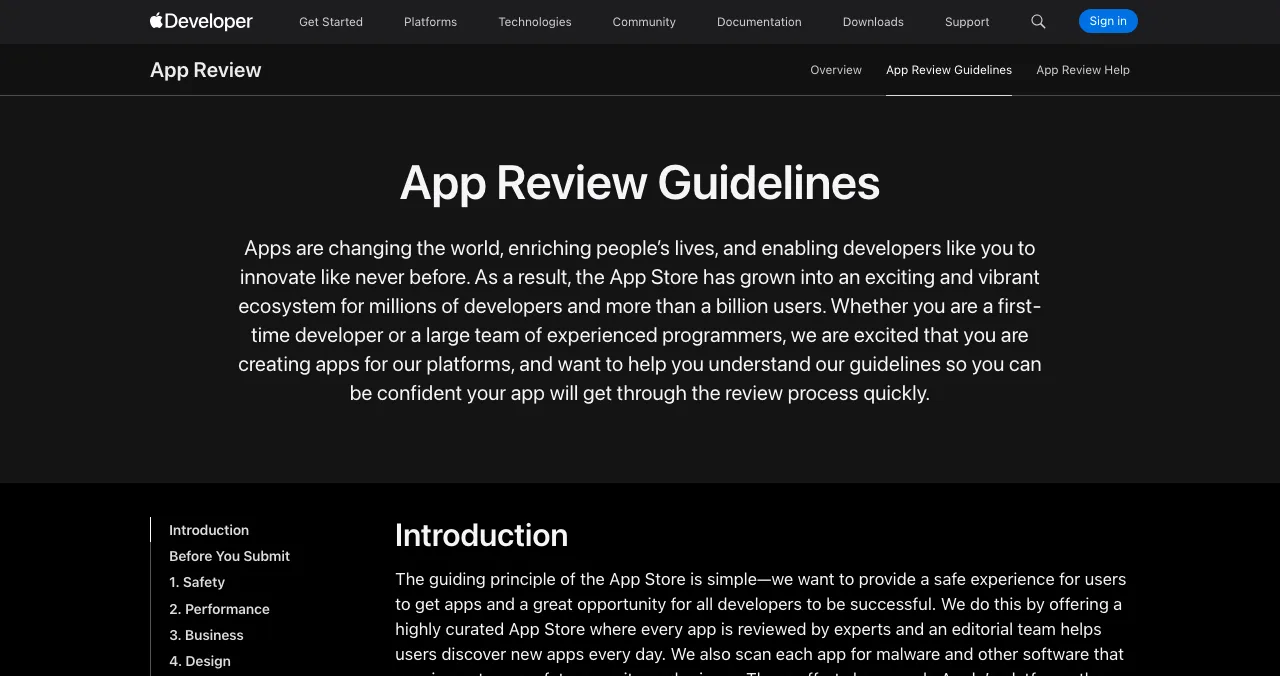
If your fintech is a mobile app, the App Store is a launch channel with its own gate. Apple's guidelines, read on 18 November 2026, say:
- Who submits: apps in highly regulated fields, including banking and financial services and crypto exchanges, should be submitted by the legal entity that provides the services, not an individual developer (5.1.1(ix)).
- Trading and money management: apps for financial trading, investing or money management should be submitted by the financial institution performing the service, with licensing in each location (3.2.1(viii)).
- Crypto: wallets only from developers enrolled as an organisation; exchanges only where the app is licensed (3.1.5).
- Personal loans: clear disclosure of all terms, a maximum APR of 36% including fees, and no repayment in full in 60 days or less (3.2.2(ix)).
Plan your entity and licences before launch day, not after a rejection. Our mobile app launch guide covers the rest of the store side.
More places for fintech founders

MAS FinTech Regulatory Sandbox (Singapore)
MAS runs a FinTech Regulatory Sandbox; its Sandbox Plus track took effect on 1 January 2022 and widened eligibility to early adopters of technology innovation. Applications go to fintech_sandbox@mas.gov.sg.
Free startup directories
General directories still matter for discovery and links. Start with our free startup directories list and the SaaS directories guide for B2B fintech.
Regional launch sites
Fintech is local. Our launch sites by country guide lists regional platforms and programmes.
A press release, done properly
A licence or bank partnership is real news. Our startup press release guide shows how to write one editors read.
Which fintech launch place should you use first?
| If your fintech is… | Start with | Then add |
|---|---|---|
| A UK consumer product that doesn't fit existing rules | FCA Regulatory Sandbox | Launchpad listing, then Product Hunt when live |
| A data-heavy tool still in development | Fintech Sandbox | Launchpad listing at beta |
| A B2B fintech tool (invoicing, spend, treasury) | Launchpad listing | Product Hunt, SaaS directories |
| A consumer mobile app (budgeting, saving) | Launchpad listing | App Store (via your legal entity), Product Hunt |
| A fintech with real news (licence, round) | A short pitch to fintech newsletters | Press release, Launchpad listing as the link |
Table: Which fintech launch place to start with, by product type
A fintech launch plan, in six steps
- Months before
Settle the regulatory route
Decide whether you need authorisation, a partner bank or a sandbox; apply to the FCA sandbox or your regulator's programme if you qualify.
- While building
Get the data
Apply to Fintech Sandbox for free data access if you're early-stage and under $1M ARR.
- Two weeks before
Publish your permanent page
List on the Launchpad, add the Verified badge, and let the investigation test KYC and money movement.
- One week before
Fix what the report flags
Identity steps, first deposit or connection, error messages, and trust signals on the landing page.
- Launch day
Product Hunt
Go live at 12:01 AM Pacific with a demo path that works before KYC; reply to every comment.
- After
Pitch real news
Send fintech newsletters your licence, partnership or numbers, linking to your permanent page.
Mistakes that sink fintech launches

- Hiding who holds the money — name your licences, partner bank or e-money provider where people decide to sign up
- KYC before any value — show what the product does with demo data before asking for documents
- Unexplained identity checks — say why you need the ID and how long it takes
- Vague error messages on transfers — a failed payment with no reason feels like lost money
- Treating a sandbox as an exemption — the FCA says it isn't
- Paying for "features" in newsletters — if it isn't labelled sponsorship, readers can't trust it
Trust in fintech is mostly social proof and clarity: visible regulators, partners and reviews tell a cautious visitor that other people already trust you. And identity checks feel shorter when people can see their progress (goal-gradient effect).
Ready to launch?
How we chose these places
We looked for places that help a fintech startup get found, tested or trusted, and kept only those whose terms we could read on their own pages on 18 November 2026: the FCA's sandbox and eligibility pages, Fintech Sandbox's homepage and application page, MAS's Sandbox Plus page, Product Hunt's help center, This Week in Fintech's homepage and Apple's App Review Guidelines. Where a fact wasn't on the page (an FCA fee, a TWIF submission form), we say so rather than guess. We left out paid press-release wires and fintech "directories" whose terms we couldn't confirm. Science of Apps runs the Launchpad and has no relationship with the other organisations named here.
Key terms, defined
- Fintech startup directory: a site or programme that lists financial-technology companies so customers, partners or investors can find them.
- Regulatory sandbox: a regulator's programme for testing new financial products with real consumers under supervision, as at the FCA and MAS.
- KYC (know your customer): the identity checks a regulated financial service must run on new customers.
- Money movement: the flows that move funds: deposits, transfers, payouts and withdrawals.
- Restricted authorisation: an FCA authorisation limited in scope, used for sandbox tests.
- Canonical listing: the one permanent page about your product that every other post links to.
Frequently asked questions
Where can I launch fintech startups for free?
Start with a permanent, free listing such as the Science of Apps Launchpad, which also tests your product, including KYC and money movement. Then add Product Hunt for a launch day, apply to the FCA Regulatory Sandbox or Fintech Sandbox if they fit, and pitch fintech newsletters such as This Week in Fintech with real news.
What are the best fintech startup directories?
There are few true fintech-only directories that are open and free. The places that work best are a permanent launch listing you control, general software directories where buyers compare tools, and fintech programmes such as Fintech Sandbox, whose alumni and partners form a directory of their own. Check each one's rules before you submit.
Is the FCA Regulatory Sandbox free to apply to?
The FCA's sandbox pages don't mention an application fee. Firms can apply at any point in the year, but must meet five criteria: in scope for the UK, genuine innovation, consumer benefit, readiness to test, and a real need for the sandbox. It is not an exemption from authorisation.
How do I submit my fintech startup free to newsletters?
Most fintech newsletters, including This Week in Fintech, don't have a public submission form; they cover news. Send a short, specific pitch (a funding round, a licence, a launch with numbers) to the editorial contact on the site, and don't pay for a 'feature' unless it is clearly labelled as sponsorship.
How do fintech startups get users after launch?
By lowering the trust barrier. Show licences or partner banks plainly, make the first deposit or connection feel safe, and explain why you ask for identity documents. Then go where your buyers are: business owners on Product Hunt and LinkedIn, consumers through app stores and personal-finance communities, and institutions through sandboxes and partner programmes.
Can an individual developer publish a fintech app on the App Store?
Apple's App Review Guidelines say apps in highly regulated fields, including banking, financial services and crypto exchanges, should be submitted by the legal entity that provides the services, not by an individual developer. Trading, investing and money-management apps should come from the institution performing the service.
What does the Launchpad test for fintech products?
The investigation covers 22 areas of your product, from discoverability and the landing page to sign-up, the core flow, checkout and settings. Science of Apps says the areas are re-cut per category, and fintech gets KYC and money movement. Every finding comes with evidence, a verdict and a next step, and stays private.
Sources
- Science of Apps — Launchpad: launch your product free (checked 18 Nov 2026)
- Science of Apps — Product investigation: 22 areas, re-cut per category (checked 18 Nov 2026)
- Financial Conduct Authority — Regulatory Sandbox (checked 18 Nov 2026)
- Financial Conduct Authority — Regulatory Sandbox eligibility criteria (checked 18 Nov 2026)
- Fintech Sandbox — Data Access Residency (checked 18 Nov 2026)
- Fintech Sandbox — Apply: eligibility and process (checked 18 Nov 2026)
- Monetary Authority of Singapore — Sandbox Plus (checked 18 Nov 2026)
- Product Hunt Help Center — Launch FAQ and myths (checked 18 Nov 2026)
- This Week in Fintech — Home, now The Financial News Network (checked 18 Nov 2026)
- Apple Developer — App Review Guidelines (checked 18 Nov 2026)
- Checked November 18, 2026. Figures that change — fees, salaries, prices — are reviewed every six months; if something is out of date, tell us.
Where to go from here
- Top 5 websites to launch a startup free — the general shortlist
- Free startup directories — where to list once you're live
- Launch sites by country — regional platforms and programmes
- Science of Apps - LaunchpadHealthtech startup directories for 2027: where to launch a digital health startup free, from the NHS Innovation Service to app libraries and regulator sandboxesHealthtech startup directories and free launch routes: the Launchpad, NHS Innovation Service, MHRA's AI Airlock, ORCHA and Product Hunt, rules checked.
- Science of Apps - LaunchpadClimate tech startup directories for 2027: where to launch a climate tech startup free, from Climatebase and Work on Climate to CTVCClimate tech startup directories and free launch places: the Launchpad, Climatebase, Work on Climate, CTVC and Product Hunt, with each one's terms checked.
- Science of Apps - LaunchpadThe web app directory guide for 2027: where to launch a web app free, from Product Hunt and Show HN to the Microsoft Store, PWA directories and SaaSHubWhere to launch web apps free: the Launchpad, Product Hunt, Show HN, the Microsoft Store via PWABuilder, PWAStore.io and SaaSHub, with each one's rules checked.
- Science of Apps - LaunchpadThe design tools directory guide for 2027: where to launch a design tool free, from Figma Community and the Framer Marketplace to Webflow Apps and Toools.designWhere to launch design tools free: the Launchpad, Figma Community, Framer Marketplace, Webflow Apps, Toools.design and Product Hunt, with every rule checked.
- Science of Apps - LaunchpadThe marketing tools directory guide for 2027: where to launch a marketing tool free, from HubSpot's App Marketplace and G2 to Zapier and Product HuntWhere to launch marketing tools free: the Launchpad, HubSpot App Marketplace, G2's free plan, Zapier's App Directory and Product Hunt, with rules checked.
- Science of Apps - LaunchpadThe creator tools directory guide for 2027: where to launch a creator tool free, from the Kit App Store and Canva Apps to Zapier and Product HuntWhere to launch creator tools free: the Launchpad, Kit App Store, Canva Apps Marketplace, Zapier's App Directory and Product Hunt, with review rules checked.
Get the ideas, not the noise.
Sign up with Google and we’ll send you short UX psychology tips by email — why people tap, stall and leave, and what to do about it. Unsubscribe anytime. Prefer something to keep? Get the free Laws of UX guide as a PDF.
Launch day ends. Your listing shouldn't.
A permanent, free page for your fintech product, found by the problem it solves, plus a test of your live product that, for fintech, adds KYC and money movement to the areas it checks, with a detailed report on what to fix.